Essential Kimono Care: Cleaning, Storage, and Maintenance
Preserving the Legacy: The Ultimate Guide to Kimono Care
A kimono is far more than a simple garment; it is a wearable canvas, a piece of cultural heritage, and often a multi-generational family heirloom. Whether you own a vintage silk uchikake (wedding kimono), a casual cotton yukata, or a formal kurotomesode, proper maintenance is critical to preserving the integrity of the textiles and the vibrancy of the dyes. Silk, in particular, is a protein-based fiber that is highly susceptible to environmental damage, pests, and improper handling. This comprehensive guide details the traditional and modern best practices for kimono cleaning, folding, and long-term storage.
Understanding Kimono Textiles and Vulnerabilities
Before attempting any cleaning or storage, it is vital to identify the fabric of your kimono. While modern kimono can be made from polyester or wool, traditional garments are primarily crafted from silk (kinu), cotton (momen), or hemp (asa). Silk requires the most meticulous care. The protein structure of silk fibroin degrades when exposed to high humidity, direct ultraviolet light, and alkaline substances. Furthermore, traditional Japanese dyeing techniques, such as yuzen and shibori, often utilize organic dyes and metallic threads (kinkoma) that can tarnish or bleed if exposed to moisture or harsh chemical solvents.
Professional Cleaning: The Maru-arai Process
Unlike Western garments, a silk kimono should never be machine-washed or taken to a standard local dry cleaner. In Japan, the traditional method for cleaning a kimono is called maru-arai (丸洗い), which translates to "whole washing." During this specialized process, the kimono is either cleaned whole using specialized petroleum-based hydrocarbon solvents that do not strip the silk's natural sericin or damage the delicate dyes, or it is carefully unstitched into its original rectangular panels, washed, re-stretched on wooden frames (shinshi), and then meticulously resewn by a kimono tailor.
Cost and Timing: Professional maru-arai typically costs between ¥8,000 and ¥15,000 ($55 to $100 USD), depending on the garment's condition and whether stain treatment is required. The process usually takes one to two months. It is recommended to have a worn silk kimono professionally cleaned every 3 to 5 years, or immediately if it has been exposed to heavy perspiration or environmental pollutants.
At-Home Spot Cleaning and Stain Triage
If you notice a small stain on your kimono, immediate but gentle action is required. Never rub a silk kimono, as this will fray the fibers and permanently damage the weave. Instead, use a specialized silk spot cleaner or a small amount of volatile solvent like benzine (a highly refined petroleum solvent, not to be confused with benzene) applied to a clean, white cotton cloth. Gently dab the stain from the outside in. For water-soluble stains, a slightly damp cloth can be used, but the area must be dried immediately with a hairdryer on a cool setting to prevent water rings. If the stain persists, take the garment to a professional kimono cleaner who specializes in shimi-nuki (stain removal).
The Hon-datami Folding Technique
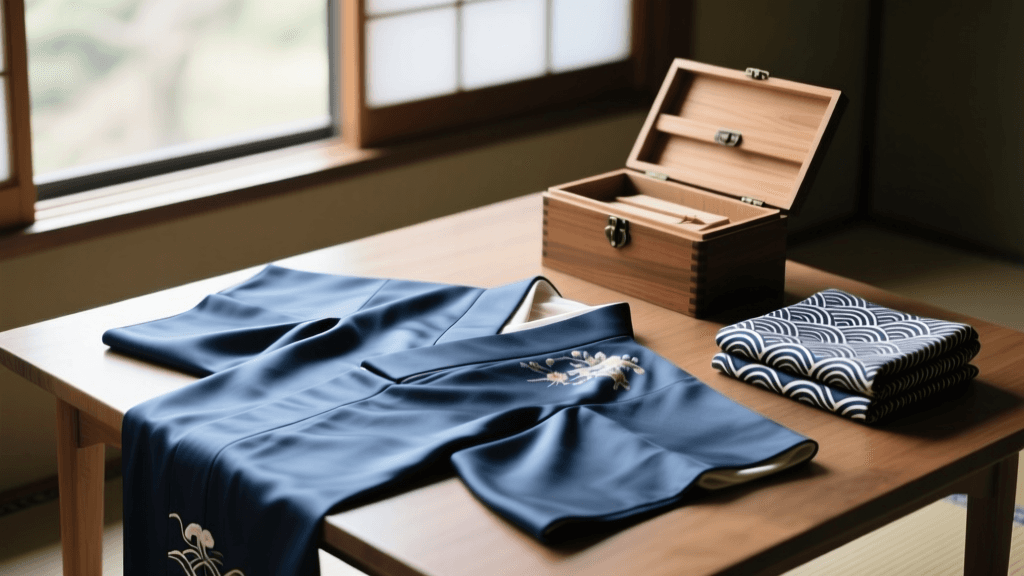
Hanging a kimono on a standard Western hanger will permanently distort the shoulders and stretch the delicate silk. Kimono are designed to be folded flat using a specific, standardized method known as hon-datami (本畳み). Proper folding ensures that the seams bear the stress, not the fabric panels.
- Step 1: Lay the kimono face down on a clean, dry surface. Fold the left front panel back onto the rear panel, aligning the seams.
- Step 2: Fold the right front panel over the left, creating a long, narrow rectangle.
- Step 3: Fold the sleeves inward so they align with the body of the garment, ensuring the collar forms a straight line.
- Step 4: Fold the garment in half lengthwise, then fold it into thirds or quarters depending on the length, ensuring the collar and hem are protected within the folds.
Once folded, the kimono should be wrapped in tatoushi (kimono wrapping paper). Standard tatoushi measures approximately 85cm by 65cm. It is crucial to use acid-free, unbuffered tissue paper or specialized Japanese washi to prevent acid migration, which causes yellowing and fabric rot over time.
Long-Term Storage: Materials and Climate Control
The environment in which a kimono is stored is just as important as how it is folded. According to the Metropolitan Museum of Art's Textile Conservation Department, maintaining a stable relative humidity (RH) between 45% and 55% is critical for protein-based fibers like silk. Fluctuations in humidity cause the fibers to expand and contract, leading to structural fatigue. Additionally, the Canadian Conservation Institute emphasizes the importance of using acid-free, unbuffered materials when storing animal-based textiles to prevent chemical degradation.
Traditional Japanese storage utilizes the kiri tansu, a chest made from paulownia wood. Paulownia is highly prized because it is naturally resistant to pests, fire-retardant, and possesses a unique cellular structure that absorbs excess moisture during humid summers and releases it during dry winters, creating a natural microclimate.
Comparison Chart: Kimono Storage Materials
| Storage Material | Pros | Cons | Estimated Cost (USD) |
|---|---|---|---|
| Paulownia Wood (Kiri Tansu) | Breathable, naturally pest-resistant, regulates humidity perfectly. | Very expensive, heavy, requires significant floor space. | $500 - $3,000+ |
| Acid-Free Cardboard Archival Box | Affordable, breathable, chemically safe for silk proteins. | Susceptible to water damage, offers no pest protection. | $25 - $60 |
| Plastic Storage Bin | Cheap, waterproof, easily stackable. | Traps moisture (causes mold), plastic off-gassing degrades silk. | $10 - $20 |
| Cotton Storage Bag | Breathable, lightweight, inexpensive. | Allows light penetration, offers zero protection against moths. | $15 - $30 |
Note: Never store silk kimono in plastic bins or vacuum-sealed bags. Plastic traps moisture, leading to rapid mold growth, and the off-gassing of plastics can chemically alter silk dyes.
Seasonal Maintenance: Mushiboshi (Airing Out)
Even when stored correctly, kimono require periodic maintenance. In Japan, the tradition of mushiboshi (虫干し), or "insect airing," is practiced to prevent mold and deter pests like the clothes moth. This process involves taking the kimono out of storage, unfolding them, and allowing them to breathe in a shaded, well-ventilated room. As highlighted by the Victoria and Albert Museum's conservation guidelines, avoiding direct sunlight and rotating displayed or stored textiles prevents irreversible photochemical degradation, meaning mushiboshi must always be done in the shade, never in direct sun.
When to perform Mushiboshi: The ideal time is during the driest, coolest months of the year. In Japan, this is typically late November to February. In other climates, choose a consecutive string of dry, winter days where the outdoor relative humidity is below 50%. Allow the garments to air out for 2 to 4 hours before refolding them with fresh tatoushi paper and replacing natural pest deterrents like camphor or cedar blocks.
Conclusion
Caring for a kimono requires patience, respect for traditional methods, and an understanding of textile conservation science. By utilizing the maru-arai cleaning process, mastering the hon-datami fold, and investing in proper climate-controlled storage like paulownia wood or archival boxes, you ensure that these magnificent garments survive to be admired and worn by future generations.