Hakama and Samue: Selecting Traditional Japanese Uniforms
The Philosophy of Movement in Japanese Arts
In the disciplined worlds of Japanese martial arts (Budo) and the Way of Tea (Chado), clothing is never merely decorative. The garments worn by practitioners are highly engineered tools designed to facilitate specific movements, enforce posture, and cultivate a mindset of respect. Whether you are stepping onto the tatami mats of an Aikido dojo, drawing a blade in Iaido, or entering the serene confines of a tea room (chashitsu), understanding the nuances of traditional uniforms like the hakama and samue is essential for any serious student of Asian traditions.
The intersection of martial arts and tea ceremony is rooted in shared Zen philosophies. Both practices demand intense mindfulness, grounded footwork (suriashi), and a deep respect for etiquette. The clothing worn in these spaces must accommodate deep knee bends, kneeling (seiza), and fluid upper-body rotations without restricting the practitioner or creating distracting noise. This guide provides actionable advice on selecting, sizing, and maintaining these traditional garments for modern practice.
The Hakama: Shared Foundation of Budo and Chado
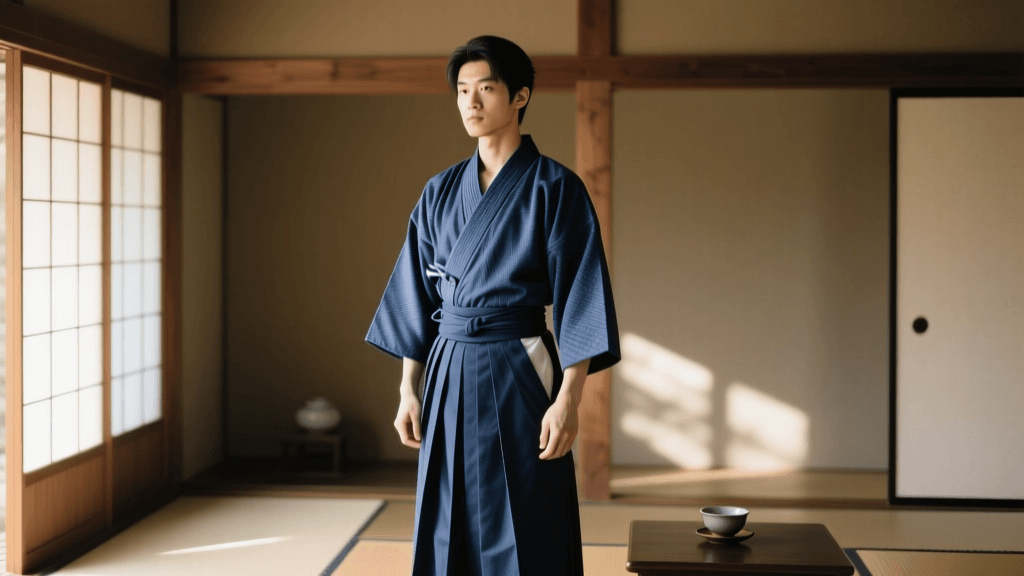
The hakama is a pleated, wide-legged skirt worn over a kimono or practice top (keikogi). Historically worn by samurai to protect their legs while riding horses and to hide their footwork from opponents, the hakama was later adopted by martial artists and tea masters alike. According to the All Japan Kendo Federation, the hakama in martial arts represents the transmission of tradition and the moral virtues of the practitioner, symbolized by its seven distinct pleats (five in the front, two in the back).
While the basic structure remains the same, the application of the hakama differs between the dojo and the tea room. In martial arts like Aikido and Kendo, the hakama is tied tightly around the waist to support the core (hara) during dynamic throws and strikes. In the tea ceremony, particularly during outdoor gatherings (nodate) or when performing specific preparatory rites, the hakama is worn with a slightly more relaxed tension to allow for the deep, sustained kneeling required in seiza.
Fabric Selection: Balancing Tradition and Practicality
Choosing the right fabric is critical and depends entirely on your discipline, budget, and local climate. The structural evolution of these garments is well-documented by institutions like the Victoria and Albert Museum, which notes that while silk remains the historical pinnacle of Japanese formal wear, modern synthetic and blended textiles have revolutionized daily practice wear.
| Fabric Type | Cost Range (USD) | Durability | Maintenance | Best Application |
|---|---|---|---|---|
| Tetron (Polyester Blend) | $40 - $70 | Very High | Machine wash, drip dry, no ironing | Daily Aikido/Kendo practice, beginner tea students |
| Cotton (Momen) | $60 - $120 | High | Hand wash, requires ironing to keep pleats | Iaido, outdoor tea gatherings, winter practice |
| Silk (Kinu) | $150 - $300+ | Low | Dry clean only, delicate handling | Formal tea ceremonies, high-level Dan gradings |
| Linen/Hemp (Asa) | $80 - $150 | Medium | Wrinkles easily, hand wash | Summer tea preparation, Zen temple work |
Measuring and Tying the Hakama
An ill-fitting hakama is a tripping hazard in martial arts and a breach of etiquette in the tea room. To measure correctly, tie a string around your navel (for men) or hip bones (for women). Measure from the string down to the ankle bone. For martial arts, subtract 5 cm from this measurement to prevent the hem from dragging during dynamic footwork. For tea ceremony, where movements are grounded and deliberate, measure exactly to the ankle bone without subtracting length.
The tying method (musubi) also varies. Martial artists use a flat, secure knot at the back to prevent the rigid back plate (hakama-ita) from shifting during ukemi (falling). Tea practitioners often use a softer, more traditional knot that sits comfortably against the spine during prolonged periods of sitting.
Samue: The Working Uniforms of the Tea Room and Dojo
While the hakama is reserved for formal practice and ceremony, the samue is the ultimate working uniform. Originally designed as the daily work clothes for Zen Buddhist monks, the samue consists of a loose-fitting jacket and matching trousers. Today, it is the standard attire for tea masters when preparing the tea room, cleaning the garden (roji), or doing pottery, as well as for martial artists performing dojo maintenance (soji).
The samue is prized for its unrestricted range of motion and breathability. When purchasing a samue, sizing is uniquely based on height rather than chest or waist measurements, as the garment is designed with a relaxed, drop-shoulder fit and a drawstring waist that can accommodate a 10 cm variance in weight. If you are 175 cm tall, select a size L (typically rated for 170-180 cm). The cuffs of the jacket and trousers are fitted with elastic or drawstrings to prevent fabric from catching on tools or tea implements.
Footwear: Tabi and Zori for Indoor and Outdoor Practice
No traditional Japanese uniform is complete without proper footwear. The tabi (split-toe sock) is essential for both martial arts and tea ceremony. The separation of the big toe from the other four toes provides superior balance, grip, and sensory feedback on the tatami mat. When purchasing tabi, buy them 0.5 cm smaller than your standard shoe size. A snug fit is necessary to prevent the fabric from bunching under the foot, which can cause blisters during martial arts pivots or discomfort when kneeling in the tea room.
For outdoor transitions, such as walking from the dojo entrance to the mat or traversing the stepping stones of a tea garden, practitioners wear zori (straw or foam sandals). Zori are designed to be easily slipped on and off, reinforcing the Japanese cultural boundary between the outside world (soto) and the sacred inner space (uchi).
Seasonal Transitions: The Rule of Koromogae
Traditional Japanese culture places a heavy emphasis on seasonality, a concept known as koromogae (the changing of clothes). Historically, this transition occurs twice a year: on June 1st (switching to summer garments) and October 1st (switching to winter garments). In the context of martial arts and tea ceremony, this means transitioning from heavy cotton or wool hakama to breathable linen, hemp, or lightweight Tetron blends during the humid Japanese summers. Adhering to koromogae shows a deep respect for the natural rhythms of the environment, a core tenet of the tea ceremony.
Maintenance, Washing, and the Art of Folding
Proper care of your traditional uniforms extends their lifespan and demonstrates respect for your art. Tetron hakama can be machine washed on a gentle cycle in a mesh bag, but cotton and silk must be hand-washed or dry-cleaned. Never use a tumble dryer, as the heat will destroy the stiff back plate and melt the synthetic threads used in the pleats.
The most critical skill in hakama maintenance is folding. A hakama must be folded precisely along its seven pleats to maintain its shape. This requires a specialized hakama-ita (folding board) or a flat, clean surface. The process involves aligning the outer edges, smoothing the front and back pleats, and folding the long ties (himo) in a specific sequence that represents the wrapping of a sword. Cultural heritage sites and tourism boards, such as those highlighted by the Japan National Tourism Organization, frequently showcase these meticulous folding techniques as a form of moving meditation in their own right.
Conclusion
Whether you are executing a flawless tea presentation or engaging in rigorous martial arts sparring, your uniform is your first and most important piece of equipment. By understanding the historical context, selecting the appropriate fabrics, and adhering to the strict maintenance rituals of the hakama and samue, you bridge the gap between ancient tradition and modern practice. Dressing in these garments is not merely a preparatory step; it is the beginning of the discipline itself.