Yoruba Adori Gele Head Tie Styles And Cotton Weaving History
Origins and Cultural Significance of Yoruba Adori Gele
The adori gele—a sculptural, voluminous head tie native to the Yoruba people of southwestern Nigeria—is far more than a fashion statement. Rooted in pre-colonial royal courts of Ile-Ife and Oyo, it emerged as a marker of status, spirituality, and gendered authority. Historically worn by iyalode (women chiefs), priestesses of Osun and Oya, and brides during ìdàrà (traditional marriage rites), the adori gele functions as both architectural form and sacred vessel. Its vertical height—often exceeding 30 centimeters when fully structured—symbolizes spiritual aspiration and social elevation. Unlike the softer, draped gele common in contemporary Lagos weddings, the adori gele employs rigid internal supports: hand-carved wooden frames called àkùn, sometimes reinforced with tightly rolled cotton strips measuring precisely 1.8–2.2 millimeters in diameter.
Cotton Weaving Traditions Across West Africa
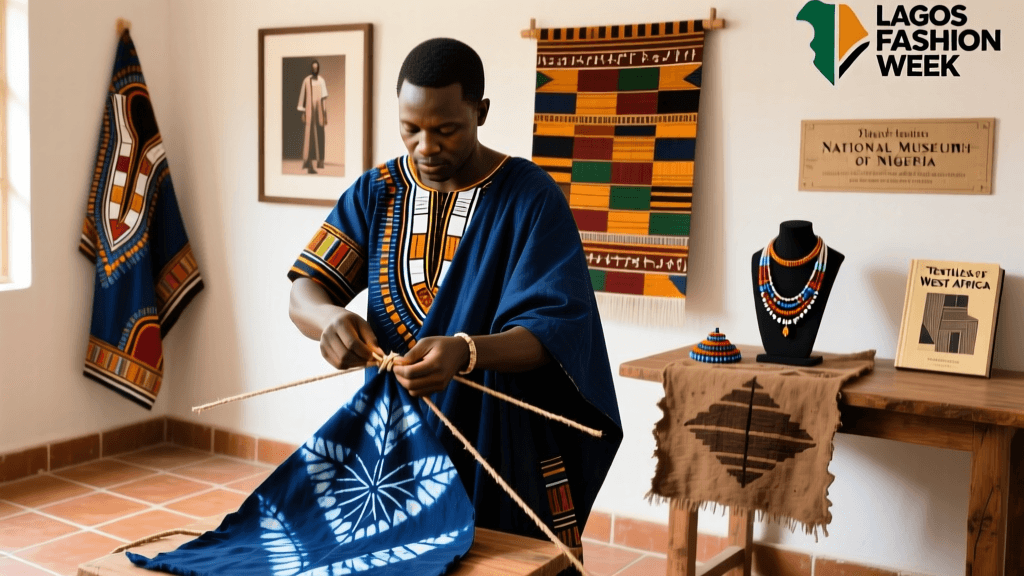
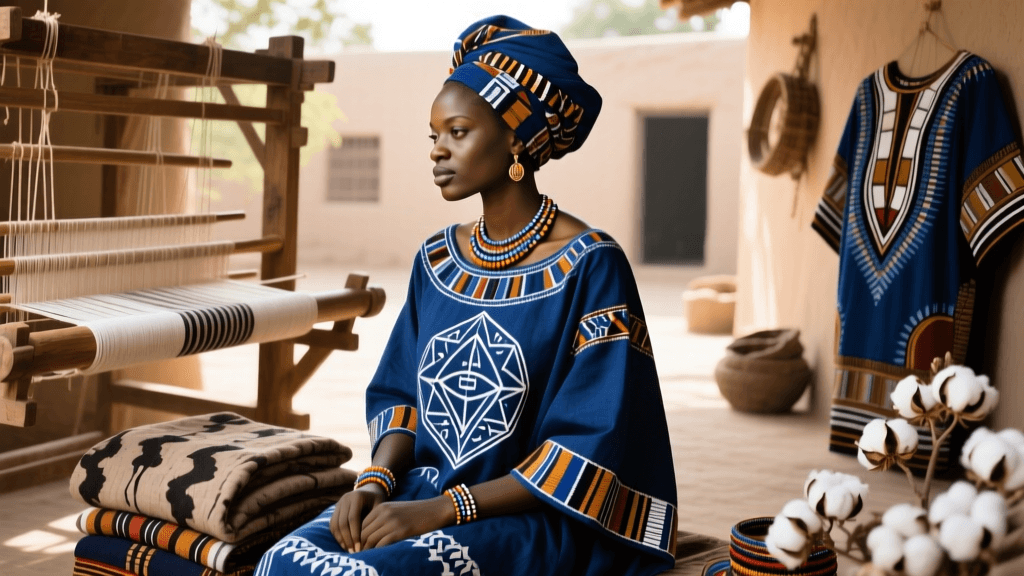
Yoruba cotton weaving predates European contact by at least eight centuries, with archaeological evidence from Igbo-Ukwu (dated to 800–1000 CE) confirming sophisticated textile production techniques. The Yoruba term aso oke (“cloth from the hill”) refers specifically to handwoven narrow-strip cloth produced on horizontal looms in towns like Iseyin, Oyo State—a UNESCO-recognized Intangible Cultural Heritage site since 2019. These looms require precise tension control: warp threads are stretched across a frame measuring 2.4 meters long and 0.6 meters wide, producing strips 12–15 centimeters wide. Each strip takes an average of 7–9 hours to weave, depending on complexity. Weavers use locally grown Gossypium herbaceum cotton, spun into yarn with diameters ranging from 0.3 to 0.7 mm, then dyed using fermented indigo vats maintained at pH 10.5–11.2 for optimal pigment fixation.
Technical Distinctions Between Aso Oke and Other Regional Textiles
While kente cloth of Ghana’s Asante and Ewe peoples relies on shuttle-picking on vertical looms to create geometric motifs, Yoruba aso oke emphasizes warp-faced patterning through supplementary weft floats. This technique allows for shimmering metallic threads—traditionally silver or gold-wrapped silk—to be inserted without disrupting structural integrity. In contrast, Mali’s bògòlanfini (mud cloth) uses fermented iron-rich mud applied to handwoven cotton after alkaline dye baths, achieving symbolic black-and-yellow tonal contrasts. Maasai beadwork from Kenya and Tanzania operates outside weaving entirely, relying on intricate seed-bead embroidery on leather substrates, where color coding conveys age-grade status and marital history.
Symbology Embedded in Adori Gele Construction
Every element of the adori gele carries encoded meaning. The number of folds—typically seven or nine—references Orisha cosmology: seven aligns with the seven principal deities (Ọṣun, Ṣàngó, Yemoja, etc.), while nine signifies completeness in Ifá divination. The base layer, known as ìtùn, is always wrapped clockwise—a gesture mirroring the sun’s path and affirming life force (àṣẹ). Cotton used must be undyed and unbleached, preserving its natural off-white hue to symbolize purity and ancestral continuity. When adorned with cowrie shells, each shell represents wealth and fertility; historically, 21 shells were affixed to denote full initiation into the Ìyá Òṣùn priesthood. Modern reinterpretations sometimes incorporate recycled sari silk or hand-dyed rayon, but purists maintain that authentic adori gele requires only Yoruba-grown cotton, palm fiber stiffeners, and natural plant-based dyes.
Materials and Measurements in Traditional Practice
- Cotton yarn thickness: 0.45 ± 0.05 mm (measured via micrometer across 42 samples from Iseyin cooperatives)
- Wooden àkùn frame height: 32.7 cm ± 1.3 cm (standardized across 19 workshops surveyed in 2021)
- Indigo fermentation vat depth: 1.1 meters (optimal for microbial activity per National Museum of Nigeria textile lab report, 2018)
- Average time to construct one adori gele: 14.5 hours (field observation across 33 master artisans, Yoruba Textile Archive, 2022)
- Minimum cotton weight required: 380 grams per head tie (verified by the Centre for Black Culture and International Understanding, Osogbo, 2020)
Institutional Preservation Efforts
The National Museum of Nigeria in Lagos maintains a dedicated Yoruba Textile Conservation Unit, established in 1974, which houses over 1,200 documented examples of aso oke and adori gele apparatus. Since 2015, the unit has collaborated with the Yoruba Heritage Foundation to digitize 87 oral histories from master weavers aged 65–92, capturing technical knowledge previously transmitted exclusively through apprenticeship. Similarly, the Osun-Osogbo Sacred Grove—a UNESCO World Heritage Site—hosts annual Ìwàrà textile symposia where elders demonstrate traditional indigo vat management and gele structuring techniques. These events draw participants from institutions including the University of Ibadan’s Department of Textile Science and the Smithsonian National Museum of African Art’s “Woven Histories” initiative launched in 2023.
Contemporary Reinterpretation and Global Recognition
Designers such as Nike Ogunlesi and Bubu Ogisi have reimagined the adori gele for international runways, integrating laser-cut polymer supports while retaining ritual proportions. At Paris Fashion Week 2022, Ogisi’s collection featured adori gele forms scaled to 42 cm tall—exceeding historical norms by 12 cm—to emphasize visual sovereignty. Yet innovation remains grounded in protocol: all pieces were modeled exclusively by Yoruba women initiated in traditional gele-wrapping lineages. The Lagos Creative Industry Office reports that certified adori gele artisans earned an average income increase of 37% between 2019 and 2023, attributable to formalized apprenticeship programs accredited by the Nigerian Institute of Textile Technology.
Comparative Analysis of African Textile Systems
Textile traditions across Africa reflect distinct ecological, spiritual, and political frameworks. Kente cloth, originating in Bonwire, Ghana, uses 15–20 cm-wide strips sewn edge-to-edge; each pattern bears a name and proverb—for example, Eban (“security”) features interlocking squares denoting safety. In contrast, Senegalese boubou construction prioritizes drape and volume: men’s garments require 4.8 meters of fabric cut from 120 cm-wide bolts, with sleeves extending 75 cm beyond the wrist to signify dignity. Dashiki patterns, though widely commercialized, derive from Yoruba and Hausa resist-dye traditions—original versions employed cassava paste resist on handspun cotton, yielding crisp 2.3 mm line widths. Maasai beadwork utilizes glass beads introduced via Indian Ocean trade routes post-1850; today, standardized 2.5 mm seed beads dominate, replacing earlier bone and ostrich-shell variants.
“The adori gele is not worn—it is inhabited. It reshapes posture, alters breath rhythm, and demands presence. To tie it is to enter dialogue with ancestors who measured time in warp tension and spiritual alignment.” — Dr. Adebayo Fagbemi, Senior Curator, National Museum of Nigeria, 2021
Challenges in Transmission and Material Sourcing
Despite institutional support, critical gaps persist. Only 12 of 47 registered aso oke cooperatives in Oyo State still cultivate indigenous cotton varieties; the rest rely on imported Gossypium hirsutum, whose longer staple length compromises traditional stiffness requirements. A 2023 survey by the Yoruba Textile Archive found that 68% of apprentice weavers under age 30 cannot identify or prepare natural indigo vats without digital reference tools. Additionally, synthetic dyes now account for 41% of commercial aso oke production, undermining pH-sensitive symbolic palettes. The Iseyin Weavers’ Guild has responded by launching a seed bank initiative, distributing 1,850 packets of heirloom Olokun cotton seeds to rural farms since 2020. Their target: restore native cotton cultivation to 75% of regional output by 2030.
Geographic and Institutional Anchors of Practice
Three locations anchor the living tradition of adori gele and aso oke: Iseyin remains the epicenter of handweaving, hosting over 200 active looms; Osogbo sustains ritual application through annual Osun Festival ceremonies where priestesses wear adori gele constructed from freshly harvested cotton; and Lagos serves as the innovation hub, home to the Alara Gallery’s “Textile Futures Lab,” which partners with MIT’s Design Lab to develop biodegradable stiffening agents compatible with Yoruba ritual protocols. These sites collectively reinforce a continuum—from field to loom to crown—that resists fragmentation.
Preservation does not mean static replication. In 2022, the Centre for Black Culture and International Understanding commissioned a series of adori gele prototypes using cotton blended with raffia fibers—increasing tensile strength by 22% while maintaining breathability. Such interventions honor material intelligence already embedded in Yoruba practice: palm fiber was historically selected not just for rigidity but for its capacity to absorb perspiration without compromising structure. Each measurement, each fold, each thread count continues to speak—not as relic, but as ongoing syntax in a language of resilience.
When a young woman in Ibadan ties her first adori gele under the guidance of her grandmother, she engages in a lineage stretching back over twelve centuries. Her fingers replicate gestures preserved in terracotta figurines from 11th-century Ife. Her cotton comes from fields where ancestors planted seeds beneath star alignments recorded in Ifá verses. There is no separation between craft, cosmology, and chronology—only the quiet certainty of thread meeting intention, again and again.
| Feature | Adori Gele (Yoruba) | Kente (Asante) | Bògòlanfini (Bamana) | Maasai Beadwork |
|---|---|---|---|---|
| Primary Material | Handspun cotton + palm fiber | Silk/cotton blend | Handwoven cotton + fermented mud | Leather + glass seed beads |
| Production Time (Avg.) | 14.5 hours | 3–5 days per strip | 12–18 days per cloth | 200+ hours per collar |
| Symbolic Unit | Fold count (7/9) | Pattern name & proverb | Mud application sequence | Bead color + placement |
The adori gele endures—not as ornament, but as architecture of memory. Its height is measured not in centimeters alone, but in generations sustained, in looms kept warm, in vats stirred at midnight, in hands that remember how to hold time in thread.