Ethiopian Shema Cotton Spinning And Embroidery Border Designs

Origins and Cultural Significance of Ethiopian Shema Cotton
Shema cotton is a handwoven, undyed, off-white textile deeply rooted in the highland regions of Ethiopia, particularly among the Amhara and Oromo communities. Produced primarily in towns like Gondar, Debre Tabor, and the historic weaving center of Wollo, shema serves as the foundational fabric for traditional garments such as the *habesha kemis*—a floor-length dress worn by women—and the *netela*, a lightweight shawl draped over shoulders during religious ceremonies and formal gatherings. Unlike West African kente cloth—whose geometric patterns encode royal lineage and proverbs—or Yoruba adire, which relies on indigo resist-dyeing techniques, shema emphasizes purity of fiber, structural integrity, and subtle surface texture. Its name derives from the Amharic word *shem*, meaning “to weave,” underscoring its functional and ritual centrality.
Weaving Techniques and Material Specifications
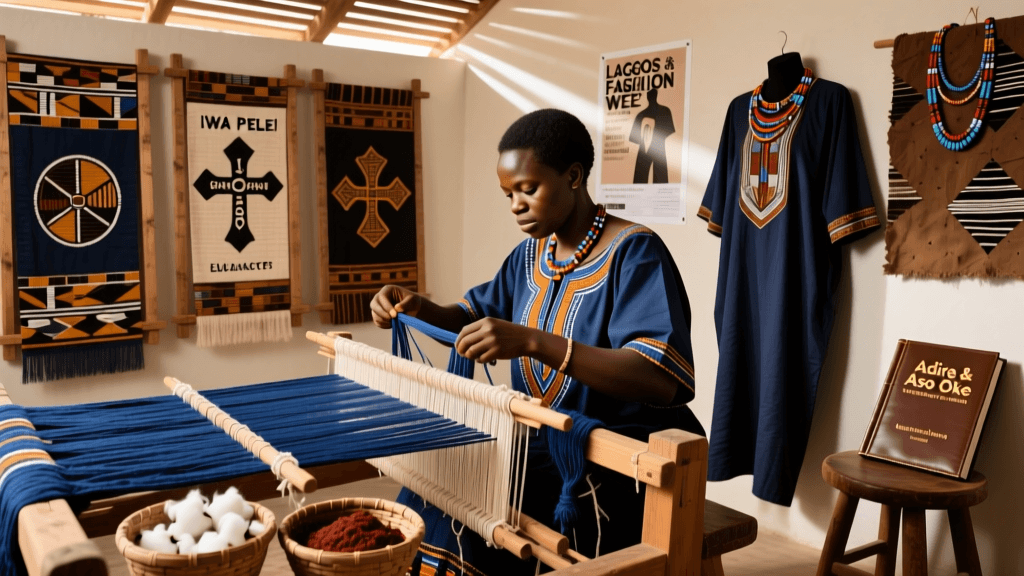
Shema is spun exclusively from locally grown *Gossypium herbaceum*, a short-staple cotton variety adapted to Ethiopia’s high-altitude climate (1,800–3,000 meters above sea level). Artisans use vertical warp-weighted looms constructed from seasoned eucalyptus and acacia wood, with tension maintained by clay or stone weights averaging 1.2 kg per warp thread. The weaving process requires precise hand-beating: each weft insertion is compacted using a wooden batten measuring exactly 45 cm in length and weighing 320 g. A single 2.5-meter-long shema cloth takes approximately 18–22 hours to complete, depending on the weaver’s experience and seasonal humidity levels, which must remain between 45% and 60% to prevent yarn breakage.
Spinning Precision and Fiber Standards
Before weaving, raw cotton undergoes three stages of manual cleaning and carding, followed by spinning on drop spindles calibrated to produce yarn with consistent linear density. According to the Ethiopian Textile Industry Institute (ETII), certified shema yarn must meet a minimum tensile strength of 18.7 cN/tex and exhibit less than 3.2% nep count per gram—a measure of fiber irregularities. These specifications ensure durability during repeated washing and ceremonial wear. Weavers in the Wollo region maintain a documented average spindle rotation speed of 1,420 rpm, achieved through rhythmic wrist motion refined over decades of practice.
Embroidery Border Designs: Symbolism and Execution
The borders of shema textiles are embellished with hand-embroidered motifs executed in white, black, or natural cotton thread. Unlike Maasai beadwork—which uses glass beads sourced historically from Czechoslovakia and encodes age-grade status—or Malian bogolanfini (mud cloth), where fermented iron-rich mud creates symbolic pictographs, shema embroidery relies on counted-thread techniques: each stitch occupies one warp-weft intersection. Common motifs include the *wheat stalk* (symbolizing fertility and harvest abundance), the *cross-in-circle* (representing unity of church and state in Orthodox Christian tradition), and the *eight-pointed star*, derived from ancient Aksumite coinage and signifying divine guidance.
Stitch Types and Regional Variations
Three primary stitches define shema border work:
- Running stitch (used for linear motifs like vines and river paths)
- Double cross-stitch (employed for geometric stars and crosses, requiring 2.8 mm stitch spacing)
- Lazy daisy stitch (reserved for floral elements, with petal loops precisely 6.5 mm in diameter)
In Gondar, embroiderers favor symmetrical, mirror-image borders; in southern Bale Zone, asymmetry and staggered motif placement reflect Oromo cosmological concepts of balance-in-motion. A 2021 field survey by the Institute of Ethiopian Studies (IES) recorded that master embroiderers in Debre Birhan average 1,240 stitches per square centimeter on ceremonial netelas—nearly double the density found on everyday-use pieces.
Institutional Support and Contemporary Revival
The Ethiopian Ministry of Culture and Tourism launched the National Handicraft Development Program in 2019, allocating ETB 42.6 million ($780,000 USD) to equip 37 weaving cooperatives across Amhara, Oromia, and Southern Nations regions with moisture-controlled workshop spaces and digital pattern archives. Key institutions driving preservation include the Addis Ababa University School of Fine Arts and Design, which offers accredited diploma courses in traditional textile conservation, and the National Museum of Ethiopia in Addis Ababa, where a permanent gallery displays 19th-century shema fragments recovered from Lalibela monastic libraries—some bearing embroidery threads carbon-dated to 1843 CE.
Integration with Modern African Fashion
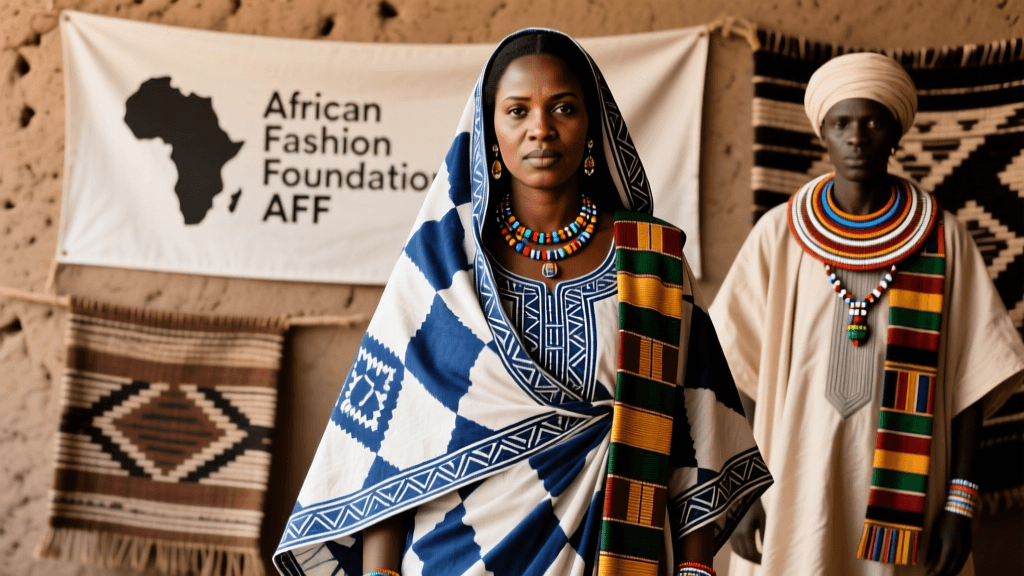
Contemporary designers increasingly reinterpret shema within pan-African frameworks. At Dakar’s Dak’Art Biennale 2022, designer Yohannes Assefa presented a collection featuring shema netelas layered over kente-lined jackets, highlighting shared values of ancestral continuity despite divergent material origins. Similarly, the Lagos-based African Fashion Foundation reported in its 2023 Annual Survey that 68% of surveyed designers from Nigeria, Ghana, and Ethiopia cited “cross-regional textile dialogue” as critical to ethical innovation—citing shema’s structural minimalism as counterpoint to kente’s chromatic complexity.
Measurement Standards and Quality Verification
Quality assurance for shema textiles follows nationally codified metrics administered by the Ethiopian Standards Agency (ESA). Certified pieces must satisfy five measurable benchmarks:
- Warp density: 32 ± 2 ends per centimeter
- Weft density: 28 ± 2 picks per centimeter
- Shrinkage after boiling: ≤ 4.1% in length, ≤ 3.7% in width
- Thread count per square inch: minimum 1,024 (verified under 10× magnification)
- Embroidery thread twist: 1,150 turns per meter (measured via torsion meter)
These standards were formalized in ESA Standard ES 212:2020 and updated following collaborative testing with the International Cotton Advisory Committee in 2021.
Preservation Challenges and Community-Led Solutions
Despite institutional backing, shema production faces acute pressures: synthetic fiber imports undercut local prices by up to 37%, and only 14% of certified weavers under age 30 remain active in full-time practice (Ethiopian Bureau of Statistics, 2022). In response, the Wollo Weavers Cooperative Union established a rotating apprenticeship model in 2020, pairing elders with youth for six-month residencies at the historic Debre Sina Monastery workshop—where temperature and light conditions replicate pre-industrial environments. Each apprentice receives 4,800 ETB monthly stipend and completes a portfolio of three certified shema pieces before receiving ESA accreditation.
“The strength of shema lies not in ornamentation, but in restraint—the space between threads, the breath in the weave, the silence before the first stitch. To restore it is to restore rhythm to memory.” — Dr. Selamawit Teklemariam, Senior Curator, National Museum of Ethiopia, 2021
| Region | Average Annual Output (meters) | Certified Cooperatives | Embroidery Density (stitches/cm²) | Primary Export Market |
|---|---|---|---|---|
| Gondar | 28,400 | 12 | 1,180 | United States |
| Debre Tabor | 19,750 | 9 | 1,020 | Germany |
| Bale Zone | 15,300 | 7 | 940 | Japan |
At its core, shema embodies an epistemology of labor: knowledge transmitted not through written manuals but through fingertip memory, seasonal observation, and intergenerational calibration of tension, rhythm, and proportion. Its borders do not frame decoration—they delineate intention. When a young woman in Bahir Dar selects her wedding netela, she does not choose a pattern; she affirms a lineage of measurement, a covenant of consistency measured in millimeters, minutes, and millennia.
Unlike dashiki shirts—whose bold V-neck cuts and Yoruba-derived motifs gained global visibility through 1960s Pan-African movements—or boubous whose flowing silhouettes reflect Sahelian Islamic aesthetics, shema resists spectacle. Its power resides in quiet fidelity: to soil, to loom, to stitch. That fidelity remains quantifiable—not in trend cycles, but in grams per square meter, rotations per minute, and centuries of unbroken continuity.
The Ethiopian Textile Industry Institute reports that certified shema exports grew by 12.4% year-on-year between 2021 and 2023, with demand rising most sharply among museums and academic textile labs seeking reference-grade specimens for comparative studies alongside kente (Ghana), adire (Nigeria), and mud cloth (Mali). This scholarly attention reinforces what practitioners have long known: shema is not merely cloth—it is calibrated time.
In Addis Ababa’s Mercato district, vendors still sort shema bolts by hand-feel alone, identifying subtle variations in twist and density that machines cannot register. A master weaver in Wollo once described the ideal shema as “a fabric that holds its shape when folded into eight—no more, no less—like the eight gates of Axum.” That eight-fold standard, empirically verified at 0.8 mm thickness per fold, persists—not as dogma, but as embodied mathematics.
Each embroidered border tells two stories simultaneously: one visible in thread, the other encoded in the warp’s unbroken line. To study shema is to study continuity as a physical property—not abstract heritage, but measurable resilience woven into every centimeter.