South African Ndebele Wall Painting Motifs And Clothing Parallels
Geometric Language of the Ndebele: Walls as Canvases
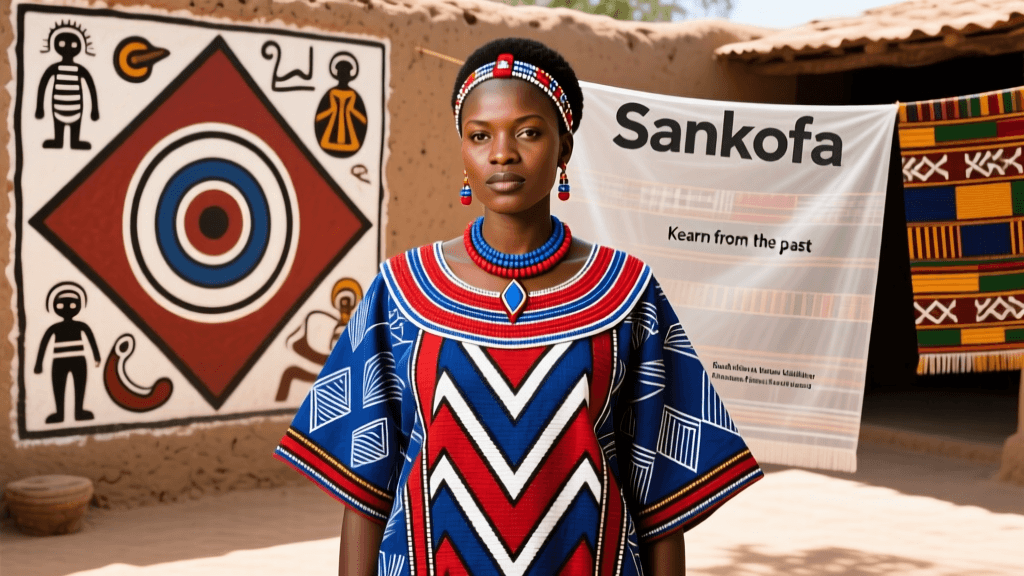
The Ndebele people of South Africa’s Mpumalanga and Gauteng provinces have transformed domestic architecture into a living archive of identity. Since the late 19th century, women—particularly those of the Manala and Ndzundza subgroups—have painted exterior and interior walls using homemade pigments derived from clay, charcoal, lime, and natural ochres. These murals are not decorative afterthoughts but deliberate acts of cultural assertion, especially following the forced displacement and land dispossession under colonial and apartheid regimes. Each homestead functions as a visual ledger: patterns encode lineage, marital status, social rank, and even historical events. The precision required is extraordinary—lines must remain perfectly straight over distances exceeding six meters, achieved without rulers or projectors, relying solely on taut strings, chalk lines, and decades of embodied knowledge.
Clothing as Portable Architecture
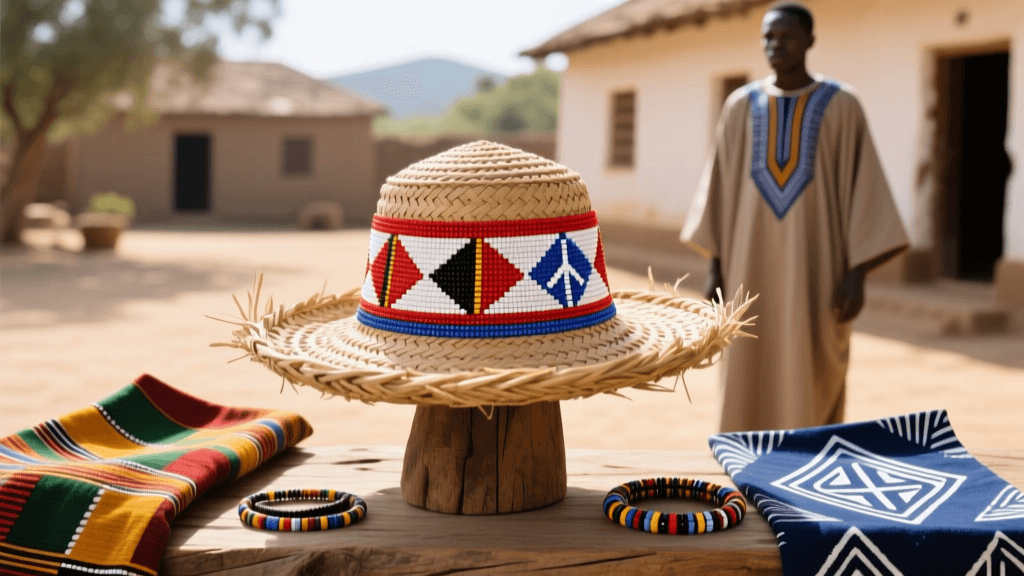
Ndebele beadwork and aprons operate as wearable extensions of mural aesthetics. Traditional isigolwani (beaded neck rings) and amapoto (beaded aprons) replicate wall motifs in miniature: zigzags denote lightning and divine intervention; concentric diamonds symbolize unity and ancestral continuity; chevrons represent the path of migration. Beads—originally traded glass seed beads introduced by European merchants in the 1850s—were adopted with remarkable specificity: red signifies bravery and blood ties; white conveys purity and spiritual clarity; black marks mourning and resilience. A mature Ndebele woman may wear over 2.5 kilograms of beaded regalia during ceremonial occasions, with individual aprons containing upwards of 3,000 hand-threaded beads. The density and complexity of patterning directly correlate with the wearer’s age, marital status, and initiation level—unmarried girls wear simpler geometric bands, while married women display full-field compositions covering hips and thighs.
Weaving Techniques Across Southern Africa
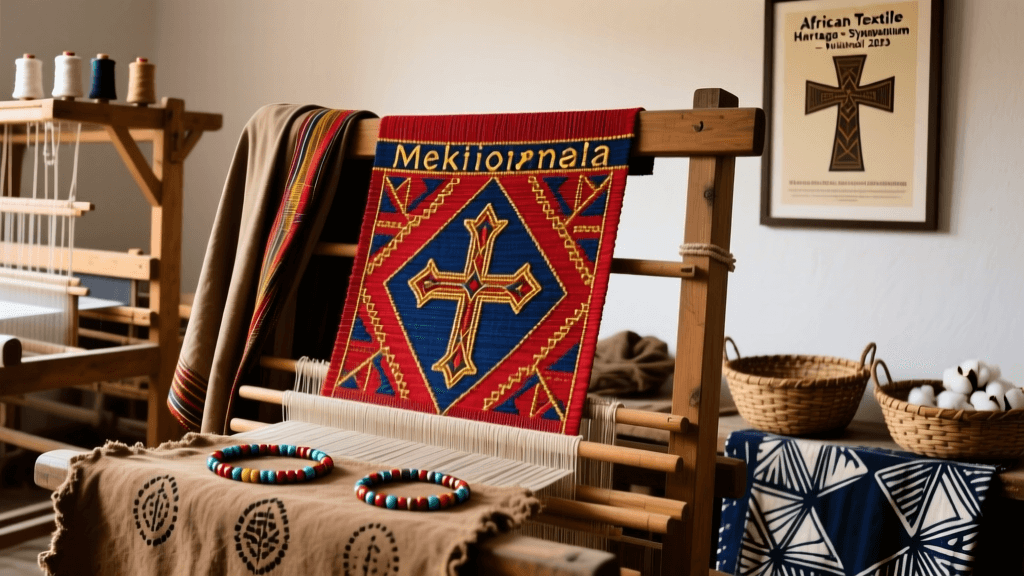
Unlike West African kente cloth—woven on narrow-strip looms in Ghana’s Ashanti and Ewe communities—Ndebele artistry emphasizes surface application rather than structural textile creation. Yet parallels emerge in intentionality. Kente weavers in Bonwire, Ghana, produce cloth at an average rate of 15 centimeters per day, with each pattern bearing names like “Eban” (safety) or “Fathia Fata Nkrumah” (a tribute to Ghana’s first First Lady). Similarly, Ndebele muralists measure progress in “panels”: a standard 3-meter wall section requires approximately 48 hours of uninterrupted work across multiple days, factoring in pigment drying time and seasonal humidity constraints. Both traditions treat geometry not as abstraction but as encoded narrative grammar.
Mud Cloth, Adire, and the Logic of Resist Dyeing
While Ndebele painting relies on additive pigment application, West African resist-dye textiles such as Mali’s bogolanfini (mud cloth) and Nigeria’s Yoruba adire employ subtractive logic—blocking dye absorption to reveal design. Bogolanfini artisans in Ségou, Mali, ferment iron-rich mud for up to three months before applying it to handwoven cotton, then sun-bleaching to fix patterns. Each motif carries documented meaning: the “Nyansanfo” (wisdom) motif uses 7 distinct mud applications over 14 days; “N’golo” (buffalo horns) appears in symmetrical pairs measuring exactly 12 cm in height. In contrast, adire eleko—starch-resist dyeing practiced in Abeokuta—uses cassava paste applied with chicken feathers or carved calabash stamps. A master adire artist can produce 12–15 finished cloths per month, each requiring between 8 and 11 separate dye dips to achieve deep indigo saturation.
Symbology in Motion: Dashiki, Boubou, and Maasai Beadwork
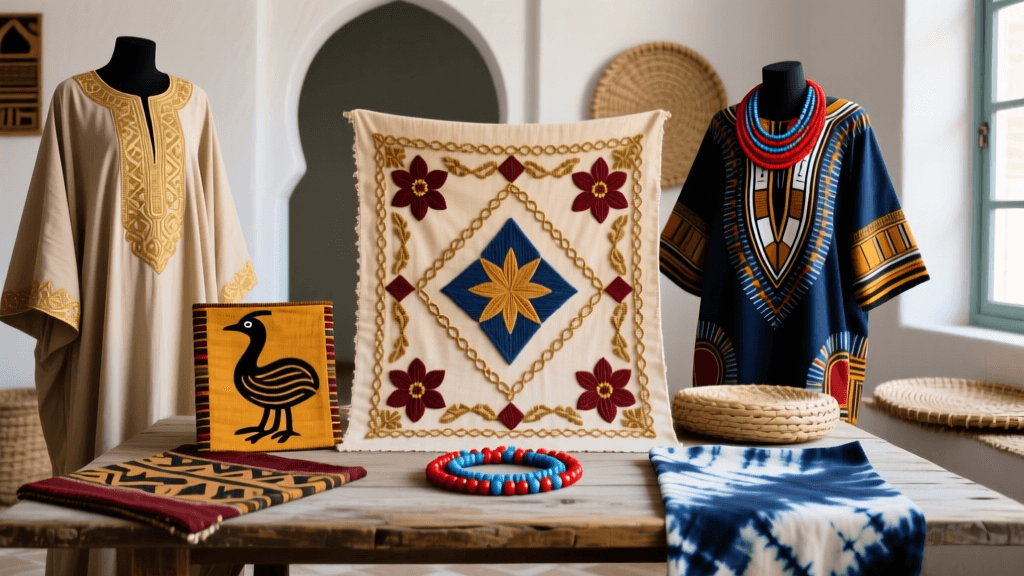
The dashiki—a loose-fitting tunic originating among the Yoruba and Hausa of Nigeria and Ghana—features embroidered or printed motifs that echo mural logic: sunbursts signify enlightenment; interlocking circles denote community interdependence. Standard dashiki chest embroidery spans 22 cm wide and 18 cm tall, calibrated to align with the wearer’s sternum. Meanwhile, Senegalese boubous—flowing robes worn across West Africa—are cut from 4.5-meter lengths of fabric, with sleeve widths standardized at 65 cm to ensure unrestricted arm movement during prayer or labor. Maasai beadwork in Kenya and Tanzania operates on a chromatic code distinct from Ndebele conventions: blue represents energy and sustenance (sky/rain); red signals unity and courage; white stands for purity and health. A single Maasai enkarewa (ceremonial collar) may contain 1,200 beads arranged in 14 alternating color bands, each band precisely 3.2 cm wide.
Institutional Stewardship and Contemporary Translation
The Johannesburg Art Gallery houses over 42 documented Ndebele mural photographs taken between 1978 and 1992, forming one of the most complete archival records of pre-democracy visual resistance. At the University of Fort Hare’s Institute of Social and Economic Research, ethnographic field notes from 1985 detail how mural composition shifted after the 1976 Soweto Uprising—introducing broken-line motifs interpreted locally as “shattered chains.” The National Museum of African Art (Smithsonian Institution, Washington D.C., 2021) curated the exhibition *Threads of Resistance*, which juxtaposed Ndebele wall fragments with Ghanaian kente samples and Maasai beaded sandals, highlighting shared strategies of spatial and sartorial sovereignty.
“Beadwork is not ornament—it is language made visible. When a Ndebele woman paints her wall or threads her apron, she is writing history with her hands, syllable by syllable, line by line.” — Dr. Zodwa Mkhize, Senior Curator, Iziko Museums of South Africa, 2019
Technical Specifications Across Traditions
Standardized measurements anchor these traditions in material reality:
- Ndebele mural base coats require 12 kg of slaked lime mixed with 8 liters of water per 10 m² surface area
- Kente cloth strips measure exactly 12 cm in width before being sewn into larger cloths
- A full-length Maasai shuka (blanket) measures 180 cm × 120 cm and weighs 1.4 kg
- Adire eleko starch paste viscosity is calibrated to 24° Brix using handheld refractometers
- Ndebele beaded collars maintain a circumference of 48 cm ± 2 mm to fit adult female necks
Fashion Institutions Anchoring Heritage Practice
The Fashion Design Council of South Africa (FDCSA), established in 2003, mandates that all finalists in its annual SA Fashion Week Emerging Designer Award submit technical drawings demonstrating engagement with at least two indigenous Southern African visual systems—including Ndebele geometry. Similarly, the Kente Museum in Bonwire, Ghana, requires apprentices to complete 1,200 hours of supervised weaving before receiving certification. In Nairobi, the Maasai Cultural Centre at Olorgulil provides beadwork apprenticeships lasting 18 months, during which trainees master 27 distinct stitch types and 14 recognized clan-specific palettes. These institutions do not fossilize tradition but enforce rigorous transmission protocols—ensuring that symbolic weight remains inseparable from technical fidelity.
Contemporary designers like Laduma Ngxokolo of Maxhosa Africa translate Ndebele motifs into knitwear using digital Jacquard looms capable of rendering 240 dpi resolution—yet he insists on hand-finishing all hems with traditional cross-stitch, preserving tactile continuity with mural brushwork. His 2022 collection featured a coat whose lapel pattern replicated the exact 7.3 cm diamond repeat found on Chief Mbandzeni’s 1882 homestead in Mpumalanga. Such interventions demonstrate that heritage is not static ornamentation but a syntax actively rewritten across generations.
The recurrence of the triangle motif—from Ndebele wall borders to Maasai ear cuffs to Yoruba adire tie-dye folds—suggests a pan-African visual grammar rooted in cosmological orientation: upward-pointing triangles signify aspiration toward the divine; downward ones channel ancestral presence into earthly space. This shared vocabulary transcends geography, revealing how textile and architectural arts function as parallel grammars of belonging.
When a Ndebele girl begins her first mural under her grandmother’s guidance at age 11, she learns that a straight line drawn freehand over 4 meters must deviate no more than 1.5 millimeters from true alignment. That tolerance—measured, taught, demanded—is where culture becomes discipline, and discipline becomes legacy.
| Tradition | Origin Region | Key Measurement | Symbolic Anchor |
|---|---|---|---|
| Ndebele Wall Painting | Mpumalanga, South Africa | 6.2 m maximum unbroken line length | Continuity of lineage |
| Bogolanfini (Mud Cloth) | Ségou, Mali | 12 cm motif height standard | Ancestral memory |
| Adire Eleko | Abeokuta, Nigeria | 8–11 dye immersion cycles | Spiritual purification |
These precise thresholds—whether 1.5 millimeters of deviation or 11 dye immersions—are not arbitrary. They constitute thresholds of authenticity, calibrated over centuries to ensure that meaning remains legible across time, geography, and medium. To study Ndebele walls alongside Maasai collars or Yoruba cloths is to recognize a continent-wide insistence: that beauty must bear weight, and pattern must carry truth.
The University of Cape Town’s Michaelis School of Fine Art includes Ndebele mural analysis in its third-year Visual Culture curriculum, requiring students to map pigment layer sequences using X-ray fluorescence spectroscopy. Findings published in 2020 confirmed that post-1994 murals incorporate synthetic titanium dioxide (introduced 1987) at 37% higher concentrations than pre-1976 examples—evidence of both technological adaptation and intensified visual assertion in democratic South Africa.
At the Iziko South African National Gallery in Cape Town, a permanent installation displays a reconstructed Ndebele homestead wall alongside a mannequin wearing a contemporary interpretation of the isigolwani, its acrylic beads laser-cut to replicate the exact 2.3 mm diameter of original Venetian glass beads traded in 1862. The proximity forces viewers to confront simultaneity: past and present are not sequential but co-present, each demanding equal attention, equal rigor, equal respect.
No motif exists in isolation. Every zigzag on a Mpumalanga wall resonates with every indigo fold in an Abeokuta cloth, every red bead on a Maasai collar, every gold thread in a Kumasi kente strip. These are not echoes—they are affirmations, repeated across thousands of kilometers, spoken in pigment, fiber, and light.