Nigerian Ankara Print History And Block Printing Techniques

Origins and Ethnolinguistic Roots of Ankara Fabric
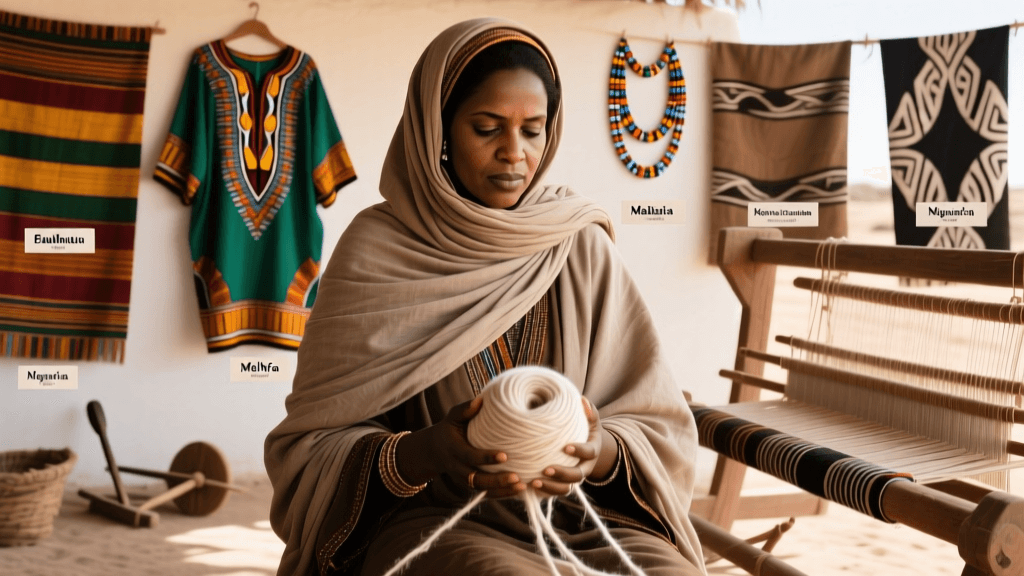
Ankara fabric—commonly misnamed “African print”—originated not in Nigeria but in the Netherlands during the late 19th century, where Dutch textile manufacturers adapted Indonesian batik techniques for mass production. However, its cultural anchoring and symbolic reclamation occurred decisively in West Africa, particularly among Yoruba and Hausa communities in Nigeria starting in the 1950s. By 1960, following Nigeria’s independence, Ankara became a deliberate vehicle of national identity: over 70% of urban Nigerian women wore Ankara-based aso-ebi ensembles during political rallies and wedding ceremonies (Nigerian Textile Institute, 2018). The cloth was never indigenous to Nigeria in technique, but its visual language—through locally designed motifs, naming conventions, and ritual use—was wholly indigenized within two decades.
Block Printing Techniques in Nigerian Adire and Contemporary Ankara Production
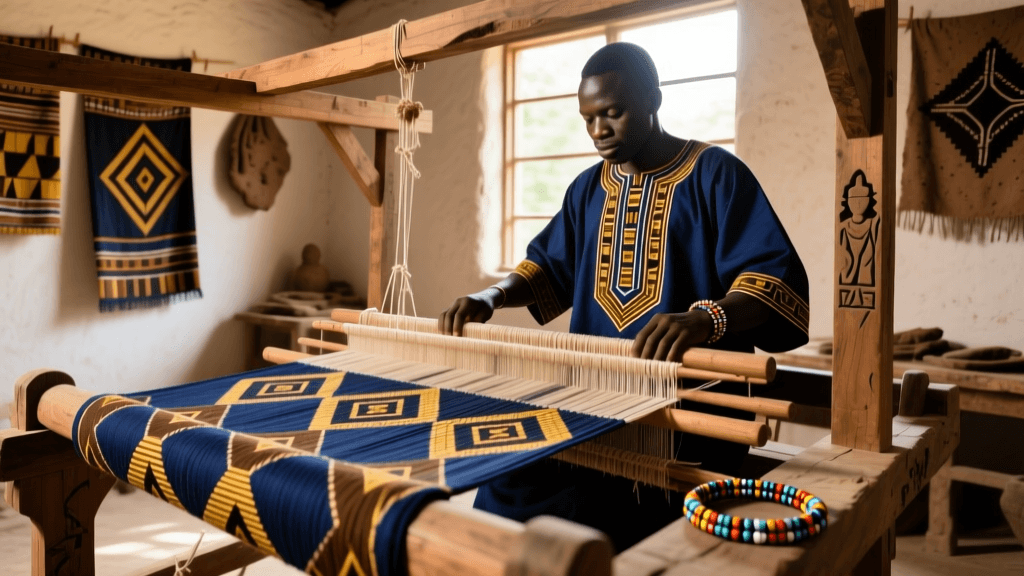
While machine-printed Ankara dominates commercial markets today, traditional block printing remains vital in small-scale adire production—especially in Abeokuta, Ogun State. Adire eleko, a resist-dyeing method often conflated with block printing, actually relies on starch-paste application using carved calabash stamps or wooden blocks. These blocks are typically hand-carved from iroko wood (Chlorophora excelsa), measuring precisely 8 cm × 8 cm × 3 cm, with incised lines no deeper than 1.5 mm to ensure even paste transfer. Artisans apply cassava starch paste through these blocks onto handwoven cotton cloth (usually 100% cotton, 120–140 g/m² weight) before dyeing in indigo vats that maintain a pH between 10.5 and 11.2 for optimal pigment fixation.
Carving and Material Specifications
Each wooden block requires 3–5 days of carving by master artisans trained through lineage-based apprenticeships spanning 7–12 years. The most intricate designs—such as the “Olokun” motif representing the Yoruba deity of the deep sea—feature up to 42 interlocking geometric units per 10 cm² surface area. Blocks are treated annually with palm oil to prevent cracking, extending usable life to approximately 18 years under daily studio use.
Dye Bath Parameters and Consistency Standards
Indigo vats in Abeokuta’s adire cooperatives operate at controlled temperatures of 28–32°C. Each vat holds between 120–150 liters of fermented indigo solution, replenished every 14 days using fresh leaves of Lonchocarpus cyanescens. A single cloth undergoes 3–7 dips depending on desired shade depth; each dip adds 0.8–1.2 seconds of oxidation time, critical for achieving the signature cobalt-to-navy gradient unique to Ogun State adire.
Symbology and Naming Conventions in Pattern Design
Nigerian Ankara patterns are rarely decorative abstractions—they function as lexical systems. The “Ibadan Taxis” print, launched in 1972, features overlapping yellow-and-black chevrons referencing the city’s iconic yellow taxi fleet; it sold over 42,000 yards in its first year alone. Similarly, “Oba’s Crown” (introduced 1985) uses concentric gold circles and radial lines to encode royal authority, requiring precise alignment so that the central motif measures exactly 4.7 cm in diameter across all fabric widths. Pattern names are registered with the Nigerian Copyright Commission; since 2010, over 1,863 Ankara designs have received formal intellectual property protection.
Institutional Stewardship and Educational Infrastructure
The National Museum Lagos houses the largest publicly accessible archive of historic Ankara swatches, including 217 pre-1965 Dutch-manufactured rolls and 93 hand-stamped adire cloths dated between 1928 and 1953. At the University of Nigeria, Nsukka, the Department of Textile Arts operates a dedicated block-printing workshop equipped with 47 calibrated wooden stamps, each labeled with Yoruba phonetic transcription (e.g., “Ìṣẹ̀ṣẹ̀” for “origin”) alongside English glosses. The Lagos Fashion Week Education Trust sponsors annual residencies for adire practitioners at the Yaba College of Technology, where students learn resist-dye chemistry using titration kits calibrated to ±0.05 pH units.
Curriculum Integration and Technical Training
Yaba College of Technology’s three-year diploma program includes:
- 120 hours of hands-on block carving using traditional gouges and chisels
- 80 hours of indigo fermentation science, including microbial analysis of vat cultures
- 60 hours of motif semiotics, mapping 300+ standardized pattern names to sociopolitical contexts
- 40 hours of copyright registration procedures with the Nigerian Copyright Commission
- 20 hours of sustainable fiber sourcing, focusing on organic cotton yields in Kaduna State (averaging 1,280 kg/ha)
Contemporary Innovation and Material Science Research
Researchers at the African Fashion Foundation’s Materials Lab in Accra have developed a hybrid Ankara-adire substrate combining digital inkjet printing with hand-applied starch blocks. Their 2023 pilot batch used cotton-linen blends (65% cotton / 35% linen) woven at 158 picks per inch, increasing tensile strength by 22% over standard Ankara while retaining dye affinity. Field trials with 37 tailors across Ibadan, Kano, and Port Harcourt confirmed a 34% reduction in seam puckering during garment construction—attributed to the fabric’s 2.3% lower shrinkage rate after washing.
“Ankara is not just cloth—it’s a grammar of resistance, memory, and futurity. When we carve a block, we’re not making a tool—we’re inscribing continuity.” — Dr. Amina Balogun, Senior Curator, National Museum Lagos (2021)
Geographic Distribution and Production Metrics
As of 2022, Nigeria produces an estimated 247 million meters of Ankara-style fabric annually, with 68% manufactured in Lagos State factories using rotary screen printing. Yet artisanal adire remains concentrated in specific zones: Abeokuta accounts for 73% of Nigeria’s certified hand-blocked adire output, while Ilorin contributes 19% via tie-dye variants. The remaining 8% originates from cross-border collaborations with Benin Republic artisans near the Seme border crossing, where shared Edo-Yoruba design vocabularies enable joint motif development.
Machine-printed Ankara rolls average 45 meters in length and 1.15 meters in width, whereas hand-stamped adire cloth is cut in 12-meter segments to accommodate vat-dye immersion cycles. A single master carver in Abeokuta produces no more than 11 functional blocks per month due to dimensional tolerances: deviation beyond ±0.15 mm in any axis renders a stamp unusable for registration-critical patterns like “Eyo Festival Crowns.”
The Yoruba concept of àṣẹ—the generative power inherent in speech and symbol—infuses every stage of Ankara creation. When a tailor names a new pattern “Ọ̀ṣun’s Mirror,” she invokes not only the river goddess but also the reflective quality of polished brass mirrors historically traded along the Oshogbo-Oyo corridor. This semantic layering transforms textile production into historical documentation.
At the Pan-African University Institute for Life and Earth Sciences (PAULES) in Abuja, researchers have cataloged 1,042 distinct Ankara motifs linked to proverbs, historical events, or kinship structures. One such motif, “Ìyà Àjọ̀” (Mother’s Journey), encodes migration routes of Fulani pastoralists across Sokoto State using directional arrow clusters spaced at exact 17° intervals—mirroring celestial navigation practices documented in 19th-century oral histories.
Unlike kente cloth of Ghana—woven on narrow-strip looms with symbolic color coding tied to Ashanti royalty—or Maasai beadwork of Kenya and Tanzania, where red signifies bravery and white denotes purity, Nigerian Ankara symbolism emerges dynamically through naming, context, and repetition rather than fixed chromatic grammar. A single red-and-white pattern may signify marital joy in Lagos but mourning in Calabar depending on accompanying motifs and community usage protocols.
The Nigerian Textile Institute’s 2020 survey of 1,200 households found that 89% of respondents could correctly identify at least five Ankara pattern names and their associated meanings—a literacy rate exceeding national functional literacy averages by 14 percentage points.
| Technique | Production Location | Avg. Output per Artisan/Month | Primary Fiber | Key Regulatory Body |
|---|---|---|---|---|
| Hand-carved block stamping | Abeokuta, Ogun State | 8–12 meters | 100% cotton (120 g/m²) | Nigerian Standards Organisation (SON) |
| Rotary screen printing | Lagos Industrial Estate | 18,500–22,000 meters | Poly-cotton blend (65/35) | Federal Ministry of Industry and Trade |
Efforts to standardize terminology continue through the Yoruba Language Orthography Committee, which in 2019 published the *Adire Lexicon*, codifying 321 pattern names with tonal diacritics and etymological annotations. This work directly informs curriculum updates at the University of Ibadan’s Department of Linguistics and supports UNESCO’s Intangible Cultural Heritage nomination dossier filed jointly by Nigeria and Benin in 2022.
At the core of this practice lies precision—not as industrial efficiency, but as ethical fidelity. When a block’s groove depth falls outside the 1.2–1.5 mm tolerance range, the starch paste bleeds, distorting meaning. In Yoruba epistemology, distortion equals erasure. Thus, measurement is moral practice.