Yang Guifei & The Tang Dynasty Qixiong Ruqun Hanfu Guide
The Legend of Yang Guifei and Tang Dynasty Aesthetics
When discussing the pantheon of Asian historical fashion figures, few names evoke as much opulence, artistic inspiration, and sartorial influence as Yang Yuhuan, universally known as Yang Guifei. As the beloved consort of Emperor Xuanzong of the Tang Dynasty (618–907 CE), Yang Guifei was not merely a passive wearer of royal garments; she was a cultural icon whose personal tastes dictated the aesthetic zeitgeist of an entire empire. According to historical records and biographies documented by Encyclopedia Britannica, her influence was so profound that the Tang court shifted away from the slender, delicate silhouettes of earlier dynasties toward a celebration of voluptuousness, vibrancy, and bold structural layering.
The Tang Dynasty is widely considered the golden age of Chinese arts, culture, and cosmopolitan exchange. The Silk Road brought an influx of foreign textiles, dyes, and motifs into the capital of Chang'an. As noted by the UNESCO Silk Road Programme, the integration of Central Asian weaving techniques with traditional Chinese sericulture resulted in unprecedented fabric varieties. Yang Guifei, residing at the epicenter of this cultural renaissance, popularized the Qixiong Ruqun—a chest-high skirt and jacket ensemble that remains one of the most recognizable and beloved styles in the modern Hanfu revival movement.
Deconstructing the Qixiong Ruqun
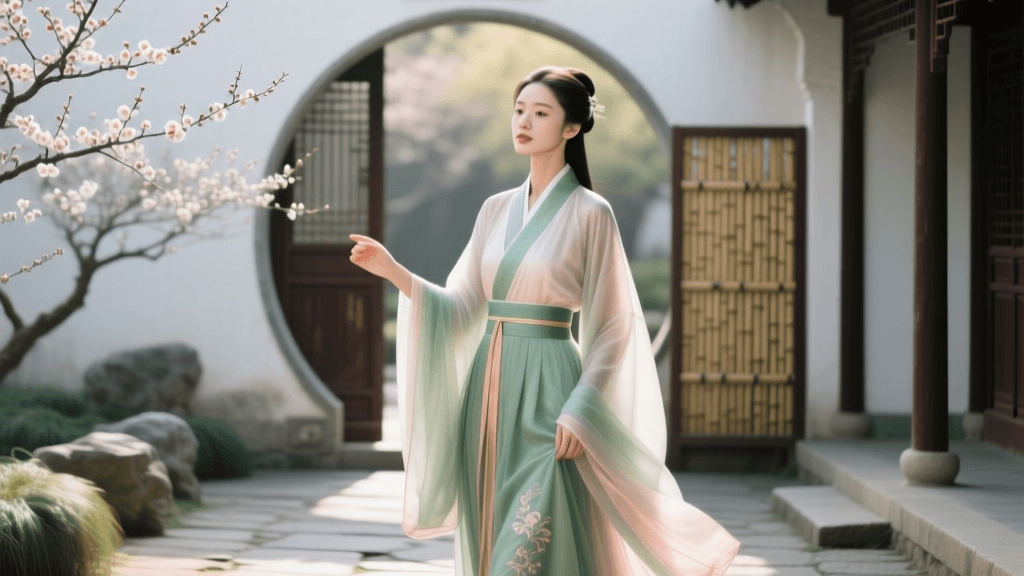
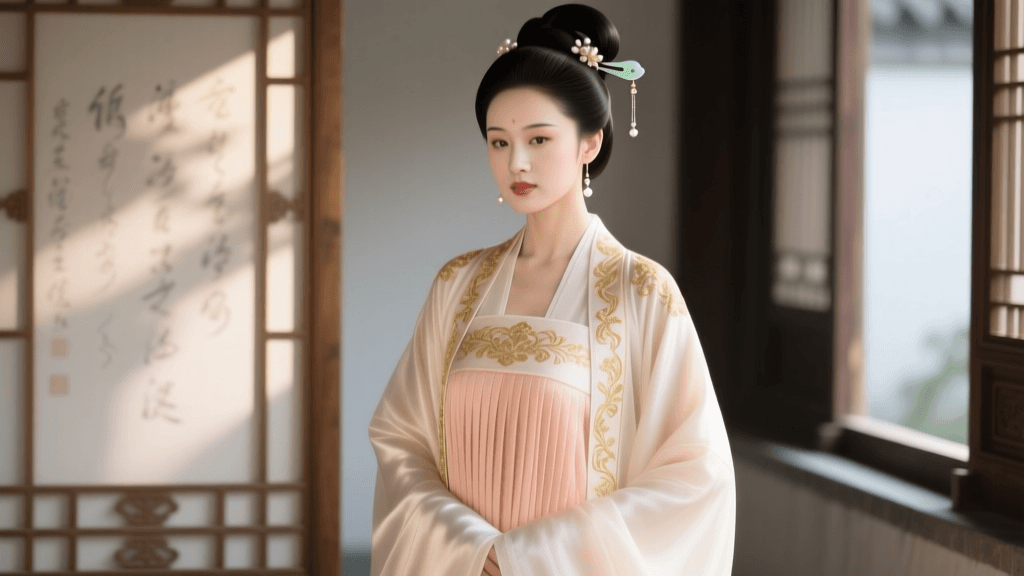
The Qixiong Ruqun (齐胸襦裙) translates literally to 'chest-level jacket and skirt.' Unlike the Qiyao Ruqun (waist-high skirt) of the Song and Ming dynasties, the Tang chest-high skirt was tied securely above the bust, creating an elongated, flowing silhouette that flattered the fuller figures celebrated during Yang Guifei's era. The ensemble consists of three primary components:
1. The Shan (衫 - Top/Jacket)
The Shan is a lightweight, short-sleeved or long-sleeved cross-collared or round-collared top. In the Tang court, these were often made of sheer, translucent silks that allowed the vibrant colors of the undergarments or the skin to peek through, creating a layered, ethereal effect. The sleeves were notably wide, reflecting the relaxed and confident spirit of the era.
2. The Qun (裙 - Skirt)
The skirt is the centerpiece of the outfit. Historical Tang skirts were constructed from multiple panels of fabric—sometimes up to twelve panels—pleated and gathered to create immense volume. The waistband of the skirt was designed to sit high on the chest, just below the collarbones, and was secured with long, flowing tie-strings.
3. The Pibo (披帛 - Silk Scarf)
No Yang Guifei-inspired outfit is complete without the Pibo. This long, lightweight silk scarf was draped over the shoulders and arms, cascading down the back and swaying with the wearer's movements. The Metropolitan Museum of Art's Heilbrunn Timeline of Art History highlights how Tang dynasty paintings frequently depict court ladies adorned with these flowing scarves, emphasizing a sense of divine, almost celestial grace.
How to Recreate the Look: A Modern Hanfu Guide
Recreating the Tang Dynasty aesthetic today requires an understanding of both historical accuracy and modern practicality. The most common complaint among modern Hanfu enthusiasts regarding the Qixiong Ruqun is the tendency for the heavy, multi-paneled skirt to slip down. Here is how to properly size, tie, and style your ensemble.
Measurements and Sizing
To achieve the proper Tang Dynasty volume without looking overwhelmed by fabric, pay close attention to the skirt's circumference. A historically accurate Tang skirt should have a hem circumference that is at least 1.5 to 2 times your chest measurement. For a standard chest measurement of 85 cm (33.5 inches), look for a skirt with a hem width of 3 to 4 meters. The length should be measured from your underarm (where the waistband will sit) to the floor, typically requiring a custom length of 130 cm to 145 cm depending on your height and preferred shoe heel.
The Anti-Slip Tying Technique
To prevent the chest-high skirt from slipping, modern Hanfu wearers utilize a modified traditional knotting method:
- Wrap and Cross: Wrap the skirt around your chest. Take the two long front ties and cross them tightly over your sternum.
- The Back Loop: Bring the ties to your back, cross them again, and pull them tightly to the front. The friction of the cross-back creates a structural anchor.
- The Double Knot: Tie a secure double knot at the center of the chest.
- The Ribbon Cascade: Let the remaining lengths of the ties cascade down the front of the skirt, mimicking the decorative ribbons seen in Tang dynasty scroll paintings.
Fabric Selection: Historical vs. Modern
Yang Guifei's wardrobe was composed of the finest silks produced by imperial workshops. Today, modern Hanfu brands offer a variety of fabrics that mimic these historical textiles at different price points. Below is a comparison guide to help you choose the right materials for your Tang-style ensemble.
| Garment Component | Historical Tang Fabric | Modern Hanfu Alternative | Est. Cost (USD) | Drape & Feel |
|---|---|---|---|---|
| Shan (Top) | Luo (Gauze Silk) | Silk Chiffon / Organza | $30 - $60 | Sheer, crisp, breathable |
| Qun (Skirt) | Jin (Brocade) / Damask | Jacquard Poly-Silk / Taffeta | $50 - $120 | Heavy, structured, lustrous |
| Pibo (Scarf) | Sha (Lightweight Silk) | Printed Georgette / Voile | $15 - $35 | Fluid, floating, soft |
When sourcing your garments, prioritize the weight of the skirt fabric. A skirt made of lightweight cotton or thin polyester will lack the regal, sweeping drape necessary to emulate the Tang court style. Opt for jacquard weaves that incorporate traditional motifs like the Baoxiang flower or intertwined vines, which were highly favored during the 8th century.
Makeup and Accessories: The Huadian and High Buns
The clothing is only half of Yang Guifei's iconic look. Tang Dynasty makeup was bold, experimental, and highly stylized. To fully embody the consort's aesthetic, follow this historical makeup and hair routine:
- The Base & Blush: Tang court ladies favored a pale complexion contrasted with heavy, vibrant blush. Apply a generous amount of red or pink blush not just on the apples of the cheeks, but sweeping upward toward the temples and the outer corners of the eyes, creating a flushed, intoxicating effect known as Xieya (slanting red).
- The Eyebrows: Move away from modern sharp, arched brows. The Tang aesthetic favored short, thick, and rounded brows, often compared to cassia leaves or distant mountains. Use a dark brown or grey pomade to draw soft, teardrop-shaped brows closer to the bridge of the nose.
- The Huadian (花钿): This is the quintessential Tang forehead decoration. Originally made from gold leaf, pearl, or kingfisher feathers, the Huadian was applied to the center of the forehead between the brows. Today, you can easily recreate this using specialized cosmetic face stickers, liquid eyeliner, or small rhinestones in floral or geometric shapes.
- The Hair: Yang Guifei was famous for her elaborate, towering up-dos. Use a hairpiece or a foam bun insert to create a high, voluminous bun at the crown of the head. Adorn the bun with oversized gold or resin hairpins (Zanzi) featuring dangling pearl tassels and peony motifs.
Sourcing and Budgeting for Your Tang Hanfu
The modern Hanfu market has exploded, making it easier than ever to acquire historically inspired garments. For beginners, Western-based Hanfu boutiques offer curated selections with reliable shipping, though at a premium (typically $80 to $150 for a full set). For those willing to navigate international shipping, platforms like Taobao host thousands of specialized Hanfu workshops. Brands such as Shisanyu and Zhongzheng Hanfu offer museum-grade reproductions of Tang dynasty textiles, with highly accurate jacquard skirts and sheer tops ranging from $40 to $90.
'Clouds think of her clothes, flowers think of her face; the spring breeze brushes the threshold, dewdrops are thick.'
— Li Bai, 'The Clear Pure Melody' (Qingping Diao), written in praise of Yang Guifei.
Conclusion
Yang Guifei's legacy in Asian fashion history is unparalleled. She did not merely wear the clothes of her time; she elevated them into a symbol of imperial prosperity, cultural openness, and unapologetic femininity. By understanding the structural mechanics of the Qixiong Ruqun, selecting the appropriate heavy jacquards and sheer gauzes, and embracing the bold, flushed makeup of the Tang court, modern wearers can step into the vibrant world of 8th-century Chang'an. Whether you are attending a Hanfu festival, participating in a traditional tea ceremony, or simply exploring the rich tapestry of Asian sartorial history, the spirit of Yang Guifei offers a masterclass in wearing history with confidence and grace.