Xin Zhongshi Office Style 2026: Tailoring Xiangyunsha Silk
The Evolution of Xin Zhongshi in the 2026 Corporate Sphere
The Xin Zhongshi (新中式), or "New Chinese Style," movement has undergone a radical transformation as we navigate the 2026 fashion landscape. Once relegated to avant-garde streetwear, festive holiday apparel, or niche tea-ceremony attire, Xin Zhongshi has firmly established itself as a cornerstone of the modern executive wardrobe. Today's professionals are demanding garments that bridge the gap between cultural heritage and boardroom authority. The result is a refined, minimalist approach to traditional Chinese tailoring that prioritizes structural elegance, heritage textiles, and understated luxury.
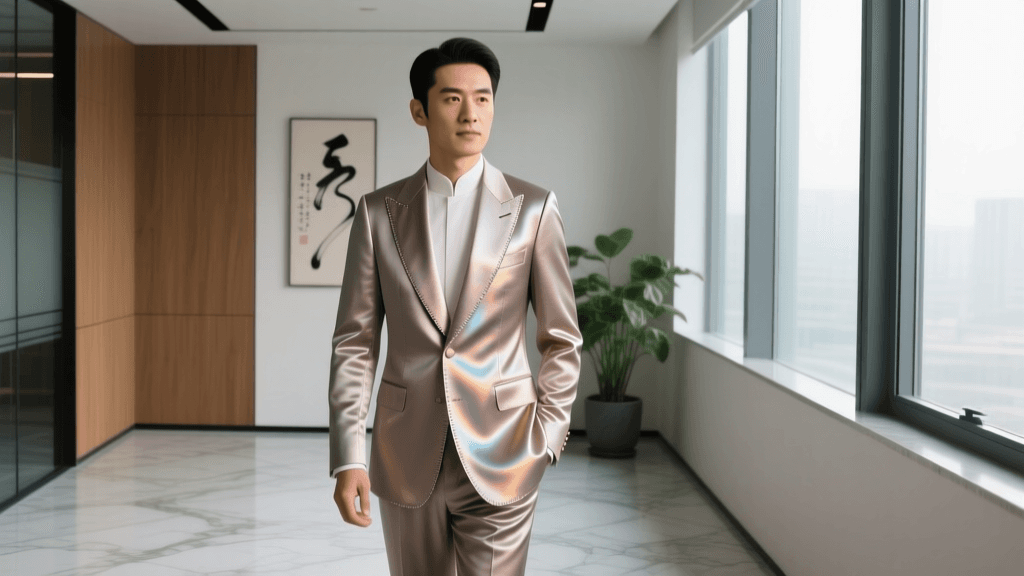
In 2026, the hallmark of a sophisticated corporate wardrobe is no longer the standard Western suit, but rather the meticulously tailored Xin Zhongshi blazer and wide-leg trouser combo. This shift represents a broader cultural reclamation, where Asian professionals are embedding their heritage into their daily power dressing. To master this aesthetic, one must look beyond superficial motifs like embroidered dragons or overly bright brocades, and instead focus on the foundational elements of Chinese garment architecture: the collar, the closure, the drape, and, most importantly, the fabric.
Xiangyunsha: The Ultimate 2026 Power Fabric
At the pinnacle of the 2026 Xin Zhongshi corporate hierarchy sits Xiangyunsha (香云纱), also known as Gambiered Canton Gauze. Originating from the Guangdong province, this extraordinary silk is dyed using the juice of the Dioscorea cirrhosa (gambier) tuber and then coated with iron-rich river mud. The chemical reaction between the tannins and the iron creates a deeply hued, dual-toned fabric that is naturally water-resistant, UV-protective, and remarkably anti-wrinkle—making it the ultimate travel and office textile.
As documented by the V&A Museum's extensive archives on Chinese dress, the evolution of Chinese silk textiles has always been intrinsically linked to social status and professional function. In 2026, authentic Xiangyunsha commands a premium, with high-grade, hand-woven yardage pricing between 1,200 and 1,800 RMB ($165 to $250 USD) per meter. The fabric possesses a unique structural memory and a subtle, leathery "crackling" sound when moved, which lends an undeniable aura of authority to the wearer. Unlike softer silks that cling and wrinkle, Xiangyunsha holds a crisp, architectural silhouette that mimics the structure of heavy wool but breathes like lightweight linen.
Modernizing the Silhouette: Tailoring Specifications
Translating traditional Chinese garments into a 2026 corporate environment requires precise tailoring modifications. The goal is to honor the heritage of the cut while accommodating the ergonomics of modern office life, which involves long hours at a desk, frequent travel, and high-stakes presentations.
The Mandarin Collar (Yuanlingbao)
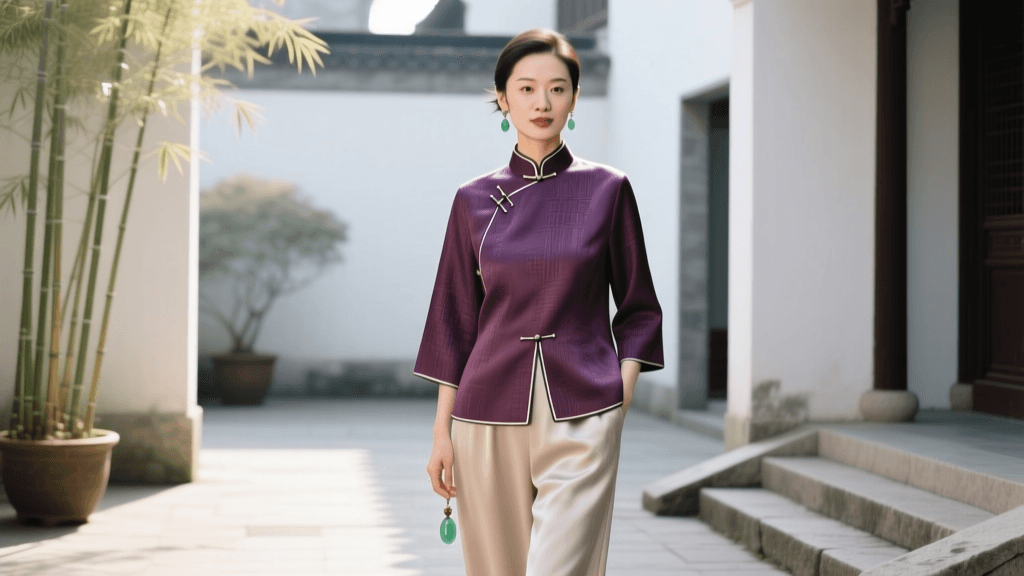
Historically, the traditional Mandarin collar stood rigidly at 5 to 6 centimeters, often restricting neck movement and causing discomfort during long meetings. The 2026 corporate standard lowers the collar height to exactly 2.5 to 3.5 centimeters. Furthermore, modern tailors are incorporating a slight inward curve at the nape of the neck and using flexible, memory-foam interfacing rather than rigid buckram. This ensures the collar frames the face elegantly without choking the wearer or interfering with the lapels of an overcoat.
Pan-Kou (Frog Closures) and Hidden Tech
The Pan-Kou, or hand-knotted frog button, is a defining feature of Xin Zhongshi. However, traditional knotted buttons are notoriously difficult to fasten quickly and can pop open under tension. In 2026, leading tailors utilize "phantom closures." From the exterior, the garment features beautifully hand-knotted silk Pan-Kou buttons in matte black or deep oxblood. Internally, these are backed by high-tension, silent magnetic snaps or micro-hooks. This allows the wearer to secure their jacket in seconds while maintaining the flawless, unbroken visual line of the traditional closure.
Traditional vs. 2026 Corporate Xin Zhongshi Silhouettes
To understand the practical application of these tailoring shifts, review the comparison below detailing how heritage cuts have been optimized for the modern professional.
| Garment Feature | Traditional Heritage Cut | 2026 Corporate Xin Zhongshi Cut |
|---|---|---|
| Shoulder Line | Drop-shoulder, unstructured, sloping | Soft-padded, structured shoulder with a 1cm extension for authoritative posture |
| Collar Height | 5.0cm - 6.0cm (rigid buckram) | 2.5cm - 3.5cm (flexible memory interfacing) |
| Closure System | Functional hand-knotted Pan-Kou loops | Decorative Pan-Kou over internal magnetic snaps |
| Trouser Hem | Tapered, ankle-grazing, tight cuffs | Wide-leg, floor-skimming drape with hidden elastic waistbands |
| Lining | Unlined or fully lined in polyester | Half-lined in Cupro or Mulberry silk for breathability and static control |
Integrating Heritage Accents: Nanjing Yunjin Brocade
While Xiangyunsha provides the matte, structural foundation of the 2026 office wardrobe, incorporating subtle flashes of heritage brocade elevates the garment from standard corporate wear to haute couture. Nanjing Yunjin (云锦), or "Cloud Brocade," is historically reserved for imperial dragon robes and remains one of the most complex weaving techniques in the world. Recognized on the UNESCO Representative List of the Intangible Cultural Heritage of Humanity, Yunjin incorporates gold and silver threads alongside peacock feather filaments.
In 2026, wearing a full Yunjin garment to the office is considered overly ostentatious. Instead, the "quiet luxury" approach dictates using Yunjin strictly as an accent material. Tailors are lining the inside of Xiangyunsha blazer lapels with Yunjin, so the brocade is only visible when the jacket is removed or the lapel is folded back. Alternatively, a slim, 2-centimeter strip of Yunjin is applied to the inner cuffs of a blouse, revealing a flash of gold thread only when the wearer gestures or types. This restrained application respects the historical weight of the textile while adhering to modern minimalist aesthetics.
Care and Maintenance for Gambiered Silk
The longevity of Xiangyunsha relies on highly specific care protocols. The mud and tannin coating that gives the fabric its unique properties can be degraded by harsh modern chemicals. According to textile conservation guidelines outlined by the Metropolitan Museum of Art's Heilbrunn Timeline of Art History on Chinese Silk, protein-based fibers require meticulous environmental control and gentle handling to prevent structural degradation.
- Washing: Never dry-clean Xiangyunsha. The solvents used in commercial dry cleaning will strip the iron-rich mud coating, leaving the silk brittle and dull. Hand wash only in cool water (below 30°C) using a pH-neutral, silk-specific detergent.
- Drying: Never wring or twist the fabric, as this will permanently fracture the "crackled" surface texture. Roll the garment in a clean, dry cotton towel to press out excess moisture, then hang it on a padded wooden hanger to dry in the shade. Direct sunlight will cause the gambier dye to fade unevenly.
- Storage: Xiangyunsha must be stored in a breathable cotton garment bag. Avoid plastic covers, which trap moisture and can cause the organic mud coating to develop mildew. Store in a climate-controlled closet with cedar blocks to deter pests naturally.
- Ironing: Use a steam iron on the lowest "silk" setting, but never allow the metal plate to touch the fabric directly. Always use a cotton pressing cloth between the iron and the Xiangyunsha to prevent scorching the tannin finish.
Building Your 2026 Xin Zhongshi Capsule Wardrobe
To successfully integrate this aesthetic into your professional rotation, focus on acquiring these three foundational pieces:
1. The Structured Mao-Lapel Blazer: Cut from matte-black Xiangyunsha, featuring a 3cm Mandarin collar and a single, asymmetrical Pan-Kou closure at the sternum. Pair this with Western-style wool trousers for a cross-cultural power suit.
2. The Wide-Leg Xiangyunsha Trouser: High-waisted with hidden side closures. The natural stiffness of the gambiered silk allows the wide leg to drape like a column rather than clinging to the body, providing immense comfort during long flights or desk sessions.
3. The Asymmetric Wrap Midi Skirt: Utilizing a diagonal "Dajin" (wrap) closure secured by hidden magnets. The hem should fall exactly at the mid-calf, allowing for ease of movement while maintaining strict corporate modesty.
By embracing the architectural precision of Xin Zhongshi and the unparalleled material benefits of Xiangyunsha, the 2026 professional can command the boardroom with a wardrobe that is deeply rooted in Asian heritage, yet unequivocally modern in its execution.