Xin Zhongshi 2026: Building a Modern Chinese Style Wardrobe
The 2026 Xin Zhongshi Renaissance: Beyond the Costume
The Xin Zhongshi (New Chinese Style) movement has fundamentally transformed the global fashion landscape. As we navigate 2026, Xin Zhongshi is no longer relegated to ceremonial wear, lunar new year festivities, or niche streetwear. It has matured into a sophisticated, everyday sartorial language that bridges centuries of Asian textile heritage with the demands of modern urban life. For the contemporary wardrobe, this means moving away from stiff, restrictive silhouettes and embracing breathable, adaptable garments that honor traditional craftsmanship while prioritizing comfort and versatility.
At the heart of this 2026 evolution is a deep respect for materiality. Designers and heritage mills are collaborating to revive ancient weaving techniques, updating them with modern textile engineering. The result is a capsule wardrobe that feels inherently luxurious, culturally resonant, and entirely practical for the modern professional. Whether you are navigating a corporate boardroom or attending a weekend gallery opening, building a Xin Zhongshi capsule wardrobe requires an understanding of heritage fabrics, structural nuances, and mindful styling.
Core Fabrics: Innovations in Xiangyunsha and Song Brocade
To build an authentic New Chinese Style wardrobe, one must first understand the textiles that define it. In 2026, the market has seen incredible innovations in how traditional fabrics are treated for daily wearability.
Xiangyunsha (Gambiered Guangdong Silk)
Historically known as "soft gold," Xiangyunsha is a unique silk dyed with the juice of the gambier plant and coated with iron-rich river mud, resulting in a distinctive dark, glossy finish on one side and a matte, earthy tone on the other. According to the Metropolitan Museum of Art's Heilbrunn Timeline of Art History, Chinese silk weaving and dyeing techniques have long set the global standard for luxury textiles. In 2026, textile engineers have introduced nano-coated Xiangyunsha, which retains the iconic crackled patina and cooling properties of the mud-dye process but offers unprecedented water resistance and machine-washability on delicate cycles. This breakthrough has made Xiangyunsha blazers and wide-leg trousers viable for daily commuter wear.
Modernized Song Brocade (Song Jin)
Song brocade is renowned for its intricate, multi-layered geometric and floral patterns. Historically heavy and reserved for outerwear or framing scroll paintings, 2026 iterations utilize high-twist mulberry silk blended with cupro to create a lightweight, fluid drape. This modernized Song brocade is now the fabric of choice for elegant mid-skirts and lightweight summer jackets, offering the visual richness of heritage motifs without the stifling weight of ancient weaves. The preservation of these complex weaving techniques is vital, as recognized by UNESCO's Intangible Cultural Heritage list, which highlights the intricate sericulture and silk craftsmanship of China as a cornerstone of global cultural history.
The 2026 Xin Zhongshi Capsule Wardrobe Breakdown
Building a cohesive wardrobe requires selecting pieces that mix and match effortlessly. Below is a curated guide to the essential Xin Zhongshi garments for 2026, including current market pricing and care instructions.
| Garment | Heritage Element | 2026 Fabric Innovation | Est. Price (USD) | Care Instructions |
|---|---|---|---|---|
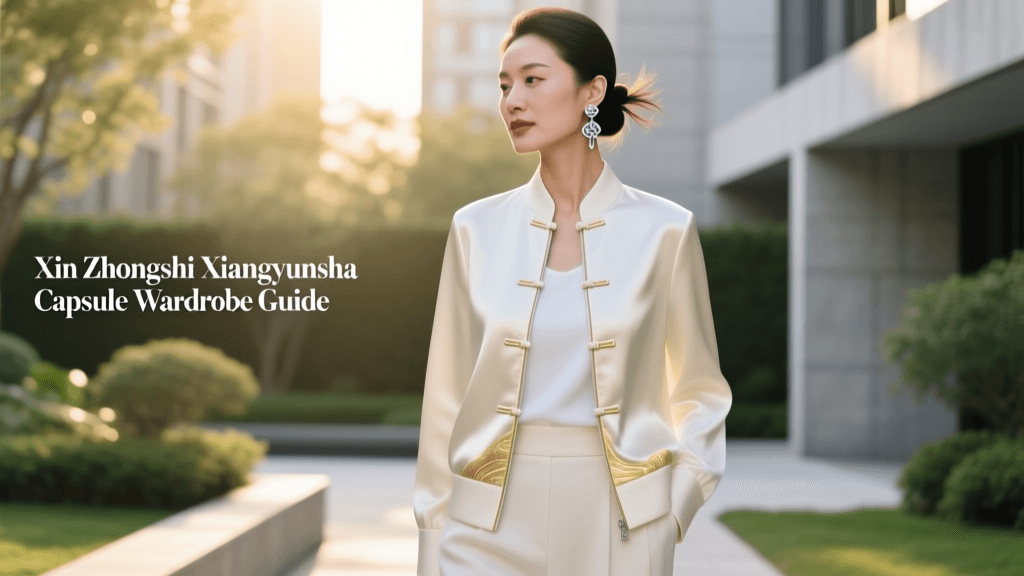
| Deconstructed Tang Jacket | Mandarin Collar, Frog Closures | Washable Xiangyunsha Silk | $280 - $420 | Cold wash, hang dry |
| Modern Mamian Skirt | Horse-face Pleating, Flat Front | Acetate-Silk Blend Brocade | $150 - $250 | Dry clean only |
| Bamboo-Weave Tote | Traditional Basket Weaving | Treated Rattan with Leather Base | $180 - $300 | Wipe with damp cloth |
| Cloud-Toe Loafers | Upturned Cloud Motif | Vegan Mushroom Leather | $120 - $190 | Spot clean, condition |
| Song Jin Blouse | Asymmetrical Dajin Wrap | Lightweight Cupro-Brocade | $140 - $210 | Steam, gentle hand wash |
Deconstructing the Pan Kou (Frog Closures)
The Pan Kou, or knotted frog closure, is perhaps the most recognizable hallmark of Chinese traditional garments. In the past, these intricate knots were strictly functional, used to fasten the heavy silk collars of Qing-era robes. In 2026, the Pan Kou has been deconstructed and reimagined as both a structural element and a standalone piece of jewelry.
When styling a modernized Tang jacket or a wrap blouse, look for asymmetrical placements. Instead of the traditional symmetrical row down the center chest, contemporary designers place a single, oversized Pan Kou at the clavicle or the lower ribcage, leaving the rest of the garment to drape naturally. For the modern wardrobe, opt for Pan Kou crafted from matte jade, carved wood, or oxidized silver rather than traditional silk cords, which can fray with heavy daily use. These modern hardware knots provide a subtle, sophisticated nod to heritage without looking like a theatrical costume.
The Modernized Mamian Skirt: A Masterclass in Drape
The Mamian (horse-face) skirt, characterized by its flat front and back panels with heavily pleated sides, has seen a massive resurgence. However, the 2026 version is distinctly different from the rigid, heavily embroidered skirts of the Ming Dynasty revivalists. Today's Mamian skirt is designed for movement and ease.
For a versatile capsule wardrobe, invest in a midi-length Mamian skirt cut from a high-drape acetate-silk blend. The flat front panel provides a slimming, streamlined silhouette that pairs beautifully with cropped, modern knitwear or tailored blazers, while the side pleats explode into motion when walking. The key to styling the Mamian skirt in a contemporary context is contrast. Pair the fluid, heritage-rich skirt with a stark, minimalist ribbed turtleneck or a structured, oversized leather jacket. This juxtaposition of ancient silhouette and modern texture is the defining aesthetic of the Xin Zhongshi movement.
Footwear and Accessories: Grounding the Look
Footwear can easily make or break a heritage-inspired outfit. The traditional cloud-toe shoe, with its distinctive upturned toe, has been adapted into the modern loafer and slip-on sneaker. In 2026, sustainable material innovations have taken center stage, with heritage footwear brands utilizing lab-grown mushroom leather and recycled rubber soles to craft cloud-toe loafers that are both eco-conscious and ergonomically supportive for all-day wear.
For accessories, bamboo and rattan weaving techniques—historically used for agricultural baskets—have been elevated to luxury bag-making. A structured bamboo-weave tote with a sleek calfskin base offers the perfect vessel for a laptop and daily essentials, providing an organic, textural contrast to the smooth sheen of Xiangyunsha silk. For deeper historical context on regional variations in Asian garments and accessories, the Victoria and Albert Museum's Asian Collections provides extensive archives that continue to inspire today's avant-garde accessory designers.
Conclusion: Wearing Your Heritage
The Xin Zhongshi movement of 2026 is not about playing dress-up; it is about integrating the profound artistry of Asian textile history into the rhythm of modern life. By investing in innovative fabrics like washable Xiangyunsha, understanding the structural poetry of the Mamian skirt, and styling Pan Kou closures with contemporary minimalism, you build a wardrobe that is deeply rooted in culture yet entirely forward-looking. The New Chinese Style is a living, breathing tradition, and your capsule wardrobe is the canvas upon which its next chapter is written.