Xin Zhongshi Xiangyunsha Blazers: 2026 Office Style Guide
The Rise of Xin Zhongshi in 2026 Corporate Fashion
The fashion landscape of 2026 has firmly cemented Xin Zhongshi, or the New Chinese Style, as a dominant force in global professional wardrobes. Moving far beyond the ceremonial boundaries of traditional Hanfu or the festive limitations of holiday wear, Xin Zhongshi has matured into a sophisticated, everyday sartorial language. At the forefront of this movement is the integration of heritage textiles into Western-tailored silhouettes, creating a hybrid aesthetic that commands respect in modern boardrooms and creative studios alike. For the contemporary professional, the Xin Zhongshi blazer represents the pinnacle of this evolution, offering a masterclass in cultural reverence and modern utility.
Understanding Xiangyunsha: The Soul of the Garment
To truly appreciate the 2026 Xin Zhongshi blazer, one must understand the heritage fabric that defines it: Xiangyunsha, also known as Gambiered Canton gauze. Originating from the Guangdong province, this extraordinary textile is recognized for its complex, labor-intensive dyeing process. According to historical textile archives, the creation of Xiangyunsha involves dyeing silk with the tannin-rich juice of the Shuliang yam, followed by a crucial chemical reaction with iron-rich river mud. This process, which can take several months and involves over thirty distinct steps, results in a fabric that is dual-toned, water-resistant, and remarkably breathable.
The unique properties of Xiangyunsha make it an unparalleled choice for structured outerwear. Unlike standard mulberry silks that drape and cling, Xiangyunsha possesses a crisp, paper-like hand feel that holds architectural shapes beautifully. In 2026, as the luxury market pivots heavily toward sustainable and slow-fashion investments, Xiangyunsha has seen a surge in demand. Authentic, heritage-woven Xiangyunsha blazers now retail between $450 and $950, reflecting both the scarcity of the raw materials and the artisanal craftsmanship required to produce the textile. Furthermore, the sericulture and silk craftsmanship underlying these garments are globally recognized for their cultural significance, as documented by UNESCOs Intangible Cultural Heritage registries.
The 2026 Xin Zhongshi Blazer Silhouette
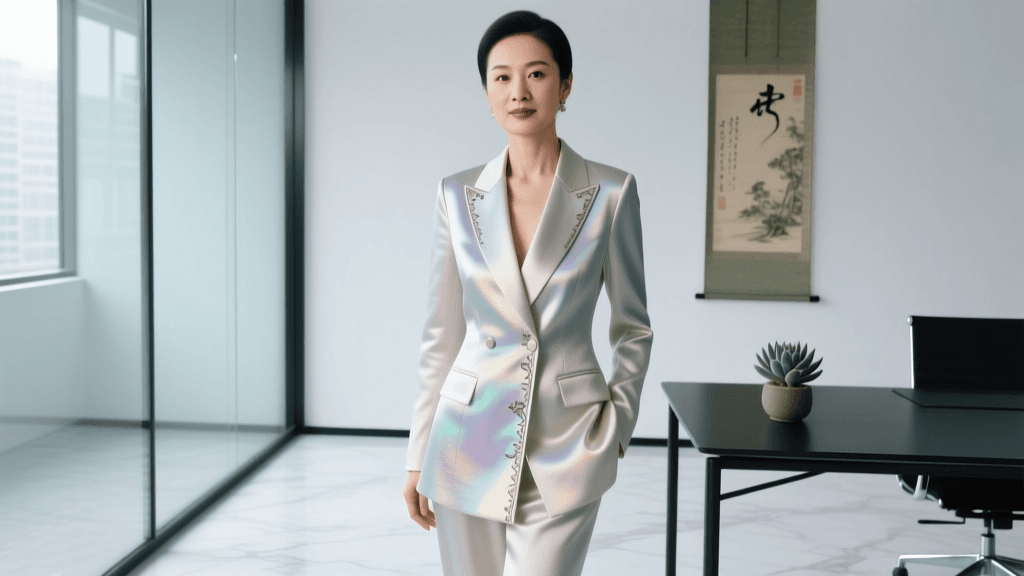
The 2026 iteration of the Xin Zhongshi blazer abandons the rigid, overly theatrical interpretations of the past decade. Today, the focus is on subtle integration. The lapels are where the most significant design dialogue occurs. Designers are currently favoring a modified Mandarin collar, or band collar, that sits softly against the clavicle without choking the neck. This is often paired with a hidden placket, where traditional Pan Kou (frog buttons) are used functionally on the inside of the garment, while the exterior maintains a sleek, minimalist line.
The tailoring borrows from the traditional Chinese flat-cutting method, which minimizes fabric waste and respects the natural drape of the silk, but incorporates subtle Western darts at the waist to provide a modern, professional fit. The shoulders are typically unpadded or feature a very soft, natural shoulder line, aligning with the 2026 trend toward relaxed yet polished corporate wear. Color palettes for this year lean heavily into nature-inspired, muted tones: obsidian black with a subtle copper undertone (a hallmark of authentic mud-dyed Xiangyunsha), deep celadon, and ink-wash grey.
Building the Office Capsule: Styling the Blazer
Integrating a Xiangyunsha blazer into your daily workwear requires a balance of textures and proportions. Because the blazer itself is a statement piece with a rich visual and tactile history, the supporting garments should remain understated.
- The Inner Layer: Opt for a matte silk crepe camisole or a fine-gauge merino wool turtleneck in neutral tones like ivory or charcoal. Avoid loud patterns that compete with the subtle slub and texture of the Canton gauze.
- The Bottoms: While the traditional Mamianqun (horse-face skirt) has been adapted for office wear, a pair of high-waisted, wide-leg wool crepe trousers offers a more grounded, contemporary look. The fluidity of the wool contrasts beautifully with the crispness of the Xiangyunsha.
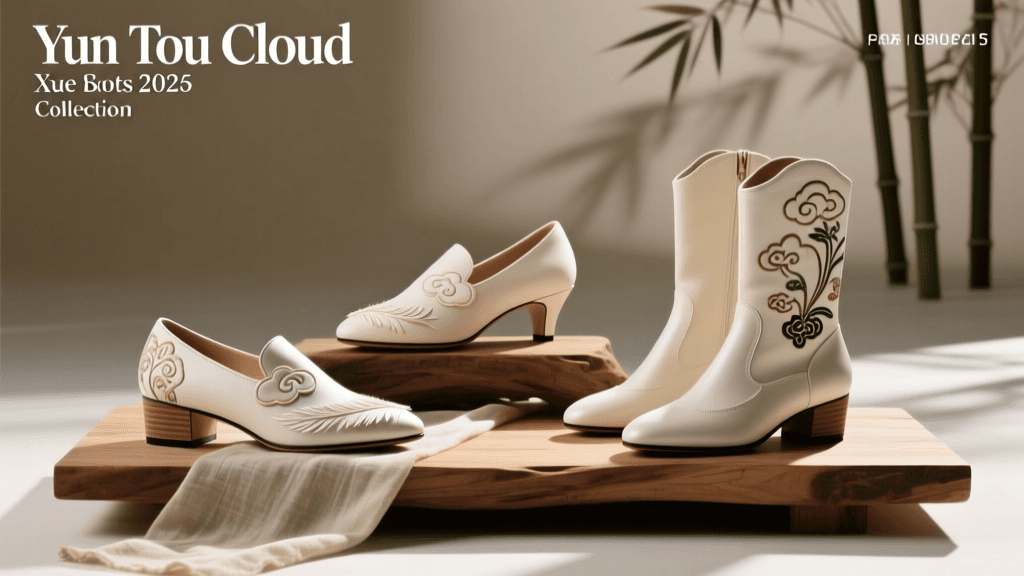
- Footwear: Minimalist leather loafers or low-block heels in oxblood or black complement the heritage aesthetic without veering into costume territory.
Traditional vs. Modern: A Design Comparison
To understand how far the New Chinese Style has come, it is helpful to compare historical garments with their 2026 office-ready counterparts. The evolution of Chinese dress, deeply rooted in centuries of sartorial codes, has been thoughtfully adapted for modern mobility and corporate environments, a transition well-documented in the Metropolitan Museum of Arts archives on Chinese silk and dress.
| Garment Element | Traditional Historical Equivalent | 2026 Xin Zhongshi Office Adaptation |
|---|---|---|
| Collar Structure | High, stiff Mandarin collar (Yuanling) fastening tightly at the throat. | Softened band collar with a slight V-notch for comfort and breathability. |
| Closures | External, highly decorative Pan Kou (knot buttons) made of silk or jade. | Hidden magnetic closures or internal knot buttons for a clean exterior facade. |
| Sleeve Cut | Wide, flowing sleeves or extended cuffs requiring tying back. | Tailored two-piece sleeves with functional button cuffs for typing and desk work. |
| Fabric Treatment | Heavy brocades, extensive surface embroidery, and bright ceremonial dyes. | Mud-dyed Xiangyunsha, subtle jacquard weaves, and muted, earthy colorways. |
| Overall Silhouette | Boxy, flat-cut, prioritizing fabric conservation and modesty. | Semi-structured with subtle waist suppression and natural shoulder lines. |
Care and Maintenance for Xiangyunsha Outerwear
Owning a Xiangyunsha blazer is an investment in wearable art, and its maintenance requires specific care to preserve the integrity of the mud-and-yam dye complex. Unlike standard wools that can be dry-cleaned frequently, Xiangyunsha thrives on minimal intervention.
- Cleaning: Avoid traditional dry cleaning chemicals, which can strip the natural oils and the iron-tannin coating that gives the fabric its water-resistant properties. If spot cleaning is necessary, use a damp cloth with a pH-neutral silk detergent.
- Airing Out: Xiangyunsha is naturally antibacterial and odor-resistant. After a day at the office, hang the blazer on a wide, padded wooden hanger in a well-ventilated, shaded area. Never expose the garment to direct sunlight, as UV rays can degrade the Shuliang yam dyes over time.
- Storage: Store the blazer in a breathable cotton garment bag. Avoid plastic covers, which can trap moisture and cause the silk fibers to weaken. During humid summer months, include natural cedar blocks to deter pests without introducing harsh chemical mothballs that could alter the fabrics scent and finish.
The Future of Heritage in the Workplace
The Xin Zhongshi movement of 2026 is not merely a trend; it is a profound reclamation of cultural identity within the globalized corporate sphere. By choosing a Xiangyunsha blazer, professionals are doing more than elevating their personal style; they are supporting centuries-old artisanal supply chains and championing a more thoughtful, sustainable approach to luxury fashion. As the lines between Eastern heritage and Western tailoring continue to blur, the New Chinese Style stands as a testament to the timeless elegance of cultural synthesis, proving that tradition and modernity can seamlessly share the same wardrobe.