Seasonal Hanfu Guide: Fabrics and Styles for China's Climates
Adapting Traditional Chinese Clothing to Diverse Climates
China is a geographically massive nation, encompassing everything from the subarctic, wind-swept plains of the north to the tropical, humidity-drenched coasts of the south. Because of this immense climatic diversity, traditional Chinese clothing—collectively known as Hanfu—was never a single, static uniform. Instead, it evolved into a highly sophisticated, seasonally responsive system of layering, textiles, and silhouettes. For modern enthusiasts and cultural practitioners, understanding how to adapt Hanfu to the seasons is essential for both historical accuracy and physical comfort.
The traditional Hanfu wardrobe relies on a modular layering system. The base layer, or zhongyi, acts as a protective barrier between the skin and the outer garments. Over this, wearers add seasonal tops (ru or ao), skirts (qun), and outerwear like jackets (beizi) or cloaks (doupeng). By manipulating the weight, weave, and fiber of these layers, historical wearers seamlessly transitioned from the sweltering heat of a Lingnan summer to the biting frost of a Harbin winter. Today, we can apply these same ancestral principles to build a functional, year-round Hanfu wardrobe.
Spring: Transitional Layering and Light Silks
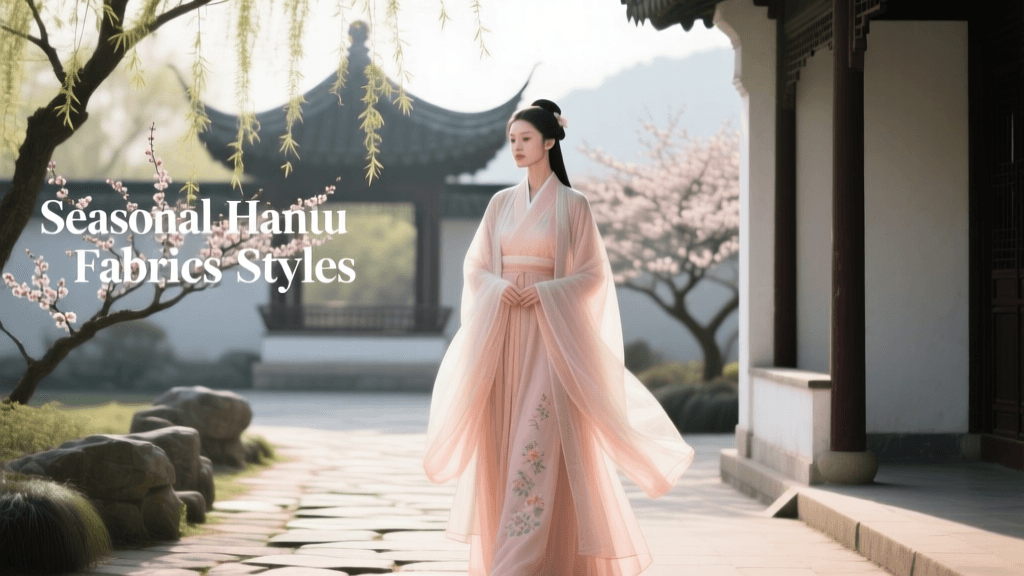
Spring in China, particularly in the Jiangnan region, is characterized by rapidly shifting temperatures and the famous "plum rain" season. The key to spring Hanfu is transitional layering. The Beizi (an open-front, long-sleeved jacket) is the quintessential spring garment. It can be worn open over a lightweight Ruqun (a top-and-skirt ensemble) when the sun is out, or crossed and tied when a sudden chill rolls in.
For fabrics, spring calls for mid-weight mulberry silk and fine cotton. When shopping for silk Hanfu, pay attention to the "momme" (mm) weight, which measures the density of the silk. A 12 to 14 momme silk offers a beautiful, fluid drape that moves elegantly in the spring breeze, while a 16 momme silk provides slightly more structure and wind resistance for the Beizi. Cotton-linen blends (around 150-180 GSM) are also excellent for spring, offering breathability while maintaining the crisp, structured pleats required for skirts like the Mamianqun (horse-face skirt).
Summer: Breathable Fibers for Humid Heat
Summers in central and southern China are notoriously hot and humid. Wearing heavy silks or synthetic blends in these conditions is not just uncomfortable; it is historically inaccurate. The ancients relied heavily on plant-based fibers and specialized open-weave techniques to survive the heat. The most important summer fabric in Chinese history is ramie, often referred to as Xia Bu (summer cloth).
Ramie is a bast fiber that is naturally stiff, highly absorbent, and dries much faster than cotton. Its inherent stiffness prevents the fabric from clinging to sweaty skin, creating a micro-climate of airflow between the garment and the body. Modern Hanfu brands frequently use ramie or high-quality linen for summer Ruqun sets. Another historical summer luxury is Luo (silk gauze), an intricately woven silk with a mesh-like structure that provides the prestige of silk with the ventilation of a net. When purchasing summer Hanfu, look for unlined garments, wide sleeves (which act as bellows to circulate air), and skirts with fewer, wider pleats to reduce fabric bulk around the waist.
Autumn: Crisp Textures and Structured Silhouettes
Autumn brings crisp, dry air and vibrant foliage, making it the most comfortable season for Hanfu wear. This is the ideal time to showcase structured silhouettes and richer textures without the risk of overheating or freezing. The Aoqun (a lined or padded jacket paired with a skirt) becomes the standard outerwear choice, replacing the lighter, unlined Ru tops of summer.
Autumn fabrics bridge the gap between summer breathability and winter insulation. Mid-weight cottons, wool-blend yarn-dyed fabrics, and heavier silks (19-22 momme) are perfect. This is also the season where intricate weaving techniques like Zhuanghua (brocade weaving) begin to make an appearance on collars, cuffs, and skirt hems. The Mamianqun shines in autumn; the heavy, structured pleats of a 250 GSM cotton-polyester or wool-blend horse-face skirt swing beautifully in the crisp wind while providing adequate warmth to the legs.
Winter: Insulating Brocades and Layering Systems
Winters in northern China are brutal, with dry, freezing winds that necessitate serious insulation. The historical response to this was a combination of windproof outer layers, insulating middle layers, and padded linings. The ultimate winter Hanfu garment is the Doupeng, a sweeping, hooded cloak that envelops the entire body, trapping heat and blocking the wind. Underneath the Doupeng, wearers would don padded Ao jackets lined with cotton batting, silk floss, or animal fur.
The outer shells of winter garments were traditionally made from dense, wind-resistant textiles. Brocade, a richly decorative shuttle-woven fabric often made with silk and metallic threads, was highly prized for winter outerwear because its tight, complex weave blocked icy drafts. The cultivation and processing of the silk used in these luxurious winter garments is a deeply rooted cultural practice, recognized globally for its historical importance through Chinese sericulture traditions. For modern winter wear, look for Hanfu cloaks made from wool blends, velvet, or heavy brocade, and invest in a Doupeng that features a plush, faux-fur or real-fur collar to protect the neck and face from windburn.
Seasonal Hanfu Fabric & Style Matrix
To help you build a functional, historically inspired wardrobe, refer to the seasonal matrix below. This guide matches China's traditional climate zones with the appropriate garments, fabrics, and technical specifications.
| Season | Climate Zone | Primary Garment Style | Recommended Fabric | Weight / Specification |
|---|---|---|---|---|
| Spring | Transitional / Damp | Beizi over Ruqun | Mulberry Silk, Cotton-Linen | 12-16 momme; 150 GSM |
| Summer | Hot / Humid | Unlined Ruqun, Duanqun | Ramie (Xia Bu), Linen, Luo | 120-150 GSM; Open weave |
| Autumn | Cool / Dry | Aoqun, Mamianqun | Heavy Silk, Wool-blend, Cotton | 19-22 momme; 250 GSM |
| Winter | Freezing / Windy | Doupeng, Padded Ao | Brocade, Velvet, Padded Silk | 300+ GSM; Quilted lining |
Practical Tips for the Modern Hanfu Wardrobe
While historical accuracy is a noble pursuit, modern wearers have the advantage of contemporary textile technology to enhance comfort. One of the most common challenges for winter Hanfu enthusiasts is staying warm without ruining the traditional silhouette with bulky modern coats. The solution lies in modern thermal base layers. Wearing ultra-thin, high-tech thermal wear (such as Uniqlo's Heattech or merino wool base layers) underneath your zhongyi provides immense insulation without adding visible bulk to your sleeves or waistline.
Care and maintenance also vary strictly by season and fabric. Summer ramie and linen garments should be hand-washed in cool water and dried in the shade; direct sunlight will quickly degrade and yellow plant fibers. Spring and autumn silks require pH-neutral detergents and should never be wrung out—instead, roll them in a clean towel to absorb excess moisture before laying them flat to dry. Winter brocades and velvets should be spot-cleaned or professionally dry-cleaned to preserve their intricate weave structures and metallic threads.
Finally, consider your footwear. Traditional Hanfu is worn with flat, cloth-soled shoes or boots. In the summer, breathable straw or woven sandals are appropriate. However, in autumn and winter, modern leather boots or insulated ankle booties that match the color of your skirt hem are highly recommended. They provide the necessary arch support and weatherproofing for modern city streets while remaining hidden beneath the sweeping, floor-length hems of the Mamianqun or Aoqun.
By respecting the seasonal logic of traditional Chinese clothing, you not only ensure your own comfort but also participate in a living tradition that honors the deep, harmonious relationship between human culture and the natural environment.