Kimono Buying Guide: Comparing Formal and Casual Styles
The Resurgence of the Kimono in Global Fashion
The Japanese kimono is far more than a traditional garment; it is a profound expression of cultural heritage, seasonal awareness, and intricate social etiquette. For international collectors, fashion enthusiasts, and cultural historians, acquiring an authentic kimono is a deeply rewarding endeavor. However, navigating the complex hierarchy of kimono types, understanding traditional Japanese sizing, and evaluating textile quality can be daunting for first-time buyers. According to The Metropolitan Museum of Art, the evolution of the kimono from the Heian period to the modern era reflects profound shifts in Japanese aesthetics, societal structures, and textile technology. This comprehensive buying guide will demystify the differences between formal and casual kimonos, provide a detailed comparison chart, and offer actionable advice on sizing and fabric evaluation to ensure you make an informed, authentic purchase.
Decoding Kimono Formality: A Tiered System
In Japanese culture, clothing is governed by the concept of TPO (Time, Place, and Occasion). The formality of a kimono is determined by several factors: the presence and number of family crests (mon), the type of fabric, the dyeing technique, and the placement of patterns. Understanding these tiers is crucial for buyers looking to wear their garments appropriately or build a well-rounded collection.
The Pinnacle of Formality: Kurotomesode and Irotomesode
The Kurotomesode (black-edged sleeve) is the most formal kimono for married women. Made of pristine black silk, it features exactly five family crests and boasts elaborate, auspicious patterns that are strictly confined to the lower half of the garment below the waist. It is traditionally worn by the mothers of the bride and groom at weddings. The Irotomesode follows the same structural rules but features a colored background instead of black. It can have one, three, or five crests and is worn by married women (and occasionally unmarried women) for highly formal events where black might be deemed too somber.
Unmarried Elegance: The Furisode
The Furisode, translating to 'swinging sleeve,' is the most formal kimono for unmarried women. It is instantly recognizable by its dramatically long sleeves, which can measure anywhere from 85 to 114 centimeters in length. Historically, the long sleeves were believed to ward off evil spirits and express romantic interest through graceful movement. Today, furisode are predominantly worn during the Coming of Age Day (Seijin no Hi) and by unmarried female relatives at weddings. They are heavily decorated with vibrant, all-over Yuzen dyeing and often feature lavish gold and silver embroidery.
Versatile Semi-Formal: Homongi and Tsukesage
The Homongi (visiting wear) is a highly versatile semi-formal kimono suitable for both married and unmarried women. Its defining characteristic is the 'eba' technique, where the design is dyed across the seams so that the pattern flows continuously when the kimono is laid flat. It typically features one to three crests. The Tsukesage is slightly less formal; its patterns are applied to individual pieces of fabric before sewing, meaning the designs do not cross the seams. Both are excellent choices for tea ceremonies, gallery openings, and upscale dining.
Everyday Elegance: Komon and Tsumugi
For casual outings, the Komon (fine pattern) is the standard choice. Komon feature small, repeating stencil-dyed patterns that cover the entire garment. They do not bear family crests and are perfect for shopping, casual lunches, or theater visits. Tsumugi is a type of pongee silk woven from pre-dyed threads, resulting in a beautiful, nubby texture with a matte finish. Despite being made of expensive silk, tsumugi is strictly categorized as casual wear due to its rustic, artisanal origins.
Summer Casual: The Yukata
The Yukata is an unlined, lightweight cotton or hemp garment worn primarily during the humid summer months. Originally utilized as a bathrobe in onsen (hot spring) resorts, the yukata is now the standard attire for summer fireworks festivals (hanabi) and bon odori dances. It is the most accessible and affordable entry point for kimono beginners.
Comprehensive Kimono Comparison Chart
| Kimono Type | Formality Level | Primary Wearer | Avg. Vintage Price (USD) | Key Characteristics |
|---|---|---|---|---|
| Kurotomesode | Ultra-Formal | Married Women | $150 - $500+ | Black silk, 5 crests, hem patterns only |
| Furisode | Ultra-Formal | Unmarried Women | $100 - $400 | Extra-long sleeves, vibrant all-over dye |
| Homongi | Semi-Formal | All Women | $80 - $300 | Continuous patterns across seams, 1-3 crests |
| Komon | Casual | All Women | $30 - $120 | Repeating stencil patterns, no crests |
| Tsumugi | Casual | All Genders | $50 - $250 | Nubby woven silk, matte finish, rustic |
| Yukata | Informal | All Genders | $20 - $80 | Unlined cotton, worn in summer |
Mastering Kimono Sizing and Measurements
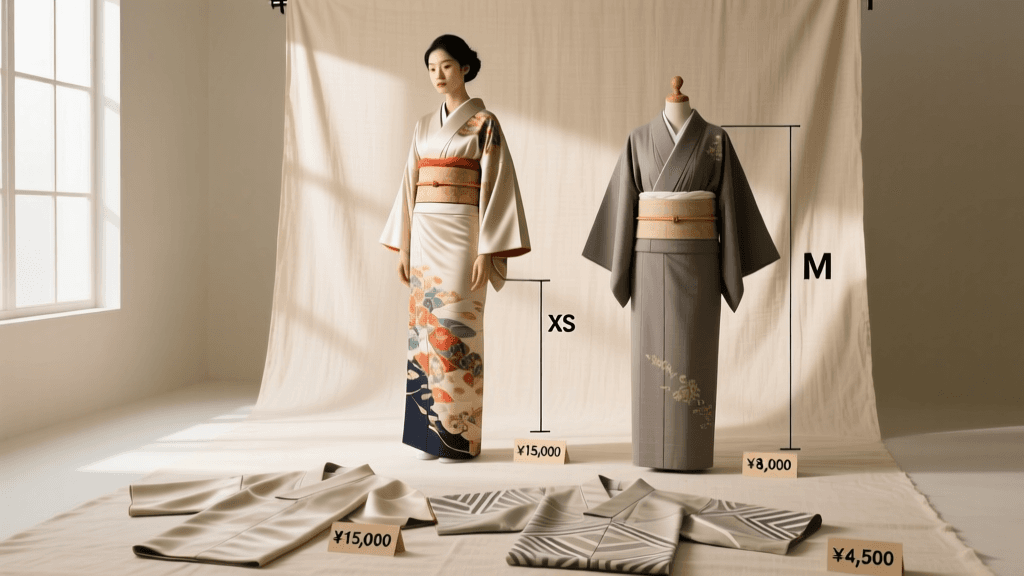
Unlike Western clothing, traditional kimonos are constructed from standard bolts of fabric known as tanmono. Because the fabric is cut in straight lines and sewn with minimal tailoring, sizing is highly adjustable, but understanding two critical measurements is essential for international buyers.
Understanding Mitake (Body Length)
The mitake refers to the back length of the kimono, measured from the base of the collar to the hem. Traditionally, a kimono is worn with an 'ohashori'—a fold of fabric tied at the waist to adjust the length and allow for ease of movement. To calculate your ideal mitake, use the following formula: Your Height x 0.6. Alternatively, subtract roughly 30 centimeters from your total height. For example, a person who is 160 cm tall should look for a mitake of approximately 125 to 130 cm. If the kimono is too long, the excess can be folded into the ohashori; if it is too short, it will be difficult to wear traditionally.
Calculating Yuki (Wingspan and Sleeve Length)
The yuki measures the distance from the center back seam of the neck, across the shoulder, and down to the wrist. This measurement dictates both the shoulder width and the sleeve length. To find your yuki, extend one arm straight out to the side and measure from the prominent bone at the base of your neck (C7 vertebra) to your wrist bone. Most standard women's kimonos have a yuki of 62 to 66 cm. Men's kimonos generally range from 70 to 78 cm. Because kimono sleeves do not sit precisely at the wrist bone like Western jackets, a variance of up to 3 centimeters is generally acceptable and can be adjusted by how the garment is wrapped.
Textile Techniques and Fabric Guide
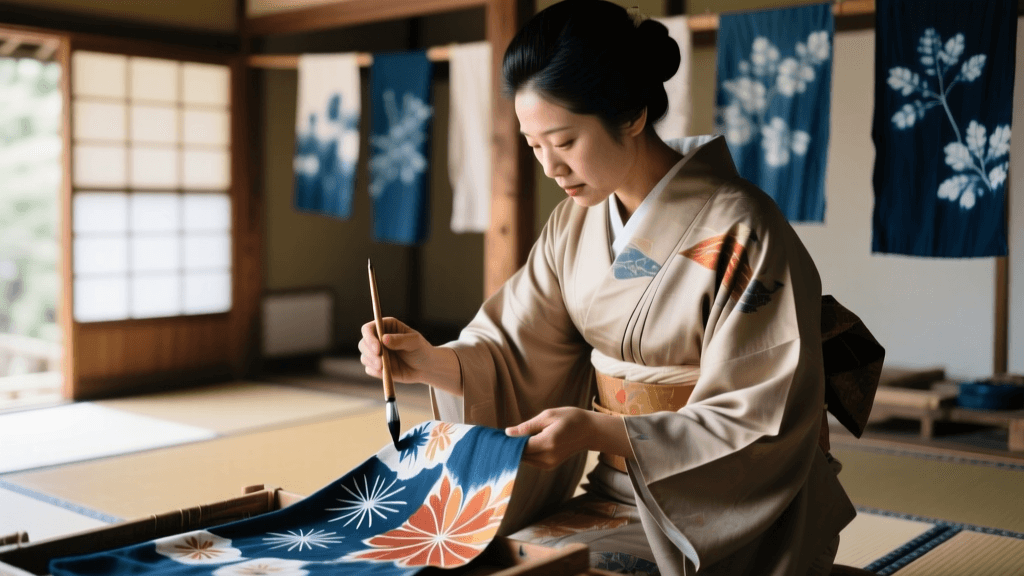
The value of a kimono is heavily tied to its textile origin and dyeing technique. The Victoria and Albert Museum highlights the mastery of Japanese textile artisans, particularly in the realm of silk weaving and resist-dyeing. The most prized fabric for formal kimonos is chirimen, a silk crepe characterized by its pebbled texture and excellent drape. For summer formal wear, artisans weave ro and sha, which are sheer, gauze-like silks that provide breathability without sacrificing elegance.
Dyeing techniques also dictate value. Yuzen dyeing, a labor-intensive resist-dyeing method that allows for painterly, multi-colored designs, is the hallmark of high-end formal kimonos. As documented by the Japan Traditional Crafts organization, regional variations like Kaga Yuzen (known for realistic, nature-inspired motifs and deep colors) and Kyo Yuzen (known for vibrant, stylized patterns and heavy gold leaf) are highly sought after by collectors. When buying, always check the lining and the interior collar for stamps or signatures that authenticate the artisan or region.
Practical Buying Guide: Inspecting Vintage Kimonos
The market for 'recycled' or vintage kimonos is booming, offering buyers the chance to acquire exquisite, hand-crafted silk garments for a fraction of their original cost. However, inspecting vintage textiles requires a keen eye. When shopping at a tansu (antique chest) shop or online auction, follow this inspection checklist:
- The Collar (Han-eri): Check the interior neckband for heavy foundation or sweat stains. While the removable half-collar can be replaced, deep stains on the main silk collar are often impossible to clean.
- The Hem (Suso): Inspect the bottom 20 centimeters of the skirt for fraying, mud stains, or thinning fabric, as this area endures the most friction.
- The Underarms: Look for yellowing or stiffening of the silk under the arms, which indicates oxidized sweat stains that will eventually degrade the fibers.
- Odor Assessment: Vintage kimonos stored in old cedar chests may carry a strong camphor or musty odor. While airing them out in a shaded, breezy area can help, deep-set mold smells are notoriously difficult to remove and should be avoided.
- Crease Lines: Check the traditional fold lines for severe fading or 'burn' marks caused by prolonged exposure to light or acidic storage paper.
Conclusion
Purchasing a kimono is an investment in wearable art. By understanding the strict hierarchy of formality, accurately calculating your mitake and yuki, and carefully inspecting vintage textiles for structural integrity, you can confidently navigate the global kimono market. Whether you are seeking a striking furisode for a cultural exhibition, a subtle homongi for a tea ceremony, or a casual komon for everyday styling, the perfect garment awaits those who take the time to understand its rich, woven history.