Destination Wedding Kimono: The Ultimate Styling Guide
The Rise of the Destination Wedding Kimono
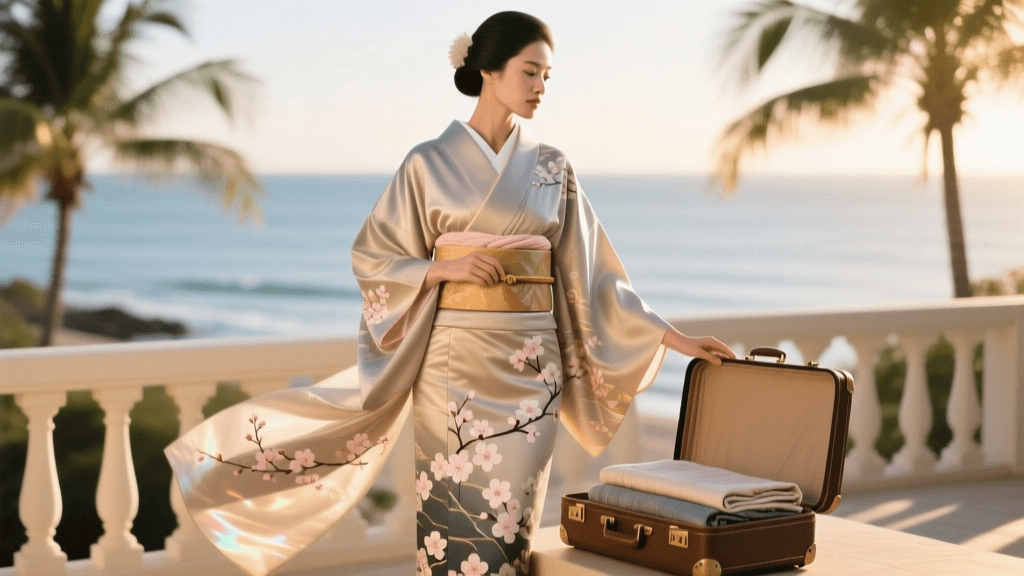
As couples increasingly seek unique, culturally rich experiences for their nuptials, the destination wedding has evolved far beyond the standard white gown on a tropical beach. For those with Japanese heritage, or simply a profound appreciation for Asian textile arts, incorporating a traditional kimono into a global celebration is a breathtaking choice. However, taking a delicate, highly structured silk garment across the world requires meticulous planning. From navigating international climates to securing a certified dresser abroad, executing a destination wedding in a kimono is an art form in itself.
The kimono is not merely a dress; it is a complex system of layers, sashes, and seasonal motifs. As highlighted by the Victoria and Albert Museum, the garment's iconic T-shaped structure and intricate surface designs make it a masterclass in textile engineering, yet this same structure demands specific handling when removed from its native environment. This comprehensive guide will walk you through everything you need to know to successfully style, pack, and wear a kimono for your destination wedding or special international event.
Selecting the Perfect Garment for Global Climates
One of the most critical mistakes destination brides and grooms make is ignoring the climate of their venue. Traditional Japanese clothing is strictly governed by the seasons. Wearing a lined winter silk kimono (awase) on a beach in Bali, or a sheer summer gauze kimono (ro or sha) in a snowy alpine lodge, will not only look seasonally inappropriate but will also cause immense physical discomfort.
The Metropolitan Museum of Art notes that the seasonal adaptability of the kimono is one of its most defining cultural features, with fabrics and linings changing throughout the year to reflect the natural world. When planning your destination event, you must align your fabric choice with the local weather.
Climate and Fabric Comparison Chart
| Destination Climate | Recommended Kimono Type | Ideal Fabric & Weave | Styling Notes |
|---|---|---|---|
| Tropical / Beach (e.g., Bali, Hawaii, Maldives) | Hitoe (Unlined) or Usumono (Sheer) | Ro or Sha (Silk Gauze), Linen blends | Opt for lighter, breathable weaves. Avoid heavy brocade obi. Consider a yukata or lightweight komon for guests. |
| Temperate / Spring (e.g., Tuscany, Napa Valley, Kyoto) | Awase (Lined) or Hitoe (Unlined) | Chirimen (Silk Crepe), Rinzu (Silk Satin) | Perfect for layered elegance. The slight weight of crepe silk drapes beautifully in mild breezes. |
| Cold / Winter (e.g., Swiss Alps, Aspen, Hokkaido) | Awase (Lined) with outerwear | Heavy Crepe, Wool blends, Velvet Haori | Layering is essential. Add a silk han-eri (collar), tabi socks, and a plush velvet or wool haori jacket. |
The Bridal Trousseau: Uchikake vs. Kakeshita
For brides, the choice of bridal garment is paramount. In a traditional Japanese wedding, the bride often wears a Shiromuku (a pure white, heavily padded ensemble) or an Iro-uchikake (a vibrant, heavily embroidered outer robe worn open over a base kimono). However, an uchikake can weigh upwards of 15 to 20 pounds due to its thick padding and dense metallic embroidery. Navigating a cobblestone street in Europe or a sandy beach in Mexico with a trailing, heavily weighted hem is a logistical nightmare.
The Destination Solution: Opt for a Kakeshita. A kakeshita is a formal, highly decorated silk kimono that is worn tied with an obi, rather than left open and trailing like an uchikake. It offers the same level of bridal formality and exquisite artistry but is significantly lighter, easier to pack, and far more manageable for outdoor or non-traditional venues. You can still incorporate the dramatic bunkin-takashimada bridal wig or fresh floral hairpieces without the burden of a 20-pound silk train.
Logistics: Packing and Transporting Silk
Silk is a protein fiber that is highly susceptible to moisture, heat, and friction. You must never check your wedding kimono into the airplane's cargo hold. The extreme temperature fluctuations and the risk of lost luggage make carry-on transport mandatory.
The Ultimate Kimono Packing Checklist
- Tatoushi Paper: Wrap every silk component (kimono, obi, obiage, obijime) in traditional tatoushi (acid-free, moisture-regulating Japanese paper). Never use plastic bags or dry-cleaner covers, as plastic traps humidity and causes permanent mold spots on silk.
- The Folding Technique: Fold the kimono along its designated seams. The kimono is constructed from straight bolts of fabric, meaning it is designed to be folded flat, not hung on a hanger. Hanging will distort the shoulders and stretch the silk.
- Garment Bag: Place the paper-wrapped, folded kimono inside a breathable canvas or cotton garment bag for the flight.
- Desiccant Packets: Tuck a few silica gel packets into the garment bag to absorb any ambient moisture during transit.
- Wrinkle Release: Upon arrival at your hotel, unpack the kimono immediately. Lay it flat on a clean bed or hang it in a steamy bathroom (away from direct water contact) to allow natural humidity to release any fold lines.
The Kitsuke Challenge: Dressing on Location
Kitsuke is the art of dressing in a kimono. A formal bridal or furisode (long-sleeved) kimono requires precise padding, multiple ties, and complex obi knots that are nearly impossible to achieve alone. In Japan, you would simply visit a salon. Abroad, you have three main options:
- Fly Out a Japanese Dresser: The most reliable but expensive option. Hiring a certified kitsuke-shi (dresser) from Japan and flying them to your destination will cost between $2,000 and $4,000 USD, covering their flights, accommodation, and a dressing fee of roughly $200 to $300 USD.
- Hire a Local Diaspora Dresser: Many major global cities (Los Angeles, London, Sydney, Paris) have Japanese cultural centers or independent kimono schools. Research local Japanese associations to find a certified dresser. Expect to pay between $300 and $600 USD for on-site hotel dressing.
- The Pre-Tied Obi (Tsuke-Obi) & DIY: If hiring a dresser is impossible, consider using a tsuke-obi (a pre-tied obi that slips on and is secured with a simple clip and tie). While purists may object, for a destination event where comfort and logistics are paramount, a high-quality tsuke-obi paired with a simpler kimono can be styled by a talented local hairstylist/makeup artist who understands basic wrapping techniques.
Venue-Specific Etiquette and Styling Adjustments
The environment of your destination wedding will dictate necessary adjustments to your styling and accessories.
The Beach Ceremony
Sand and silk are natural enemies. Traditional zori (woven sandals) will sink into the sand, and the hem of your kimono will absorb moisture and stain. The fix: Use a shigoki—a decorative, sheer silk sash tied around the waist to gather and lift the hem of the kimono into a bustle. This keeps the silk off the sand and creates a chic, modern silhouette. Many beach brides opt to go barefoot or wear custom, flat-soled leather sandals that match their obi.
The Historic Castle or Garden
If you are marrying in a historic European estate or a traditional Japanese garden abroad, be mindful of stone pathways and morning dew. The ohashori (the waist fold that adjusts the kimono's length) should be tied slightly higher than usual to prevent the hem from brushing against damp grass or muddy cobblestones. Additionally, always check the venue's photography policies; many historic sites prohibit flash photography or tripods, which can affect your wedding photographer's lighting setup when capturing the intricate metallic threads of your obi.
Accessorizing the Destination Look
Accessories are where you can blend your destination's local culture with Japanese tradition. While the kanzashi (hair ornaments) and obi-jime (decorative cord) are traditionally seasonal, modern brides often incorporate local flora into their hairpieces. Imagine a Tuscan wedding where the bride's silk hairpins are accented with local olive branches, or a Hawaiian ceremony featuring subtle plumeria motifs woven into the yukata of the bridal party.
For the feet, ensure your tabi (split-toe socks) are crisp and white. If your destination involves a lot of walking between the ceremony and reception, bring a pair of soft, flat leather slippers to change into, saving your formal zori strictly for the ceremonial moments and photographs.
Final Thoughts on Cultural Appreciation
Wearing a kimono for a destination wedding is a profound way to honor heritage while celebrating globally. It requires a deeper level of preparation than a standard Western wedding gown, demanding respect for the garment's structure, seasonal rules, and delicate textiles. By carefully selecting climate-appropriate fabrics, mastering the logistics of silk travel, and securing a skilled dresser, you ensure that your kimono remains a source of joy and elegance, rather than a burden, on your special day. Whether you are exchanging vows on a cliffside in Santorini or in a historic vineyard in Bordeaux, the timeless beauty of the kimono will undoubtedly make your celebration an unforgettable masterpiece of cross-cultural artistry.