Best Hanfu Garments For Tai Chi And Qigong In 2026
The Intersection of Xin Zhongshi and Traditional Wellness
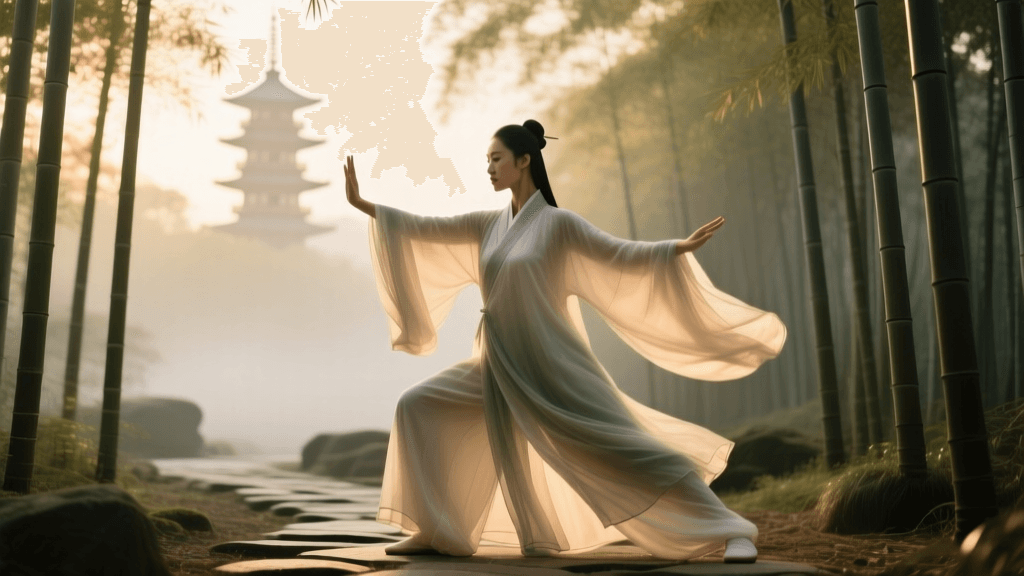
As the global wellness movement continues to evolve in 2026, the integration of traditional Asian practices into daily life has reached new heights. Among the most profound of these practices are Tai Chi and Qigong, ancient Chinese martial and meditative arts designed to cultivate life force energy, or Qi. Simultaneously, the Xin Zhongshi (New Chinese Style) fashion movement has revolutionized how we wear traditional garments. No longer confined to festivals or historical reenactments, Hanfu is now being thoughtfully adapted for modern, active lifestyles. For practitioners of Tai Chi and Qigong, selecting the right Hanfu is not merely an aesthetic choice; it is a functional necessity that directly impacts breathability, range of motion, and the uninterrupted flow of energy throughout the body.
In 2026, leading textile innovators and traditional tailors have collaborated to create a new generation of wellness-focused Hanfu. These garments honor the historical silhouettes of the Ming and Song dynasties while utilizing advanced natural fiber blends that cater to the rigorous demands of internal martial arts. Whether you are practicing the 24-form Yang style Tai Chi in a misty park at dawn or engaging in standing meditation (Zhan Zhuang) in your living room, understanding the synergy between your clothing and your practice is essential.
The Biomechanics of Qi and Cloth
To understand why specific Hanfu cuts are superior for wellness practices, we must first look at the biomechanics of Tai Chi and Qigong. According to the National Qigong Association, these practices require deep diaphragmatic breathing, spinal elongation, and expansive, sweeping joint articulations. Restrictive modern activewear, particularly those made from synthetic compression materials, can inadvertently limit the subtle micro-movements of the fascia and restrict the natural expansion of the ribcage during deep breathing exercises.
Traditional Chinese medicine and martial arts philosophy dictate that clothing should act as a secondary skin—one that protects the body from environmental pathogens (like wind and dampness) without trapping stagnant heat or binding the meridians. When performing deep stances such as Ma Bu (Horse Stance) or Gong Bu (Bow Stance), the fabric must drape and fold without pulling at the shoulders or constricting the hips. The 2026 Xin Zhongshi wellness collections address this by incorporating hidden gussets, raglan-style sleeve integrations, and bias-cut skirts that move fluidly with the practitioner's center of gravity, known as the Dantian.
Top Fabric Choices for 2026 Qigong Practitioners
The foundation of any wellness garment lies in its textile. In 2026, the market has shifted heavily toward sustainable, high-performance natural fibers that offer superior moisture-wicking and temperature regulation. Synthetic blends have been largely abandoned by serious practitioners in favor of materials that allow the skin to breathe and the body's electromagnetic field to remain ungrounded by plastic-based threads.
| Fabric Type | Weight / Specification | Breathability | Drape Quality | Average 2026 Cost (USD) |
|---|---|---|---|---|
| Ramie (Xia Bu) | 150 gsm hand-loomed | Exceptional | Crisp, structured | $85 - $140 |
| Mulberry Silk (Crepe de Chine) | 16-19 momme | High | Fluid, heavy drape | $150 - $280 |
| Bamboo-Linen Blend | 120 gsm woven | Very High | Soft, moderate drape | $60 - $110 |
| Organic Cotton Gauze | Double-layer 90 gsm | Moderate | Light, airy | $45 - $80 |
Ramie and the Art of Xia Bu
Ramie, often referred to as Chinese linen, has seen a massive resurgence in 2026. The traditional Xia Bu (summer cloth) weaving technique produces a fabric that is naturally antibacterial, highly absorbent, and incredibly cooling. For practitioners who engage in vigorous Qigong forms that induce heavy sweating, a ramie Shenyi (deep robe) pulls moisture away from the skin while maintaining a structured silhouette that does not cling when damp.
Mid-Weight Mulberry Silk
While silk is historically associated with luxury, its properties for wellness are unparalleled. A 16 to 19-momme crepe de chine silk offers a matte finish and a fluid drape that visually accentuates the continuous, circular movements of Tai Chi. Silk is a natural temperature regulator, keeping the practitioner warm during cool morning warm-ups and cool during intense practice sessions. Furthermore, silk's smooth texture reduces friction against the skin, which is vital for maintaining sensory awareness during meditative movement.
Ideal Hanfu Silhouettes for Tai Chi
The cut of the garment dictates how energy flows around the body. In 2026, designers have refined historical patterns to eliminate excess bulk while preserving the philosophical essence of the clothing. Here are the most recommended silhouettes for internal martial arts practitioners this year.
The Modified Shenyi (Deep Robe)
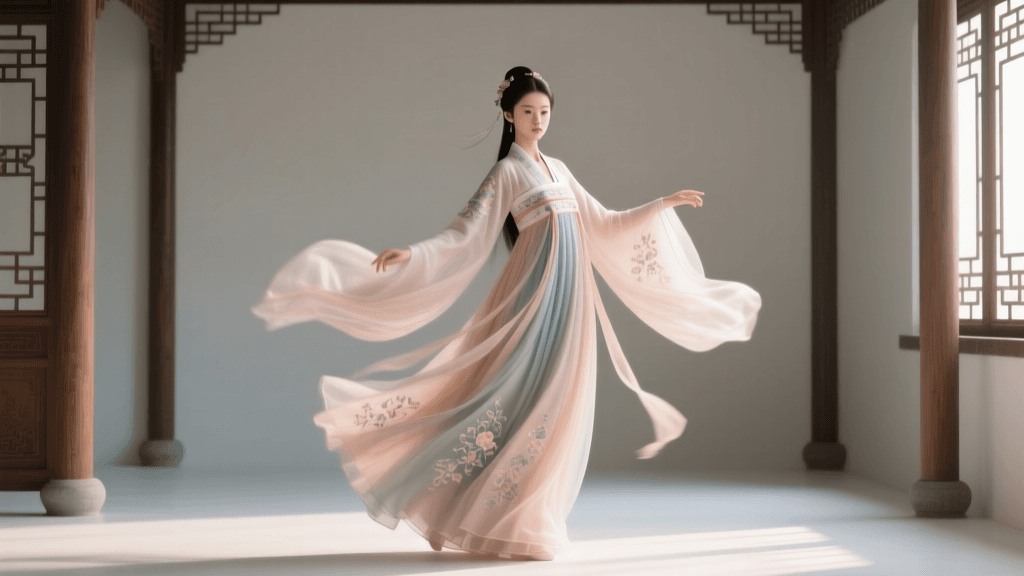
The Shenyi is a one-piece robe that connects the upper and lower garments, symbolizing the unity of heaven and humanity. For Tai Chi, the 2026 modified Shenyi features wider armholes and a slightly raised waistline. This prevents the fabric from pulling across the chest when the arms are raised above the head in forms like 'White Crane Spreads Its Wings.' The continuous vertical lines of the robe also help practitioners maintain visual and physical spinal alignment.
Songku (Wide-Leg Trousers)
While the Mamianqun (horse-face skirt) is immensely popular in daily Xin Zhongshi fashion, its dense pleating can be a tripping hazard during low, sweeping stances or ground-transition movements. Instead, the Songku—wide-leg trousers originating from the Song Dynasty—are the gold standard for 2026 wellness wear. Cut with a dropped crotch and generous thigh room, Songku allow for maximum hip mobility and deep knee flexion without any resistance from the fabric. When paired with a shorter Ru (jacket) or Banbi (half-sleeve vest), they create a balanced, grounded silhouette.
Banbi (Half-Sleeve Layering)
Layering is crucial for regulating body temperature before and after practice. The Banbi, a short-sleeved or half-sleeved vest, is perfect for wearing over a long-sleeved silk tunic. It provides core warmth to protect the internal organs and the Mingmen (Gate of Life) point on the lower back, while leaving the arms free to articulate without bunching fabric at the elbows.
'The clothing of the scholar and the martial artist shares a common root: it must not impede the natural circulation of breath and blood. When the body is unbound, the mind becomes still, and the Qi flows like a deep, unobstructed river.' — Traditional Wudang Wellness Proverb
Footwear: Grounding Your Practice
No discussion of Tai Chi and Qigong attire is complete without addressing footwear. The connection between the Yongquan (Bubbling Spring) acupressure point on the sole of the foot and the earth is fundamental to rooting and balance. Modern rubber-soled sneakers often isolate the practitioner from the ground and alter the natural biomechanics of the foot strike.
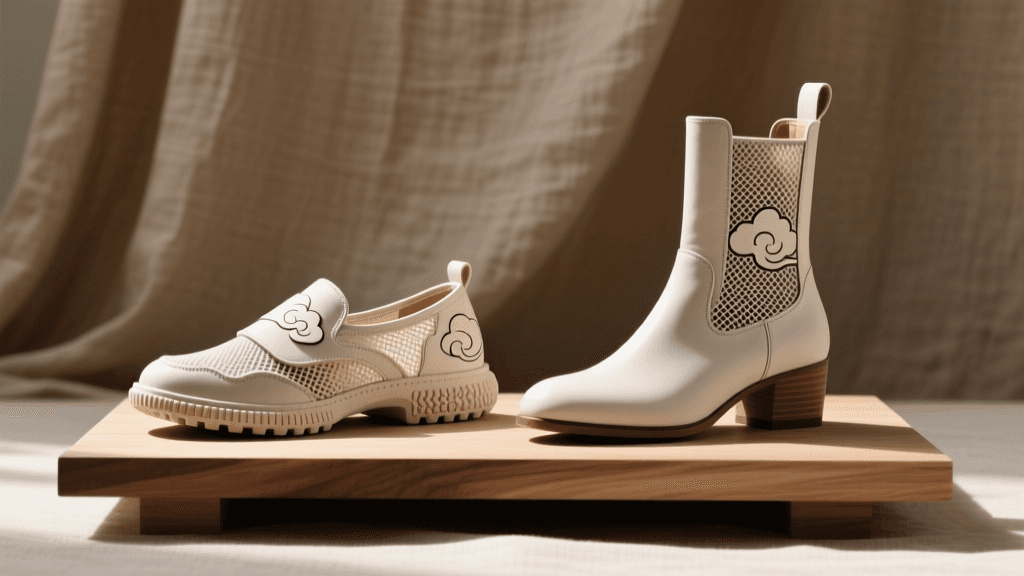
In 2026, the traditional Bu Xie (cloth shoe) has been elegantly updated by Xin Zhongshi footwear brands. These shoes retain the classic cotton uppers and flexible profile but now feature sustainable cork and natural latex footbeds that provide arch support without sacrificing ground feel. The soles are thin enough to allow the toes to grip the earth, facilitating the subtle weight shifts required in Tai Chi, yet durable enough for urban park practice. Brands focusing on traditional wellness footwear have also introduced hemp-canvas options that naturally mold to the wearer's foot shape over time, creating a bespoke fit that enhances proprioception.
Sourcing Authentic Wellness Wear in 2026
As the demand for functional Hanfu grows, it is vital to source garments from makers who understand both historical tailoring and modern kinesiology. When shopping for Tai Chi and Qigong Hanfu in 2026, look for the following hallmarks of quality:
- Flat-Felled Seams: Ensures durability and prevents chafing during repetitive movements.
- Underarm Gussets: A diamond-shaped piece of fabric inserted at the armpit to provide extra give when lifting the arms.
- Natural Dyes: Plant-based dyes (like indigo or madder root) are not only environmentally friendly but are believed in traditional Chinese culture to carry harmonious energetic properties, unlike harsh chemical dyes.
- Cross-Collar Alignment: Ensure the Jiaoling Youren (right-over-left collar) sits flat against the sternum without gaping when the torso twists.
Conclusion: Embracing the Flow
The integration of Hanfu into Tai Chi and Qigong practice represents a beautiful synthesis of cultural preservation and holistic health. As noted by researchers at Harvard Health Publishing, the physical and mental benefits of Tai Chi are profound, ranging from improved balance and muscle strength to significant stress reduction. By honoring these ancient movements with garments that are equally thoughtful in their design and material, practitioners in 2026 can deepen their connection to the art. The Xin Zhongshi movement has successfully proven that traditional clothing is not a relic of the past, but a living, breathing companion on the path to modern wellness. Whether you are a seasoned martial artist or a beginner taking your first mindful steps, choosing the right Hanfu will elevate your practice, allowing your body to move as freely as the Qi you seek to cultivate.