Kunqu Opera Xifu & Hanfu: 2026 Stage Costume Sourcing Guide
The 2026 Renaissance of Traditional Stage Garments
As we navigate the cultural landscape of 2026, the global stage is witnessing an unprecedented revival of traditional Asian performing arts. Enthusiasts, scholars, and modern theatrical troupes are increasingly looking backward to move forward, blurring the lines between historical daily wear and theatrical extravagance. At the heart of this movement is the intersection of Hanfu (traditional Han Chinese clothing) and Xifu (specialized theatrical costumes). While everyday Hanfu has seen a massive streetwear and ceremonial resurgence over the last decade, the highly specialized world of Kunqu and Peking Opera garments remains a niche, deeply revered craft. Understanding how to source, wear, and preserve these garments in 2026 requires a deep appreciation for both historical accuracy and the exaggerated demands of the stage.
The Intersection of Hanfu and Xifu in Traditional Performing Arts
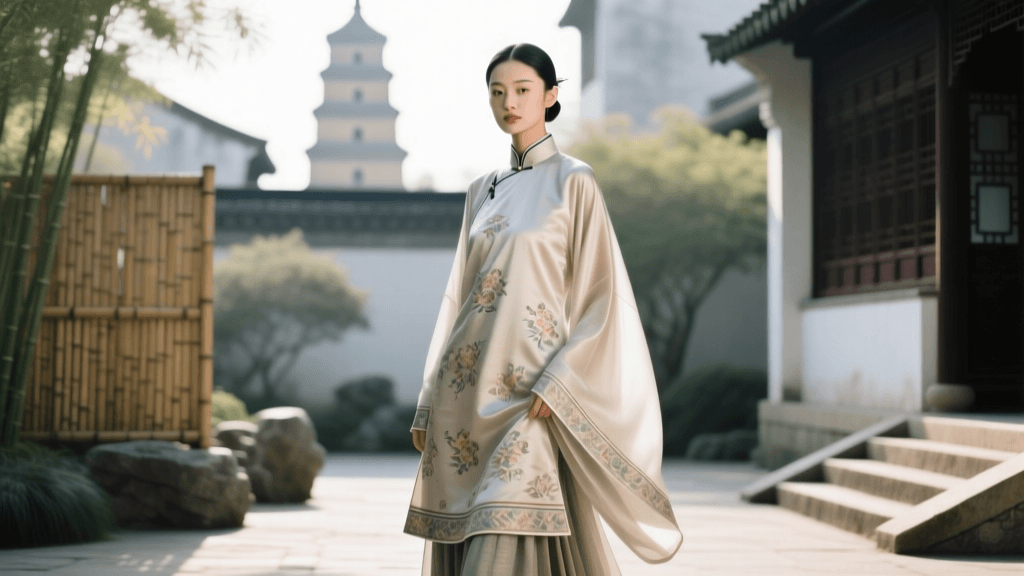
To the untrained eye, a Ming Dynasty Hanfu robe and a Kunqu Opera stage costume might appear identical. Both feature sweeping silhouettes, intricate silk embroidery, and cross-collar closures. However, the distinction lies in their purpose. Hanfu was designed for the realities of historical daily life, court ceremonies, and scholarly pursuits. Xifu, on the other hand, is engineered for the stage. It is an amplification of reality, designed to convey a character's social status, moral alignment, and emotional state to an audience sitting far from the stage.
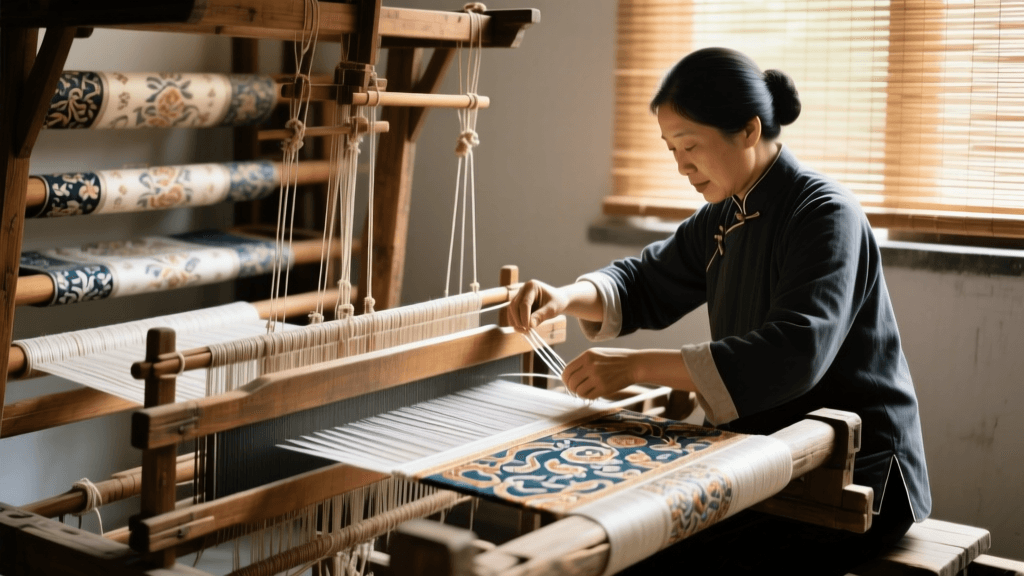
In 2026, contemporary Kunqu troupes are adopting a 'neo-traditional' approach. Directors and costume designers are collaborating with master Hanfu artisans to create stage garments that utilize historically accurate Ming Dynasty weaving techniques and natural plant dyes, while retaining the theatrical proportions required for opera. This synthesis honors the UNESCO Intangible Cultural Heritage status of Kunqu Opera, ensuring that the living art form evolves without losing its historical anchor.
Kunqu vs. Peking Opera: Understanding Theatrical Garments
When sourcing or studying traditional performance wear, it is vital to distinguish between the two dominant forms of Chinese opera. Kunqu Opera, often referred to as the 'mother of a hundred operas,' originated in the Ming Dynasty. Its aesthetic is elegant, poetic, and restrained. The costumes reflect the refined tastes of the literati and the imperial court of that era. According to the Victoria and Albert Museum's extensive archives on Chinese theatre, Kunqu garments heavily favor soft pastels, deep jewel tones, and flowing, naturalistic embroidery motifs like plum blossoms, orchids, and cranes.
Conversely, Peking Opera (Jingju), which crystallized during the Qing Dynasty, is louder, more acrobatic, and highly stylized. As noted by Britannica's comprehensive guide to Peking Opera, the costumes rely on high-contrast primary colors, bold geometric patterns, and dense, symbolic embroidery featuring dragons, tigers, and fierce mythical beasts. While Hanfu purists often lean toward the Ming aesthetics of Kunqu, modern performers frequently mix elements, requiring a nuanced understanding of both theatrical traditions.
Garment Comparison: Everyday Hanfu vs. Stage Xifu
| Feature | Everyday Ming Hanfu | Kunqu Opera Xifu | Peking Opera Xifu |
|---|---|---|---|
| Sleeve Style | Narrow, straight, or moderate wide sleeves | Extended Shuixiu (Water Sleeves) in white silk | Stylized, rigid cuffs with highly structured Shuixiu |
| Collar & Neckline | Round collar or cross-collar (Jiaoling) | Exaggerated cross-collar with a stark white neckband | Stiff, high collars with heavy, metallic embroidery |
| Color Palette | Muted, natural plant dyes, earth tones | Soft pastels, elegant blues, pinks, and deep greens | High-contrast, bold reds, yellows, blacks, and whites |
| Embroidery Motifs | Subtle, localized, seasonal flora and fauna | Flowing, poetic motifs (bamboo, lotus, butterflies) | Dense, symbolic motifs (five-clawed dragons, qilins) |
| Primary Fabrics | Linens, cottons, lightweight damasks, crepe | Heavy silk satin, soft brocades, silk crepe | Stiff brocades, heavy satin, metallic thread couching |
Sourcing Authentic Stage Hanfu and Xifu in 2026
Sourcing genuine theatrical garments in 2026 requires navigating a specialized network of artisans, primarily located in Suzhou, Hangzhou, and Beijing. For Kunqu Opera, the undisputed epicenter of production remains Suzhou, specifically the Zhenhu embroidery district. Here, master embroiderers utilize the Su Xiu (Suzhou embroidery) technique, renowned for its incredibly fine silk threads that can be split into 1/64th of their original thickness to create photorealistic, yet deeply traditional, stage motifs.
For those looking to commission a custom Mang (Python Robe) or a Pei (informal cape) for Kunqu performances in 2026, be prepared for a significant investment of both time and capital. A bespoke, hand-embroidered Kunqu Mang crafted with genuine silk and gold-leaf thread currently ranges from 15,000 to 45,000 RMB (approximately $2,100 to $6,300 USD), with a production lead time of six to nine months. For university theater programs or amateur troupes, high-quality machine-embroidered replicas utilizing advanced 2026 synthetic-silk blends are available from specialized theatrical tailors in Beijing's Tianqiao district for roughly $400 to $800 USD. These modern blends offer the advantage of being lighter, more breathable under hot stage lights, and significantly easier to clean.
The Art of Shuixiu (Water Sleeves): Technique and Garment Specs
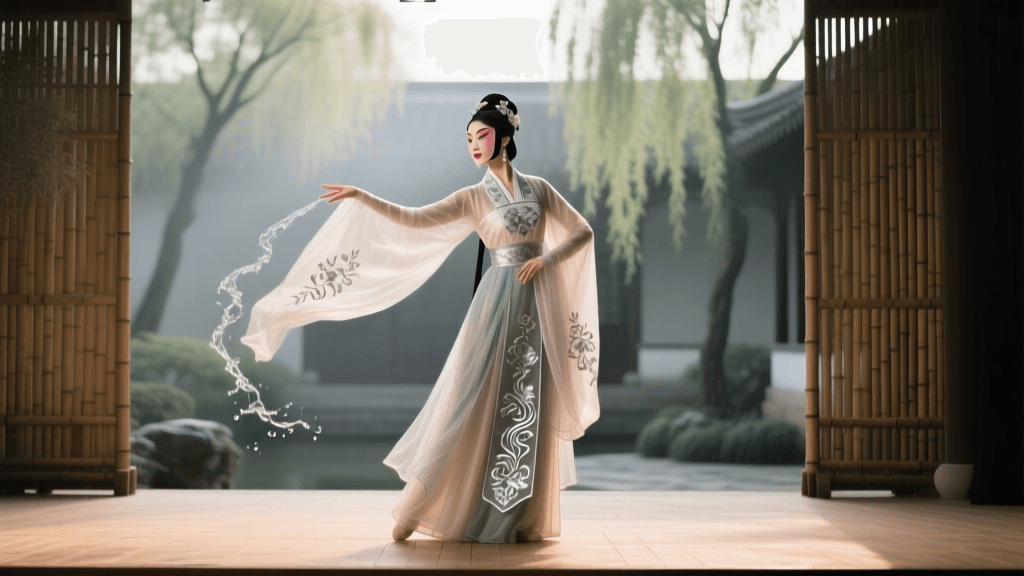
No discussion of Kunqu or Peking Opera Xifu is complete without addressing Shuixiu, or 'Water Sleeves.' These are the long, flowing white silk extensions attached to the cuffs of the costume. They are not merely decorative; they are an extension of the actor's body, used to express a vast vocabulary of emotions—from the shy covering of a maiden's face to the violent, trembling rage of a betrayed general.
In 2026, professional performers have highly specific requirements for their Shuixiu. The standard length extends 1.5 to 2.5 feet past the actor's fingertips. While traditionalists insist on heavy, pure white silk crepe (which provides the necessary weight and momentum for complex flicking techniques like douxiu and fanxiu), many modern touring actors are opting for specialized performance silks treated with microscopic hydrophobic coatings. This 2026 innovation prevents the sleeves from absorbing sweat and stage humidity, ensuring the fabric remains light and responsive during three-hour epics like The Peony Pavilion.
'The water sleeve is the soul of the Kunqu actor. If the silk is too light, it flutters without intention. If it is too heavy, it drags the spirit down. Finding the exact gram-weight of the crepe is as vital as tuning a traditional lute.' — Master Chen, Kunqu Costume Director, Suzhou.
Caring for Theatrical Silks and Heavy Embroidery
The maintenance of Xifu is a rigorous discipline. Unlike everyday Hanfu, which can often be gently hand-washed or dry-cleaned, theatrical garments featuring heavy gold couching (panjin) and dense metallic threads must never be submerged in water. The metallic threads, often wrapped around a silk or cotton core, will tarnish, snap, or bleed dye if exposed to modern chemical solvents or water.
In 2026, the gold standard for preserving these garments involves specialized ozone-cleaning chambers, which neutralize odors and kill bacteria without touching the delicate fibers. For physical storage, Xifu must never be folded. Folding creates permanent creases in the stiff brocades and can snap the metallic embroidery threads over time. Professional troupes utilize custom-built, acid-free cardboard tubes to roll the garments, interleaving the folds with unbleached, acid-free muslin cloth to prevent the heavy embroidery from snagging on the delicate silk satin base. Furthermore, garments must be stored in climate-controlled environments, maintaining a strict humidity level of 45-50% to prevent the silk from becoming brittle or developing mildew.
Conclusion: Preserving the Living Heritage of Asian Stage Wear
The year 2026 represents a critical juncture for traditional Asian performing arts. As global interest in Hanfu continues to skyrocket, the specialized, theatrical branch of this sartorial family—Xifu—deserves equal attention and preservation. Whether you are a theater director sourcing authentic Kunqu garments, a performer mastering the physics of the water sleeve, or a cultural historian studying the evolution of Ming Dynasty aesthetics on the modern stage, understanding the profound differences between daily Hanfu and theatrical Xifu is essential. By investing in master artisans, respecting the rigorous maintenance these garments require, and honoring the historical context of each stitch, we ensure that the vibrant, sweeping silhouettes of Kunqu and Peking Opera will continue to captivate audiences for generations to come.