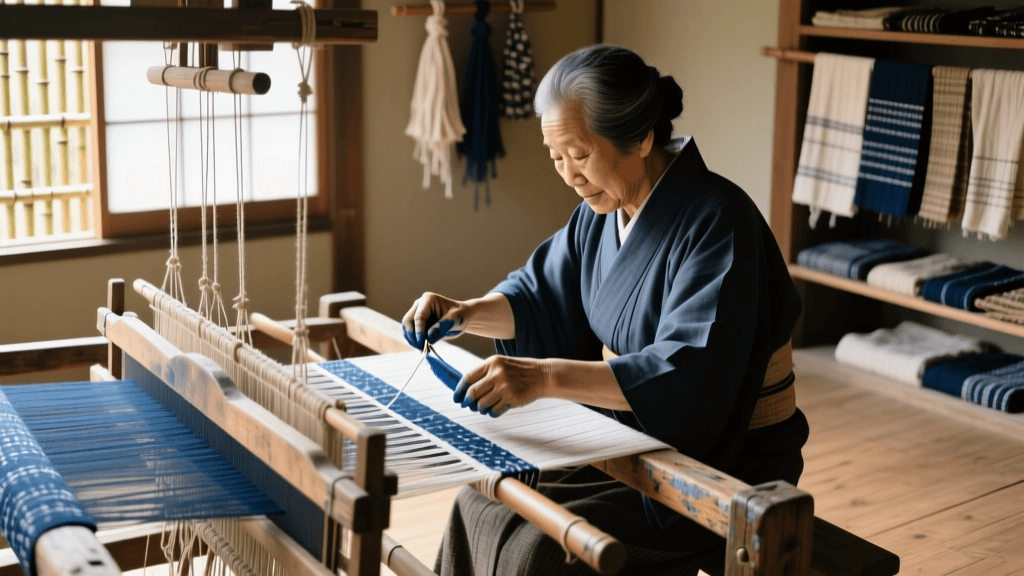
Preserving Chinese Drawloom Weaving Heritage In 2026
The Legacy of the Da Hua Lou in 2026
The Chinese drawloom, known historically as the Da Hua Lou (large pattern loom), represents the absolute zenith of ancient textile engineering. Unlike standard treadle looms, the drawloom was specifically designed to weave complex, large-scale figurative patterns, most notably the legendary Nanjing Yun brocade (Cloud Brocade). As of 2026, the preservation of these massive wooden structures and the intricate weaving techniques they require remains a critical focus for global textile historians and Asian heritage artisans. According to UNESCO's Intangible Cultural Heritage registry, the Nanjing Yunjin brocade weaving technique is a masterpiece of human ingenuity, requiring a level of symbiosis between weavers that is virtually unmatched in global textile history.
In 2026, the intersection of ancient craftsmanship and modern preservation technology has transformed how these looms are maintained and operated. Heritage workshops in Nanjing and Suzhou now utilize advanced climate control and digital archiving to ensure that the physical looms and their "software"—the complex harness cord patterns—survive for future generations. This guide explores the anatomy, operation, and modern preservation of the Chinese drawloom, offering actionable insights for textile conservators, weavers, and historians.
Anatomy of the Traditional Chinese Drawloom
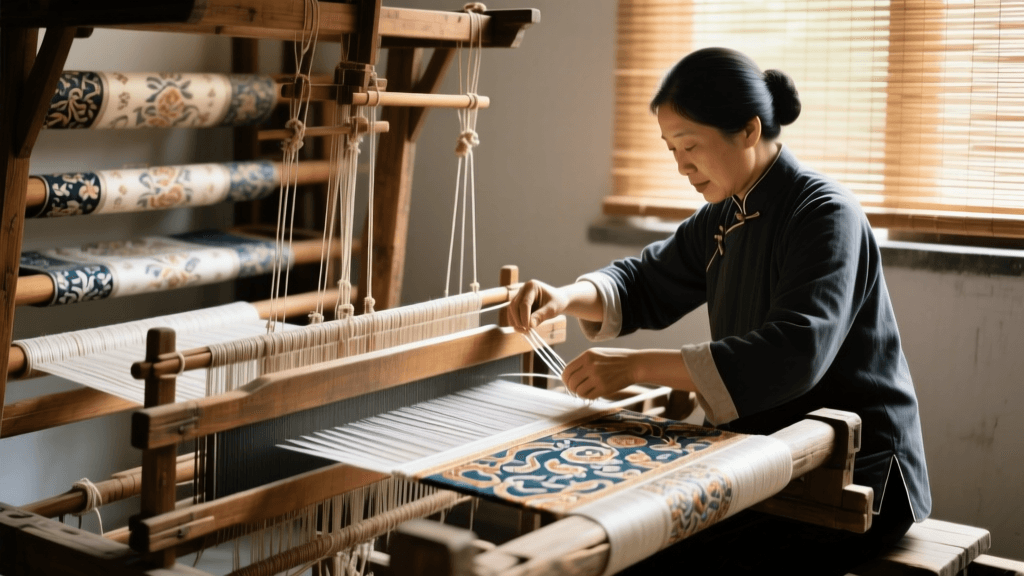
The Da Hua Lou is a towering structure, often exceeding four meters in height and spanning over five meters in length. It is traditionally constructed from aged camphor or elm wood, chosen for its resistance to warping and insect damage. The loom is divided into two primary operational zones:
- The Upper Deck (Pattern Harness Zone): This elevated platform houses the Jie Ben (pattern harness). It consists of thousands of silk heddle cords tied in a specific sequence that dictates the pattern. This is where the "software" of the textile lives.
- The Lower Deck (Weaving Zone): This is where the warp threads are tensioned and the weft threads are inserted. It features the bamboo reed, the shuttle race, and the treadles for the ground weave.
In 2026, master carpenters specializing in heritage loom restoration use LiDAR scanning to map the structural integrity of centuries-old wooden joints. Because traditional mortise and tenon joints expand and contract with seasonal humidity, modern heritage studios maintain a strict ambient relative humidity (RH) of 50% to 55% to prevent the wooden chassis from cracking or seizing.
The Symbiosis of the Pattern Puller and Weaver
Operating a Chinese drawloom is inherently a two-person endeavor. The physical and communicative synergy required between the two artisans is the defining characteristic of Yun brocade production.
The Zhuai Hua (Pattern Puller)
Seated on the upper deck, the Zhuai Hua is responsible for lifting the correct warp threads to create the pattern shed. Following a traditional "punch card" system made of knotted cords, the puller yanks specific bundles of harness cords upward. This action requires immense upper body strength and precise timing, as pulling the wrong cord will instantly ruin the intricate brocade motif.
The Zhi Hua (Weaver)
Seated at the lower deck, the Zhi Hua manages the ground weave treadles, passes the shuttle carrying the weft thread, and beats the reed to pack the threads tightly. Crucially, the weaver also incorporates supplementary weft threads—such as gold leaf or peacock feather yarns—using small bobbins, weaving them only into the specific areas of the pattern that require color or metallic highlighting.
To mitigate the severe ergonomic strain historically associated with the drawloom, 2026 heritage workshops have introduced concealed ergonomic seating and anti-fatigue matting that do not alter the loom's historical footprint but significantly reduce joint degradation for the artisans.
Materials: Sourcing Authentic Silk and Gold Threads
The brilliance of the Da Hua Lou is only realized through the materials it weaves. As noted in traditional sericulture practices recognized by UNESCO, the foundation of Chinese brocade relies on premium mulberry silk. In 2026, sourcing authentic, historically accurate materials requires navigating a specialized market of heritage-grade suppliers.
| Material | Composition | 2026 Price (per 100m) | Primary Use in Drawloom |
|---|---|---|---|
| Grade 6A Mulberry Silk | 100% Bombyx mori, high twist | $45 - $65 USD | Warp foundation and base weft |
| Gold Leaf Silk (Pian Jin) | Silk core, real gold foil lacquer wrap | $900 - $1,300 USD | Motif highlighting and borders |
| Peacock Feather Thread | Silk core, peacock barb wrapping | $450 - $600 USD | Iridescent accents in floral motifs |
| Ramie Blended Silk | 70% Silk, 30% Ramie | $30 - $45 USD | Reinforcement for heavy tapestry zones |
Note: Prices reflect Q1 2026 wholesale rates from certified heritage suppliers in Jiangsu and Zhejiang provinces. Authentic gold leaf silk must be verified via X-ray fluorescence (XRF) testing to ensure the use of real gold rather than modern synthetic metallic substitutes.
Step-by-Step: The Weaving Cycle of Yun Brocade
For textile students and apprentices studying the drawloom in 2026, mastering the weaving cycle requires breaking down the process into micro-movements. A single centimeter of complex Yun brocade can take an entire day to complete.
- Shed Formation (Ground Weave): The weaver depresses the treadles to open the ground shed. The pattern puller remains still.
- Shuttle Pass: The weaver throws the main shuttle carrying the foundational silk weft through the shed.
- Pattern Shed Opening: The pattern puller yanks the designated harness cord bundle, lifting specific warp threads to create the pattern shed.
- Supplementary Weft Insertion: The weaver uses small, localized bobbins (the Wang technique) to weave colored or metallic threads exclusively within the boundaries of the lifted pattern warp.
- Beating: The weaver pulls the heavy bamboo reed forward to pack the weft tightly against the fell of the cloth, ensuring the brocade's dense, weather-resistant texture.
- Reset: The pattern puller releases the cord, the weaver releases the treadle, and the warp tension is advanced via the ratchet mechanism.
Modern Preservation: Digital Archiving of Loom Patterns
One of the most significant vulnerabilities of the Da Hua Lou is the physical degradation of the Jie Ben (pattern harness cords). Traditionally, if the silk cords tying the pattern snapped or rotted, the "software" for that specific brocade design was lost forever, requiring months of labor to re-tie from memory or fragmented manuscripts.
Today, institutions like The Metropolitan Museum of Art's Asian Art conservation departments and the Nanjing Cloud Brocade Research Institute employ high-resolution 3D photogrammetry to map the exact topology of the harness cords before they are untied for restoration. In 2026, AI-assisted knot-recognition software can analyze these 3D models and generate a digital blueprint, ensuring that even if the physical loom is damaged, the exact mathematical sequence of the draw can be perfectly reconstructed on a new harness.
Practical Advice for 2026 Loom Conservators
If you are managing a heritage textile collection or overseeing a traditional weaving studio, maintaining a functional drawloom requires strict adherence to environmental and mechanical protocols:
- Warp Tensioning: Never leave the warp under full tension when the loom is idle for more than 48 hours. The continuous stress will permanently stretch the silk fibers and warp the wooden breast beam. Use the traditional slackening ratchets to relieve tension.
- Shuttle Maintenance: The wooden shuttles must be polished with natural beeswax bi-weekly. In 2026, synthetic microfiber liners are often placed in the shuttle race to reduce friction and prevent microscopic wood splinters from snagging the delicate gold-leaf threads.
- Pest Management: Camphor wood naturally repels many insects, but the silk heddles are highly susceptible to carpet beetles. Implement an anoxic pest management system (using nitrogen gas chambers) for any textile components removed from the loom for cleaning, avoiding chemical pesticides that can degrade the silk fibroin.
Conclusion
The Chinese drawloom is not merely a tool; it is a monumental archive of mathematics, art, and cultural history. As we navigate 2026, the survival of the Da Hua Lou and the breathtaking Nanjing Yun brocade it produces relies on a delicate balance. By respecting the ancient, grueling mechanics of the two-person weave while embracing modern climate control and digital archiving, we ensure that the clouds of silk woven in ancient China continue to materialize in the modern era. For weavers and conservators alike, the drawloom remains a profound testament to the heights of human patience and precision.