Mastering Hanfu Etiquette: Greetings and Dress Code Rules
The Intersection of Garment and Behavior in Chinese Tradition
China has long been revered as the Li Yi Zhi Bang (礼仪之邦), the 'State of Etiquette and Propriety.' In the context of traditional Chinese culture, clothing is never merely a functional covering or a superficial fashion statement; it is a profound physical manifestation of social harmony, cosmic philosophy, and moral rectitude. The modern Hanfu revival has brought millions of enthusiasts back to the elegant silhouettes of the Han, Tang, Song, and Ming dynasties. However, wearing the garment is only half of the equation. To truly honor the tradition, one must understand the rigorous Hanfu etiquette, greeting rituals, and dress code rules that historically governed daily life. According to extensive cultural reporting by BBC News on the Hanfu movement, modern practitioners are increasingly dedicated to learning these historical etiquettes, elevating the practice from simple cosplay to a genuine revival of cultural heritage.
The Golden Rule of Hanfu Dress Code: Jiao Ling You Ren
If there is one absolute, unbreakable rule in Hanfu dress code, it is the concept of Jiao Ling You Ren (交领右衽), which translates to 'crossed collar, right lapel.' When wearing the iconic Y-shaped crossed collar robe, the left side of the collar must always cross over the right side, resting on the wearer's right shoulder and chest.
Why Does Collar Direction Matter?
In traditional Chinese cosmology, the left side represents Yang (life, vitality, and the living), while the right side represents Yin (death, the underworld, and the spiritual realm). Therefore, wrapping the left over the right signifies the triumph of life and adherence to civilized Han customs. Reversing this—wrapping the right over the left (Zuo Ren)—is strictly reserved for dressing the deceased for burial. Historically, it was also associated with nomadic tribes outside the Central Plains.
'Without Guan Zhong, we would be wearing our hair unbound and folding our robes to the left.' — Confucius, The Analects, highlighting the deep cultural association between rightward lapels and civilized society.
Actionable Advice: Always check your collar in a mirror before stepping out. If you are taking photographs or looking in a mirror, remember that reflections reverse the image; ensure the physical garment on your body crosses left over right.
Sleeve Proportions and the Philosophy of Cut
Hanfu tailoring relies heavily on flat-pattern cutting, utilizing entire widths of fabric to minimize waste and honor the materials. The UNESCO-recognized silk craftsmanship of China historically produced fabrics in specific loom widths, which dictated the structural geometry of the garments. Formal Hanfu sleeves are designed with a concept known as Hui Zhou (回肘). When the wearer extends their arms horizontally, the elongated sleeves should drape gracefully, folding back over the elbow. When the hands are clasped together in front of the chest, the cuffs should meet perfectly, hiding the hands entirely. This design enforces a physical restriction that naturally slows down the wearer's movements, promoting a calm, dignified, and deliberate demeanor.
Dress Code Tiers: Matching Garments to Occasions
Just as Western fashion has black-tie and business-casual distinctions, Hanfu operates on a strict hierarchy of formality. Wearing a highly formal court robe to a casual tea house is considered a faux pas, just as wearing a casual summer top to an ancestral rite shows disrespect.
- Xiaoli (Casual / Everyday): Garments like the Ruqun (top and skirt ensemble) or Beizi (open-front jacket). Fabrics are typically breathable cotton, linen, or lightweight ramie. Sleeves are narrower for practicality. Suitable for daily wear, casual meetups, and navigating modern city streets.
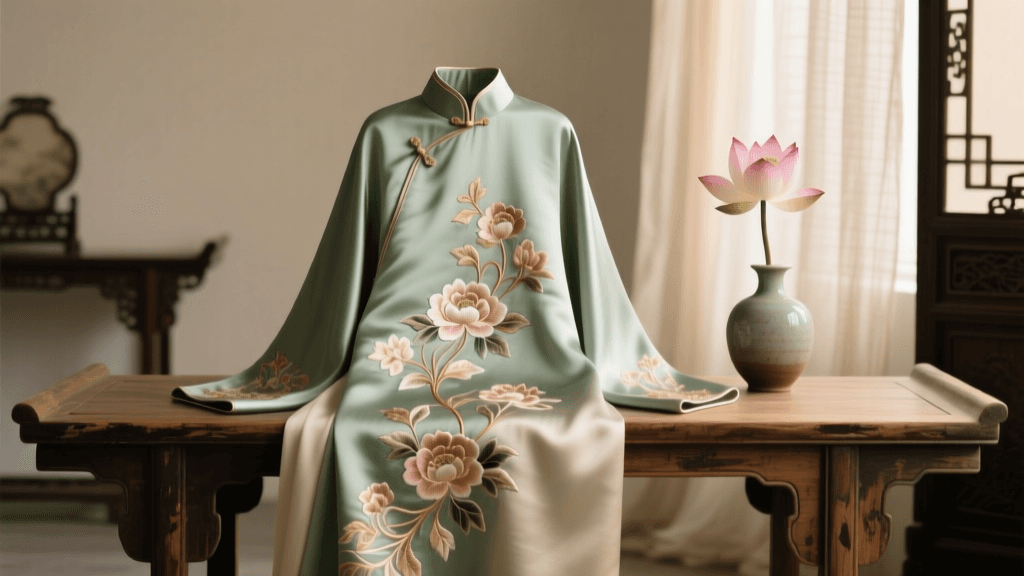
- Zhongli (Semi-Formal): Garments like the Shenyi (deep robe connecting top and bottom) or Yuanlingpao (round-collar robe). Often made from silk blends or damask with subtle embroidery. Suitable for traditional festivals, visiting elders, attending tea ceremonies, or cultural exhibitions. As noted in the Metropolitan Museum of Art's archives on Chinese textiles, the integration of intricate silk weaves in semi-formal wear historically denoted scholarly or merchant-class refinement.
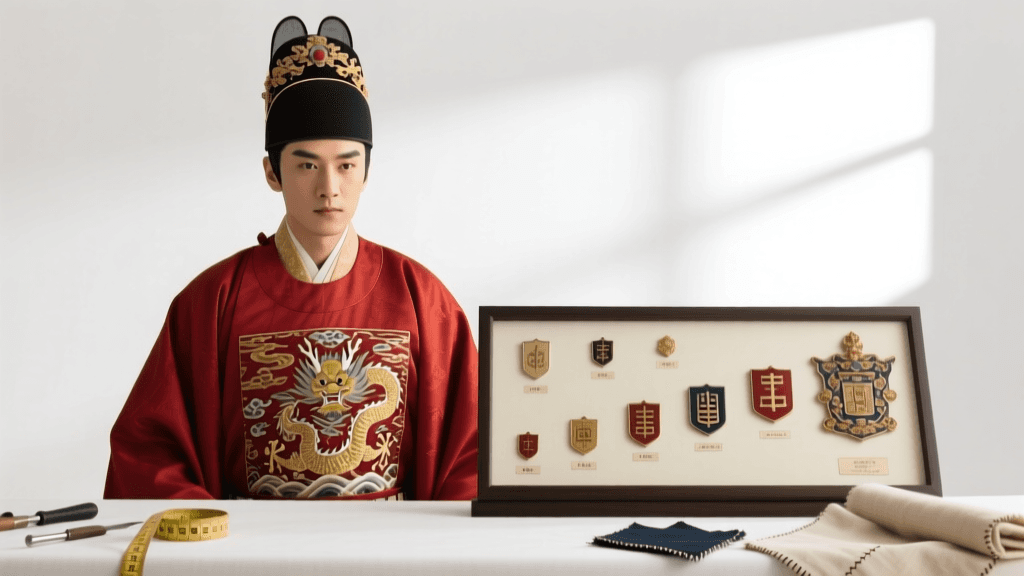
- Dali (Highly Formal): Garments like the Mianfu or elaborate Chaofu (court robes). These feature heavy brocades, extensive embroidery (dragons, phoenixes, auspicious clouds), and strict color codings (e.g., black and red for traditional weddings). Reserved for coming-of-age ceremonies (Guan Li / Ji Li), weddings, and major ancestral worship rites.
Hanfu Greeting Rituals: The Physical Language of Respect
In the Hanfu tradition, how you greet someone is just as important as what you are wearing. Greetings are dictated by the Book of Rites (Liji) and vary based on gender, social status, and the formality of the occasion. The core philosophy is to show respect while maintaining physical boundaries and bodily harmony.
1. Gong Shou Li (Cupped Hands Greeting)
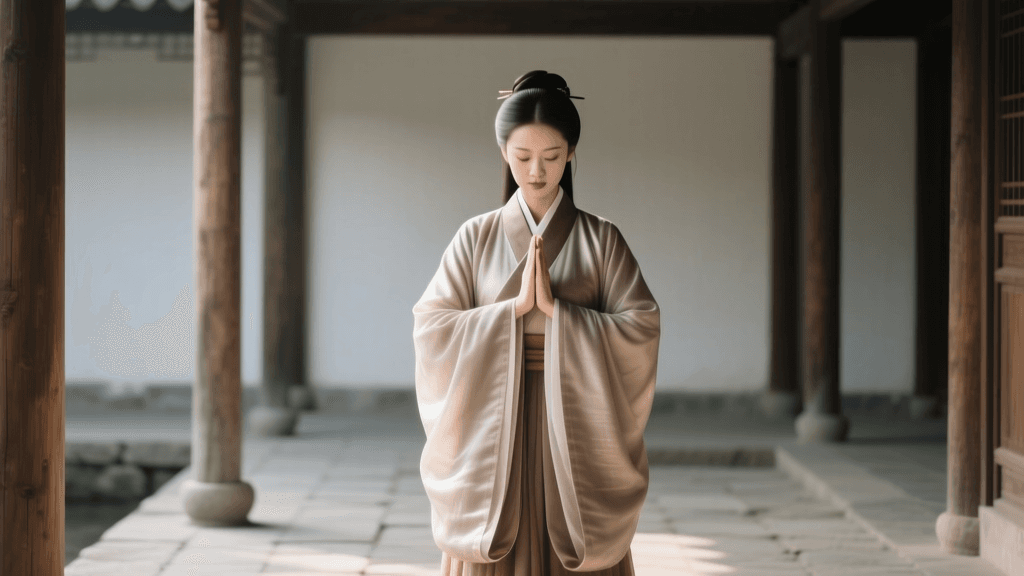
This is the standard, everyday greeting used when meeting peers or acquaintances. It involves clasping the hands in front of the chest.
- For Men: The left hand wraps over the right fist. (Left is Yang/life).
- For Women: The right hand wraps over the left fist. (Right is Yin).
Note: In some modern Hanfu communities, women also adopt the left-over-right rule for standard auspicious greetings, but strict traditionalists maintain the Yin/Yang gender split. During funerals or inauspicious events, these hand positions are reversed.
2. Yi Li (The Formal Bow)
Used when greeting elders, teachers, or during formal ceremonies. The practitioner performs the Gong Shou hand clasp, raises the hands to eye level, pushes them slightly forward, and then bows from the waist. The back must remain perfectly straight; bending the neck or slouching is considered disrespectful. The depth of the bow indicates the level of respect: 30 degrees for peers, 45 degrees for elders, and 90 degrees for profound reverence.
3. Wan Fu Li (Women's Blessing Bow)
A graceful greeting historically used by women, particularly from the Song and Ming dynasties. The hands are clasped gently at the hip or lower waist. The woman keeps her back straight, bends her knees slightly into a subtle curtsy, and bows her head modestly. It is highly elegant and pairs beautifully with the flowing lines of the Ruqun or Mamianqun (horse-face skirt).
Comparison Chart of Hanfu Greeting Rituals
| Ritual Name | Primary Gender | Hand Position | Bow Depth | Best Used For |
|---|---|---|---|---|
| Gong Shou Li | Both | Men: Left over Right Fist Women: Right over Left Fist | None (Standing) | Daily greetings, casual encounters |
| Yi Li | Primarily Men | Cupped hands pushed forward | 30° to 90° | Elders, teachers, formal ceremonies |
| Wan Fu Li | Women | Clasped at hip/waist | Slight knee bend | Semi-formal greetings, festivals |
| Su Bai (Kowtow) | Both | Hands on the floor | Kneeling, head to floor | Ancestral worship, deities ONLY |
Crucial Warning: Never perform the Su Bai (full kneel and kowtow) to living people in modern contexts, as it is heavily reserved for deceased ancestors, deities, or historically, the Emperor. Doing so to a living person can cause immense social awkwardness and is considered highly inappropriate.
Hair, Grooming, and Accessory Etiquette
The Classic of Filial Piety states: 'Body, hair, and skin are given by parents, one dare not damage them.' Historically, cutting one's hair was a punishment reserved for criminals. Therefore, adults wearing Hanfu must adhere to strict grooming rules to maintain the integrity of the silhouette.
- Hair Tying: Leaving hair completely loose and flowing down the back is historically inaccurate for adults and is viewed as unkempt, childlike, or indicative of a state of mourning. Men must tie their hair into a topknot, secured with a Zan (hairpin) or covered with a Guan (cap). Women should wear their hair in elegant updos or braids, adorned with Buyao (step-shake hairpins) or combs.
- Footwear: Modern sneakers break the historical illusion. Practitioners should invest in traditional cloud-head shoes (Yuntou Xie), embroidered cloth boots, or simple, unbranded leather flats that mimic historical silhouettes.
- Makeup: While Tang dynasty court makeup featured bold, experimental designs (like Huadian forehead decals), everyday Hanfu etiquette favors a clean, refined aesthetic. Subtle enhancements that highlight natural features are preferred over heavy, modern contouring.
Conclusion: Embodying the Spirit of Liyi
Mastering Hanfu etiquette is a journey of connecting with the philosophical roots of Asian traditions. The garments are designed to shape the body, but the etiquette is designed to shape the mind. By adhering to the Jiao Ling You Ren dress code, understanding the appropriate tiers of formality, and executing greeting rituals with mindfulness and respect, practitioners do more than just wear historical clothing. They breathe life into a millennia-old cultural dialogue, proving that true elegance lies not just in the silk and embroidery, but in the grace, respect, and harmony of the wearer's actions.