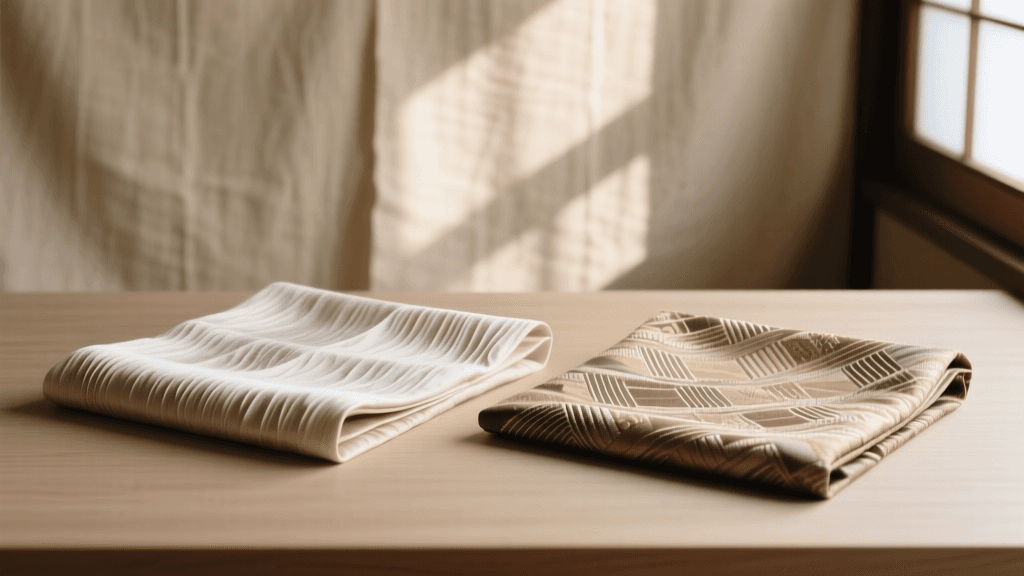
Mastering Kurume Kasuri Jibata Loom Weaving in 2026
The Renaissance of Kurume Kasuri in 2026
In the global textile landscape of 2026, the demand for sustainable, slow-fashion garments has catalyzed a massive revival in traditional Asian weaving techniques. Among the most revered of these is Kurume Kasuri, a highly complex cotton ikat textile originating from Fukuoka Prefecture, Japan. While modern power looms can mimic the geometric patterns of kasuri, true connoisseurs and international fashion houses are increasingly seeking out authentic, hand-woven textiles produced on the traditional jibata (Japanese floor loom). According to the Metropolitan Museum of Art's Heilbrunn Timeline of Art History, Japanese textiles have long been celebrated for their technical brilliance and profound aesthetic philosophy, a legacy that continues to evolve today.
For the modern artisan and textile enthusiast, mastering the jibata loom to produce Kurume Kasuri is not merely an exercise in historical reenactment; it is a vital, living practice. In 2026, weaving cooperatives in Kurume City have integrated ergonomic adaptations to the traditional floor loom, allowing a new generation of weavers to sustain the rigorous physical demands of the craft while preserving the soul of the technique. This comprehensive guide explores the anatomy of the jibata, the meticulous preparation of kasuri threads, and the precise hand-weaving methods required to achieve the elusive kasuri-awase (perfect pattern alignment).
Understanding the Jibata: The Traditional Japanese Floor Loom
Unlike the Western floor loom, where the weaver sits elevated on a bench, the jibata is a low-set wooden frame designed for a weaver seated on the floor. This grounded posture lowers the weaver's center of gravity, allowing for a deeply rhythmic, full-body engagement with the textile. The jibata is particularly suited for cotton and hemp weaving, providing the immense tension required for tightly packed weft-faced fabrics.
Key Components of the Jibata
- Chikiri (Warp Beam): Positioned behind the weaver, this heavy wooden beam holds the meticulously measured warp threads. In 2026, many artisans use reinforced carbon-steel cores inside the wooden chikiri to prevent warping under high-tension organic cotton yarns.
- Osa (Reed): The comb-like structure that beats the weft thread into place. Traditional Kurume Kasuri utilizes custom-carved bamboo reeds, which offer a slight flexibility that prevents the delicate, dye-resisted cotton threads from snapping during the beating process.
- Aya (Heddles and Treadles): The jibata utilizes a complex system of foot-operated treadles connected to wooden heddle bars. The weaver uses their feet to open the 'shed' (the gap between warp threads), freeing both hands to throw the shuttle and adjust the pattern.
- Hi (Shuttle): A sleek, boat-shaped wooden tool that carries the weft bobbin (hii). The aerodynamic shape of the hi is critical for achieving the rapid, fluid motion necessary to maintain consistent weft tension.
The Intricate Preparation: Te-gukuri and Indigo Dyeing
The magic of Kurume Kasuri begins long before the weaver sits at the jibata. The defining characteristic of kasuri (the Japanese term for ikat) is that the threads are resist-dyed before they are mounted on the loom. The traditional method, known as te-gukuri (hand-tying), is a painstaking process that defines the 2026 artisanal market.
Artisans begin by calculating the exact mathematical placement of the desired pattern. Bundles of raw cotton yarn are tightly bound with hemp or specialized biodegradable synthetic cords to resist the dye. For authentic Kurume Kasuri, natural indigo (ai) fermentation vats are employed. The bound threads are dipped repeatedly into the indigo vat, oxidized in the air, and dipped again until the desired depth of blue is achieved. The tied sections remain pristine white. Once the dyeing is complete, the bindings are removed, revealing the blurred, pixelated edges characteristic of kasuri. This 'bleed' is not a flaw; it is the highly prized aesthetic signature of the craft, celebrated by the Victoria and Albert Museum's Asian Textile Collection for its organic, cloud-like visual texture.
The Weaving Process: Achieving Kasuri-awase
Mounting the dyed warp onto the jibata is a multi-day process requiring absolute precision. The tension must be uniformly distributed across hundreds of threads. Once the loom is dressed, the actual weaving begins, and this is where the true mastery of the Kurume artisan is tested.
The primary challenge in weaving Kurume Kasuri is kasuri-awase—the exact alignment of the dyed weft threads with the dyed warp threads to form a cohesive, sharp picture or geometric motif. Because the weft thread is naturally slightly uneven after the dyeing and tying process, a machine cannot perfectly align the pattern. The human eye and hand are irreplaceable.
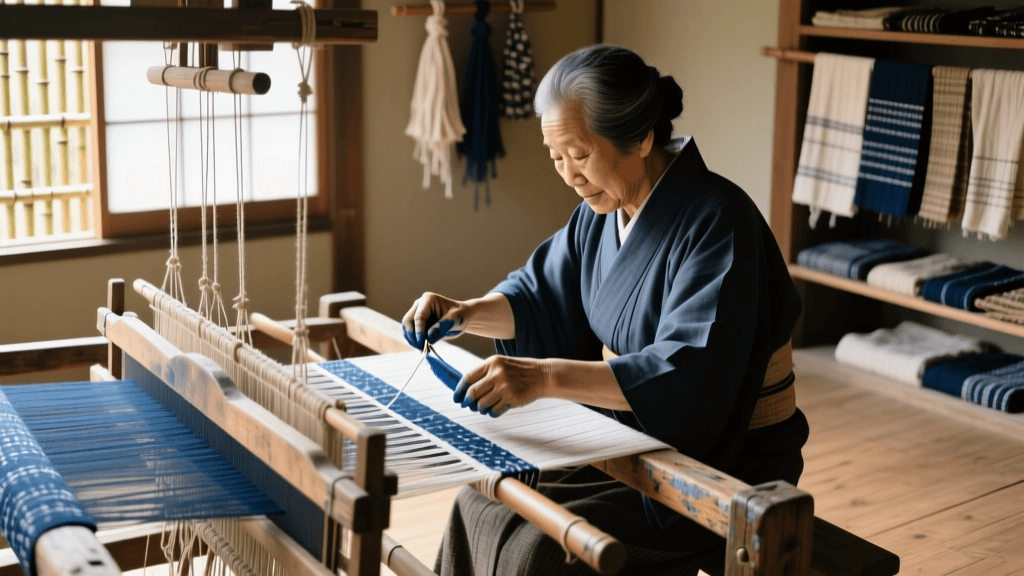
As the weaver depresses the treadle and throws the hi (shuttle) through the shed, they do not immediately beat the weft into place. Instead, the weaver pauses, using a specialized bamboo needle or their fingertips to micro-adjust the weft thread, shifting it fractions of a millimeter left or right until the white resist-dyed blocks perfectly intersect with the warp pattern. Only after this microscopic adjustment does the weaver pull the osa (reed) forward to beat the thread into the cloth. This pause-and-adjust rhythm means that a master weaver on a jibata produces only 10 to 15 centimeters of complex e-gasuri (picture kasuri) per day.
2026 Market Analysis: Hand-Woven vs. Machine-Woven Kasuri
As of 2026, the market for Kurume Kasuri is distinctly bifurcated. Mass-market fashion brands utilize computerized power looms to produce 'kasuri-style' fabrics, while luxury collectors and heritage fashion houses seek out the te-ori (hand-woven) pieces produced on jibata looms. The economic disparity reflects the immense labor value embedded in the traditional method. According to data from the Japan National Tourism Organization, heritage craft tourism in Fukuoka has surged in 2026, with international buyers directly commissioning bolts of hand-woven kasuri.
| Feature | Hand-Woven (Jibata Te-ori) | Machine-Woven (Power Loom) |
|---|---|---|
| Production Time (per 12m Tan) | 45 to 90 Days | 1 to 2 Days |
| 2026 Average Market Price | $2,800 - $4,500 USD | $120 - $250 USD |
| Pattern Alignment (Kasuri-awase) | Micro-adjusted by hand; crisp, intentional blur | Printed or mechanically approximated; rigid edges |
| Thread Material | Hand-spun, naturally fermented indigo cotton | Commercially spun, synthetic or chemical indigo |
| Textile Hand (Drape and Feel) | Supple, breathable, softens profoundly with age | Stiffer, uniform, lacks structural memory |
Maintaining the Jibata Loom in 2026
Owning and operating a jibata requires dedicated maintenance. The wooden frame, often crafted from Japanese cypress (hinoki) or oak, reacts to seasonal humidity changes. In 2026, weavers utilize advanced digital hygrometers in their studios to maintain a strict 55% humidity level, preventing the wooden treadles from swelling and the warp tension from fluctuating. The bamboo reeds must be brushed daily with specialized camellia oil to prevent the cotton fibers from catching and fraying. Furthermore, the physical toll on the weaver's lower back and knees is significant; modern weaving studios now incorporate heated, ergonomic floor cushions and localized lumbar support frames that integrate seamlessly with the antique wooden loom structures.
Sourcing Materials and Starting Your Jibata Journey
For textile artists looking to transition from Western floor looms to the Japanese jibata in 2026, sourcing authentic equipment requires navigating specialized artisanal networks. While antique jibata looms can occasionally be found through rural estate auctions in Japan, they often require extensive restoration by master woodworkers. Alternatively, contemporary woodworking studios in Kyoto and Fukuoka are now building new jibata looms to exact historical specifications, utilizing sustainably harvested hinoki. These modern commissions typically cost between $6,000 and $9,000 USD and have a waiting list of up to fourteen months.
Aspiring weavers should begin by mastering the fundamental foot-treadle rhythm and shuttle-throwing mechanics before attempting complex kasuri alignment. Many international weaving guilds now offer virtual and in-person masterclasses taught by visiting Kurume artisans, focusing on the transition from rigid Western weaving to the fluid, body-tensioned philosophy of the jibata. By embracing the slow, deliberate pace of the jibata, modern weavers not only preserve a vital piece of Asian cultural heritage but also contribute to a more mindful, sustainable future for the global textile industry.
Conclusion
The jibata loom is far more than a tool for interlacing threads; it is an instrument of cultural memory. The creation of Kurume Kasuri in 2026 stands as a testament to the enduring value of human touch in an increasingly automated world. From the rhythmic clatter of the wooden reed to the profound scent of fermented indigo, the sensory experience of hand-weaving on a jibata connects the modern artisan to centuries of Japanese textile mastery. Whether you are a collector seeking the perfect bolt of hand-woven cotton or a weaver looking to expand your technical repertoire, the world of Kurume Kasuri offers a profound, lifelong journey into the heart of Asian textile traditions.