Decoding Kimono Fabrics: Tango Chirimen & Nishijin-ori
The Foundation of Japanese Silk: An Introduction to Kimono Craftsmanship
The Japanese kimono is far more than a simple garment; it is a wearable canvas that reflects centuries of refined textile engineering, regional geography, and meticulous artistry. While the silhouette of the kimono has remained relatively unchanged since the Edo period (1603–1867), the fabrics used to create it represent the pinnacle of global textile craftsmanship. For collectors, cultural historians, and enthusiasts, understanding the material composition of a kimono is just as vital as appreciating its dyed motifs.
At the heart of high-end kimono production are two legendary textile traditions: the crepe silk foundation known as Tango chirimen and the opulent brocade weaving technique called Nishijin-ori. Together, these craftsmanship pillars dictate the drape, durability, and ultimate value of the garment. According to the Victoria and Albert Museum's extensive research on kimono artistry, the interplay between the silk canvas and the dyeing techniques, such as Yuzen, is what elevates Japanese garment-making to a revered fine art.
The Foundation: Tango Chirimen Crepe Silk
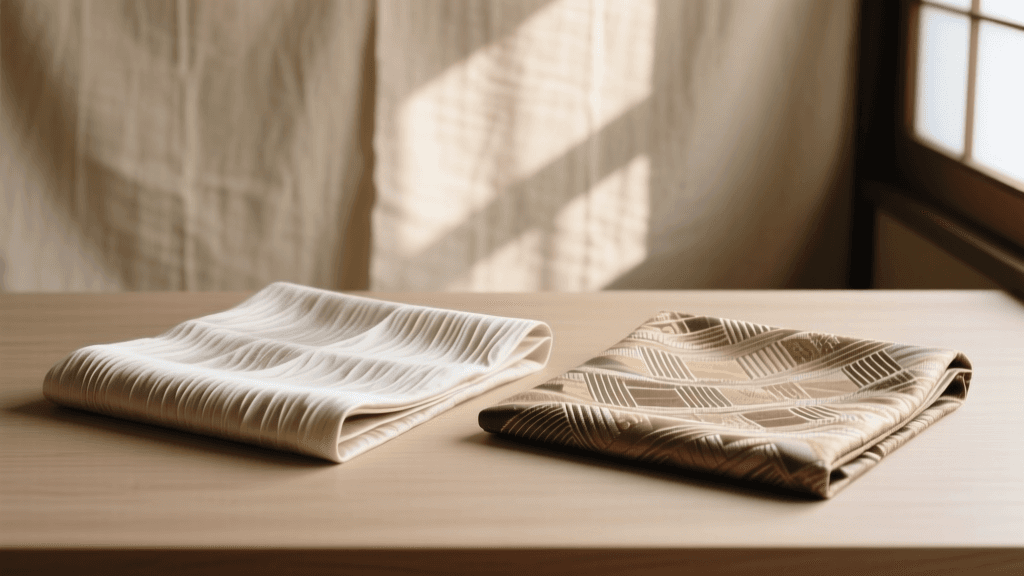
Before a kimono can be dyed with intricate floral or seasonal motifs, it requires a flawless canvas. Enter Tango chirimen, a premium crepe silk produced in the Tango region of northern Kyoto Prefecture. Chirimen is characterized by its distinctive pebbled texture, which is not woven into the fabric but created through extreme tension and twisting during the yarn preparation stage.
The Science of the Twist
The secret to chirimen lies in the weft (horizontal) yarns. Artisans twist the raw silk threads up to 2,500 to 3,000 times per meter. When the woven fabric is removed from the loom and washed in hot water, the highly twisted weft yarns contract and relax unevenly. This creates the microscopic 'pebbles' or crepe effect on the surface. This texture serves a highly practical purpose: it prevents the silk from wrinkling easily, gives the fabric a luxurious, heavy drape, and provides a matte finish that absorbs and reflects dyes with unparalleled depth.
'The unique topography of Tango, with its high humidity and soft, mineral-rich water, is essential for the silk threads to maintain their elasticity during the intense twisting process. Without this specific climate, the threads would snap.' — Regional Textile Historians
The Pinnacle of Weaving: Nishijin-ori Brocade
While chirimen provides the dyed canvas, Nishijin-ori represents the zenith of woven silk. Originating in the Nishijin district of Kyoto, this technique produces thick, richly patterned brocades primarily used for obi (the sash that secures the kimono) and formal outerwear like uchikake (wedding overcoats).
Handlooms vs. Jacquard Looms
Historically, Nishijin weavers utilized complex draw-looms requiring two artisans: one to weave and one to pull the warp threads from above to create the pattern. Today, while modern computerized Jacquard looms are used for commercial production, the highest-end Nishijin-ori is still woven on traditional hand-operated Jacquard looms. A single formal fukuro obi (a luxury bag-ob) woven with genuine gold and silver leaf threads can take a master artisan several weeks to complete, utilizing up to 9,000 individual warp threads. The Nishijin Textile Center in Kyoto remains a vital institution for preserving these ancestral loom techniques and certifying authentic regional brocades.
Understanding the Canvas: Tanmono and Monme
For buyers and collectors, navigating the kimono market requires fluency in traditional Japanese textile measurements. Unlike Western tailoring, which cuts fabric to individual body measurements, kimonos are constructed from a standard bolt of fabric known as a tanmono.
Standard Measurements
- Length: A standard tanmono is approximately 12 to 14 meters (39 to 46 feet) long.
- Width: The width is strictly woven to about 38 to 42 centimeters (15 to 16.5 inches).
- Construction: The kimono is made by cutting this single bolt into eight rectangular panels (two for the body, two for the sleeves, two for the overlap, and two for the collar). Because the fabric is rarely cut to shape, a kimono can be entirely disassembled, cleaned, re-dyed, and sewn back together, ensuring the garment can outlive its original wearer.
Measuring Weight: The Monme System
Silk weight is measured in monme (abbreviated as 'mm'), a traditional Japanese unit where 1 monme equals exactly 3.75 grams. When evaluating a chirimen kimono, buyers should look for the weight per square meter. A lightweight summer silk might be 15 monme, while a heavy, premium winter Tango chirimen will range from 25 to 35 monme. Heavier fabrics command higher prices due to the volume of raw silk required and their superior draping qualities.
Fabric Comparison Chart: A Collector's Guide
To make informed purchasing decisions, it is crucial to understand how different silk types perform across seasons and occasions. Below is a structured comparison of the most prominent kimono fabrics.
| Fabric Type | Weave / Texture | Best Season | Price Range (New Custom) | Primary Use |
|---|---|---|---|---|
| Tango Chirimen | Crepe, pebbled matte finish, heavy drape | Autumn, Winter, Spring | $800 – $3,500+ | Everyday to formal dyed kimono (Yuzen) |
| Nishijin-ori | Brocade, thick, raised metallic patterns | All Seasons (depending on lining) | $2,000 – $15,000+ | Formal Obi, Uchikake, Haori |
| Oshima Tsumugi | Pongee, flat weave, mud-dyed, crisp texture | Autumn, Winter, Spring | $3,000 – $20,000+ | High-end casual, intellectual chic |
| Ro / Sha | Leno weave, sheer, visible horizontal gaps | Summer (July - August) | $400 – $1,500 | Summer kimono, lightweight Juban |
| Habutai | Plain weave, smooth, lustrous surface | All Seasons | $200 – $800 | Under-kimono (Juban), lining, casual wear |
Actionable Buying & Care Guide
Whether you are sourcing vintage pieces from Kyoto antique markets or commissioning a modern artisan, proper care and authentication are paramount. The Kyoto Tourism Official Guide emphasizes that maintaining traditional textiles requires an understanding of their organic origins.
Authentication Tips
- Look for the Selvedge Stamp: Authentic Tango chirimen and Nishijin-ori often feature stamped seals or woven labels on the inner selvedge (the tightly woven edge of the tanmono) indicating the weaving guild and artisan.
- The Burn Test (for loose threads only): Genuine silk will smell like burning hair when exposed to a flame and leave a crushable, black ash bead. Synthetic blends will melt into a hard plastic bead and smell like chemicals.
- Check the Drape: High-monme chirimen should feel dense and fluid. If the fabric feels stiff or overly buoyant, it may be heavily sized with synthetic starches or blended with polyester.
Maintenance and Storage
- Airing Out: Never store silk in plastic, which traps moisture and causes mildew. After wearing, hang the kimono on a specialized wide bamboo hanger (emono) in a shaded, well-ventilated room for 24 hours to allow sweat and moisture to evaporate.
- Cleaning: Traditional kimonos are rarely washed in water. They require arai-hari, a centuries-old process where the garment is completely unstitched, washed in specialized solvents or mild natural soaps, stretched on wooden boards to dry, and then meticulously resewn. Expect to pay between $150 and $300 for professional arai-hari services, and allow 4 to 8 weeks for the process.
- Climate Control: Store folded kimonos in acid-free tatoushi (traditional Japanese paper wrappers) inside a wooden chest (tansu). Include natural desiccants and replace them every six months to prevent humidity damage, which is the primary enemy of silk brocades and metallic threads.
Conclusion
The creation of a single silk kimono is a symphony of specialized labor, involving silk farmers, thread twisters, weavers, dyers, and tailors. By understanding the structural brilliance of Tango chirimen and the artistic mastery of Nishijin-ori, collectors and wearers can better appreciate the profound cultural heritage woven into every thread. Investing in these traditional fabrics is not merely a fashion choice; it is an active participation in the preservation of Japanese artisanal history.