Miao Silver Jewelry and Indigo Batik: A Buyer's Guide
The Miao people, widely known in the West as the Hmong, represent one of China’s most culturally vibrant ethnic minorities. Concentrated primarily in the mountainous regions of Guizhou, Yunnan, and Hunan provinces, the Miao have historically lacked a formal written language. Instead, they have encoded their myths, migrations, and social structures into their material culture—most notably through breathtaking silver jewelry and complex indigo batik textiles. According to cultural historians and resources like Encyclopedia Britannica, these garments and accessories serve as wearable history books, marking everything from marital status to spiritual protection.
For collectors, fashion historians, and conscious consumers, understanding the nuances of Miao craftsmanship is essential. This guide delves into the technical specifications, cultural significance, and practical buying advice for authentic Miao silver and indigo batik, ensuring you can appreciate and support these living traditions.
Miao Silver Jewelry: Wearable Wealth and Spiritual Armor
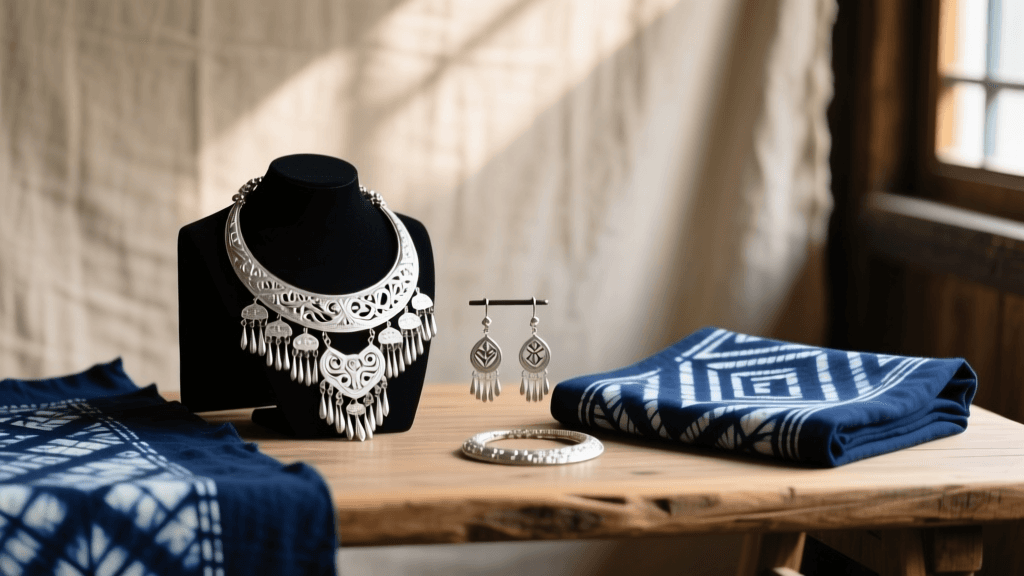
In Miao culture, silver is far more than an adornment; it is a spiritual shield against evil spirits and a tangible display of a family's wealth and social standing. A full set of traditional Miao silver festival regalia can weigh anywhere from 5 to 10 kilograms, encompassing elaborate headdresses, neck rings, chest locks, and hairpins.
The Craftsmanship and Forging Techniques
Traditional Miao silversmiths employ over thirty distinct techniques to create their masterpieces. The most prominent include repoussé (hammering the metal from the reverse side to create a raised design), filigree (twisting fine silver threads into intricate lace-like patterns), and chasing. Motifs heavily feature the natural world and Miao mythology, particularly the butterfly mother (a central creation deity), dragons, water buffalo, and birds.
Practical Guide: Sizing, Purity, and Costs
When sourcing authentic Miao silver, buyers must understand the metallurgical standards and pricing structures:
- Purity Marks: Unlike Western sterling silver (92.5% purity), traditional Miao silver is typically forged at 99.0% or 99.9% purity. Look for the stamps "990" or "999". Because pure silver is softer, authentic pieces will feel slightly more malleable and will not have the rigid snap of alloyed metals.
- Weight and Sizing: A standard artisan-crafted silver neck ring (xiangquan) measures 15-20 cm in diameter and weighs between 300g and 600g. Headdresses (yinjiao) can span 60-80 cm in width.
- Pricing Structure: Authentic artisan silver is priced by weight plus a craftsmanship fee. Expect to pay between 15 to 30 RMB ($2 to $4 USD) per gram. Therefore, a 500g authentic neck ring will cost roughly 7,500 to 15,000 RMB ($1,050 to $2,100 USD). If a large piece is sold for a fraction of this cost, it is likely made of copper-nickel alloys (often called "Tibetan silver" or "Miao silver" in tourist traps) and contains no actual silver.
The Alchemy of Miao Indigo Batik (Lajian)
Miao batik, or lajian, is a resist-dyeing technique that transforms plain cotton and hemp into striking, metallic-blue textiles. Museums such as the Metropolitan Museum of Art preserve historical examples of these textiles, noting their complex geometric patterns that map out Miao cosmological beliefs.
The Resist-Dyeing Process and Chemistry
The process begins with melting a mixture of beeswax and pine resin at approximately 65°C to 70°C. Using a specialized brass knife called a laxiao, the artisan draws intricate patterns onto the white fabric. The wax acts as a resist, preventing the dye from penetrating the covered areas.
The true magic lies in the indigo vat. Artisans use leaves from the Strobilanthes cusia (Japanese indigo) or Indigofera tinctoria plant. The leaves are fermented in water mixed with rice wine and wood ash lye to create an alkaline environment with a pH between 9 and 11. This chemical reduction process makes the indigo water-soluble.
Timing and the Oxidation Cycle
Dyeing is not a single-step process; it requires immense patience and precise timing.
"The fabric must be dipped into the indigo vat and then hung in the air to oxidize. It is the oxygen in the air that turns the yellow-green liquid into the iconic deep blue. This dip-and-oxidize cycle must be repeated 15 to 20 times over two to three weeks to achieve the dark, almost black-blue hue prized by the Miao."
Once the desired depth of color is reached, the fabric is boiled in hot water to melt away the wax, revealing the crisp white patterns against the deep indigo background. The characteristic "ice-crack" veining—caused by the wax fracturing as the fabric is handled—allows tiny amounts of dye to seep in, giving each piece a unique, organic fingerprint.
Caring for Indigo-Dyed Textiles
If you purchase an authentic Miao batik jacket or textile, proper care is vital to maintain its integrity:
- Washing: Hand wash only in cold water (below 30°C). Use a pH-neutral, mild detergent. Never use bleach or harsh alkalis, which will strip the indigo.
- Drying: Dry flat in the shade. Direct sunlight will rapidly fade the natural indigo pigments.
- Crocking: Be aware that natural indigo will "crock" (transfer color) onto lighter fabrics or skin during the first few wears. This is a hallmark of natural, chemical-free dyes and will diminish over time.
Comparison Chart: Authentic Artisan vs. Tourist Market
When shopping in regions like Guizhou, it is crucial to distinguish between genuine heritage crafts and mass-produced souvenirs. Use this comparison chart to guide your purchases:
| Feature | Authentic Artisan Piece | Mass-Produced Tourist Item |
|---|---|---|
| Silver Purity | 990 or 999 pure silver; soft, heavy, hallmarked. | Copper, brass, or nickel alloy; lightweight, rigid, no hallmark. |
| Silver Weight | 300g - 1000g+ per major piece. | Under 100g; often hollow or thinly plated. |
| Batik Wax | Beeswax and pine resin; features natural "ice-crack" veining. | Synthetic paraffin wax or screen-printed white ink; uniform, artificial cracks. |
| Indigo Source | Fermented plant leaves; smells faintly earthy/fermented. | Synthetic chemical dyes; smells of harsh chemicals or has no scent. |
| Price Range | Jacket: 1,500 - 4,000 RMB ($210 - $560 USD). | Jacket: 50 - 150 RMB ($7 - $21 USD). |
Sourcing and Supporting Miao Artisans
To truly appreciate and ethically source Miao crafts, one must engage directly with the communities that keep these traditions alive. Global heritage organizations like UNESCO emphasize the importance of supporting the economic ecosystems surrounding intangible cultural heritage to prevent these skills from vanishing.
Where to Go
For silver, the towns of Shidong and Leishan in Guizhou Province are renowned for their multi-generational silversmithing families. For batik, Danzhai County is widely considered the epicenter of Miao indigo dyeing, home to numerous cooperatives where women gather to draw wax and tend the vats.
When to Visit
Timing your visit to coincide with traditional festivals offers the best opportunity to see these garments in their intended context. The Miao New Year (typically falling in October or November on the lunar calendar) and the Lusheng Festival are spectacular events. During these times, women don their full silver regalia and finest batik pleated skirts, transforming the village squares into dazzling exhibitions of living art.
Conclusion
Purchasing Miao silver jewelry and indigo batik is an investment in human history. By understanding the metallurgical purity of the silver, the complex chemistry of the indigo vat, and the fair market costs of artisan labor, buyers can avoid exploitative tourist traps. Instead, you can build a meaningful collection that directly supports the Miao artisans who continue to forge and dye their ancestral stories into existence.