The Complete Hanfu Ensemble: Jade Hair Accessories Guide
The Architecture of a Complete Hanfu Ensemble
The modern Hanfu revival is a meticulous pursuit of historical aesthetics, yet many enthusiasts focus solely on the garments while neglecting the crowning glory of the silhouette: the hair. A truly authentic Hanfu ensemble is not merely a dress; it is a comprehensive architectural layering of textiles, accessories, and hairstyling that communicates status, era, and philosophical alignment. To master the complete Hanfu look, one must understand how the foundational garments interact with traditional jade hair accessories, creating a harmonious balance between structured fabrics and luminous stones.
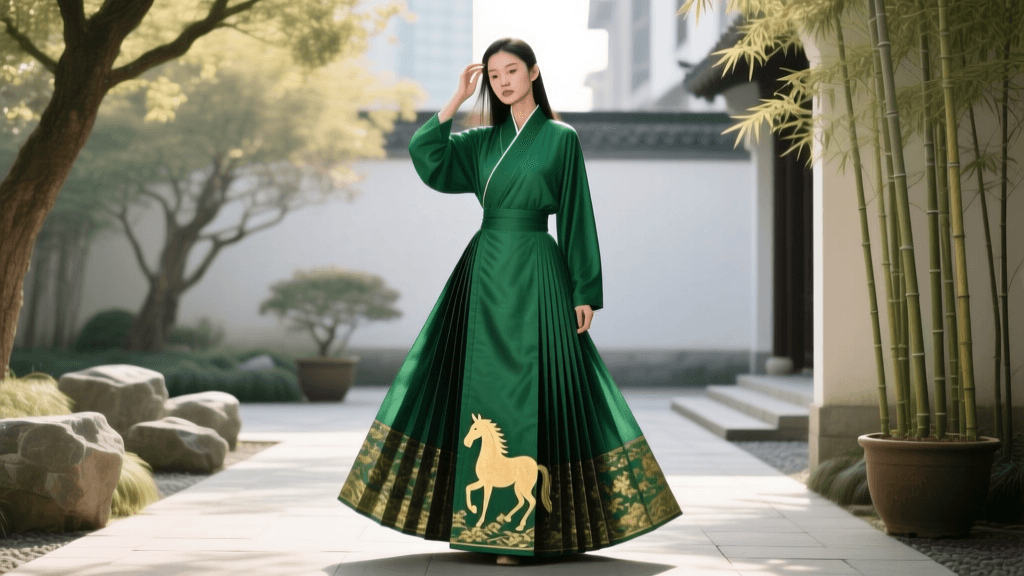
The foundation of any Hanfu outfit begins with the Zhongyi (inner garment), typically a white or unbleached cotton or linen cross-collared shirt that protects the outer layers from body oils and provides a crisp, contrasting collar line. Over this, the primary outer layers are worn. For a Ming Dynasty silhouette, this involves an Ao (a lined, structured jacket with a stand-up or cross collar) paired with a Mamianqun (horse-face skirt). A proper Mamianqun requires substantial fabric—typically 4.5 to 6 meters of material—to ensure the pleats remain flat and the overlapping front and back panels drape correctly during movement. For Tang Dynasty styles, the Qixiong Ruqun (chest-high skirt) demands lighter, flowing silks that gather just below the collarbone, secured by long, embroidered ties.
The Cultural Weight of Jade and the Jili Ceremony
In traditional Chinese culture, hair was considered a sacred gift from one's parents, and cutting it was viewed as an act of filial impiety. Consequently, hair was grown long and intricately styled, necessitating a robust array of hair accessories. The transition to adulthood for women was marked by the Jili (hair-pinning ceremony) at the age of fifteen. During this rite of passage, a young woman's hair was gathered into an updo and secured with a Zan (hair stick) for the first time, signaling her eligibility for marriage and her entry into adult society.
Jade was the undisputed king of these accessories. More than just a decorative stone, jade was imbued with profound moral significance. According to The Metropolitan Museum of Art's Heilbrunn Timeline of Art History, Confucius famously compared jade to virtue, noting that its温润 (warmth and luster) represented benevolence, while its hardness represented wisdom and justice. Wearing jade in the hair was not merely a fashion statement; it was a public declaration of the wearer's moral refinement and cultivated inner character.
Anatomy of Traditional Hair Accessories
To build a historically accurate ensemble, you must select the correct tools for your updo. Traditional Chinese hair accessories are categorized by their structure and function:
- Zan (簪 - Hair Stick): A single-pronged stick used to anchor the primary bun. Standard lengths range from 15cm to 18cm. The head of the Zan is often carved from a single piece of Hetian jade or features a jade inlay set in gold or silver filigree.
- Chai (钗 - Hairpin): A double-pronged pin, typically 12cm to 15cm in length. The dual prongs provide superior grip for securing heavier, thicker sections of hair or attaching supplementary false hairpieces (Yiji) to add volume to the updo.
- Buyao (步摇 - Step-Shake): The most elaborate of all hair ornaments. A Buyao features a rigid base that anchors into the hair, with dangling, articulated elements—often jade drops, pearls, or metal leaves—suspended from fine wires. A high-quality Buyao can weigh between 50 and 80 grams, requiring a heavily reinforced updo to prevent it from slipping.
- Huasheng (华胜 - Floral Ornament): A symmetrical, comb-like or shield-shaped ornament worn at the very front of the hairline, often directly above the forehead, serving as the focal point of the frontal silhouette.
Sourcing Jade: A Buyer's Comparison Chart
When sourcing jade for your Hanfu accessories, it is crucial to understand that 'jade' is an umbrella term encompassing several different minerals. The two most historically significant are Nephrite (Hetian jade) and Jadeite (Feicui). Below is a practical guide to selecting the right jade for your budget and historical era.
| Jade Type | Origin | Visual Traits | Price Range (USD) | Best Dynasty Match |
|---|---|---|---|---|
| Hetian Nephrite (Mutton Fat) | Xinjiang, China | Creamy white, opaque, high waxy luster | $150 - $1,500+ | Ming / Han |
| Xiuyan Jade (Serpentine) | Liaoning, China | Translucent green to yellow, softer, glassy | $20 - $80 | Tang / Song |
| Nanyang Jadeite (Feicui) | Myanmar | Vibrant emerald green, highly translucent | $200 - $5,000+ | Qing / Modern |
| Dushan Jade | Henan, China | Multi-colored, opaque, earthy tones | $40 - $150 | Wei-Jin / Han |
For beginners, Xiuyan jade offers an affordable, historically plausible option that captures the translucent green hues favored in the Tang and Song dynasties. For advanced collectors seeking the ultimate Ming Dynasty aesthetic, Hetian nephrite set in gold-plated silver (a technique known as Jinxiangyu) is the gold standard.
Dynasty-Specific Styling and Silhouette Matching
Matching your jade accessories to your garment's dynasty is critical for a cohesive look. The aesthetic philosophies of different eras dictated vastly different approaches to hair ornamentation.
Tang Dynasty (618–907 AD): Opulence and Volume
The Tang era was characterized by cosmopolitan wealth and bold silhouettes. Women wore their hair in massive, elaborate buns (such as the double-looped Feitian buns). Jade accessories from this period should be large, heavily carved with floral motifs like peonies, and paired with vibrant silks. A heavy, multi-pronged Buyao with jade pendants is ideal here, as the volume of the Tang updo can easily support the 60g+ weight of the ornament.
Song Dynasty (960–1279 AD): Restraint and Elegance
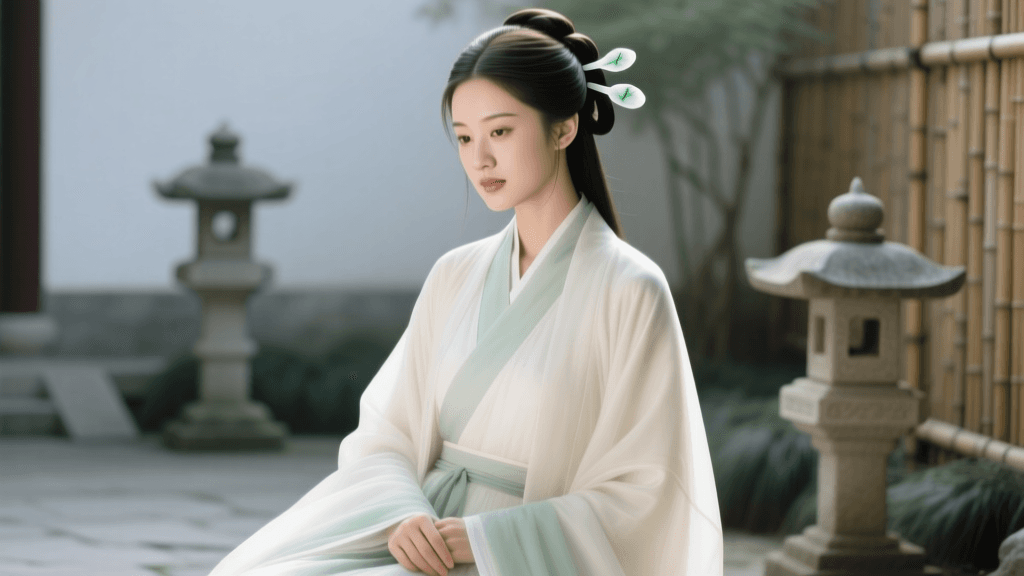
In stark contrast, Song Dynasty aesthetics favored intellectual restraint, minimalism, and slender silhouettes, such as the long, flowing Beizi (open-front jacket). Hair was typically styled in sleek, low buns at the nape of the neck. Avoid heavy Buyao; instead, opt for a single, slender 16cm Hetian jade Zan with a minimalist bamboo or orchid carving. Accent the jade with small, natural freshwater pearls rather than flashy gold inlays.
Ming Dynasty (1368–1644 AD): Structure and Grandeur
Ming Dynasty fashion was highly structured, governed by strict sumptuary laws that dictated what materials different social classes could wear. As noted in the Metropolitan Museum of Art's overview of Ming Dynasty culture, the era saw a resurgence of rigid Confucian social hierarchies, which was reflected in clothing. The Ming Aoqun ensemble demands structured, heavy hair ornaments. Look for Jinxiangyu (gold-inlaid jade) hairpins. The combination of bright yellow gold and creamy white mutton-fat jade perfectly complements the heavy brocades and stand-up collars of the Ming Ao.
Practical Wearing Techniques: Securing Heavy Jade
Modern wearers often struggle with the weight of authentic jade Buyao, finding that the pins slip out of their hair within minutes. To solve this, you must build a structural anchor.
- Create a Base Anchor: Do not rely solely on your natural hair. Use a wooden or matte-black acrylic hair stick to create a tight, twisted bun (a jiu bun) at the crown of your head.
- The 45-Degree Rule: When inserting your jade Zan or the base of your Buyao, never push it straight in. Insert it at a 45-degree downward angle, weaving it under the base anchor and catching the scalp-level hair before pushing the tip back up into the bun. This creates a lever mechanism that locks the heavy jade head against the skull.
- Use Matte U-Pins: For added security, use 5cm black, matte-finish U-pins. Slide the U-pin through the metal loops at the base of the jade ornament and weave it into the hair. The matte finish ensures the metal grips the hair shaft rather than slipping out like shiny bobby pins.
Budgeting, Sizing, and Care
Building a complete, high-quality Hanfu and jade accessory wardrobe is an investment. A complete, custom-tailored Ming Dynasty Aoqun set (including Zhongyi, Ao, Mamianqun, and embroidered shoes) typically costs between $250 and $600 depending on the silk brocade used. Adding a genuine Hetian jade Zan ($150) and a gold-plated Buyao ($120) brings the total ensemble cost to approximately $500 to $900.
Proper care of your jade is essential. Jade is porous and can be damaged by the natural oils, hairsprays, and perfumes used in modern styling. After every wear, gently wipe the jade elements with a soft, dry microfiber cloth. Never use ultrasonic jewelry cleaners or harsh chemical solvents, especially on antique or treated Xiuyan jade, as this can strip the stone's natural waxy polish. Store your jade hairpins in individual, unbleached silk pouches to prevent the metal settings from scratching the stone's surface.
By understanding the architectural layers of the Hanfu, the philosophical weight of jade, and the mechanical engineering required to secure heavy historical ornaments, you elevate your practice from simple costuming to a living, breathing continuation of Asian sartorial heritage.