Chinese Heritage Textiles in Global Haute Couture & Runway
The Evolution of Chinese Heritage on the Global Runway
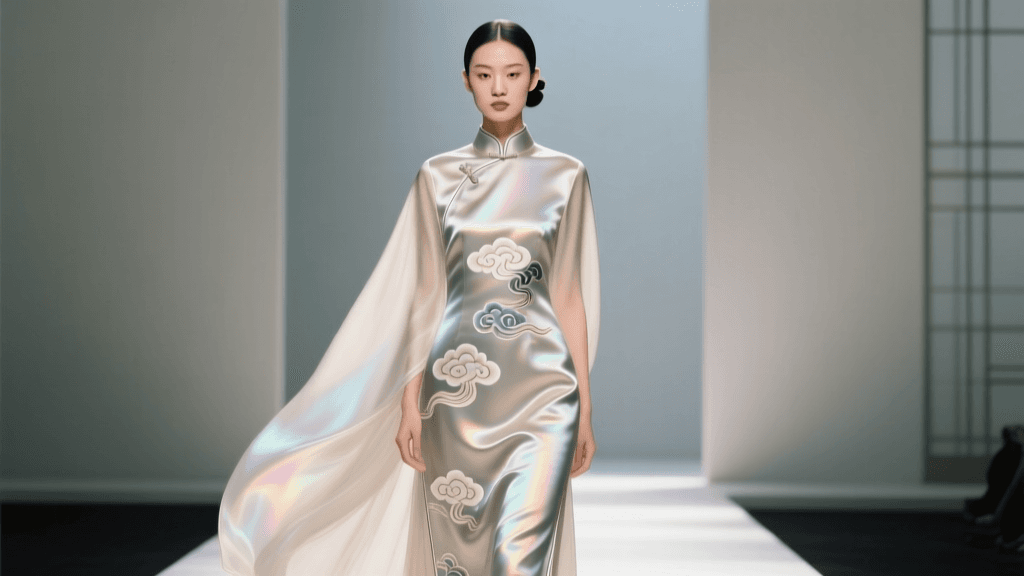
The integration of Chinese fashion into international couture has undergone a profound transformation over the last decade. Historically, Western fashion houses relied on superficial 'chinoiserie'—applying dragon motifs, mandarin collars, and porcelain prints to standard European silhouettes. However, the contemporary runway has shifted toward a deep, structural, and material appreciation of authentic Chinese heritage textiles. This paradigm shift was notably catalyzed by The Metropolitan Museum of Art's landmark 2015 exhibition, 'China: Through the Looking Glass', which challenged global designers to look beyond surface-level orientalism and engage with the rich history of Chinese sartorial craftsmanship.
Today, the most compelling couture collections do not merely mimic traditional Chinese garments; they utilize ancient, highly specialized textiles to create avant-garde silhouettes. Designers are increasingly collaborating directly with master artisans in Suzhou, Foshan, and Hangzhou to source materials that possess unique structural and visual properties impossible to replicate with modern synthetic mills. For independent designers, couture enthusiasts, and fashion historians, understanding how to source, handle, and style these heritage textiles is essential for creating high-fashion editorial pieces and runway-ready garments.
Core Heritage Textiles Defining Modern Couture
To successfully integrate Chinese textiles into modern couture, one must understand the physical properties and historical contexts of the fabrics. The following three textiles are currently dominating the high-fashion landscape.
Xiangyunsha (Gambiered Silk): The 'Soft Gold' of the Runway
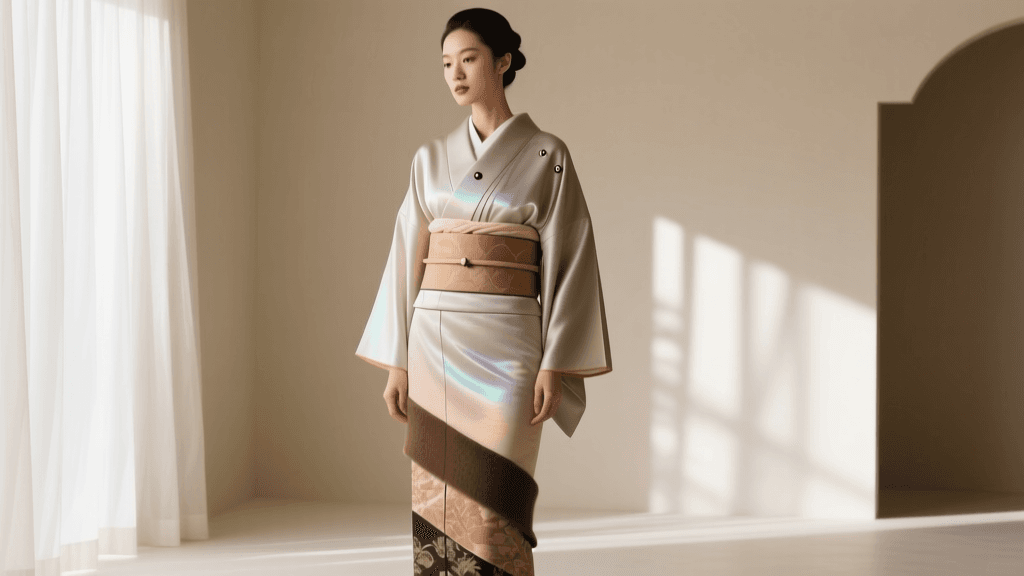
Xiangyunsha is a highly specialized silk dyeing technique originating from the Guangdong province, recognized for its dual-toned finish: a glossy, deep black-brown on one side and a matte, earthy terracotta on the other. The fabric is created by repeatedly dyeing silk in the juice of the Dioscorea cirrhosa tuber and then coating it with iron-rich river mud. This process, which can only be executed during the intense heat of the summer months, takes several weeks and results in a fabric that is naturally water-resistant, antimicrobial, and uniquely stiff.
In couture, Xiangyunsha is prized for its architectural drape. Unlike fluid silk charmeuse, gambiered silk holds its shape, making it ideal for structured gown skirts, oversized trench coats, and sculptural sleeves. The glossy side catches the runway lights beautifully, while the matte side provides a grounded, organic contrast. Because the mud-coating process alters the silk's hand-feel, it produces a distinctive rustling sound—often referred to as the 'music of silk'—which adds an auditory dimension to runway presentations.
Song Brocade (Songjin): Geometric Elegance
Originating in the Song Dynasty, Songjin is characterized by its intricate, geometric patterns and a flat, reversible weave that utilizes multiple colored warps and wefts. Unlike the heavily embossed look of French jacquards, Song brocade is remarkably flat and dense. According to The Met's Heilbrunn Timeline of Art History, Chinese silk weaving techniques like brocade have long been celebrated for their mathematical precision and structural integrity.
Modern couturiers use Songjin for tailored corsetry, structured bodices, and sharp-shouldered blazers. The fabric's density allows it to support heavy beadwork and crystal embroidery without sagging. When designing for the runway, the subtle, tonal geometric patterns of Songjin read beautifully from a distance, providing texture without overwhelming the garment's silhouette.
Kesi (Cut Silk Tapestry): The Ultimate Luxury
Kesi is a tapestry weave where the weft threads are cut and turned back at the edges of each color block, creating a 'cut' or slit effect. This painstaking process, often taking months to complete a single yard, allows for photorealistic gradients and complex pictorial designs. In haute couture, Kesi is treated less like fabric and more like a flexible canvas. It is frequently used for statement pieces, such as sweeping opera coats, structured bustiers, and avant-garde headpieces. Due to its immense value and structural rigidity, Kesi is often framed within the garment's architecture rather than draped.
Comparison Chart: Heritage Textiles for Couture Applications
| Textile | Weight & Drape | Best Couture Application | Estimated Cost (USD/meter) | Tailoring Considerations |
|---|---|---|---|---|
| Xiangyunsha | Medium-heavy, stiff, architectural | Sculptural skirts, trench coats, voluminous sleeves | $150 - $350 | Requires Microtex needles; cannot be steam-pressed heavily. |
| Song Brocade | Heavy, dense, minimal drape | Corsetry, tailored blazers, structured bodices | $200 - $500 | Needs silk organza underlining; frays easily, requires serged seams. |
| Kesi Tapestry | Variable, rigid, canvas-like | Statement coats, bustiers, sculptural accessories | $800 - $2,500+ | Treat as leather or heavy canvas; use leather needles and bound seams. |
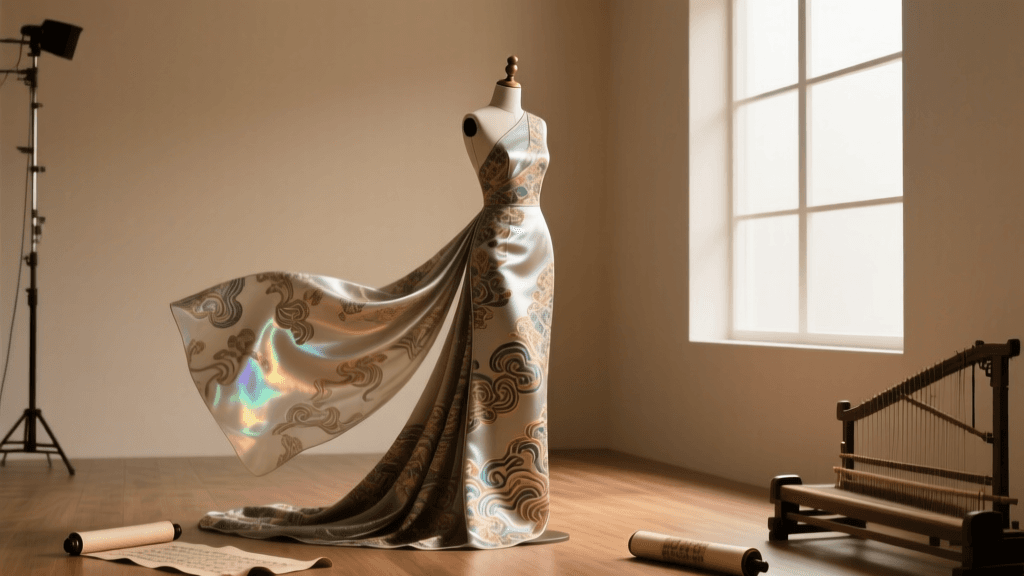
| Su Embroidered Silk | Light to medium, fluid but delicate | Evening gowns, sheer overlays, ethereal trains | $300 - $1,000+ | Avoid seaming through embroidered areas; use French seams on base silk. |
Actionable Guide: Sourcing Authentic Heritage Textiles
For designers and ateliers looking to incorporate these materials into their collections, authentic sourcing is paramount. The global supply chain for true heritage textiles is highly localized and relies on specific geographic indications.
- Xiangyunsha: Authentic gambiered silk must be sourced from the Foshan and Shunde districts in Guangdong. The dyeing process is heavily dependent on the local river mud and climate. Look for suppliers certified by the local intangible cultural heritage bureaus. Expect a minimum order quantity (MOQ) of 50 meters for custom dye lots, with a lead time of 3 to 4 months, as production is restricted to the summer season.
- Song Brocade & Su Embroidery: The epicenter for these textiles is Shengze Town in Wujiang, Suzhou. While many commercial suppliers sell machine-made imitations, true couture-grade Songjin is woven on specialized wooden or semi-automated jacquard looms by master weavers. Partnering with established Suzhou-based export houses that specialize in museum-grade reproductions is the most reliable route for international buyers.
- Verifying Authenticity: The Chinese government and international bodies closely monitor these crafts. For instance, traditional sericulture and silk craftsmanship are officially recognized on UNESCO's Intangible Cultural Heritage list. Requesting certificates of origin and artisan guild authentication is standard practice when purchasing couture-grade yardage.
Technical Tailoring and Construction Advice
Working with heritage Chinese textiles requires a departure from standard European couture techniques. The unique finishes and weaves demand specialized handling to preserve the integrity of the fabric.
Needle and Thread Selection
When sewing Xiangyunsha, the mud-coated surface is prone to permanent needle holes. Always use Microtex or sharp needles in sizes 60/8 or 70/10. Standard universal needles will push the coating aside, causing snags. Use 100% silk thread or high-grade polyester core-spun silk thread to ensure the seams have the same tensile strength and sheen as the fabric.
Interfacing and Underlining
Song brocade and Kesi are incredibly dense but can fray aggressively at the cut edges. Never apply fusible interfacing directly to the reverse side of these textiles, as the heat and adhesives will ruin the natural fibers and alter the drape. Instead, use a floating underlining of silk organza (8mm or 12mm weight). Baste the organza to the fashion fabric within the seam allowance before construction. This provides the necessary structural support for corsetry and tailored jackets while allowing the brocade to move naturally.
Pressing and Finishing
Steam is the enemy of Xiangyunsha. The moisture can reactivate the natural dyes and mud coating, causing water spots and stiffness. Press gambiered silk using a dry iron on a low silk setting, always with a Teflon pressing sheet or a dry silk press cloth. For Su embroidered pieces, press face-down on a plush velvet pressing mat to avoid crushing the micro-stitches.
Runway Styling and Editorial Integration
Styling Chinese heritage textiles for a modern runway requires a careful balance of reverence and rebellion. The most successful contemporary collections avoid creating literal historical replicas (such as standard Hanfu or Qipao silhouettes) and instead use the textiles to subvert modern tailoring.
Consider juxtaposing the ancient rigidity of Song brocade with ultra-modern materials like bonded neoprene, laser-cut leather, or 3D-printed TPU. A structured Songjin bodice paired with a voluminous, raw-hemmed neoprene skirt creates a striking visual tension that speaks to the intersection of antiquity and futurism. Similarly, Xiangyunsha can be cut on the bias—a technique rarely used in traditional Chinese garment-making—to create fluid, draped evening wear that clings to the body while maintaining the fabric's signature two-tone luster.
For editorial shoots, lighting is crucial. Xiangyunsha requires hard, directional lighting to emphasize the cracked, leather-like texture of the mud coating, whereas Su embroidery demands soft, diffused lighting to highlight the microscopic gradient shifts in the silk threads. By mastering the technical handling and creative styling of these extraordinary materials, designers can push the boundaries of global haute couture while honoring the profound legacy of Chinese textile artistry.