Mastering Kimono Layering: A Seasonal Dressing Guide
The Philosophy of Koromogae: Anticipating the Seasons
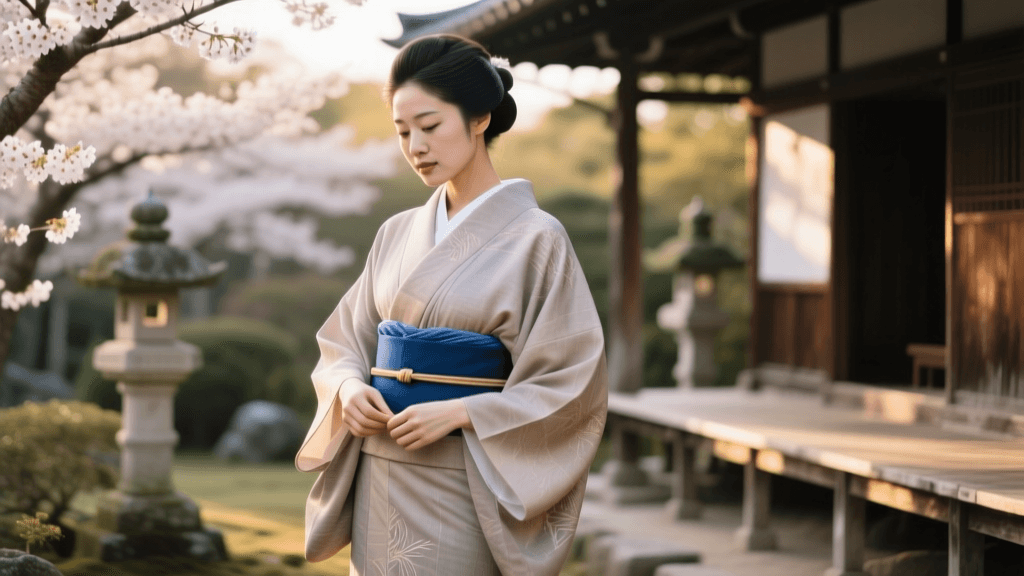
In the world of traditional Japanese clothing, the changing of the wardrobe is not merely a practical response to weather; it is a profound cultural ritual known as koromogae. Historically rooted in the Heian period court, koromogae dictates that one should anticipate the season rather than simply react to it. According to cultural overviews on Japan Guide, the traditional calendar strictly divides the year into specific sartorial phases, requiring a nuanced understanding of textiles, layering techniques, and dressing (kitsuke) adjustments. To wear a winter-lined kimono in early June, or a sheer summer robe in late September, is considered a breach of aesthetic etiquette. This guide provides actionable, practical advice for navigating these seasonal transitions, ensuring both comfort and cultural accuracy.
The Traditional Kimono Seasonal Calendar
The Japanese kimono calendar is broadly divided into three main categories based on the lining and weave of the garment. While modern climate control has slightly relaxed these rules for casual wear, formal occasions still adhere strictly to this timeline.
| Season | Months | Kimono Type | Fabric and Weave Characteristics |
|---|---|---|---|
| Spring / Autumn / Winter | October 1 – May 31 | Awase (Lined) | Chirimen (crepe), Tsumugi (pongee), Rinzu (satin-weave silk). Fully lined with habutai silk. |
| Early Summer / Early Autumn | June 1 – June 30 September 1 – September 30 | Hitoe (Unlined) | Lightweight silks, unlined Tsumugi, or synthetic blends like Toray Sillook for easy care. |
| High Summer | July 1 – August 31 | Natsugmono (Summer) | Ro (leno weave with visible gaps), Sha (thin gauze), Asa (linen/ramie), and Coma. |
The transition dates of June 1st and October 1st are the absolute pillars of koromogae. However, because Japan's climate ranges from the subarctic north to the subtropical south, contemporary dressers often adjust these dates by a few weeks based on local humidity and temperature.
Winter Layering: Warmth Without Bulk
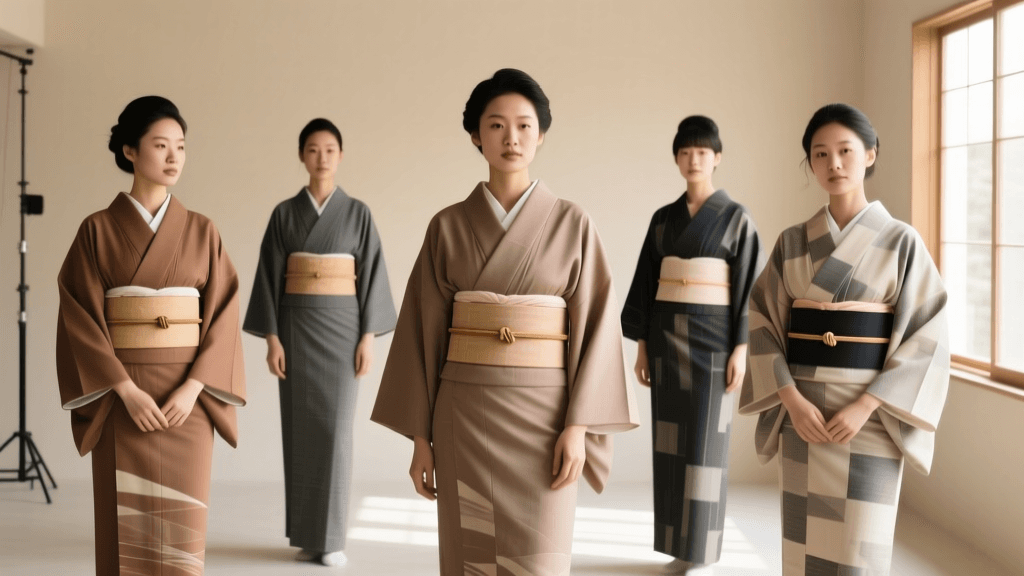
Dressing for winter in a kimono presents a unique challenge: maintaining the sleek, cylindrical silhouette of the kitsuke while trapping body heat. Traditional layering can become cumbersome, so modern practitioners rely on a blend of heritage garments and contemporary textiles.
Undergarments and Base Layers
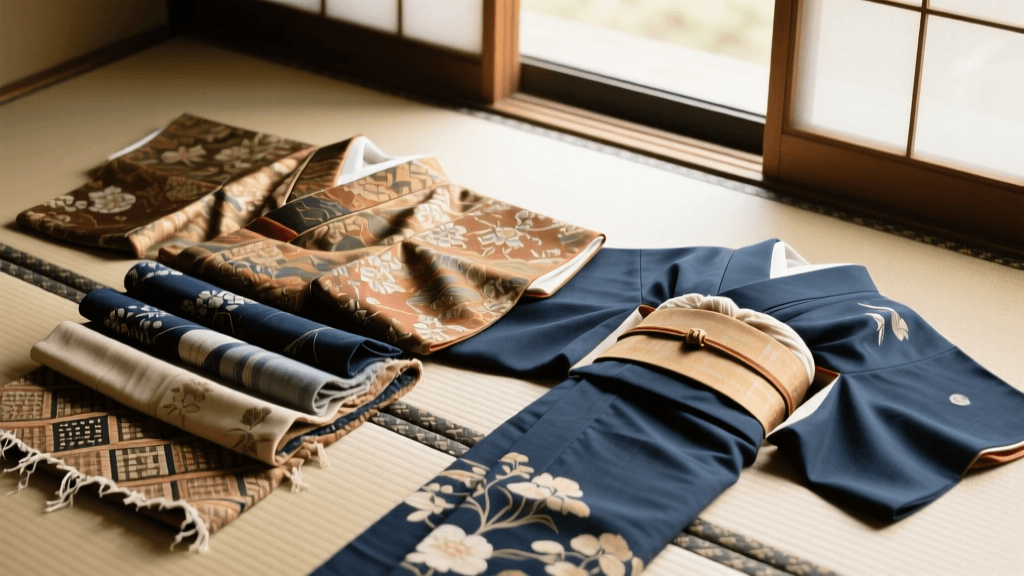
The foundation of winter warmth begins beneath the nagajuban (under-robe). While traditionalists might wear a padded wata-ire juban, this adds significant bulk to the torso, making the obi difficult to tie. A highly practical, modern alternative is wearing fitted, modern thermal innerwear (such as Uniqlo's Heattech line in a deep V-neck to hide beneath the collar) paired with a standard hadajuban. Over this, a nagajuban featuring a chirimen (crepe) silk han-eri (detachable collar) provides visual warmth and texture appropriate for the cold months.
Outerwear and Accessories
When stepping outdoors, the haori (jacket) or michiyuki (overcoat) is essential. For deep winter, a michiyuki made of heavy tsumugi silk or wool offers excellent wind resistance. Measurements matter here: a winter haori should ideally fall mid-thigh (approx. 85–95 cm in length for an average height) to protect the upper legs from drafts. To seal in warmth at the neck, a kaitori (kimono shawl) or an erimaki (muffler) woven from silk or cashmere is draped over the collar. Finally, swap standard cotton tabi (split-toe socks) for nel (flannel-lined) or quilted tabi, which typically cost between 2,500 and 4,000 JPY and provide crucial insulation for the extremities.
Summer Dressing: Achieving Suzushisa (Coolness)
Summer in Japan is notoriously hot and humid. The goal of summer kitsuke is to achieve suzushisa—a visual and physical sense of coolness. As noted by the Victoria and Albert Museum, the evolution of summer textiles like ro and sha represents a masterclass in functional textile engineering, utilizing leno weaves to create microscopic ventilation holes.
Strategic Fabric Choices
For high summer, the ro weave is paramount. The alternating twisted and untwisted warp threads create horizontal slits that allow air to circulate directly against the skin. Beneath a ro kimono, the undergarments must also breathe. A koshimaki (waist slip) and suteteko (lightweight drawers) made of asa (ramie or linen) are mandatory. Ramie wicks moisture away from the body and dries rapidly, preventing the silk outer layers from absorbing sweat and staining.
Visual Coolness
Summer dressing is as much about visual psychology as physical comfort. The han-eri (collar) of the nagajuban is swapped from heavy winter crepe to sheer ro silk or intricate lace. Obi choices shift to lightweight hakata weaves or sheer sha nagoya obi, often dyed in cool, aquatic motifs like flowing water, goldfish, or morning glories.
Regional Variations: Ryukyuan and Ainu Seasonal Wear
While the Honshu-centric kimono calendar is the most widely recognized, Japan's ethnic minorities possess distinct seasonal dressing traditions adapted to their specific microclimates.
Ryukyuan Ryusou (Okinawa)
In the subtropical climate of Okinawa, the traditional Ryusou is designed almost exclusively for heat mitigation. The most prized summer textile is Bashofu, woven from the fibers of the Japanese fiber banana plant. Bashofu is incredibly lightweight, stiff enough to stand away from the skin to promote airflow, and highly breathable. Unlike the heavy, multi-layered Awase of the north, Ryusou is worn as a single, unlined layer with a wide, loosely tied sash, prioritizing ventilation over the structured silhouette of mainland Japan.
Ainu Attus (Hokkaido)
Conversely, the indigenous Ainu people of Hokkaido historically faced brutal, snowy winters. Their traditional garment, the attus, is woven from the inner bark of the elm tree. While not a seasonal garment in the sense of changing weaves, the layering technique is vital. In winter, the attus was layered over animal hides or padded with dried grasses for insulation, and secured tightly to trap heat. The heavy, textured bark cloth is naturally water-resistant, making it an ingenious adaptation to the freezing, damp climate of northern Japan.
Actionable Kitsuke: Adjusting for the Seasons
The physical act of dressing (kitsuke) must also adapt to the season. The most critical adjustment is the nukikata—the gap between the collar and the nape of the neck.
- Winter Adjustment: Pull the collar relatively tight against the nape. The gap should be roughly the width of a closed fist (approx. 8 cm). This prevents cold drafts from entering the back of the kimono and maintains a neat, insulated seal.
- Summer Adjustment: Loosen the nukikata significantly, allowing a gap wide enough to fit an open palm (approx. 10–12 cm). This exposes the nape of the neck, creating a chimney effect that draws hot air up and out of the garment. Use an eri-nuki (collar stay) with a small plastic hook to anchor the collar to your koshihimo (tying cord), ensuring the wide gap does not collapse during movement.
- Obi Tying: In summer, minimize the bulk of the obi knot. Opt for a simple bunko or taiko musubi using a lightweight core (obi-ita), and replace the thick, padded obi-makura with a folded cotton towel to reduce heat retention on the lower back.
Budgeting for a Seasonal Wardrobe
Building a seasonally accurate kimono wardrobe can seem financially daunting, but strategic sourcing makes it accessible. According to the Metropolitan Museum of Art, the sheer volume of textiles produced during the Edo and Meiji periods means the secondary market is flooded with high-quality, affordable garments today.
Cost Breakdown and Sourcing
- Recycle Shops (Tansu-ya, Chicago): Ideal for Awase (winter) and Hitoe (transitional) silk kimonos. Expect to pay between 5,000 and 15,000 JPY for a garment in excellent condition. Summer ro kimonos are slightly rarer in good condition due to the fragility of the weave, averaging 10,000 to 25,000 JPY.
- Modern Synthetics (Toray Sillook): For the rainy season (June), a washable polyester Hitoe is a practical investment. These cost around 20,000 to 35,000 JPY new but save money on professional dry cleaning.
- Bespoke and Artisanal: Commissioning a custom Nishijin-ori summer obi or a hand-woven Bashofu piece from Okinawa is an investment in heritage craftsmanship, with prices starting at 300,000 JPY and easily exceeding 1,000,000 JPY for master-weaver pieces.
Conclusion
Mastering the seasonal wear of traditional Japanese garments is a rewarding journey that deepens your connection to the natural world. By respecting the koromogae calendar, selecting the appropriate weaves like ro and chirimen, and adjusting your kitsuke techniques for thermal regulation, you transform the kimono from a static costume into a living, breathing dialogue with the environment. Whether you are braving a Hokkaido winter in layered silks or seeking the cool breeze of a Kyoto summer in sheer sha, the art of seasonal dressing ensures you do so with both grace and comfort.