Inclusive Kimono Styling for Diverse Body Types and Genders
The Evolution of Inclusive Kimono Fashion
The traditional Japanese kimono is a masterpiece of textile art and cultural heritage. Unlike Western tailoring, which cuts fabric to contour the body's natural curves, the kimono is constructed from straight, rectangular bolts of fabric. This T-shaped structure means that the garment does not inherently possess a fixed silhouette; rather, the silhouette is created through the art of kitsuke (dressing). According to the Metropolitan Museum of Art, the kimono's flat, geometric construction allows it to transcend specific body shapes, making it an inherently adaptable garment when styled with the correct techniques.
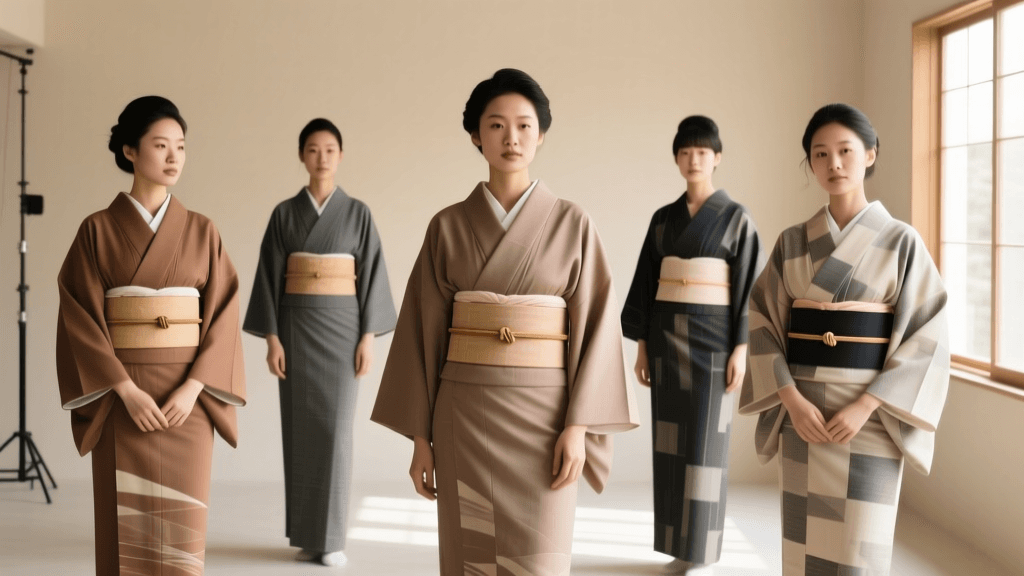
Historically, the kimono was worn by people of all genders, with distinctions arising primarily in color, motif, and sleeve length rather than structural tailoring. Today, the modern kimono revival embraces this versatility, offering inclusive styling options for diverse body types, plus-size individuals, and gender-nonconforming wearers. Whether you are visiting Kyoto for a rental experience or investing in your own silk komon, understanding how to manipulate the garment's drape is the key to achieving an elegant, comfortable fit.
Understanding Kimono Measurements and Adjustments
Because kimonos are not sized by standard Western metrics (like Small, Medium, or Large), they are measured by specific dimensions. The two most critical measurements for inclusive fitting are mitake (the back length from the nape of the neck to the ankle) and yuki (the sleeve length from the center back seam to the wrist).
- Petite Wearers: If the mitake is too long, the excess fabric is folded at the waist using the ohashori (waist fold). A deeper ohashori safely hides excess length without altering the garment's hemline.
- Tall Wearers: Finding adequate length can be challenging. Tall individuals should look for vintage or custom-tailored kimonos with a longer mitake. In modern styling, it is increasingly acceptable for the hem to sit slightly above the ankle, especially when wearing casual cotton yukata or pairing the kimono with modern footwear like boots.
- Broad Shoulders: The yuki measurement must accommodate the shoulder width. If the sleeves pull tightly across the back, the collar will choke the neck. Stylists recommend leaving a generous fist-sized gap at the back of the neck (eri-nuki) to alleviate shoulder tension and provide a graceful neckline.
The Art of Padding: Creating the Cylindrical Silhouette
The ideal traditional kimono silhouette is tsutsu-gata, a smooth, cylindrical shape that minimizes the bust, waist, and hips. This requires strategic padding, which is a blessing for diverse body types as it allows the wearer to control the garment's drape and prevent the fabric from clinging or twisting.
Padding Techniques for Curvy and Plus-Size Bodies
For individuals with larger busts or pronounced curves, the fabric can easily pull open at the chest or bunch at the waist. Professional kitsuke artists use specialized padded towels called body dressers or standard cotton towels to fill in the hollows of the body.
- Bust Management: Rather than compressing the chest, a soft towel is often wrapped around the upper bust to create a smooth slope down to the waist. The undergarment (juban) collar is pulled into a deep V-shape to prevent the fabric from gaping over the chest.
- Hip and Lower Back Padding: A pronounced lower back curve (lordosis) or wide hips can cause the kimono hem to kick outward. Wrapping a thick towel around the hips and lower back fills the dip of the spine, ensuring the kimono falls in a straight, elegant line from the waist to the floor.
- Securing the Shape: Padding is secured using koshihimo (long, thin cotton ties) and datejime (wide elastic or silk belts). For plus-size wearers, utilizing velcro-closure datejime belts provides superior support and prevents the obi from slipping down throughout the day.
Kimono Styling Guide by Body Type
The following table provides actionable styling and adjustment strategies for various body characteristics, ensuring a flattering and culturally respectful silhouette.
| Body Characteristic | Recommended Garment & Fabric | Adjustment & Padding Technique |
|---|---|---|
| Petite / Short Stature | Yukata, Komon (small repeating patterns) | Create a deep ohashori (waist fold). Avoid large, sweeping motifs that overwhelm the frame. Opt for a smaller bunko obi knot. |
| Tall / Long-Limbed | Hikizuri (trailing hem), Homongi | Minimize the waist fold. Embrace vertical, flowing patterns. A longer, dramatic obi knot like the taiko musubi balances the back. |
| Curvy / Large Bust | Stretch silk blends, Chirimen (crepe silk) | Use upper-chest padding to smooth the collar line. Pull the juban collar into a deep V. Use an elastic datejime for secure waist tying. |
| Broad Shoulders | Wool Kimono, Casual Tsumugi | Leave a wide eri-nuki (neck gap) to relieve shoulder tension. Avoid stiff, heavily brocaded obi fabrics that add bulk to the upper back. |
| Plus-Size / Full Hips | Opaque Ro or Sha (summer), heavy Silk | Apply thick lower-back and hip padding to create a cylindrical base. Use a wider kaku obi or a structured fukuro obi for midsection support. |
Gender-Inclusive Kimono and Hakama Styling
The conversation around gender and the kimono is deeply nuanced. As highlighted by the Victoria and Albert Museum's exhibition "Kimono: Kyoto to Catwalk", historical Japanese fashion frequently played with gender fluidity, particularly in the theater and artistic circles of the Edo period. Today, breaking away from rigid binary styling is a celebrated aspect of modern kimono fashion.
Masculine and Androgynous Presentations
For individuals seeking a masculine or androgynous silhouette, the hakama (pleated trousers) and haori (jacket) are foundational. While traditionally associated with men's formal wear or martial arts, women and non-binary individuals frequently adopt the hakama for graduation ceremonies and tea ceremonies.
- The Haori: A long, hip-length haori worn open over a kimono creates a striking, structured, and gender-neutral look. Opt for dark, subdued colors like charcoal, navy, or deep plum, or choose vintage haori with subtle geometric linings.
- The Obi: Masculine styling relies on the kaku obi, a narrow, stiff woven belt. It is tied low on the hips in a simple, flat knot called kai-no-kuchi. This lowers the visual center of gravity, contrasting with the high, voluminous obi knots of traditional feminine styling.
Feminine and Fluid Expressions
Conversely, individuals assigned male at birth who wish to explore feminine or fluid kimono styling can embrace the fukuro obi and vibrant textiles. The key to successful cross-gender styling lies in the collar and the hemline.
- Collar Placement: Feminine styling dictates a tight collar at the throat that opens into a wide V at the back. Adjusting the juban collar to sit closer to the Adam's apple provides a softer, traditionally feminine neckline.
- Hemline and Footwear: Pairing a brightly patterned kimono with elevated okobo (wooden platform sandals) or delicate zori alters the wearer's posture, encouraging the short, gliding steps traditionally associated with feminine kimono wear.
Practical Guide for Inclusive Rental Experiences
Tourists visiting Japan often rely on kimono rental shops in cities like Kyoto, Tokyo, and Kanazawa. The Japan National Tourism Organization (JNTO) highly recommends booking in advance, but for plus-size or gender-nonconforming travelers, advance communication is essential for a positive experience.
What to Ask Rental Shops
- Inventory Sizing: Ask explicitly if the shop carries "free size" garments with adequate width. Standard rental kimonos usually fit up to a 100cm (39-inch) hip circumference. Larger travelers must request shops that stock king-size or wide-bolt kimonos.
- Staff Expertise: Inquire if the dressers (kitsuke-shi) are experienced in body padding. Not all entry-level rental staff know how to properly pad a curvy figure or style a gender-neutral hakama.
- Undergarments: Rental shops provide basic hadajuban (undershirts) and susoyoke (slips). However, these are often one-size-fits-all. It is highly recommended to bring your own comfortable, form-fitting base layers, such as a sports bra, bicycle shorts, or a personal compression top, to ensure hygiene and personal comfort beneath the rented garments.
Conclusion: The Kimono as a Canvas for Identity
The beauty of the kimono lies in its architectural flexibility. It does not demand that the body conform to the fabric; instead, the fabric is sculpted to honor the body wearing it. By mastering the techniques of strategic padding, understanding the mechanics of the ohashori and eri-nuki, and embracing the rich history of gender-fluid styling, anyone can wear the kimono with confidence. Whether you are wrapping yourself in a casual summer yukata or a formal silk homongi, the garment becomes a deeply personal canvas, reflecting your unique identity while participating in a centuries-old Asian tradition.