The Ultimate Guide to Matching Obi, Zori, and Kimono Accessories
The Art of Kitsuke: Beyond the Kimono
When most people think of traditional Japanese clothing, the kimono immediately comes to mind. However, in the art of kitsuke (the way of dressing), the kimono itself is merely the canvas. The true expression of formality, seasonality, and personal aesthetic lies in the intricate coordination of the obi, zori, and an array of essential accessories. According to the Victoria and Albert Museum's Asian textile archives, the evolution of the obi from a simple functional tie in the Heian period to a massive, heavily brocaded decorative focal point by the Edo period fundamentally changed the silhouette and styling rules of Japanese dress.
Whether you are a seasoned collector, a practitioner of tea ceremony, or a modern enthusiast looking to wear vintage kimono for destination events, understanding how to match your accessories is crucial. This comprehensive guide breaks down the measurements, materials, and formality rules required to build a cohesive and culturally respectful Japanese wardrobe.
Decoding the Obi: Types, Measurements, and Knots
The obi is the sash that secures the kimono, but it also serves as the primary indicator of the outfit's formality. Choosing the wrong obi can drastically underdress or overdress your ensemble.
1. Fukuro Obi (The Formal Standard)
The Fukuro obi is the most formal obi worn by women today, typically paired with visiting kimono (homongi) or the long-sleeved furisode worn by unmarried women.
- Measurements: Approximately 31 cm (12 inches) wide and 420 cm (165 inches) long.
- Construction: It is fully patterned on the front and usually lined with plain silk on the back. It is woven with luxurious materials, often incorporating gold or silver metallic threads (kinran or ginran).
- Knot Style: Usually tied in the Taiko musubi (drum knot) for married or older women, or the elaborate Fukura-suzume (sparrow knot) for young women.
- Cost Estimate: $150–$600+ new; $40–$120 vintage.
2. Nagoya Obi (The Versatile Semi-Formal)
Invented in the 1920s in the city of Nagoya, this obi was designed to be easier to tie than the Fukuro. It is the workhorse of the modern kimono wardrobe, suitable for everything from semi-formal gatherings to casual outings.
- Measurements: Approximately 31 cm wide and 360 cm (140 inches) long.
- Construction: The back half is pre-folded and stitched together to make the tying process simpler, while the front half remains full-width to tuck neatly under the knot.
- Knot Style: Almost exclusively tied in the Taiko musubi (one-layer drum knot).
- Cost Estimate: $80–$300 new; $15–$60 vintage.
3. Hanhaba Obi (The Casual Essential)
Translating to 'half-width obi', this is strictly for casual wear. It is paired with yukata (summer cotton kimono) or everyday wool and polyester kimono.
- Measurements: Approximately 15 cm (6 inches) wide and 360 cm long.
- Construction: Unlined, reversible, and often made of cotton, linen, or synthetic blends. It allows for playful, reversible styling and intricate bow knots like the Bunko musubi (library/bow knot).
Footwear Fundamentals: Zori and Tabi
Footwear in Japanese tradition is highly specialized. You never wear a kimono with standard Western shoes or bare feet inside the sandals.
Zori Sandals
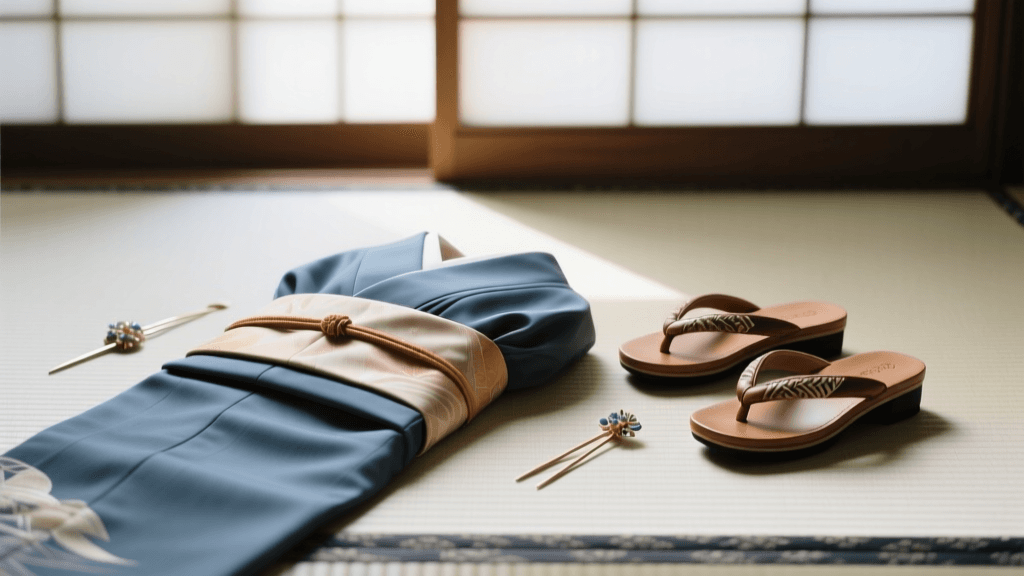
Zori are flat, thonged sandals. The formality is dictated by the material of the sole and the hanao (the fabric thongs).
- Brocade/Woven Zori: The most formal. Woven from the same Nishijin-ori silk as formal obi. Reserved for weddings, tea ceremonies, and formal parties. The hanao are usually white or gold.
- Vinyl/Enamel Zori: Semi-formal to casual. Easy to clean and weather-resistant, making them ideal for modern daily wear or rainy days.
- Tatami/Igusa Zori: Made from woven rush grass. Strictly casual and highly breathable, perfect for summer yukata.
- Heel Heights: Standard zori have a heel height of about 5 cm. However, formal zori worn with furisode can feature platform heels ranging from 7 cm to 10 cm to keep the long kimono sleeves from dragging on the ground.
Tabi Socks
Tabi are split-toe socks designed to accommodate the thong of the zori.
- Formality: Crisp, white cotton tabi are mandatory for formal events. Colored or patterned tabi are reserved for casual wear and yukata.
- Sizing: Tabi are sized in centimeters (e.g., 22.5 cm, 23.0 cm). They should fit snugly without wrinkles at the ankle to maintain a clean silhouette.
The Essential 'Hidden' Accessories
Beneath and around the obi lies a network of small but vital accessories. The Japanese Textile Study Group notes that these items not only serve structural purposes but also provide subtle opportunities to introduce seasonal motifs and secondary color palettes into an outfit.
Obiage and Obijime
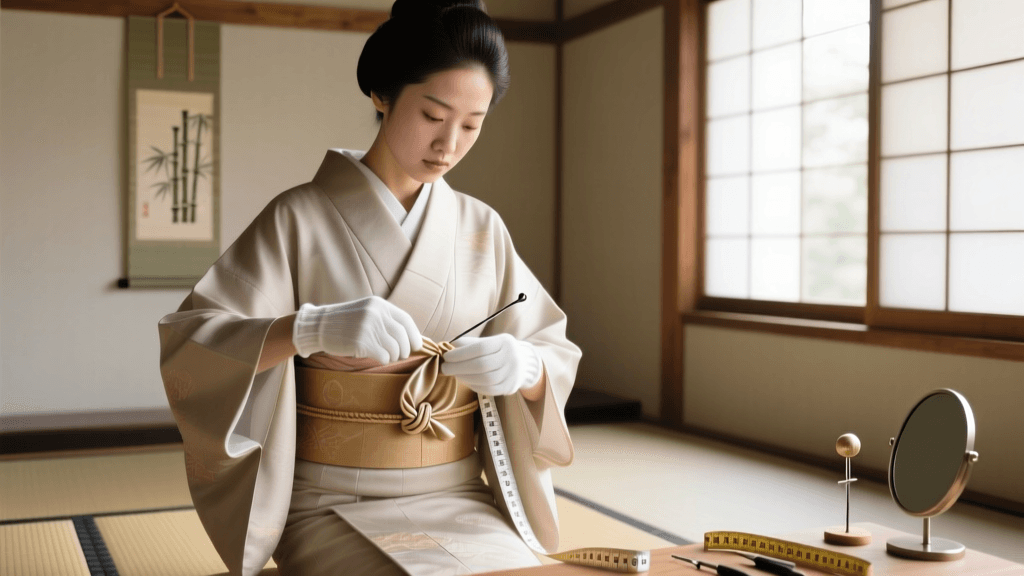
The Obiage is a silk crepe scarf used to cover and hide the obi-makura (the padding pillow that gives the Taiko knot its shape). It peeks out just above the obi. The Obijime is a braided silk cord tied tightly over the center of the obi to secure the knot in place. Together, they act as the 'belt and buckle' of the ensemble, and their colors should harmonize with, but not perfectly match, the kimono and obi.
Obidome
An Obidome is a decorative bead, brooch, or carved ornament threaded onto the obijime cord. It is typically used with Nagoya obi for semi-formal or casual wear. Collectors often seek out antique coral, jade, or cloisonné obidome to add a touch of vintage luxury to their outfits.
Datejime and Koshihimo
These are the under-sashes. Koshihimo are thin cotton or silk ties used to secure the kimono at the waist and hips before the obi is applied. The Datejime is a wider, stiffer sash tied over the koshihimo to smooth out wrinkles and provide a cylindrical base for the obi to wrap around.
Formality Matching Chart
Use this quick-reference table to ensure your accessories align with the formality of your kimono.
| Formality Level | Kimono Type | Obi Type | Zori Material | Tabi Color |
|---|---|---|---|---|
| High Formal | Kurotomesode / Furisode | Fukuro (Gold/Silver) | Silk Brocade | White Cotton |
| Semi-Formal | Homongi / Tsukesage | Fukuro / Formal Nagoya | Woven Silk / Vinyl | White Cotton |
| Smart Casual | Komon / Tsumugi | Nagoya (Dyed/Woven) | Vinyl / Leather | White or Patterned |
| Casual / Summer | Yukata | Hanhaba | Tatami / Barefoot | Patterned / Barefoot |
Seasonality and Color Theory in Accessories
Japanese dressing is deeply tied to the seasons. The Agency for Cultural Affairs, Japan, emphasizes the preservation of traditional aesthetic concepts like Kasane-no-irome (layered color combinations), which heavily influences accessory choices.
- Spring: Accessories feature motifs of cherry blossoms, plum blossoms, and butterflies. Pastel obijime and obiage in shades of sakura pink and pale yellow are preferred.
- Summer: Transparency and coolness are key. Glass or jade obidome, mesh obijime, and ro (sheer silk) obiage are used to create a visually cooling effect.
- Autumn: Motifs shift to maple leaves, chrysanthemums, and harvest moons. Deep reds, burnt oranges, and gold metallic threads dominate the obi and accessories.
- Winter: Velvet obijime, plush shibori obiage, and motifs of pine, bamboo, and plum (the auspicious Shochikubai) are utilized to convey warmth and New Year celebrations.
Styling Tip: Never perfectly match the color of your obijime to your obi. The traditional aesthetic values subtle contrast and layered depth. If your obi is deep crimson, choose a soft gold or cream obijime to make the texture of the braid stand out.
Sourcing and Building Your Collection
Building a collection of kimono accessories can be an expensive endeavor if buying strictly new from department stores in Kyoto or Tokyo. However, the thriving vintage market offers incredible opportunities for high-quality silk at a fraction of the cost.
Buying Vintage (Recycle Shops)
In Japan, 'recycle shops' (such as the famous Tansu-ya chain) are treasure troves for vintage obi and zori. A pristine, hand-woven vintage Fukuro obi that would cost $800 new can often be found for $50 to $90. When buying vintage zori, always inspect the hanao (thongs) for fraying and check the vinyl or leather soles for cracking. Fortunately, a skilled cobbler or kimono shop can easily re-string the hanao for about $30-$50.
Investing in New Craftsmanship
For highly formal events, such as your own wedding or a formal tea ceremony presentation, investing in new, certified traditional crafts is recommended. Look for the designation of Dento Kogeishi (Traditional Craftsman) when purchasing Nishijin-ori obi from Kyoto, ensuring you are supporting authentic, generational weaving techniques recognized by the Japanese government.
Conclusion
Mastering the coordination of obi, zori, and kimono accessories transforms the act of getting dressed into a mindful, artistic practice. By respecting the rules of formality, embracing seasonal motifs, and understanding the structural purpose of each hidden tie and sash, you honor the deep cultural heritage of Japanese textiles. Whether you are tying a casual hanhaba obi for a summer festival or securing a heavy brocaded fukuro obi for a wedding, the right accessories ensure your silhouette is authentic, elegant, and entirely your own.