Douyin's New Chinese Style: Mastering Modern Hanfu Streetwear
The Intersection of Heritage and Hype: Douyin's Street Fashion Revolution
If you have spent any time scrolling through Douyin (the Chinese counterpart to TikTok) or exploring the street-style photography hubs of Chengdu and Shanghai, you have likely witnessed a sartorial revolution. The rigid boundaries between ancient heritage and hyper-modern streetwear have dissolved, giving rise to Xin Zhong Shi (New Chinese Style). This trend is not merely a costume revival; it is a dynamic, community-driven movement where traditional Chinese garments are reimagined for the concrete jungle.
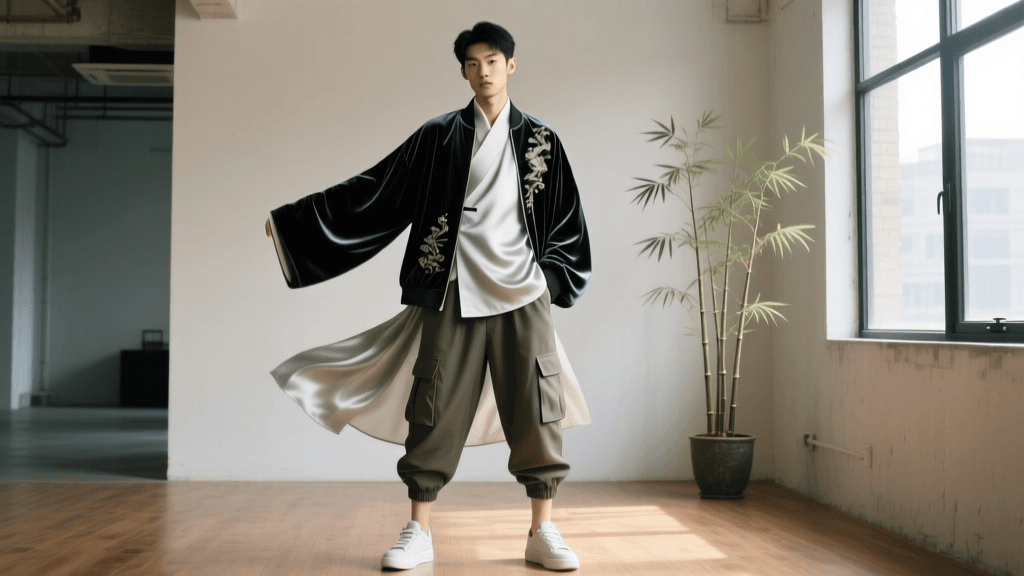
Unlike the strict, historically orthodox Hanfu movement, which prioritizes museum-accurate reconstructions of dynastic clothing, the Douyin street fashion scene prioritizes wearability, subversion, and personal expression. Influencers are pairing centuries-old silhouettes with chunky sneakers, leather moto jackets, and minimalist streetwear staples. For global fashion enthusiasts, understanding and replicating these looks requires a deep dive into traditional textiles, modern tailoring, and the specific styling formulas that dominate Chinese social media.
Decoding 'Xin Zhong Shi' (New Chinese Style)
The term Xin Zhong Shi translates directly to 'New Chinese Style.' It represents a design philosophy that extracts core elements of traditional Chinese aesthetics—such as mandarin collars, frog button closures (pankou), and specific dynastic silhouettes—and integrates them into contemporary daily wear. On Douyin, this aesthetic is heavily driven by Gen Z and Millennial creators who view traditional clothing not as a relic, but as a versatile wardrobe foundation.
The cultural catalyst for this trend was partly fueled by a desire to reclaim cultural narratives. When international luxury houses faced backlash for appropriating traditional Chinese skirt silhouettes without proper attribution, domestic consumers and Douyin influencers responded by flooding the streets and social feeds with authentic, locally produced garments. This sparked a massive boom in domestic heritage brands, making high-quality traditional pieces accessible at various price points.
Core Garments Dominating Douyin Street Fashion
To master the Douyin streetwear look, you must first understand the foundational garments that influencers use as their canvas.
The Mamianqun (Horse-Face Skirt)
The undisputed queen of the New Chinese Style trend is the Mamianqun (horse-face skirt). Originating in the Song and Ming dynasties, this skirt is characterized by its flat, unpleated front and back panels (the 'horse faces') and deeply pleated sides.
Douyin Styling: Influencers rarely wear the Mamianqun with its traditional matching top. Instead, they contrast the skirt's ornate, often gold-leaf jacquard fabric with ultra-modern, structured tops. A popular Douyin formula involves pairing a dark, metallic-threaded Mamianqun with a tight, black ribbed turtleneck, an oversized vintage leather blazer, and chunky platform boots. The juxtaposition of the flowing, historic pleats against the sharp, rebellious lines of streetwear creates a striking visual tension.
The Song Dynasty Beizi
The Beizi jacket from the Song Dynasty is a long, open-front coat with straight lapels and side slits that reach up to the armpit. Traditionally worn as a lightweight outer layer, Douyin fashionistas have repurposed it as a duster coat or an oversized cardigan.
Douyin Styling: The modern iteration often features subtle, tone-on-tone embroidery rather than loud, contrasting colors. Influencers layer the Beizi over crop tops and wide-leg denim or cargo pants. The vertical lines of the open Beizi elongate the silhouette, making it a favorite for street-style photography in urban environments like Shanghai's Xintiandi district.
The Influencer Styling Matrix
To help you translate Douyin trends into actionable outfits, refer to this styling matrix used by top Chinese street fashion influencers.
| Traditional Garment | Modern Streetwear Pairing | Footwear Choice | Aesthetic Vibe |
|---|---|---|---|
| Mamianqun (Jacquard) | Cropped Moto Jacket + Mesh Top | Chunky Platform Boots | Cyber-Heritage / Edgy |
| Song Beizi (Linen/Silk) | White Ribbed Tank + Baggy Cargo Pants | Retro Sneakers (e.g., New Balance) | Effortless / Minimalist |
| Ming Dynasty Ao (Padded Jacket) | Pleated Tennis Skirt + Knee-High Socks | Loafers or Mary Janes | Preppy / Academia |
| Modified Qipao Top | Oversized Distressed Denim Jeans | Pointed-Toe Kitten Heels | Y2K / Retro-Futurism |
Sourcing and Sizing: A Practical Guide for Global Fans
Replicating these looks outside of China requires navigating Chinese e-commerce platforms like Taobao, Weidian, or specialized Hanfu boutiques. Here is the actionable data you need to source authentic pieces.
Search Terminology
- Xin Zhong Shi: 新中式 (New Chinese Style)
- Mamianqun: 马面裙 (Horse-face skirt)
- Song Dynasty Style: 宋制 (Song Zhi)
- Daily Wear Hanfu: 日常汉服 (Richang Hanfu)
Measurements and Sizing Realities
Chinese sizing runs significantly smaller than US and EU standards. Furthermore, traditional garments rely on different measurement focal points.
- The Mamianqun Waist: Unlike Western skirts that sit on the natural waist or hips, the Mamianqun is designed to sit higher, often just below the ribcage. Actionable Tip: Measure the narrowest part of your torso and add 2-4 centimeters for the overlapping flat panels. Most skirts use adjustable side ties rather than zippers, offering a forgiving fit.
- Shoulder and Sleeve Length: Traditional jackets (Ao) feature dropped shoulders and extended sleeves that cover the knuckles. When buying modern 'daily' adaptations, check the shoulder seam measurement. If you prefer a structured streetwear look, size down to achieve a standard shoulder drop.
Cost and Quality Tiers
Understanding the price-to-quality ratio is crucial when importing these garments.
- Entry-Level (150 - 300 RMB / $20 - $40 USD): Usually made from polyester jacquard. The pleats are machine-pressed and may lose their sharpness after washing. Good for testing the trend.
- Mid-Tier (400 - 800 RMB / $55 - $110 USD): Features high-density woven brocades, sometimes blended with viscose or cotton for breathability. Pleats are heat-set permanently. This is the sweet spot for Douyin influencers.
- Haute / Artisan (1500+ RMB / $210+ USD): Utilizes authentic Xiangyunsha (gambiered Guangdong silk) or real gold-leaf thread weaving (Zhuanghua). These are investment pieces that require dry cleaning and careful storage.
Accessorizing the Douyin Way
The accessories make or break the New Chinese Style look. Douyin influencers avoid wearing full, historically accurate hair and makeup sets when doing street fashion, as it pushes the outfit into 'cosplay' territory. Instead, they use strategic, minimalist accents.
Hair and Headwear
Instead of elaborate dynastic updos, influencers opt for sleek, low buns or modern bob cuts, accessorized with a single, striking hairpin (Zan). Modern iterations of the Zan are crafted from brushed titanium, matte black metal, or carved jade, bridging the gap between ancient ornamentation and modern industrial design. Sunglasses are a mandatory street-style prop; narrow, retro-futuristic shades are frequently paired with traditional collars to emphasize the temporal clash.
Jade and Metal Hardware
Layering is key. Influencers often wear a traditional jade平安扣 (Ping'an Kou, or peace buckle) pendant on a delicate silver chain, layered over a modern streetwear t-shirt. Additionally, the traditional Yajin (a weighted pendant used to hold down the lapels of a jacket against the wind) has been reimagined as heavy, brutalist metal chains clipped to the hems of modern jackets and skirts.
Regional Street Style Hubs
The interpretation of Xin Zhong Shi varies by city, reflecting local youth cultures:
- Chengdu (Taikoo Li): Known for avant-garde and gender-fluid styling. Expect to see Mamianquns paired with harnesses, combat boots, and heavy silver jewelry.
- Shanghai (Xintiandi & Anfu Road): Leans into the 'intellectual minimalist' aesthetic. Outfits feature muted tones, high-quality linens, Song Dynasty Beizi worn over tailored trousers, and designer loafers.
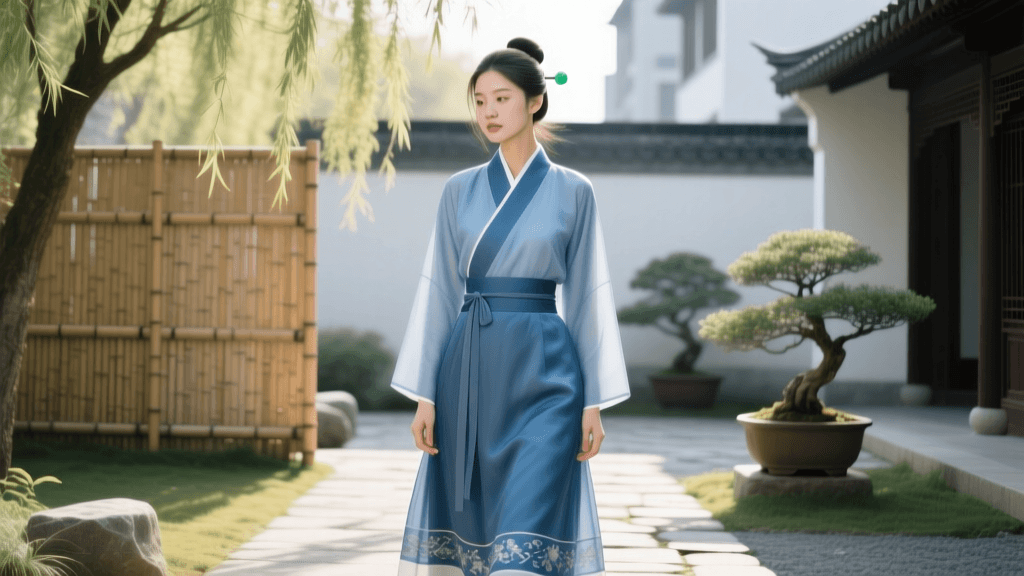
- Hangzhou: As a historic capital and silk hub, the styling here is softer, incorporating sheer fabrics, bamboo-motif embroidery, and tea-culture-inspired color palettes.
The Future of the Trend
The Douyin New Chinese Style movement is not a fleeting micro-trend; it is a fundamental shift in how a generation relates to its cultural wardrobe. By stripping traditional garments of their ceremonial rigidity and injecting them with the rebellious, practical energy of streetwear, young Chinese creatives have ensured that these ancient silhouettes will continue to evolve. For the global fashion community, mastering this trend is an exercise in cultural appreciation, requiring an understanding of historical proportions, textile heritage, and the bold confidence to mix centuries of history with the modern streetscape.