Heian Period Fashion: The Junihitoe and Japanese Court Dress
The Pinnacle of Dynasty Fashion: Heian Period Court Dress
The Heian period (794–1185 CE) represents a golden age of Japanese art, literature, and, most notably, fashion. As the imperial court moved to Heian-kyo (modern-day Kyoto), Japan began to distance itself from the heavy cultural influence of Tang Dynasty China. This cultural isolation birthed kokufu bunka, an indigenous aesthetic that prioritized subtle elegance, seasonal awareness, and meticulous layering. According to the Metropolitan Museum of Art's Heilbrunn Timeline of Art History, this era was defined by the court's obsession with aesthetic refinement, where a person's taste in clothing and color combinations was a direct reflection of their breeding, rank, and social standing.
For modern historians, textile artists, and traditional garment enthusiasts, understanding Heian fashion is not merely an academic exercise. It provides the foundational blueprint for all subsequent Japanese formal wear, including the modern kimono. This guide explores the intricate anatomy of Heian court dress and provides actionable advice for experiencing, renting, or commissioning these historical garments today.
The Junihitoe: Anatomy of the Twelve-Layer Robe
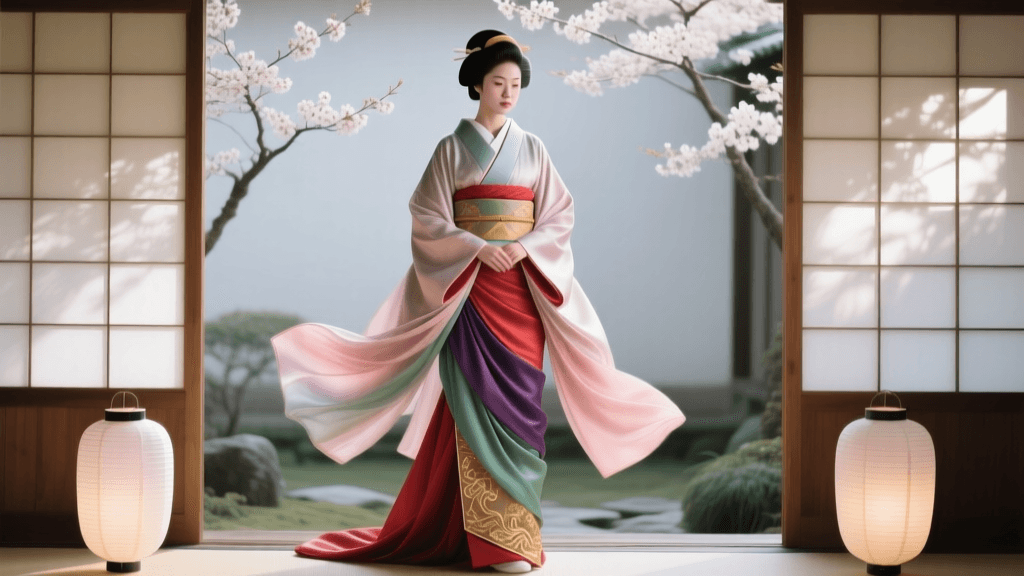
The most iconic garment of the Heian period is the junihitoe, which translates literally to 'twelve-layer robe.' Worn exclusively by high-ranking court ladies, this ensemble was a masterpiece of textile engineering and color theory. Despite the name, the actual number of layers could vary from five to twenty, depending on the season, the wearer's rank, and the formality of the occasion. The sheer weight of the garments—often exceeding 20 kilograms (44 pounds)—dictated a slow, gliding gait that was considered the height of aristocratic elegance.
Layer Breakdown and Function
| Layer Name | Description & Function | Material |
|---|---|---|
| Kosode | The basic undergarment, similar to a modern kimono. Provided the base layer of warmth. | Plain silk or linen |
| Nagabakama | Long, flowing trousers tied at the waist. The train extended far behind the wearer. | Heavy patterned silk |
| Hitoe | An unlined robe worn over the undergarments. Served as a protective barrier for outer layers. | Lightweight silk crepe |
| Itsutsuginu | The 'five-layer' set of identically tailored robes, featuring graduated sleeve and hem lengths. | Dyed silk |
| Uchiginu | A stiffened, beaten-silk robe that provided structure and shape to the softer layers beneath. | Stiffened raw silk |
| Uwagi | The primary outer robe, featuring the most elaborate weave and dye patterns. | Brocade or figured silk |
| Karaginu | A short, Chinese-style jacket worn on the upper body for formal court appearances. | Rich brocade |
| Mo | A long, pleated train attached to the waist, trailing behind the wearer like a skirt. | Sheer silk with dye motifs |
Kasane no Irome: The Art of Layered Colors
The true genius of the junihitoe lay in the kasane no irome, the art of layered color combinations. Because the robes were worn with progressively longer sleeves and hems, the edges of the inner layers peeked out from beneath the outer layers. Court ladies spent hours calculating these color gradients to reflect the exact micro-season of the year.
For example, the 'Sakura' (cherry blossom) combination utilized a white outer layer over progressively deeper shades of pink, mimicking the blooming of spring flowers. The 'Yamabuki' (Japanese kerria rose) combination layered shades of yellow and green. A misstep in seasonal color theory was considered a profound social embarrassment. As noted in Britannica's overview of the Heian period, literature of the time, such as Murasaki Shikibu's The Tale of Genji, frequently pauses the narrative to meticulously describe the color combinations of a character's sleeves, using them as a literary device to convey mood, season, and emotional subtlety.
'She wore a gown of light purple, with a cloak of deep crimson, and the layered colors of her sleeves were like the first blossoms of spring.' — The Tale of Genji
Menswear of the Court: Sokutai and Kariginu
While women's fashion focused on fluid layering, Heian menswear was defined by rigid structure and strict sumptuary laws. The sokutai was the highest formal attire for men, worn only for major state ceremonies. It consisted of a voluminous outer robe (ho), wide trousers (hakama), and a stiffened hat (kanmuri). The color of the ho strictly denoted court rank, ranging from deep purple for the highest ministers to pale green for lower officials.
For everyday court duties and informal gatherings, noblemen wore the kariginu, or 'hunting robe.' Originally adapted from practical hunting wear, the kariginu evolved into a sophisticated, relaxed garment characterized by its unlined, flowing silhouette and a distinctive round collar. Today, the kariginu is still worn by Shinto priests and traditional musicians, serving as a living bridge to Heian-era menswear.
Experiencing Heian Fashion Today: Rentals, Festivals, and Costs
For traditional garment enthusiasts, costume designers, or cultural travelers, experiencing the weight and elegance of Heian fashion is entirely possible today. Kyoto remains the epicenter for historical dress preservation, offering both rental experiences and custom commissions.
Attending Historical Festivals
To see authentic, museum-quality reproductions in motion, timing your visit to Kyoto's major historical festivals is essential. The Jidai Matsuri (Festival of the Ages), held annually on October 22nd, features a massive parade where participants wear meticulously researched Heian court garments. Similarly, the Aoi Matsuri on May 15th showcases the specific, highly formalized Sokutai and Junihitoe worn during imperial shrine visits.
Actionable Guide: Commissioning or Renting
If you are looking to rent, purchase, or commission a Heian-era reproduction, consider the following practical parameters:
- Rental Experiences (Kyoto): Several specialized studios near Kyoto Station offer 2-hour Junihitoe dressing experiences. Cost: ¥10,000 to ¥25,000 ($70–$170 USD). Timing: Book at least 4 weeks in advance, especially during the October and November peak seasons.
- Measurements for Custom Tailoring: Unlike modern western clothing, historical Japanese garments rely on specific traditional metrics. You will need to provide your Yuki (center-back to wrist measurement), Katahaba (shoulder width), and Kohaba (front panel width). A standard modern kimono measurement is insufficient for the exaggerated sleeve drops of a Kariginu or Junihitoe.
- Commissioning Authentic Silk Reproductions: For theater productions or serious collectors, commissioning a full Junihitoe from a traditional Kyoto weaver (such as those in the Nishijin district) is a major investment. Cost: ¥1,500,000 to ¥5,000,000+ ($10,000–$35,000 USD). Timing: Expect a lead time of 12 to 18 months, as the silk must be custom-dyed and woven on traditional Jacquard or handlooms to replicate Heian-era brocades.
- Budget Alternatives: For cosplayers or independent filmmakers, purchasing individual vintage silk kimono and layering them using the Kasane no Irome color theory is a highly effective workaround. Focus on sourcing unlined hitoe kimono from summer antique markets to reduce the physical weight and bulk of the layers.
Preservation and Cultural Significance
The transition from Heian court dress to the samurai-dominated fashions of the Kamakura and Edo periods saw the junihitoe relegated to the most exclusive imperial ceremonies. Today, it is worn only by the Empress and female members of the imperial family during enthronement rites and the most sacred Shinto rituals. By studying the dynasty fashion of the Heian period, we do more than admire beautiful textiles; we decode a complex visual language where every thread, color gradient, and silk weave communicated a profound understanding of nature, hierarchy, and aesthetic perfection.