A Collector's Guide to Shibori, Yuzen, and Kasuri Textiles
The Holy Trinity of Japanese Textile Arts
For collectors of vintage Asian garments and traditional textiles, Japanese dyeing techniques represent some of the most intricate and highly sought-after art forms in the world. Among the myriad of methods developed over centuries, three techniques stand out as the "holy trinity" of Japanese textile arts: Shibori, Yuzen, and Kasuri. Each method requires years of apprenticeship to master, resulting in garments that are not merely clothing, but wearable canvases.
Whether you are sourcing antique kimono from Kyoto estate sales, hunting for vintage indigo workwear in Tokyo flea markets, or curating a museum-quality collection, understanding the nuances of these three techniques is essential. This guide provides actionable advice on visual identification, market valuation, and the precise conservation methods required to preserve these delicate protein and cellulose fibers for generations.
Historical Context: The Edo Period Catalyst
To truly appreciate these textiles, one must understand the socio-political climate that birthed them. During the Edo period (1603–1867), the Tokugawa shogunate enacted strict sumptuary laws that restricted the common merchant class (chonin) from wearing ostentatious clothing. Banned from wearing bright colors and luxurious embroidered silks, the urban elite turned to the lining of their garments and subtle, highly technical dyeing methods to express their wealth and aesthetic refinement. As detailed in the Metropolitan Museum of Art's Heilbrunn Timeline, these restrictions inadvertently catalyzed a golden age of textile innovation, pushing artisans to develop the complex resist-dyeing methods we revere today.
Decoding the Dyes: Visual Identification
Authenticating a vintage piece begins with a close visual and tactile inspection. Each technique leaves distinct physical and visual hallmarks on the fabric.
Shibori: The Art of Shaped Resist
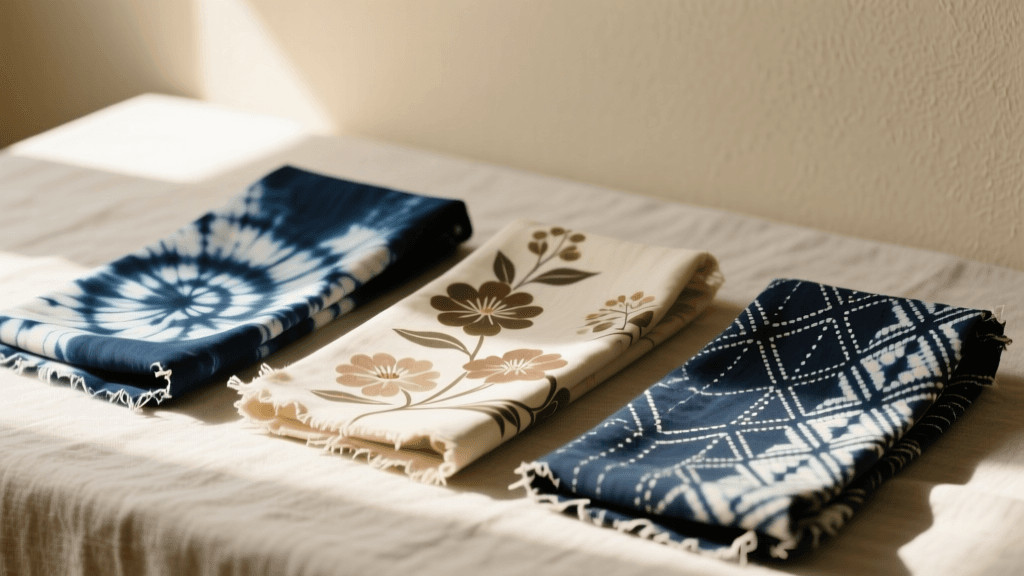
Shibori is often mistakenly referred to in the West simply as "tie-dye," but traditional Japanese shibori encompasses dozens of highly disciplined resist techniques. The fabric is bound, stitched, folded, twisted, or clamped before being submerged in dye (traditionally indigo).
- Kanoko Shibori: Creates fawn-spot patterns. Look for tiny, raised, three-dimensional bumps on the reverse side of the fabric where the silk was tightly bound with thread.
- Miura Shibori: Involves looping and binding. It produces a water-like, flowing pattern with softer, less defined edges than kanoko.
- Itajime Shibori: Uses carved wooden blocks to clamp the fabric, resulting in crisp, repeating geometric shapes.
Tactile Test: Run your hand over authentic shibori silk. You should feel a distinct, crepe-like texture and physical topography where the fabric was gathered and compressed.
Yuzen: The Painterly Resist
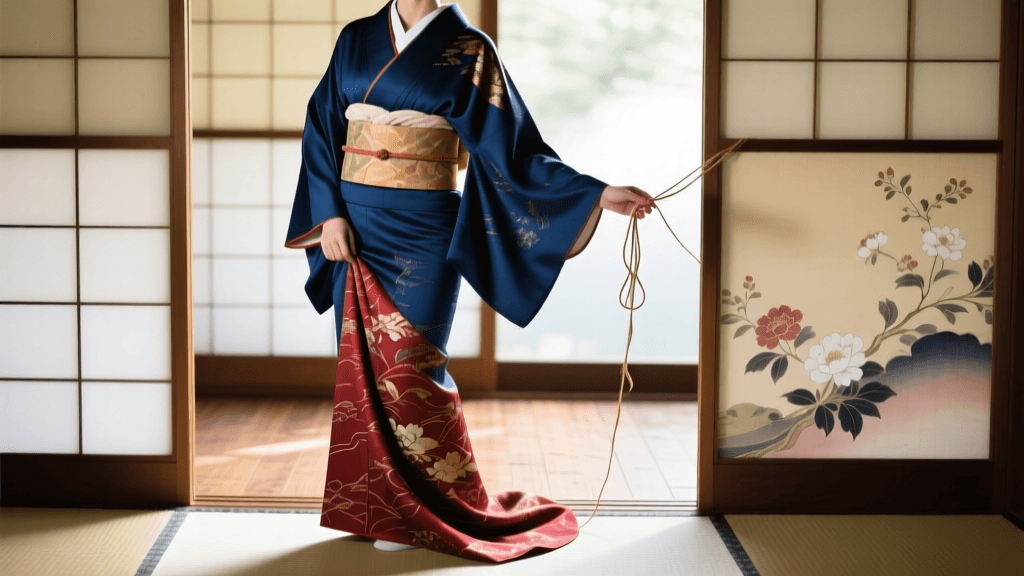
Yuzen is the technique responsible for the breathtaking, pictorial kimono featuring cascading florals, cranes, and landscapes. It utilizes a rice-paste resist (itome-nori) applied through metal stencils or drawn freehand to outline designs, preventing dyes from bleeding into one another.
- Kyo-Yuzen (Kyoto): Characterized by opulent, stylized designs, heavy use of gold leaf (surihaku), and embroidery accents. The aesthetic is luxurious and courtly.
- Kaga-Yuzen (Kanazawa): Known for hyper-realistic, botanical motifs. Look for the signature "five colors" (indigo, crimson, chrome yellow, dark green, and purple) and the deliberate use of musikui (insect-eaten leaf) motifs to reflect the beauty of impermanence.
Visual Test: Inspect the edges of the colored motifs. Authentic Yuzen will feature a tiny, un-dyed white outline where the rice paste protected the silk from the brush-applied dyes.
Kasuri: The Woven Resist (Ikat)
Unlike shibori and yuzen, which are dyed after the fabric is woven, kasuri is the Japanese iteration of ikat. The threads (warp, weft, or both) are tightly bound and dyed before they are placed on the loom. When woven, the pre-dyed threads align to form patterns.
- Kurume Kasuri: Originating in Fukuoka, this cotton kasuri is famous for its deep indigo blues and intricate, folk-art geometric or pictorial motifs.
- Bingata Influence: While technically a stencil dye from Okinawa, some southern kasuri weaves mimic the vibrant, tropical stenciled looks of bingata using pre-dyed cotton threads.
Visual Test: Kasuri translates roughly to "blurred." The defining hallmark is the slightly fuzzy, feathered edge of the pattern where the dyed and undyed threads intersect. If the edges are perfectly sharp, it is likely a modern screen-printed imitation.
Comparative Analysis for Collectors
When building a collection or pricing inventory, use this comparative matrix to evaluate vintage pieces. Prices reflect the current market for authenticated, mid-20th-century (Showa era) garments in excellent condition.
| Technique | Visual Hallmarks | Primary Base Fabric | Care Difficulty | Avg. Vintage Cost (USD) |
|---|---|---|---|---|
| Shibori | 3D textured dots, geometric patterns, spiderweb motifs | Silk (Chirimen), Cotton | High (Silk) / Med (Cotton) | $150 - $800+ |
| Yuzen | Crisp white outlines, painterly florals, gold leaf accents | Silk (Rinzu, Chirimen) | High | $300 - $2,000+ |
| Kasuri | Blurred edges, geometric/folk motifs, matte finish | Cotton, Hemp, Ramie | Medium | $80 - $400 |
Practical Care and Conservation
Preserving vintage Asian textiles requires a departure from modern laundry habits. The American Institute for Conservation (AIC) Textile Wiki emphasizes that protein fibers like silk are highly susceptible to alkaline damage, while cellulose fibers like cotton and hemp are vulnerable to acid degradation and mold.
Washing and Spot Cleaning
Never machine wash or dry clean vintage Yuzen or Shibori silk. The chemical solvents used in dry cleaning can dissolve the metallic threads and gold leaf applied to Kyo-yuzen garments. Furthermore, the water used in traditional Japanese dyeing is soft; modern hard water can cause mineral deposits that dull the silk.
- The Detergent: Use a pH-neutral, conservation-grade detergent such as Orvus WA Paste or Eucalan. Standard laundry detergents are highly alkaline (pH 9-11) and will strip the natural sericin from the silk, causing it to become brittle.
- Temperature: Submerge the garment in distilled or filtered water strictly below 30°C (86°F). Hot water will cause the natural dyes (especially safflower red and indigo) to bleed.
- Agitation: Gently press the water through the fabric. Never wring, twist, or scrub the textile, as this will permanently distort the woven structure and ruin the shibori topography.
- Drying: Lay the garment flat on a clean, colorfast cotton towel. Roll the towel like a sleeping bag to gently press out excess moisture, then unroll and lay flat on a drying rack away from direct UV light.
Archival Storage Solutions
Improper storage is the leading cause of deterioration in vintage kimono collections.
- Folding vs. Rolling: While traditional kimono are folded along specific seams (tatami), long-term storage of heavy, embroidered Yuzen or delicate Shibori should involve rolling the garment around an acid-free cardboard tube to prevent permanent crease lines and fiber breakage.
- Interleaving: Use unbuffered, acid-free tissue paper (pH 7.0-8.5) to stuff the sleeves and pad the folds. Buffered tissue (which contains calcium carbonate) should be avoided for silk, as it can cause yellowing over time.
- The Cedar Myth: Avoid storing vintage textiles in traditional cedar chests. While cedar repels moths, the wood releases acidic oils and volatile organic compounds (VOCs) that will stain and degrade silk fibers. Instead, use archival-quality polyethylene plastic bins with silica gel packets to maintain a relative humidity of 45% to 55%.
Sourcing and Authenticating Vintage Pieces
When sourcing from online auctions, estate sales, or antique dealers in Japan (such as the famous Oedo Antique Market in Tokyo), authentication goes beyond visual inspection.
"A true vintage kimono carries the scent of its history. The aroma of camphor, old paulownia wood, and faint incense is a hallmark of proper Japanese storage, whereas a smell of mildew or harsh chemical mothballs indicates poor preservation and potential hidden damage."
Check the Basting Stitches (Shitsuke): Authentic, well-cared-for vintage kimono are often stored with loose, white cotton basting stitches along the seams and hem. These stitches protect the fabric from dust and snagging while in storage. If a piece arrives with pristine, machine-stitched seams and no basting, it may be a modern reproduction or a garment that has been heavily altered.
Inspect the Lining (Hakkake): Turn back the hem to inspect the lower lining. In high-quality Yuzen kimono, the lining silk is often dyed to match or complement the outer shell, and the hem is padded with cotton batting (hakkake fukin) to give the garment a beautiful, weighted drape. Modern reproductions frequently use cheap, synthetic polyester linings that trap heat and moisture, accelerating the decay of the outer silk shell.
Conclusion
Collecting Shibori, Yuzen, and Kasuri textiles is a rewarding pursuit that connects you directly to the artisanal heritage of Japan. By learning to read the physical hallmarks of the rice-paste resists, the blurred ikat threads, and the three-dimensional shibori bindings, you elevate yourself from a casual buyer to a true custodian of textile history. Armed with conservation-grade cleaning methods and archival storage protocols, your collection will not only retain its financial value but will preserve these masterful Asian traditions for the centuries to come.