Gender-Inclusive Kimono: A Fit Guide for All Bodies
Breaking the Mold: The Evolution of Inclusive Kimono Fashion
When most people envision the traditional Japanese kimono, they picture a highly structured, gender-binary garment tailored to a very specific, standardized silhouette. However, the reality of the kimono is far more fluid and adaptable than modern pop culture suggests. Historically, the foundational garment of Japan—the kosode—was remarkably egalitarian. According to the Metropolitan Museum of Art's Heilbrunn Timeline of Art History, early kimono forms were worn by both men and women of various classes, with distinctions arising primarily from textile patterns, color choices, and sleeve lengths rather than fundamental structural differences.
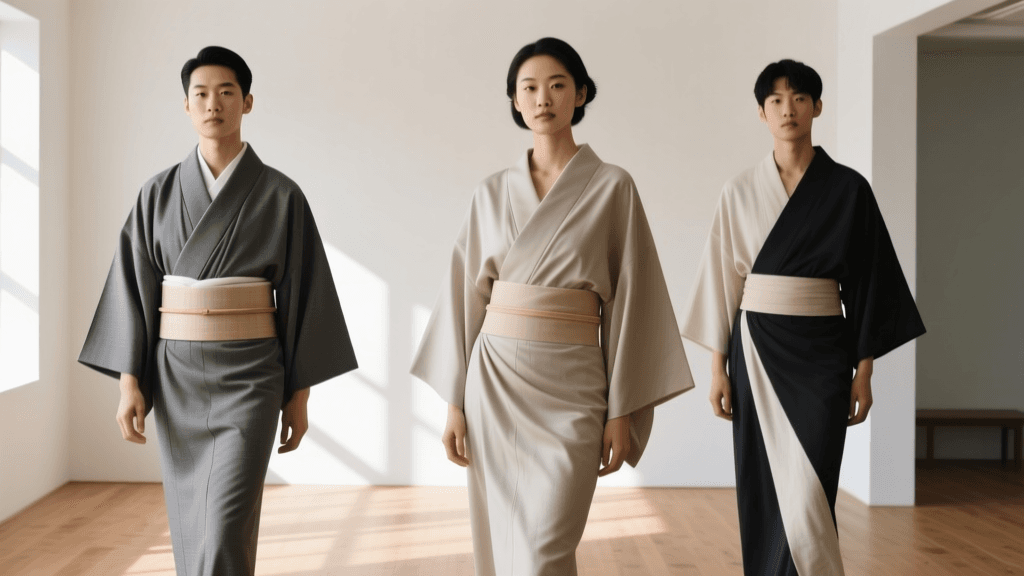
Today, the global revival of Japanese traditional wear is being spearheaded by a movement that embraces gender-inclusive and body-positive styling. From the runways of Tokyo to the historic streets of Kyoto, modern wearers are dismantling the rigid rules of kitsuke (the art of kimono dressing). Whether you are tall, plus-sized, petite, or seeking a gender-fluid aesthetic, the kimono is inherently a flat, two-dimensional canvas that can be sculpted to celebrate any three-dimensional body.
Understanding Kimono Measurements for Diverse Bodies
Unlike Western clothing, which is cut and sewn to accommodate curves, shoulders, and busts, a traditional kimono is constructed from straight, rectangular bolts of fabric called tanmono. This means the garment does not have a fixed shape until it is wrapped and tied onto the body. Understanding three key measurements is crucial for finding a comfortable fit:
- Mitake (Back Length): Measured from the base of the neck to the ankle. For women, the kimono is typically tied with an ohashori (waist fold) to adjust the length. For men, the kimono is worn at exact ankle length without a fold.
- Yuki (Sleeve Span): Measured from the center back of the neck, over the shoulder, and down to the wrist. This is the most critical measurement for tall or broad-shouldered individuals.
- Hip Width: While not a fixed garment measurement, the width of the fabric panels dictates how much overlap occurs at the front. Insufficient overlap can cause the kimono to pull open when walking.
Body Type and Fit Adaptation Chart
| Body Type | Primary Fit Challenge | Recommended Kimono Style | Essential Dressing Accessories |
|---|---|---|---|
| Tall & Broad | Sleeve length (Yuki) and overall hem length | Men's vintage kimono, Hakama sets | Custom foot inserts, wide obi belts |
| Petite & Curvy | Excess fabric at waist and bust | Two-piece (Ni-bu-shiki) kimono | Korin belt, hip padding, towel ties |
| Plus-Size | Wrapping width and securing the obi | Stretch-fabric modern kimono, wider panels | Magic tape obi, elastic date-jime |
| Gender-Fluid | Navigating strict masculine/feminine markers | Mix-and-match Haori and Hakama | Neutral tone obijime, adjustable collars |
Styling Strategies for Diverse Body Types
Tall and Broad-Shouldered Builds
Finding a kimono with adequate yuki (sleeve span) and mitake (length) can be challenging for taller individuals, especially women, as vintage female kimonos were cut for shorter average heights. The most practical solution is to explore the men’s vintage market. Men’s kimonos feature longer sleeves, broader shoulder spans, and darker, geometric, or nature-inspired motifs that look incredibly striking on any gender. Pairing a men’s vintage silk kimono with a structured hakama (pleated trousers) not only solves the length issue but creates a powerful, sweeping silhouette. If the sleeves are still slightly short, modern styling embraces this: let a contrasting turtleneck or long-sleeved lace shirt peek out from underneath, turning a fit issue into a deliberate fashion statement.
Petite and Curvy Silhouettes
The traditional kimono ideal favors a cylindrical, straight-up-and-down silhouette, which can be difficult to achieve for those with pronounced busts or hips without uncomfortable binding. Modern kitsuke offers a liberating alternative: the korin belt. This elasticized, adjustable belt secures the collar and waist without the need for tight, restrictive tying. Additionally, petite wearers should look into ni-bu-shiki (two-piece) kimonos. These separate the top and bottom halves of the garment, entirely eliminating the need for the bulky ohashori waist fold, which can overwhelm a smaller frame. When selecting patterns, opt for smaller, scattered motifs (komon) rather than large, sweeping crests that can visually swallow a petite build.
Plus-Size and Apple/Pear Shapes
For plus-size bodies, the primary concern is ensuring the front panels of the kimono overlap sufficiently to prevent gaping while walking. When renting or buying, specifically request a hirohaba (wide-width) kimono. Modern textile innovators have also introduced stretch-fabric kimonos made from polyester blends that offer forgiveness and movement. To secure the garment comfortably without digging into the midsection, utilize a magic tape obi (a pre-tied or velcro-secured sash) and an elastic date-jime (under-sash). This provides a secure, all-day hold that accommodates sitting, eating, and breathing with ease.
Breaking Gender Binaries in Kimono Fashion
The Victoria and Albert Museum's comprehensive guide to Kimono history highlights how the strict gender codes associated with the garment are largely a product of the Edo period's sumptuary laws and subsequent Western influence during the Meiji era. Today, the concept of jendaresu (genderless) fashion in Japan has naturally extended to traditional wear.
To cultivate a gender-neutral or fluid aesthetic, focus on mixing traditional markers. The haori (a hip- or thigh-length kimono jacket) is an excellent entry point. Historically worn by male samurai and later adopted by female geisha, the haori is inherently unisex. Wearing a haori over a simple turtleneck, wide-leg trousers, and boots creates a stunning, avant-garde look that bypasses the complexities of full kimono wrapping while honoring the textile's heritage. Furthermore, the hakama serves as the ultimate gender-neutral canvas. Whether paired with a formal kimono or a casual linen top, the hakama's sweeping lines provide dignity and movement without adhering to binary gender norms.
Practical Guide to Inclusive Kimono Rentals and Purchases
For tourists visiting Japan, experiencing traditional dress is a highlight, but navigating rental shops outside the standard Japanese sizing can be daunting. Here is an actionable guide to securing an inclusive kimono experience:
- Communicate Early: When booking a rental in hubs like Kyoto or Tokyo, use the term tōshin (tall stature) or explicitly state your height and hip measurements in centimeters. Shops need advance notice to pull hirohaba or men's garments from their archives.
- Understand the Costs: Standard kimono rentals range from 5,000 to 8,000 JPY. However, requesting custom sizing, premium vintage silks, or a private dressing session with a senior kitsuke instructor can elevate the cost to 15,000 - 25,000 JPY. This premium is worth it for a comfortable, tailored experience.
- Buying Vintage: If you wish to purchase a garment to take home, bypass the expensive tourist boutiques. Head to vintage markets in Tokyo's Shimokitazawa or Kyoto's Toji Temple flea market. Here, you can find men's and women's silk kimonos for as little as 3,000 to 10,000 JPY. Bring a measuring tape to check the yuki and mitake yourself, as vintage sellers rarely provide modern sizing charts.
- Seek Modern Innovators: For contemporary, inclusive designs, look into brands championed by the Japan National Tourism Organization (JNTO) for modern cultural experiences. Designers like Jotaro Saito create stunning denim and unconventional kimonos that are cut with a more global, gender-inclusive fit in mind, though these represent a higher investment starting around 50,000 JPY.
Conclusion
The kimono is not a fragile relic confined to a specific body type or gender identity; it is a living, breathing textile tradition that thrives on adaptation. By understanding the geometry of the garment, utilizing modern dressing accessories, and embracing the fluid history of Japanese fashion, anyone can wear the kimono with confidence, comfort, and profound respect for its cultural roots. Whether you are wrapping a vintage men's silk for a Tokyo street-style shoot or securing a two-piece set for a Kyoto temple tour, the kimono is ready to be redefined by you.