Build a Hanfu Capsule Wardrobe: Daily Style Essentials
Introduction to the Hanfu Capsule Wardrobe
The modern Hanfu movement has evolved far beyond occasional festival wear or elaborate historical reenactments. Today, enthusiasts and fashion-forward individuals are integrating traditional Chinese clothing into their daily lives. However, building a functional, versatile, and historically inspired wardrobe from scratch can be overwhelming. The sheer volume of dynasty-specific silhouettes, fabric choices, and layering rules often leads to over-purchasing and under-wearing. This is where the concept of a Hanfu capsule wardrobe becomes essential.
A capsule wardrobe focuses on a curated collection of interchangeable, high-quality pieces that can be mixed and matched to create numerous outfits. By focusing on foundational garments from the Song and Ming dynasties—eras known for their elegant yet practical everyday silhouettes—you can build a collection that transitions seamlessly from the office to a weekend tea ceremony. This guide will walk you through the essential pieces, accurate sizing, budgeting, and care instructions required to build a sustainable and stylish Hanfu capsule collection.
Core Essentials: The Foundation Pieces
To create a versatile capsule, you must prioritize garments that offer maximum mix-and-match potential. The following pieces form the backbone of a modern, practical Hanfu wardrobe.
1. The Versatile Ming Dynasty Mamianqun (马面裙)
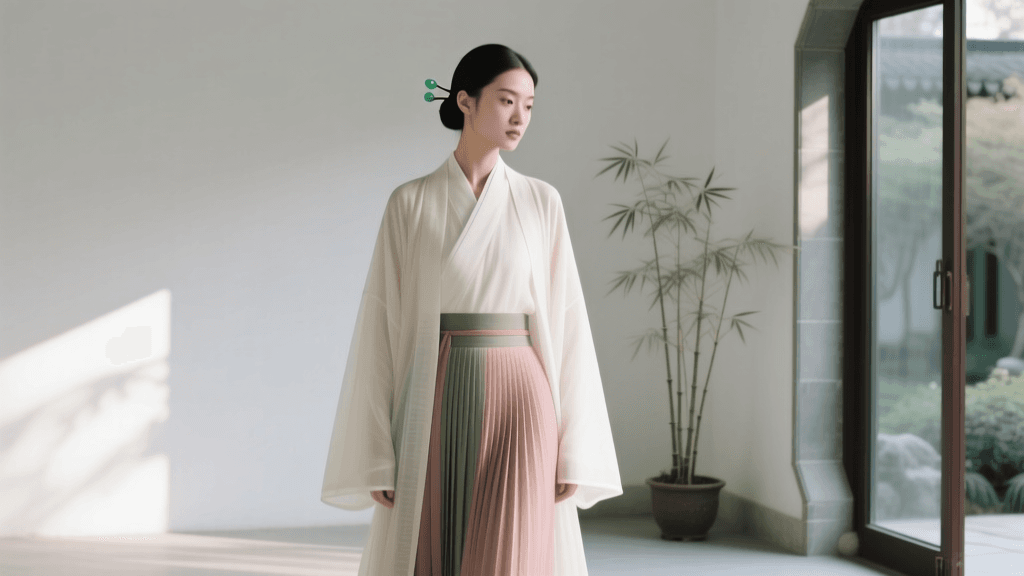
The Mamianqun, or horse-face skirt, is arguably the most adaptable and popular garment in the modern Hanfu revival. Characterized by its flat front and back panels flanked by intricate knife or box pleats, this skirt is incredibly forgiving in terms of fit and highly functional for modern movement. For a capsule wardrobe, invest in two Mamianqun skirts: one in a solid, neutral color (like navy, black, or deep burgundy) made of a woven jacquard or matte polyester blend for daily wear, and one with subtle embroidered motifs for elevated occasions. Modern adaptations often feature a length of 100cm to 105cm, allowing the hem to rest just above the ankle, making it practical for commuting and walking.
2. The Everyday Song Dynasty Beizi (褙子)
The Beizi is a long, open-front jacket with straight collars and side slits that typically reach the knee or mid-calf. Originating in the Song dynasty, the Beizi is prized for its slender, elongating silhouette and effortless layering capabilities. It can be worn open as a lightweight duster over modern clothing (like a turtleneck and jeans) or closed over traditional base layers. For your capsule, select a solid-colored cotton or linen-blend Beizi for summer, and a slightly thicker woven polyester or wool-blend Beizi for autumn. The straight collar frames the face beautifully without the restrictive feel of high-collared garments.
3. The Ming Dynasty Ao (袄) for Cooler Months
When the temperature drops, the Ao—a lined or padded jacket with a standing collar (liling) and overlapping front closure—becomes indispensable. Historical silhouettes, particularly the structured elegance of the Ming dynasty, continue to influence modern tailoring. According to The Metropolitan Museum of Art, the Ming era was characterized by a return to traditional Han Chinese aesthetics, emphasizing modesty, structured layering, and refined textiles. A well-fitted Ao in a heavy brocade or thick cotton can serve as both a traditional top and a stylish winter coat when paired with a Mamianqun.
4. Base Layers: Zhongyi (中衣) and Zhongku (中裤)
Often overlooked by beginners, base layers are the unsung heroes of the Hanfu wardrobe. A Zhongyi (inner top) and Zhongku (inner pants) are essential for opacity, sweat absorption, and comfort, especially when wearing sheer or synthetic outer layers. Invest in two sets of white or off-white cotton base layers. Look for tops with a traditional crossed collar (jiaoling) that will peek out elegantly beneath your outer jackets, providing that crucial layered aesthetic.
Understanding Hanfu Sizing and Measurements
Unlike Western fast fashion, traditional Hanfu does not rely on standard S, M, L sizing. Because the garments are cut from flat pieces of fabric with minimal darts or tailoring, the fit is dictated by the width of the fabric and the length of the seams. To ensure your capsule pieces fit correctly, you must understand three critical measurements:
- Shoulder Width: While many Hanfu jackets feature dropped shoulders, knowing your natural shoulder width helps determine if the collar will lay flat against your chest or gape open.
- Arm Length (Neck to Wrist): Hanfu sleeves are measured from the center back of the neck, across the shoulder, and down to the wrist or fingertips. Standard everyday sleeves should end at the wrist bone, while formal sleeves may extend past the fingertips.
- Waist and Hip Circumference: Crucial for the Mamianqun. The skirt must wrap around your waist with enough overlap (usually 15-20cm) to prevent the side pleats from bursting open when you sit or walk.
Capsule Wardrobe Budget and Fabric Guide
Building a capsule wardrobe requires strategic spending. While authentic silk and hand-embroidered pieces are beautiful, they are impractical for daily wear and difficult to maintain. When selecting embroidered or woven pieces, understanding historical textile techniques is crucial. The Victoria and Albert Museum notes that traditional Chinese silk weaving and embroidery require immense skill, which is why modern daily-wear Hanfu often utilizes high-quality jacquard polyester or cotton-linen blends to mimic these historical textures at a fraction of the cost and maintenance.
The modern commercialization of these garments has made them more accessible than ever. Cultural market reports featured in China Daily highlight that the Hanfu industry has seen exponential growth, resulting in better quality control and more competitive pricing for everyday consumers.
| Garment Type | Estimated Cost (USD) | Best Season | Recommended Fabric |
|---|---|---|---|
| Song Beizi (Long Jacket) | $35 - $70 | Spring / Summer | Cotton-linen blend, lightweight ramie |
| Ming Ao (Lined Jacket) | $50 - $120 | Autumn / Winter | Thick cotton, wool-blend, matte brocade |
| Mamianqun (Daily) | $40 - $85 | All Seasons | Polyester jacquard, woven cotton |
| Zhongyi / Zhongku Set | $20 - $35 | All Seasons | 100% Cotton, bamboo-blend |
| Cloud Shoulders (Yunjian) | $25 - $60 | Autumn / Winter | Faux fur, embroidered felt |
Modern Styling and Footwear Pairings
One of the greatest advantages of a Hanfu capsule wardrobe is its ability to blend with modern accessories. You do not need to wear a full, historically accurate ensemble from head to toe to honor the tradition. For a contemporary, street-style look, pair a solid-colored Mamianqun with a modern fitted turtleneck and a tailored Beizi.
Footwear is another area where modern integration shines. While traditional embroidered cloth shoes (gongxie) are beautiful, they lack the arch support needed for modern city commuting. Instead, pair your skirts with leather loafers, Chelsea boots, or clean, minimalist white sneakers. A pleated Mamianqun falling just above the ankle looks exceptionally chic with a pair of classic black Mary Janes or Oxford shoes. For accessories, swap elaborate historical hairpins for simple jade hair sticks, minimalist metal hair clips, or a silk ribbon tied into a low bun.
Garment Care and Maintenance
To ensure your capsule wardrobe lasts for years, proper care is non-negotiable. The structured pleats of the Mamianqun and the delicate collars of the Ao require specific washing techniques.
- Washing: Always hand-wash your Hanfu in cold water using a mild, pH-neutral detergent. If you must use a machine, place the garments in a mesh laundry bag and use the delicate cycle. Never use bleach or harsh stain removers, as they will strip the color from jacquard weaves and damage embroidery threads.
- Drying: Never wring out your garments, as this will permanently distort the pleats and warp the collar structure. Gently press the water out between two clean towels and hang the garments to dry in the shade. Direct sunlight will fade dark dyes and weaken natural fibers like silk and ramie.
- Ironing and Pleat Maintenance: The pleats of a Mamianqun can loosen over time. To reset them, lay the skirt flat on an ironing board, align the pleats carefully, and use a low-heat steam iron. For stubborn pleats, use fabric clips to hold the folds in place while steaming, and allow the skirt to cool completely before unclipping.
- Storage: Store your jackets and skirts on wide, padded hangers to maintain the shoulder shape. For long-term storage, fold the garments with acid-free tissue paper to prevent hard creases from forming across the embroidered panels.
Conclusion
Building a Hanfu capsule wardrobe is a rewarding journey that bridges the gap between ancient Chinese aesthetics and modern lifestyle demands. By investing in versatile foundation pieces like the Mamianqun and the Beizi, understanding the nuances of traditional sizing, and committing to proper garment care, you can cultivate a wardrobe that is both historically respectful and deeply personal. Start small, prioritize quality fabrics over excessive embellishments, and allow your collection to grow organically as you discover which dynasty silhouettes best complement your daily life.