Master Hanfu Etiquette: Greeting Rituals and Dress Codes
The Philosophy of Li: More Than Just Clothing
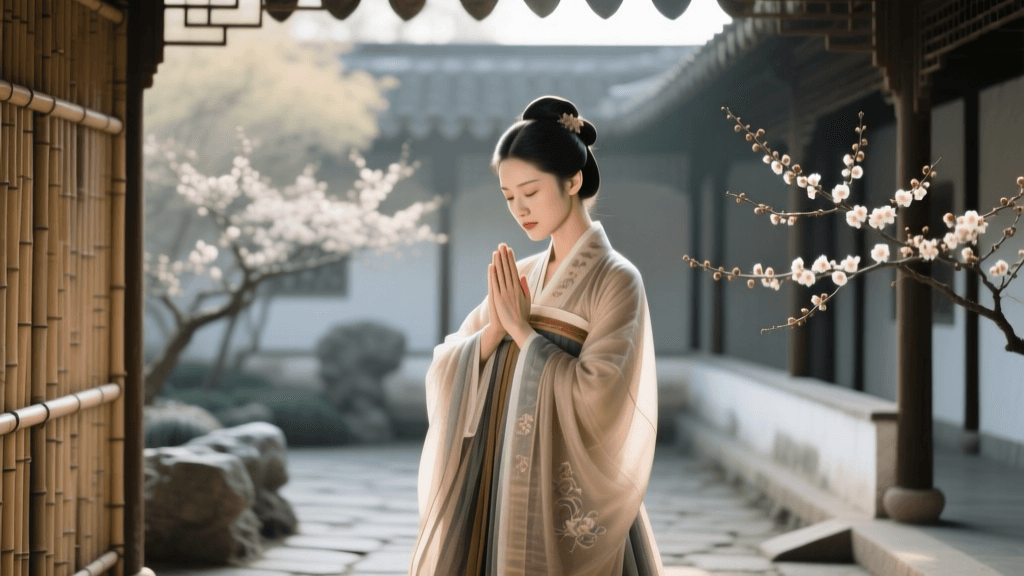
The modern Hanfu revival is not merely a fashion trend; it is a profound cultural renaissance rooted in the ancient Chinese philosophy of Li (礼), which translates to propriety, etiquette, and ritual. In traditional Chinese society, clothing and behavior were inextricably linked. To wear Hanfu without understanding the accompanying etiquette is to miss the very soul of the garment. As noted by cultural historians and institutions like the Encyclopedia Britannica, historical Chinese dress codes were strictly regulated to reflect social harmony, cosmic balance, and moral rectitude. Understanding Hanfu etiquette requires a deep dive into the physical rituals of greeting, the structural mandates of the garments, and the mindful movements expected of the wearer.
Traditional Hanfu Greeting Rituals
Greetings in Hanfu culture are deeply symbolic, reflecting the Confucian ideals of respect, humility, and the cosmological balance of Yin and Yang. Unlike modern handshakes, which involve physical contact, traditional Chinese greetings maintain a respectful distance, emphasizing spiritual and social connection over physical familiarity.
Gongshou Li (拱手礼) - The Standard Cupped-Hand Greeting
The Gongshou Li is the most common and versatile greeting in Hanfu culture, suitable for daily interactions, festivals, and meeting peers. To perform it, one stands upright, brings the hands together in front of the chest, and cups them. However, the placement of the hands is governed by strict cosmological rules:
- For Men (Yang over Yin): The left hand wraps over the right fist. In traditional Chinese philosophy, the left represents Yang (life, creation, and respect), while the right represents Yin (death, aggression, and martial arts). Covering the right fist with the left hand symbolizes the restraint of aggression and the offering of peace.
- For Women (Yin over Yang): The right hand wraps over the left fist. This reflects the traditional complementary balance of the sexes in cosmological terms.
- The Mourning Exception: The hand placement is strictly reversed during funerals or periods of mourning. A man will place his right hand over his left, and a woman her left over her right. Making this mistake in a joyful setting is considered a severe faux pas and a bad omen.
Zuoyi Li (作揖礼) - The Formal Deep Bow
When greeting elders, teachers, or individuals of significantly higher social standing, the Zuoyi Li is employed. This is an extension of the Gongshou Li but involves a full-body movement. The greeter forms the standard hand clasp, pushes the hands forward and slightly upward, and then bows deeply from the waist. The angle of the bow dictates the level of respect: a 45-degree bow shows deep respect, while a 90-degree bow is reserved for ancestors, deities, or the most revered elders. The back must remain straight during the descent, demonstrating sincerity and discipline.
Wanfu Li (万福礼) - The Traditional Feminine Greeting
Popularized during the Tang and Song dynasties, the Wanfu Li is a graceful greeting specific to women. According to research on historical costume evolution from the Metropolitan Museum of Art, women's garments often featured high waists and flowing drapes that influenced movement. To perform the Wanfu Li, a woman clasps her hands (right over left) and rests them slightly to the side of her hip or lower waist. She then performs a slight, elegant bend of the knees while lowering her head. The phrase 'Wanfu' translates to 'ten thousand blessings,' and this greeting was historically used to wish prosperity upon the person being greeted.
Hanfu Dress Code Rules and Structural Mandates
Wearing Hanfu correctly is an exercise in historical accuracy and cultural respect. The structural rules of Hanfu are not arbitrary; they are tied to ancient beliefs about life, death, and civilization.
The Golden Rule: Jiaoling Youren (交领右衽)
The most critical rule of Hanfu is Jiaoling Youren, which translates to 'intersecting collar, right lapel.' This means the left side of the collar must always cross over the right side, forming a 'y' shape at the neckline. Confucius himself famously praised the statesman Guan Zhong for preserving Chinese civilization, stating that without him, the people would be 'wearing their hair unbound and folding their robes to the left.' Therefore, folding the right collar over the left (Zuoren) is strictly reserved for dressing the deceased for burial. Wearing a collar backward in daily life is the most offensive mistake a Hanfu enthusiast can make.
Categorizing Hanfu by Occasion
Historically, the Chinese wardrobe was strictly categorized based on the event. The Victoria and Albert Museum highlights how textile choices, embroidery motifs, and garment structures shifted dramatically depending on the wearer's daily duties and ritual obligations. Today, Hanfu wearers generally divide their wardrobe into three main categories:
- Jifu (祭服) - Sacrificial/Grand Ceremonial Wear: Reserved for major rites, ancestral worship, and grand weddings. These garments are heavily layered, often featuring dark, solemn colors like black and crimson, and intricate embroidery of dragons or phoenixes.
- Chaofu/Lifu (朝服/礼服) - Formal/Court Wear: Worn for festivals, coming-of-age ceremonies (Guan Li/Ji Li), and formal gatherings. Garments like the Shenyi (deep robe) or formal Ming dynasty Aoqun fall into this category.
- Changfu (常服) - Daily/Casual Wear: Designed for everyday activities, featuring narrower sleeves, shorter skirts, and lighter fabrics like linen or cotton for ease of movement.
Hanfu Dress Code Matrix
| Occasion | Garment Category | Key Features & Textiles | Appropriate Greeting |
|---|---|---|---|
| Ancestral Worship / Weddings | Jifu (Ceremonial) | Heavy brocade, multiple layers, dark/crimson hues, wide sleeves | Zuoyi Li (90-degree bow) |
| Festivals / Coming-of-Age | Lifu (Formal) | Silk damask, embroidered motifs, Mamianqun (horse-face skirt) | Zuoyi Li (45-degree bow) |
| Tea Ceremonies / Social Visits | Changfu (Semi-Formal) | Lighter silks, Ruqun (blouse and skirt), subtle patterns | Gongshou Li / Wanfu Li |
| Daily Errands / Study | Bianfu (Casual/Work) | Cotton/Linen, narrow sleeves (Jianxiu), shorter hemlines | Nod / Casual Gongshou |
Posture, Movement, and Sleeve Management
Hanfu etiquette extends beyond greetings and into the physical navigation of space. The flowing nature of traditional garments requires a heightened sense of bodily awareness.
- Managing Shuixiu (Water Sleeves): On formal garments with extended white cuffs, one must know how to manage the excess fabric. When greeting or eating, the sleeves are elegantly folded back over the forearm or held together by the opposite hand to prevent them from dipping into food or touching the ground.
- Walking in Mamianqun: The Ming dynasty horse-face skirt features deep, structured pleats. Proper etiquette dictates taking smaller, measured steps. Striding too widely will cause the pleats to tangle and disrupt the skirt's architectural silhouette.
- Sitting Posture: When wearing long robes like the Shenyi, one must gather the back panels of the skirt and smooth them over the seat before sitting down to avoid wrinkling the fabric or sitting on the hem. The back should remain straight, and hands should rest gently on the thighs or lap.
Common Etiquette Mistakes to Avoid
'Clothing is the language of the body. To wear it incorrectly is to speak nonsense.' - Traditional Proverb
To maintain respect for the culture, avoid these common pitfalls:
- Wearing 'Leftover Right' (Zuoren): Never cross the right collar over the left unless you are dressing a body for a funeral.
- Mixing Dynastic Hairstyles Inappropriately: While modern Hanfu styling is flexible, pairing a strict Ming dynasty official's robe with a completely unrelated Tang dynasty high-bun hairstyle shows a lack of historical diligence.
- Wearing Mourning Colors to Festivals: Avoid wearing pure, unadorned white or coarse hemp fabrics to joyous occasions like the Lunar New Year, as these are historically associated with mourning and grief.
- Physical Contact During Greetings: Avoid hugging or kissing on the cheek while in full traditional Hanfu, as it disrupts the structural integrity of the garments and breaks the traditional etiquette of respectful distance.
Conclusion
Mastering Hanfu etiquette is a rewarding journey that transforms the act of getting dressed into a mindful practice of cultural preservation. By understanding the profound meanings behind the Gongshou Li, adhering strictly to the Jiaoling Youren collar rule, and moving with the grace that historical garments demand, wearers do more than just recreate the past. They breathe life into the ancient philosophy of Li, proving that true elegance is found in the harmony between outward appearance and inner propriety.