Sen No Rikyu's Legacy: Wabi-Sabi Tea Ceremony Kimono Guide
The Historical Impact of Sen no Rikyu on Japanese Fashion
In the turbulent and opulent Azuchi-Momoyama period (1568–1600), Japanese warlords like Oda Nobunaga and Toyotomi Hideyoshi favored extravagant displays of wealth. Their garments were heavily embroidered with gold thread, featuring bold, ostentatious motifs designed to project power and dominance. However, amidst this era of extreme luxury, a profound counter-movement was brewing in the quiet, dimly lit tearooms of Kyoto. At the center of this aesthetic revolution was Sen no Rikyu, the most influential historical tea master in Japanese history. Rikyu did not just codify the rules of the tea ceremony (chanoyu); he fundamentally altered the trajectory of Japanese fashion, textiles, and color theory through his philosophy of wabi-sabi—the appreciation of rustic simplicity, imperfection, and natural elegance.
Rikyu’s fashion legacy is most visibly preserved in chafuku, the specialized garments worn during tea ceremonies. By rejecting the flashy gold-laden silks of the samurai elite, Rikyu championed a sartorial code that prioritized subtlety, high-quality natural fibers, and a deep connection to the seasons. Today, the rules of chafuku remain strictly governed by the principles Rikyu established over four centuries ago, influencing everything from modern kimono color palettes to the global appreciation of minimalist Japanese design.
Defining Chafuku: The Wabi-Sabi Aesthetic in Textiles
To dress for a traditional tea gathering (chakai) is to engage in an act of historical preservation. The primary rule of chafuku is that the guest’s attire must never outshine the tea room, the hanging scroll, or the tea bowls themselves. The clothing must act as a harmonious backdrop to the art and the season. This requires a deep understanding of fabric textures and dyeing techniques that prioritize understated sophistication over immediate visual impact.
The Signature Colors: Rikyu-cha and Rikyu-nezumi
Sen no Rikyu’s influence on the Japanese dyeing industry is immortalized in two specific color palettes that bear his name. Rikyu-cha is a muted, grayish-brown reminiscent of dried bamboo and autumn leaves. Rikyu-nezumi is a complex, subdued gray with a subtle undertone of green or brown, mimicking the color of moss on a stone lantern. These colors were revolutionary because they required highly skilled dyers to achieve the perfect balance of gray undertones, preventing the fabric from looking flat or dull. When selecting a kimono for a formal tea event today, garments in these specific earthy, desaturated tones are considered the pinnacle of refined taste, signaling the wearer's deep understanding of tea aesthetics.
Practical Guide: Assembling a Tea Ceremony Kimono Ensemble
For modern practitioners, students of the Urasenke or Omotesenke schools, or cultural enthusiasts attending a formal tea gathering, assembling the correct ensemble requires precision. The All Japan Kimono Consultants Association outlines strict parameters for semi-formal and formal tea attire, ensuring that every layer serves both a functional and aesthetic purpose.
1. The Kimono: Iromuji and Edo Komon
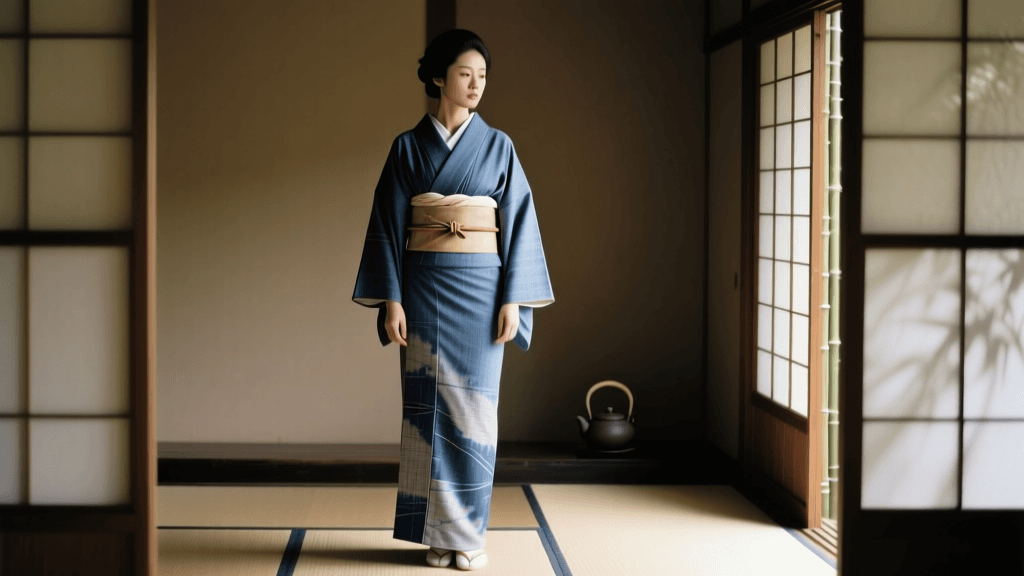
The most appropriate kimono for a semi-formal tea gathering is the Iromuji (a solid-color dyed silk kimono) or the Edo Komon (a kimono featuring ultra-fine micro-patterns that appear solid from a distance). An Iromuji with a single family crest (kamon) on the back of the neck is the standard for semi-formal events. Avoid vibrant reds, bright purples, or large, flashy pictorial patterns (like those found on Furisode or Houmongi), as they are deemed too distracting for the intimate space of the tearoom.
2. The Obi: Subtlety in the Sash
The obi (sash) should complement the kimono without overpowering it. A woven Nagoya obi featuring subtle, seasonal motifs—such as a single autumn maple leaf or a delicate winter plum blossom—is ideal. The knot used is typically the ichiju-daiko musubi (a variation of the drum knot), which is neat, flat, and allows the wearer to sit comfortably in the seiza (kneeling) position without a bulky knot pressing against the spine or the wall.
3. Footwear and Accessories
Footwear is strictly regulated. Pristine white cotton tabi (split-toe socks) are mandatory; they represent purity and cleanliness, essential when stepping onto the tatami mats. Zori (sandals) should have a low profile, preferably with a tatami-faced or subdued vinyl strap, avoiding high heels or overly ornate brocade fabrics.
Sizing, Measurements, and Budgeting for Chafuku
Acquiring and fitting a tea ceremony wardrobe is an investment. Below is a practical breakdown of the essential components, including estimated costs for authentic silk garments and crucial sizing notes to ensure proper etiquette.
| Garment Component | Recommended Material | Estimated Cost (USD) | Sizing & Fit Notes |
|---|---|---|---|
| Iromuji Kimono | 100% Silk (Chirimen or Tsumugi) | $300 - $1,200 | Must allow for a 5-7 cm ohashori (waist fold). Sleeve length (sode) should be standard (approx. 49 cm). |
| Nagoya Obi | Silk Brocade or Woven Linen | $150 - $600 | Standard length is 360 cm. The pre-folded section must be stitched securely to maintain a flat knot. |
| Juban (Undergarment) | Silk or Washable Cotton | $80 - $250 | The han-eri (collar) must be stark white or very pale seasonal embroidery. Collar must show exactly 2 cm at the nape. |
| Tabi Socks | Heavyweight Cotton | $25 - $45 | Must be pure white. Sizing is based on foot length in cm (e.g., 23.5 cm). Should fit snugly without toe wrinkles. |
| Zori Sandals | Vinyl or Tatami-faced | $40 - $120 | Heel height should not exceed 4 cm to maintain balance during the formal walking steps (suri-ashi) in the tea garden. |
The Crucial Ohashori Measurement
When dressing in a kimono for tea, the ohashori—the horizontal fold of fabric at the waist used to adjust the kimono’s length to the wearer's height—is heavily scrutinized. For tea ceremony, the ohashori must be perfectly level around the entire body and measure exactly 5 to 7 centimeters in depth. An uneven or overly thick ohashori is considered sloppy and can interfere with the smooth movements required when whisking matcha or carrying heavy tea bowls.
Seasonality in Tea Ceremony Attire
Rikyu taught that the tearoom must reflect the exact moment in nature. This extends to the weight and weave of the kimono. The Japanese concept of koromogae (seasonal changing of clothes) is strictly observed in chafuku.
- Winter (November to April): Wear Awase (lined silk kimono). The inner lining (hakkake) can feature a subtle seasonal color, such as a pale yellow lining peeking out from a gray Rikyu-nezumi kimono, representing the hidden warmth of spring beneath the snow.
- Summer (June to September): Wear Ro or Sha (sheer, breathable woven silks). The undergarments must also be made of sheer hemp or lightweight cotton to maintain a cool, visually refreshing appearance for the guests.
- Transitional Months (May and October): Wear Hitoe (unlined silk), bridging the gap between the heavy winter weaves and the sheer summer fabrics.
Strict Etiquette Rules for the Tea Room
Beyond the garments themselves, how you wear and accessorize them is dictated by centuries of practical and philosophical rules. The Japan Arts Council frequently highlights the intersection of traditional arts and disciplined etiquette in their cultural preservation guidelines. When attending a chakai, you must adhere to the following actionable rules:
- Remove All Jewelry: Rings, bracelets, and dangling earrings must be removed before entering the tearoom. This is not merely for minimalism; it is a practical necessity to prevent scratching the priceless, often unglazed Raku ware tea bowls passed among guests.
- Avoid Fragrance: Do not wear perfume, scented lotions, or strongly fragranced hair oils. The tea ceremony involves the appreciation of premium matcha and carefully selected incense (kodo). Artificial scents will disrupt the delicate olfactory experience for everyone in the small, enclosed room.
- Keep Nails Short and Unpolished: Nail polish is considered inappropriate as it introduces an artificial, modern color into the natural palette of the tearoom. Furthermore, long nails can damage the silk shifuku (brocade pouches) that hold the tea utensils.
Where to Source Authentic Tea Ceremony Garments
For those looking to build an authentic chafuku wardrobe, Kyoto remains the epicenter of traditional textile sourcing. The Nishijin district is famous for its woven obi, while vintage kimono shops (recycle shops) in the Higashiyama area often carry high-quality, pre-owned Iromuji in the coveted Rikyu-cha and Rikyu-nezumi colorways at a fraction of the cost of new custom-dyed silks. When purchasing vintage, always inspect the silk for 'shimi' (age spots) and ensure the fabric has not weakened along the fold lines, as the rigorous kneeling and standing of the tea ceremony places significant stress on the garment's seams.
Sen no Rikyu’s fashion legacy is a masterclass in the power of restraint. By stripping away the unnecessary and focusing on the profound beauty of natural materials, muted colors, and precise tailoring, he created a sartorial tradition that continues to define Japanese elegance. Dressing in the wabi-sabi tradition is not merely about putting on a historical costume; it is about adopting a mindset of mindfulness, respect, and deep appreciation for the fleeting beauty of the present moment.