Miao Traditional Dress: Guizhou Folk Embroidery & Silver
The Living Archives of Guizhou: Miao Folk Dress
In the mountainous, mist-shrouded terrain of China's Guizhou Province, the Miao (Hmong) people have cultivated one of the most visually striking and culturally profound sartorial traditions in Asia. Historically lacking a formal written language, the Miao encoded their mythology, migration history, and clan identities directly into their garments. Today, Miao traditional dress serves as a wearable archive, a masterpiece of regional folk art, and a highly sought-after category for textile collectors and fashion historians alike.
Unlike the streamlined silhouettes of the Han Chinese qipao or the imperial robes of the Qing Dynasty, Miao provincial dress is defined by its maximalist layering, structural complexity, and staggering weight. A full festival ensemble can weigh upwards of 15 kilograms (33 pounds), combining heavily pleated indigo skirts, intricately embroidered jackets, and massive, ornate silver headdresses. Understanding the craftsmanship behind these garments requires a deep dive into the specific regional techniques of Guizhou's rural artisans.
The Art of Miao Embroidery: Stitches and Mythology
Miao embroidery is not merely decorative; it is a sacred practice passed down from mother to daughter. Recognized for its incredible complexity, the craft is celebrated globally, with institutions like the British Museum holding extensive archives of Guizhou folk textiles that showcase the evolution of these regional motifs.
Key Motifs and the 'Hundred Bird Jacket'
The most iconic of all Miao garments is the Bainiao Yi, or 'Hundred Bird Jacket.' Originating primarily from the Danzhai and Rongjiang regions, this jacket is entirely covered in stylized avian embroidery. Birds represent the messengers between the earthly realm and the ancestors. Alongside birds, the 'Butterfly Mother' (Mai Bang) is a ubiquitous motif. According to Miao creation mythology, the Butterfly Mother laid twelve eggs, which hatched into the first humans, dragons, and water buffaloes, making her the ultimate symbol of fertility and protection.
Mastering the Stitches
Miao embroiderers utilize over a dozen distinct stitching techniques, many of which are entirely unique to the province:
- Bian (Plaiting Stitch): Silk threads are braided into tiny, flat cords before being couched onto the fabric, creating a raised, textured outline.
- Zhou (Wrinkle/3D Stitch): A highly specialized technique where silk is wrapped around a core of cotton or horsehair, then folded and stitched to create three-dimensional, sculptural relief patterns that resemble topographic maps.
- Da (Seed Stitch): Tiny, tightly packed knots that mimic the texture of seeds or animal scales, often used to fill the bodies of mythical dragons.
The Alchemy of Indigo and the Pleated Skirt
The foundation of the Miao wardrobe is the pleated indigo skirt. In regions like Danzhai, the 'Short Skirt Miao' wear skirts that measure only 50 to 70 centimeters in length, while other subgroups wear ankle-length versions. The creation of a single skirt is a grueling, months-long process.
The indigo dye vat is a living organism. Artisans ferment indigo leaves with rice wine, wood ash, and water, feeding the vat daily. The cotton or hemp fabric is dipped dozens of times over several weeks to achieve a deep, midnight-blue hue. Once dyed, the fabric is glazed. Women apply a mixture of egg whites, cowhide glue, and sometimes pig's blood, then pound the cloth with heavy wooden mallets for hours. This process, known as calendering, compresses the fibers and gives the indigo fabric a brilliant, iridescent, leather-like sheen.
Finally, the pleating begins. A single skirt may contain over 500 micro-pleats. The fabric is folded by hand, bound tightly with hemp string, and steamed to set the pleats permanently. The result is a skirt that flares out like a bell and possesses incredible structural rigidity.
Miao Silverwork: Weight, Craftsmanship, and Cost
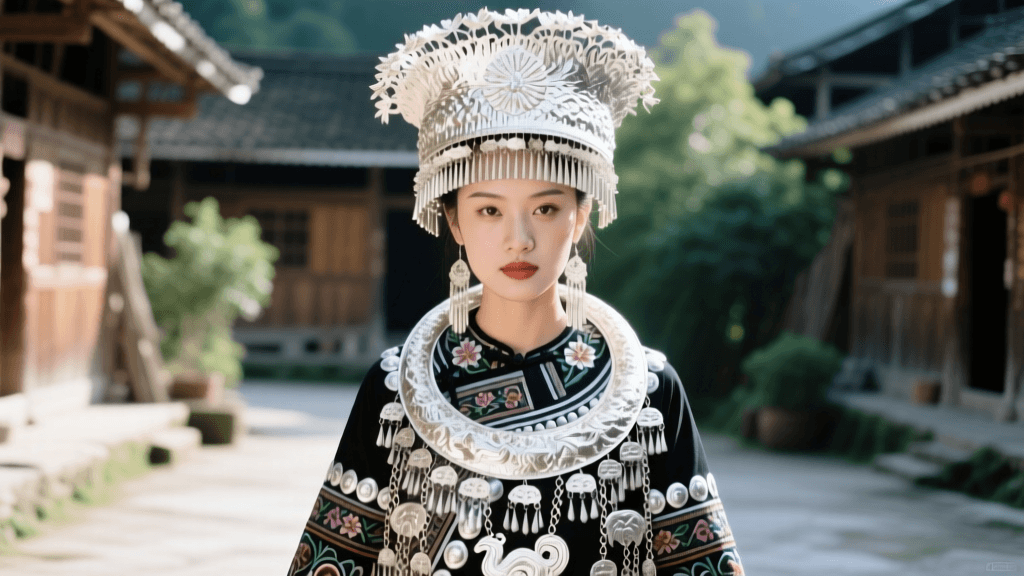
Silver is the ultimate marker of wealth, beauty, and spiritual protection in Miao culture. It is believed that the bright gleam of silver blinds evil spirits, while the chiming of silver bells wards them away. During major festivals, a Miao woman may wear up to 10 kilograms of solid silver.
The centerpiece is the Yin Jiao (Silver Horn), a massive headdress that can span up to 100 centimeters across, shaped like the horns of the revered water buffalo. This is paired with the Xiang Quan, a heavy, coiled silver neck ring, and elaborate chest plates featuring repousse and filigree work depicting dragons and phoenixes. The village of Shidong in Taijiang County is widely considered the epicenter of Miao silversmithing, where master artisans use ancient casting, hammering, and wire-drawing techniques.
Data Table: Miao Silver & Textile Sourcing Guide
| Item / Garment | Regional Origin | Average Weight / Dimensions | Estimated Cost (USD) | Sourcing & Timing Advice |
|---|---|---|---|---|
| Full Silver Festival Set | Shidong, Taijiang | 5 kg - 12 kg | $1,500 - $4,500+ | Commission directly from Shidong master smiths. Allow 2-4 months for custom forging. |
| Silver Horn Headdress (Yin Jiao) | Leishan / Kaili | 1 kg - 3 kg; 80-100cm wide | $400 - $1,200 | Verify silver purity (usually 925 or 990). Best purchased post-Lusheng Festival (Nov). |
| Vintage Indigo Pleated Skirt | Danzhai / Sandu | 50-70cm length; 500+ pleats | $300 - $800 | Seek antiques (1920s-1960s) at regional Sunday markets. Check for original egg-white glaze. |
| Hundred Bird Jacket (Bainiao Yi) | Danzhai / Rongjiang | Custom fit; heavy silk/satin | $500 - $2,500 | Authentic vintage pieces are rare. Modern reproductions take 1-2 years to embroider by hand. |
Practical Guide: Sourcing, Wearing, and Caring for Miao Garments
For collectors, curators, and enthusiasts looking to acquire or preserve Miao provincial dress, navigating the market requires specific knowledge. The commercialization of villages like Xijiang has led to a flood of mass-produced, machine-embroidered tourist items. To find authentic regional folk dress, one must venture deeper into the province.
Actionable Tips for Collectors and Travelers
- Timing Your Visit: The best time to observe and source authentic garments is during the Sisters' Meal Festival (typically April, based on the lunar calendar) or the Lusheng Festival (post-harvest, usually October/November). During these times, villagers wear their genuine, heirloom pieces rather than rented tourist costumes.
- Authentication: Examine the reverse side of embroidered panels. Authentic Miao hand-embroidery is nearly as neat on the back as the front, with no chaotic jump threads or machine-lock stitches. For silver, carry a small neodymium magnet; authentic silver is non-magnetic, whereas cheap tourist alloys will stick.
- Negotiation: In rural markets (such as the Sunday market in Kaili or Shidong), vintage textiles are priced based on the density of the embroidery and the condition of the indigo dye. Expect to negotiate, but recognize that a true vintage, hand-pleated indigo skirt represents hundreds of hours of labor.
Museum-Standard Preservation and Care
Preserving these organic materials requires strict environmental controls. According to textile conservation guidelines from institutions like the Metropolitan Museum of Art, protein-based fibers (like silk embroidery) and cellulose fibers (like cotton indigo) react differently to light and humidity.
- Indigo Care: Never wash vintage indigo-dyed Miao skirts or jackets. Water will strip the natural egg-white glaze and cause the dye to bleed. Spot clean only with a barely damp microfiber cloth. Store folded with acid-free tissue paper to prevent the sharp pleats from cracking over time.
- Silver Maintenance: Miao silver is meant to be worn, and the natural oils from the skin help maintain its polish. However, for display pieces, tarnish is inevitable. Avoid harsh chemical dips, which can strip the intentional oxidation (patina) used by silversmiths to highlight repousse details. Instead, use a gentle silver-polishing cloth for the raised areas, leaving the dark recesses intact to preserve the three-dimensional contrast.
- Pest Control: The humid climate of Guizhou makes textiles highly susceptible to moths and silverfish. Store garments in breathable cotton bags with natural camphor wood blocks or dried mugwort. Never place mothballs directly against the fabric, as the chemicals will degrade the silk threads and discolor the indigo.
Conclusion
The traditional dress of the Miao people in Guizhou is far more than regional folk attire; it is a triumph of human ingenuity, a testament to matrilineal knowledge transfer, and a masterclass in sustainable, organic craftsmanship. From the alchemy of the indigo vat to the deafening, beautiful chime of a ten-kilogram silver headdress, Miao garments demand respect and careful preservation. Whether you are a textile collector seeking a rare Hundred Bird Jacket or a traveler hoping to witness the Sisters' Meal Festival, approaching Miao dress with an understanding of its profound cultural weight ensures that these living archives continue to be honored for generations to come. For further reading on the global recognition of these crafts, the UNESCO Intangible Cultural Heritage lists provide extensive documentation on the ongoing efforts to safeguard Miao embroidery and silver forging techniques in modern China.