Ming Dynasty Hanfu Color Codes & Official Rank Symbolism
The Architecture of Status: Ming Dynasty Sumptuary Laws
The Ming Dynasty (1368–1644) represents a golden era of Hanfu, characterized by the restoration of Han Chinese cultural identity following the Yuan Dynasty. Upon establishing his rule, the Hongwu Emperor instituted rigorous sumptuary laws that dictated exactly what citizens could wear based on their social class, profession, and official rank. These laws were not merely guidelines; they were strictly enforced legal codes designed to maintain social harmony and visual hierarchy. For modern Hanfu enthusiasts, understanding these historical color codes and rank symbols is essential for curating a historically accurate wardrobe and showing respect for the cultural weight these garments carry.
According to the Metropolitan Museum of Art's Heilbrunn Timeline of Art History, Ming textiles and garments were heavily regulated, with the state controlling the production of luxury silks and the distribution of specific motifs. The clothing of this era was a visual language, where a single hue or embroidered bird could instantly communicate a person's exact standing in the imperial bureaucracy.
The Power of Color: Imperial vs. Civilian Palettes
In Ming society, color was intrinsically linked to the Wu Xing (Five Elements) theory and Confucian social stratification. The imperial court reserved specific shades exclusively for the royal family, while officials and commoners were restricted to a narrower, albeit still vibrant, palette.
- Bright Yellow (Minghuang): Reserved exclusively for the Emperor, the Empress, and the Empress Dowager. It symbolized the center of the universe and the earth element. Commoners or officials caught wearing bright yellow faced severe punishment.
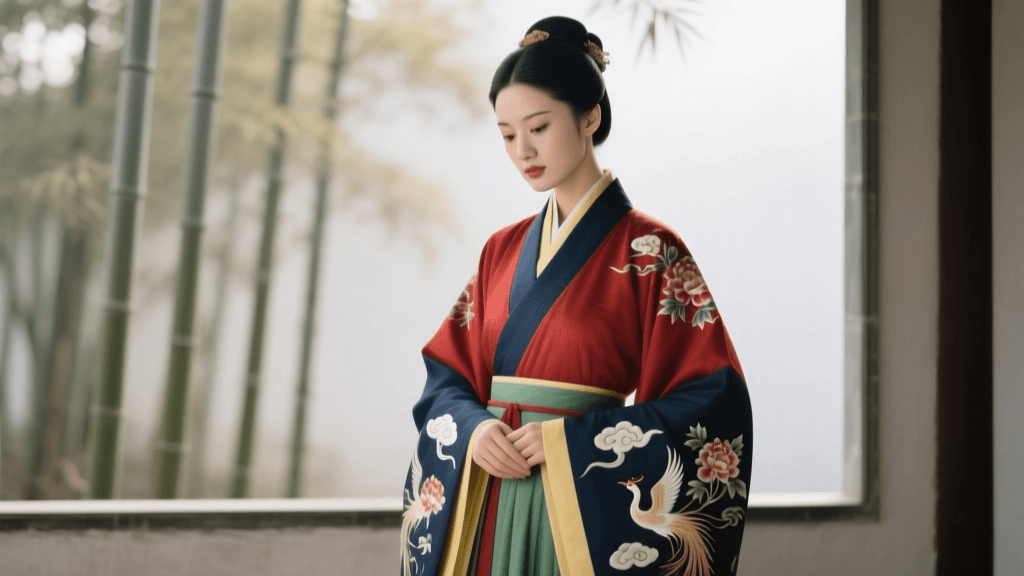
- Crimson and Scarlet (Fei): The colors of high-ranking officials, nobility, and joyous occasions. Crimson was permitted for officials of the first to fourth ranks and was heavily utilized in wedding attire for commoners, as marriage was considered a day of 'elevated' status.
- Blue and Green (Qing/Lu): Worn by mid-to-lower-ranking officials (fifth to ninth ranks), scholars, and literati. These colors represented the wood element, growth, and scholarly pursuits.
- White and Black (Bai/Xuan): White was traditionally associated with mourning and the metal element, though undyed white hemp or cotton was the standard daily wear for commoners (often referred to as 'Baiyi' or white-clothed commoners). Black or dark navy was worn by lower-class laborers and for somber occasions.
Actionable Guide: Choosing Colors for Modern Hanfu Events
When attending modern Hanfu festivals, cultural exhibitions, or traditional ceremonies, applying Ming color codes adds a layer of authenticity and etiquette to your outfit:
- For Weddings and Joyous Banquets: Opt for deep crimsons, rich burgundies, or vermilion Mamianqun (horse-face skirts) paired with gold-woven jackets. Avoid bright imperial yellow.
- For Academic or Tea Ceremonies: Choose scholar-inspired Daopao (Taoist robes) in muted jade greens, slate blues, or bamboo tones. These colors reflect the Ming literati's pursuit of elegance and restraint.
- For Mourning or Solemn Memorials: Stick to unembellished white, raw hemp textures, or stark black, avoiding any metallic threads or bright silk brocades.
Buzi (Mandarin Squares): The Ultimate Rank Indicator
While color indicated broad social categories, the Buzi (Mandarin Square) provided pinpoint accuracy regarding an official's rank. As detailed by the Encyclopedia Britannica, the Buzi was a large, embroidered square badge worn on the front and back of an official's round-collar robe (Yuanlingpao). Civil officials wore birds to symbolize literary elegance and virtue, while military officials wore mythical and real beasts to denote courage and martial prowess.
Below is the definitive data table for Ming Dynasty Buzi rankings, which remains a vital reference for collectors and historical costumers today.
| Rank | Civil Official (Birds) | Military Official (Beasts) | Permitted Robe Colors |
|---|---|---|---|
| 1st Rank | Red-Crowned Crane (Xianhe) | Qilin (Mythical Chimeric) | Crimson, Purple |
| 2nd Rank | Golden Pheasant (Jinji) | Lion (Shizi) | Crimson |
| 3rd Rank | Peacock (Kongque) | Tiger (Hu) | Crimson |
| 4th Rank | Mandarin Duck (Yunyan) | Leopard (Bao) | Crimson |
| 5th Rank | Silver Pheasant (Baihan) | Bear (Xiong) | Blue, Green |
| 6th Rank | Egret (Bailu) | Panther (Pi) | Blue, Green |
| 7th Rank | Pair of Mandarin Ducks | Rhinoceros (Xi) | Blue, Green |
| 8th Rank | Quail (Anchun) | Rhinoceros (Xi) | Blue, Green |
| 9th Rank | Paradise Flycatcher | Sea Horse (Haima) | Blue, Green |
"The Buzi system was a masterpiece of visual bureaucracy. It allowed the Emperor to assess the hierarchy of a room at a single glance, and it allowed the populace to know exactly who held authority over them." — Historical Textile Analysis, Britannica Guide to Chinese Dress.
Practical Guide: Commissioning Authentic Ming Hanfu
For modern practitioners looking to commission or purchase historically accurate Ming-style garments, understanding the structural requirements is just as important as the color and motif. The silhouette of Ming Hanfu is distinct: it is generally more voluminous, structured, and layered compared to the flowing, ethereal styles of the Tang or Song dynasties.
Measurements and Silhouette Specifications
When ordering a custom Ming Daopao (a popular cross-collared robe with side slits and dark pleats) or a Mamianqun, provide your tailor with the following specific measurements to ensure historical accuracy:
- Sleeve Length (Hui Xiu): Ming official robes often featured 'returning sleeves' that extended past the hands. Measure from the center back of the neck, over the shoulder, down to the wrist, and add 15–20 cm for the traditional drape.
- Collar Width: The cross-collar (Jiaoling) should sit snugly against the neck. The white inner collar (Zhongyi) should be visible by exactly 1 to 2 centimeters above the outer robe's collar.
- Mamianqun Pleat Count: A historically accurate Ming horse-face skirt typically features 4 to 6 large flat panels on the front and back, with 8 to 12 deep side pleats on each side. Ensure the skirt length rests exactly 2 cm above the ankle bone to prevent tripping while maintaining modesty.
Cost Breakdown and Fabric Sourcing
The cost of Ming-style Hanfu varies wildly based on textile authenticity and weaving techniques. Here is what you can expect when budgeting for your wardrobe:
- Entry-Level ($60 - $150 USD): Mass-produced garments made from polyester jacquard or cotton-linen blends. These are excellent for casual outings and beginner Hanfu enthusiasts. The Buzi motifs are usually machine-embroidered or printed.
- Mid-Range ($200 - $450 USD): Garments crafted from mulberry silk, rayon blends, or woven brocade. Motifs are often hand-embroidered or woven using basic Zhuanghua (tapestry) techniques. Expect a 15-20 day production time from specialized Hanfu ateliers.
- Heritage Commission ($800 - $2,500+ USD): Custom pieces utilizing authentic Song Brocade, Xiangyunsha (gambiered Canton gauze), or Kesi (cut silk) weaving. These garments feature hand-woven gold threads and historically accurate natural dyes. Commissioning these pieces requires a 2 to 4-month wait time and direct consultation with master weavers in Suzhou or Hangzhou.
Conclusion
The clothing of the Ming Dynasty is far more than beautiful fabric; it is a woven manuscript of Chinese history, philosophy, and social structure. By understanding the strict color codes and the intricate Buzi rank system, modern wearers can elevate their Hanfu practice from simple cosplay to a profound engagement with Asian traditions. Whether you are selecting a deep crimson Mamianqun for a wedding or commissioning a scholar's blue Daopao, you are participating in a sartorial legacy that has commanded respect for over six centuries.