Japanese Kimono Motifs: A Guide to Color and Symbolism
The Language of Silk: Understanding Kimono Symbolism
The Japanese kimono is far more than a traditional garment; it is a sophisticated canvas of communication. For centuries, the motifs, colors, and textiles used in kimono construction have conveyed the wearer's age, marital status, social rank, and even their philosophical outlook. According to the Metropolitan Museum of Art, the evolution of the kimono during the Edo period (1615–1868) transformed it into a highly regulated system of visual codes, where every stitch and dye held profound cultural weight.
Understanding pattern color and motif symbolism is essential for anyone looking to wear, collect, or study Japanese traditional clothing. Whether you are selecting a furisode for a Coming of Age ceremony or a yukata for a summer festival, the rules of kisetsukan (seasonal feeling) and color hierarchy dictate what is appropriate. This guide decodes the hidden language of the kimono, providing actionable advice on sizing, sourcing, and styling these magnificent garments.
Seasonal Motifs: Timing Your Kimono Wardrobe
In Japanese aesthetics, nature is ephemeral, and clothing must reflect this transience. The concept of kisetsukan requires that motifs anticipate the season by roughly two to four weeks. Wearing a cherry blossom motif while the trees are in full bloom is considered slightly tardy; the motif should be worn as the buds are forming, celebrating the anticipation of the season.
The Victoria and Albert Museum notes that seasonal motifs are deeply tied to classical Japanese poetry (waka) and the natural landscape. Below is a structured guide to help you time your kimono wardrobe correctly throughout the year.
| Season | Primary Motifs | Optimal Timing to Wear | Symbolic Meaning |
|---|---|---|---|
| Spring | Sakura (Cherry Blossom), Fuji (Wisteria), Tsubaki (Camellia) | March to Early April | Renewal, the fleeting nature of life, and elegance. |
| Summer | Uchiwa (Round Fans), Seigaiha (Ocean Waves), Ayame (Iris) | June to August | Coolness, perseverance, and warding off evil spirits. |
| Autumn | Momiji (Maple Leaves), Kiku (Chrysanthemum), Susuki (Pampas Grass) | September to November | Longevity, nobility, and the beautiful decay of nature. |
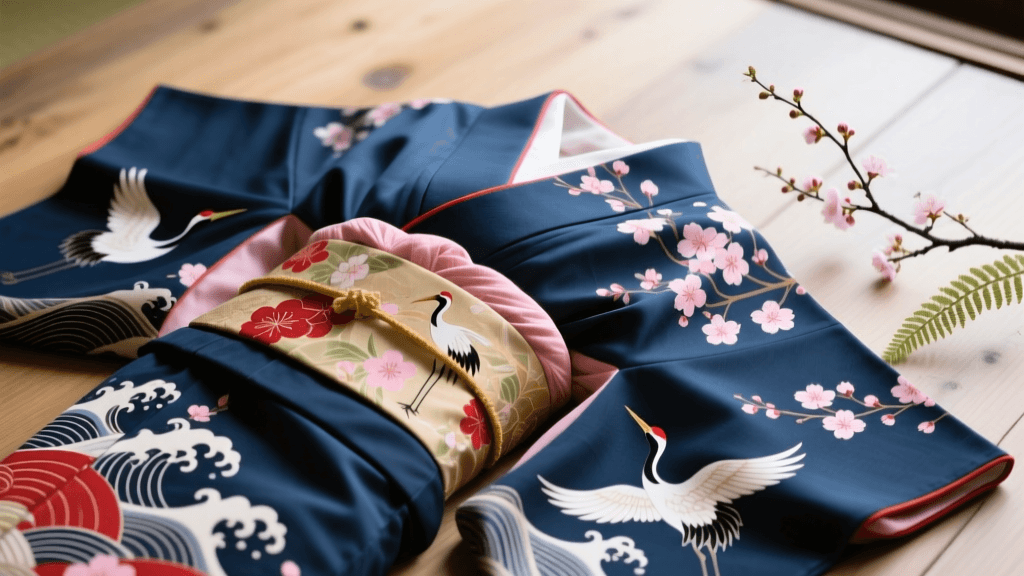
| Winter | Shochikubai (Pine, Bamboo, Plum), Tsuru (Crane) | December to February | Resilience, longevity, and auspicious beginnings. |
The Psychology and Hierarchy of Kimono Colors
Color in traditional Japanese dress is heavily regulated by age, marital status, and the formality of the event. The saturation and placement of color are just as important as the hue itself.
Red and Youthful Vibrancy
Red (aka) is the quintessential color for young, unmarried women. The furisode, characterized by its long, swinging sleeves (measuring up to 114 cm in length), is almost always adorned with vibrant reds, bright pinks, and expansive, shoulder-to-hem motifs. Red symbolizes youth, passion, and protection against malevolent spirits.
Black and Formal Authority
For married women attending highly formal events such as weddings, the kurotomesode (black kimono with patterns only below the waist) is the highest level of formalwear. The deep, lustrous black dye represents maturity, groundedness, and solemn respect. The motifs on a kurotomesode are typically auspicious, such as cranes or pine trees, rendered in gold and silver leaf.
Purple and Nobility
Historically, purple (murasaki) was restricted to the highest ranks of the imperial court. Today, it remains a color of deep respect and sophistication, often worn by older women or those attending formal tea ceremonies. The subtle, muted shades of purple dyed using traditional shibori techniques are highly prized for their understated elegance.
"The kimono is not merely a garment; it is a wearable landscape, reflecting the ephemeral beauty of nature and the strict social hierarchies of historical Japan."
Actionable Guide: Sizing, Sourcing, and Styling
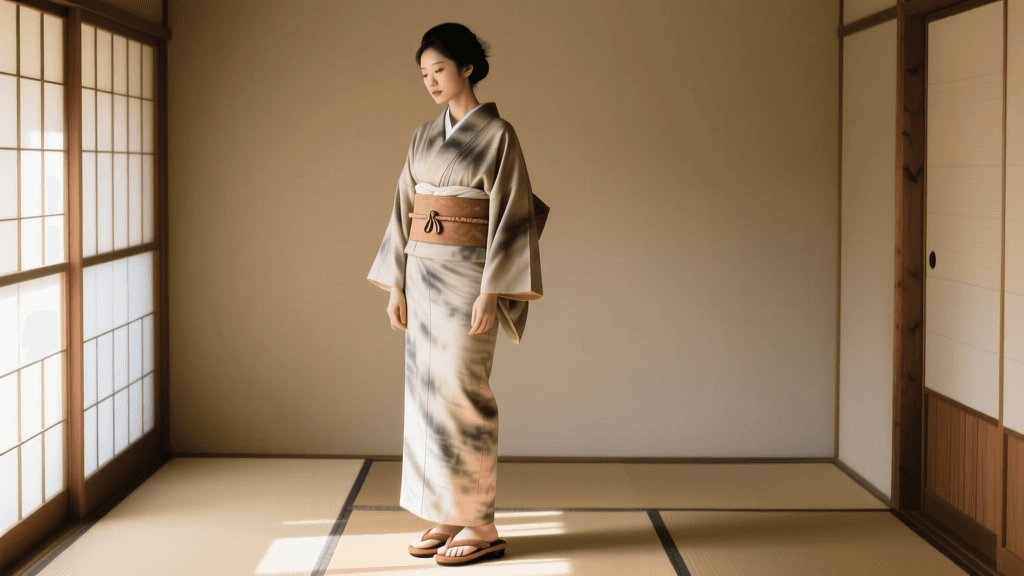
Acquiring a kimono requires an understanding of traditional measurements and dyeing techniques. Unlike Western clothing, kimono are not tailored to exact body contours but are wrapped and folded using the art of kitsuke.
Measurements and the Tanmono Bolt
Traditional kimono are cut from a single bolt of fabric called a tanmono. A standard tanmono measures exactly 36 cm (14 inches) in width and 11.5 meters (12.5 yards) in length. Because the width is fixed, the kimono is designed to fit a wide range of body types through overlapping and folding at the waist. When purchasing a vintage or bespoke kimono, the critical measurement is the yuki (the distance from the center back of the neck, over the shoulder, to the wrist). For most modern women, an ideal yuki measurement falls between 62 cm and 66 cm.
Cost Breakdown: Authentic Craftsmanship vs. Modern Prints
The cost of a kimono varies wildly based on the dyeing technique and the complexity of the motifs. If you are investing in a piece for your collection or a major life event, consider the following price tiers (estimates in USD):
- Mass-Produced Polyester Prints ($50 - $150): Ideal for casual wear, beginner kitsuke practice, or yukata summer festivals. Motifs are printed rather than dyed, lacking the depth and texture of traditional silk.
- Vintage Silk Kimono ($150 - $500): A highly actionable route for collectors. You can find exquisite mid-century shibori (tie-dye) or rinzu (figured satin silk) garments in excellent condition through specialized online dealers or Kyoto antique markets.
- Hand-Dyed Shibori Silk ($800 - $2,500): Labor-intensive tie-dyeing that creates textured, geometric, or organic motifs. The fabric retains a unique, three-dimensional puckered surface.
- Bespoke Yuzen Silk ($3,000 - $20,000+): The pinnacle of kimono craftsmanship. Yuzen involves applying a rice-paste resist to the silk before hand-painting intricate pictorial motifs. A formal furisode or kurotomesode created by a master artisan in Kyoto represents a generational investment.
Timing Your Rental or Bespoke Commission
If you are visiting Japan and wish to experience wearing a motif-specific kimono, timing is critical. For a high-quality rental experience in cultural hubs like Kyoto or Kanazawa, you must book at least three months in advance if your visit coincides with peak seasons (late March to mid-April for cherry blossoms, or November for autumn foliage). Standard rental packages cost between ¥5,000 and ¥15,000 ($35 to $100) and include dressing services.
For those commissioning a bespoke yuzen kimono, the process is a masterclass in patience. From the initial consultation and motif selection to the washing of the silk in Kyoto's pristine rivers, a bespoke commission takes a minimum of six to twelve months. According to insights from the V&A Kimono Exhibition archives, the preservation of these slow, meticulous dyeing techniques is vital to maintaining the integrity of Japanese textile heritage in an era of fast fashion.
Preserving the Legacy
Decoding the motifs and colors of the Japanese kimono transforms the way we interact with this traditional garment. It shifts the perspective from viewing the kimono as a simple costume to appreciating it as a complex, rule-bound art form. Whether you are carefully selecting a vintage piece with a subtle winter plum motif or commissioning a vibrant summer ro silk garment, respecting the symbolism ensures that the rich cultural narrative woven into the silk continues to thrive in the modern world.