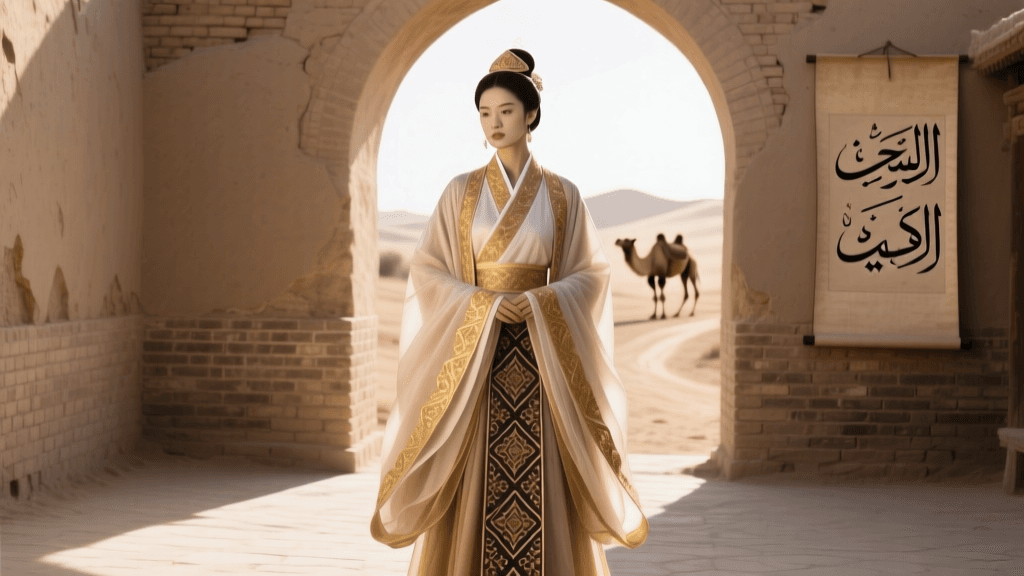
Silk Road Threads: Uyghur Atlas Silk And Trade Route Fashion
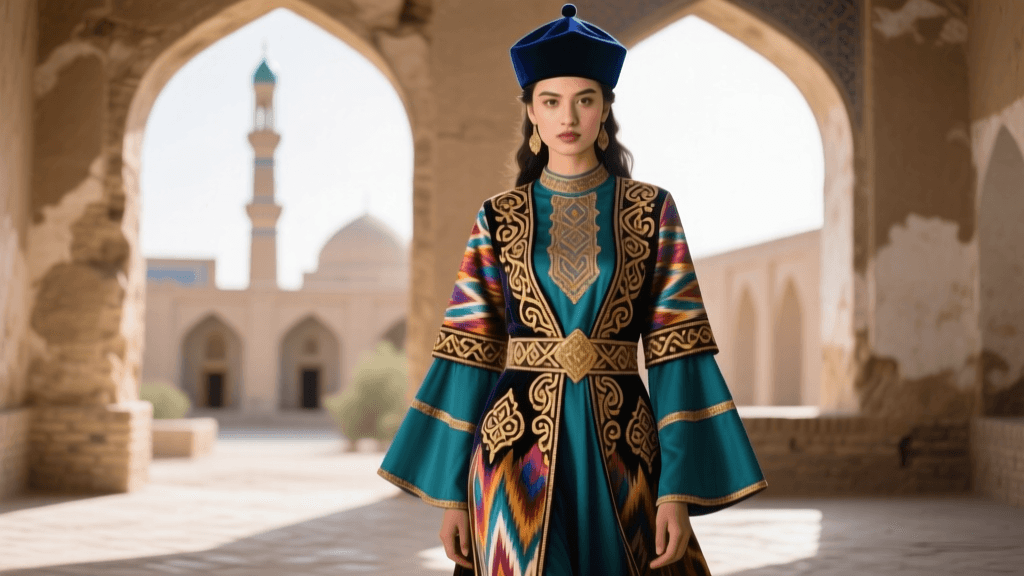
The Silk Road: A Loom of Cross-Cultural Exchange
The ancient Silk Road was not merely a conduit for the exchange of spices, jade, and precious metals; it was a vibrant artery of sartorial and textile innovation. Nowhere is this cross-cultural pollination more vividly preserved than in the traditional clothing of the Uyghur people in China's Xinjiang Uyghur Autonomous Region. Situated at the heart of the Tarim Basin, Uyghur oasis cities like Kashgar, Hotan, and Turpan served as critical waypoints where Han Chinese, Persian, Turkic, and Indian merchants converged. As documented by the UNESCO Silk Roads Programme, this geographic positioning birthed a unique material culture that seamlessly integrated Eastern weaving techniques with Central Asian motifs and Western color palettes.
For modern enthusiasts of Asian traditional garments, understanding Uyghur fashion requires looking beyond the borders of a single dynasty or empire. It demands an appreciation of a hybridized aesthetic forged over millennia of caravan trade. From the iconic, cloud-like patterns of Atlas silk to the intricate beadwork of the Doppa cap, Uyghur traditional wear stands as a living museum of Silk Road history.
Atlas Silk: The Jewel of the Tarim Basin
At the core of Uyghur traditional dress is Atlas silk, a vibrant, ikat-dyed fabric characterized by its bold, blurred geometric and floral patterns. The word "Atlas" is derived from the Arabic word for "smooth" or "satin," reflecting the deep Islamic and Middle Eastern trade influences on the region. However, the sericulture (silk farming) techniques used to produce the base threads are a direct inheritance from Han Chinese agricultural practices, which spread westward along the trade routes during the Han and Tang dynasties.
According to textile research highlighted by the Metropolitan Museum of Art's Heilbrunn Timeline of Art History, the Tang Dynasty (618–907 CE) saw an explosion of cross-cultural textile designs, with Chinese weavers adopting Persian roundel patterns and Central Asian motifs. Atlas silk is the modern descendant of this exact historical synthesis. The resist-dyeing (ikat) process involves tightly binding the warp threads before dyeing them in vibrant hues of pomegranate red, saffron yellow, indigo blue, and malachite green. When woven, the slight bleeding of the dyes creates a signature "halo" effect, reminiscent of desert mirages and flowing oasis waters.
"To wear Atlas is to wear the colors of the oasis, dyed with the waters of the Kunlun mountains and spun with the winds of the Taklamakan." — Traditional Uyghur weaving proverb.
A Buyer’s Guide to Authentic Atlas Silk
For collectors, fashion designers, and cultural enthusiasts looking to source authentic Atlas silk, navigating the markets of Xinjiang requires specific knowledge of regional variations, measurements, and pricing. The textile hubs of Hotan and Kashgar offer vastly different products.
Regional Variations and Product Names
- Hotan Atlas (Pure Silk): Known for its deep, rich colors and complex, large-scale patterns. It is highly prized for formal dresses and ceremonial wear.
- Kashgar Atlas (Silk-Cotton Blend): Often features brighter, high-contrast colors (like stark black and white or vivid neon greens) and is woven with a cotton weft for added durability and breathability.
- Bakhmal: A luxurious, silk-blend velvet featuring ikat patterns, historically reserved for nobility and wealthy merchants trading along the caravan routes.
Measurements, Costs, and Sourcing Logistics
- Fabric Width: Traditional hand-woven Atlas silk on wooden pit looms is remarkably narrow, measuring exactly 40 cm (15.7 inches) in width. Modern power-loom versions are produced at standard widths of 115 cm to 120 cm (45 to 47 inches). When calculating yardage for a garment, you must double your requirements if purchasing traditional 40cm hand-woven fabric.
- Pricing: Authentic, hand-woven pure silk Hotan Atlas costs between 350 and 600 RMB ($50 to $85 USD) per meter. Cotton-silk blends range from 80 to 150 RMB ($11 to $21 USD) per meter. Mass-produced synthetic imitations sell for under 30 RMB but lack the breathable qualities and historical integrity of true Atlas.
- Timing: The traditional ikat dyeing and tying process takes 3 to 5 days, followed by 2 days of weaving per meter. Custom orders placed in Hotan's Jiya Township (the historical center of Atlas weaving) require a minimum lead time of 14 to 21 days.
Cross-Cultural Silhouettes: The Chapan and Doppa
Beyond the textiles themselves, the structural silhouettes of Uyghur clothing reveal a fascinating dialogue between East and West. The Chapan, a long, quilted coat worn by both men and women, shares its lineage with the broader Central Asian and Persian coat traditions. However, the Uyghur Chapan is distinctly adapted for the extreme temperature fluctuations of the Tarim Basin. It is often lined with Atlas silk or cotton batting and features wide, elongated sleeves that can be pulled over the hands for warmth—a practical adaptation also seen in the Han Chinese Shenyi and Manchu riding coats.
Similarly, the Doppa (or Hua Mao), the ubiquitous square or round skullcap, showcases a mastery of embroidery that merges Islamic geometric restrictions with Chinese floral naturalism. While Islamic art traditionally avoids figurative representation, Uyghur Doppa embroidery frequently incorporates the Han Chinese peony (symbolizing wealth) and the lotus (symbolizing purity), intertwining them with Persian arabesques and Central Asian star motifs. Early textile fragments displaying this exact fusion of Sogdian, Persian, and Chinese motifs have been extensively cataloged and preserved by the International Dunhuang Project, proving that these modern caps are direct descendants of Tang-era trade route fashion.
Comparative Table: Silk Road Garment Exchange
To understand how trade routes influenced regional adaptations, it is helpful to compare Uyghur garments with their Han and Manchu counterparts, highlighting the flow of sartorial ideas across the Asian continent.
| Garment Type | Origin / Trade Influence | Uyghur Adaptation | Han / Manchu Counterpart |
|---|---|---|---|
| Chapan (Coat) | Central Asian / Persian | Quilted, Atlas-lined, wide sleeves, straight cut | Magua (Manchu riding jacket), Pifeng (Han cape) |
| Doppa (Cap) | Islamic / Turkic | Four-panel square, intricate cross-stitch, beadwork | Hutou Mao (Han children's tiger hat), Guapi Mao (Manchu skullcap) |
| Boots | Equestrian Nomadic | Soft leather, pointed upturned toes, rubber soles | Xuezi (Han soft shoes), Manchu floral platform shoes |
| Vest / Bodice | Silk Road Layering | Heavily embroidered, worn over Atlas silk dresses | Bijia (Manchu sleeveless vest), Beizi (Han parallel-collar vest) |
Practical Tailoring: Custom Orders and Measurements
If you are commissioning a traditional Uyghur dress (often called a Köynek) from a tailor in Kashgar's Old City or a specialized boutique in Urumqi, providing precise measurements is critical. Unlike the structured, tailored fits of the Han Chinese Qipao or the flat-pattern cutting of the traditional Hanfu, Uyghur dresses rely on gathered waists, dropped shoulders, and voluminous skirts that require specific mathematical ratios to drape correctly over the Atlas silk.
Essential Tailoring Measurements
- Bust and Dropped Shoulder: Measure the fullest part of the bust, then measure the shoulder width from the tip of one shoulder bone to the other, adding 4 to 5 cm to allow for the traditional dropped-shoulder seam.
- Empire Waist: Uyghur dresses typically feature an empire or high-natural waist. Measure exactly 5 cm above the natural navel line. This is where the bodice ends and the heavy gathering of the Atlas silk skirt begins.
- Sleeve Length and Cuff: Traditional sleeves are long and slightly flared. Measure from the dropped shoulder seam down to the wrist bone, adding 3 cm for the hem. The cuff circumference should be at least 25 cm to allow for easy movement.
- Skirt Length and Fullness: For a standard calf-length dress, measure from the empire waist to the mid-calf. Because traditional Atlas silk is only 40 cm wide, a tailor will need to panel multiple strips together. Specify that you want a 3:1 gathering ratio at the waist for the signature voluminous "twirl" effect.
Tailoring fees in Xinjiang are remarkably affordable compared to Western bespoke standards. Expect to pay between 150 and 300 RMB ($21 to $42 USD) for the labor of constructing a fully lined, finished Atlas silk dress. During the peak tourist and wedding season (May through October), turnaround times can stretch to 10 to 14 days, so plan your fittings accordingly.
Preserving the Legacy of the Tarim Basin
The survival of Uyghur traditional clothing is a testament to the resilience of the region's artisans. In an era of fast fashion and synthetic textiles, the continued demand for hand-woven Atlas silk and hand-embroidered Doppa caps ensures that the ancient techniques of the Silk Road are not relegated to museum archives. By understanding the historical trade routes that birthed these garments, and by supporting authentic, ethically sourced craftsmanship, modern wearers do more than just adopt a beautiful aesthetic—they become active participants in a cross-cultural dialogue that has been weaving its way across Asia for over two thousand years.