Silk Road Threads: How Trade Shaped Tang Dynasty Hanfu
The Silk Road: A Highway of Fashion and Textiles
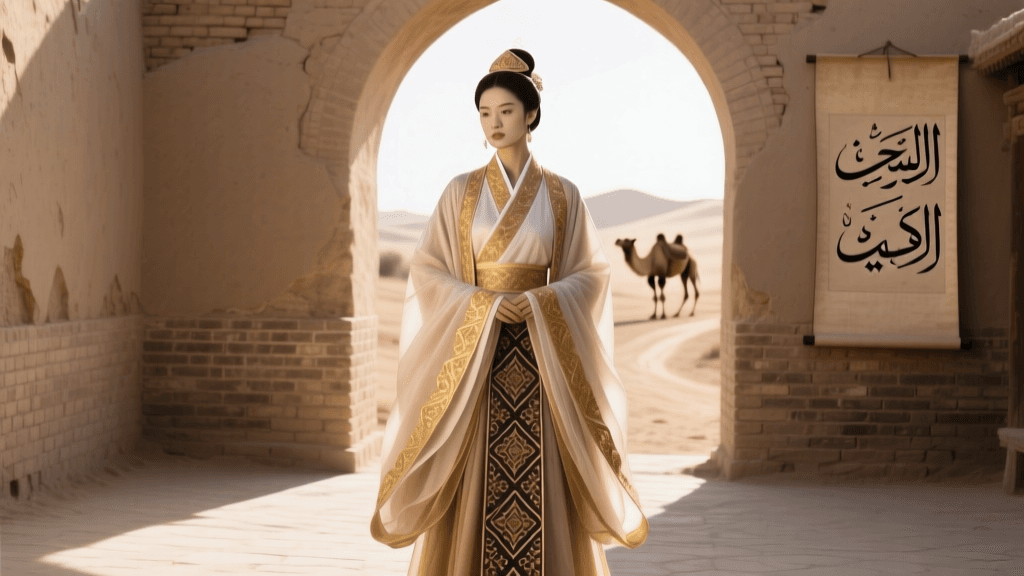
When we think of the ancient Silk Road, we often envision caravans of camels carrying spices, jade, and raw silk across the unforgiving Taklamakan Desert. However, as noted by the UNESCO Silk Roads Programme, this vast network of trade routes was equally a superhighway for cultural exchange, artistic innovation, and sartorial transformation. During the Tang Dynasty (618–907 AD), China’s capital, Chang’an (modern-day Xi’an), was the most cosmopolitan city in the world. It was a melting pot where Han Chinese mingled with Sogdian merchants, Persian diplomats, and Turkic nomads. This unprecedented cross-cultural pollination fundamentally altered the trajectory of traditional Chinese clothing, giving rise to a vibrant, eclectic fashion era that still influences modern Hanfu revivalists today.
Before the Tang Dynasty, traditional Han clothing was heavily defined by the deep-rooted philosophies of the Central Plains, favoring wide sleeves, flowing robes, and the strict cross-collar (jiaoling) style. But as the empire expanded its borders and secured the Hexi Corridor, the influx of foreign goods and ideas sparked a sartorial revolution. The rigid dress codes of previous eras gave way to a bold, experimental fashion culture where men and women alike eagerly adopted foreign styles, blending them with indigenous Chinese tailoring techniques.
Hufu: The Foreign Garments That Conquered China
The most significant sartorial import of the Tang era was Hufu, a catch-all term for 'foreign clothing' originating from the nomadic tribes of the northern steppes and the urban centers of Central Asia. According to the Metropolitan Museum of Art's Heilbrunn Timeline of Art History, the Sogdians—master merchants of the Silk Road—were particularly influential in transmitting Persian and Central Asian fashions to the Chinese elite. Hufu was characterized by its practicality: narrow sleeves, fitted bodices, lapel collars, and leather riding boots.
For the Tang aristocracy, adopting Hufu was not merely a matter of utility; it was a status symbol that demonstrated worldly sophistication and an embrace of the empire's vast, multicultural reach. Tang women, who enjoyed unprecedented social freedom compared to other dynastic periods, frequently donned Hufu to play polo, ride horses, and participate in outdoor banquets. The integration of these foreign silhouettes permanently expanded the vocabulary of Hanfu, proving that traditional Chinese dress was never static, but rather a dynamic canvas of global exchange.
Key Garments Born from Cross-Cultural Exchange
The fusion of Han and Hu (foreign) styles resulted in several iconic garments that define the Tang Dynasty aesthetic in modern historical dramas and Hanfu revivals. Understanding these pieces is crucial for collectors and enthusiasts looking to accurately recreate Tang-era fashion.
- Yuanlingpao (Round-Collar Robe): Originally a nomadic riding garment, the round collar was adopted by Tang officials and commoners alike. It featured a closed neckline fastened with buttons on the right shoulder, a stark departure from the traditional tied cross-collar.
- Banbi (Half-Sleeve Jacket): Evolving from Central Asian vests, the Banbi was a short-sleeved jacket worn over long-sleeved inner garments. It was often crafted from richly patterned brocades and became a staple in the wardrobes of Tang palace maids and noblewomen.
- Fanlingpao (Lapel-Collar Robe): Featuring a folded lapel that exposed the inner garment, this style was directly borrowed from Sogdian and Persian merchants. It was highly popular among the youth and military personnel in Chang'an.
Comparative Analysis: Traditional Han vs. Silk Road Hufu
| Feature | Traditional Han Garment (Pre-Tang) | Silk Road Influenced Garment (Tang Hufu) |
|---|---|---|
| Collar | Cross-collar (Jiaoling), right over left | Round collar (Yuanling) or Lapel collar (Fanling) |
| Sleeves | Wide, flowing, often trailing the ground | Narrow, fitted (Zhexiu) for horseback riding |
| Fastening | Fabric ties, sashes, and jade pendants | Leather belts with metal buckles and toggle buttons |
| Footwear | Flat silk, cloth, or straw shoes | Knee-high leather riding boots |
| Primary Origin | Indigenous Central Plains agriculture | Central Asian nomadic and Persian influences |
Textile Innovations: Samite and Weft-Faced Silks
The cross-cultural exchange was not limited to garment silhouettes; it fundamentally revolutionized Chinese textile manufacturing. Prior to the Silk Road's peak, Chinese silk weaving was dominated by warp-faced compound tabby weaves, which produced lightweight, flowing fabrics with subtle, linear patterns. However, as detailed by the Silk Road Seattle Project by the University of Washington, the introduction of Persian and Sogdian weavers to Chinese workshops brought about the adoption of weft-faced compound twill, known in the West as samite.
This technique allowed for the creation of 'Tang Brocade'—heavy, lustrous fabrics capable of displaying large, complex, and brightly colored circular medallions featuring exotic motifs like the duilian (paired birds), pearl roundels, and the winged horses of Persian mythology. These textiles were highly prized across Eurasia, serving as diplomatic gifts and luxury trade goods that flowed back westward to Byzantium and the Islamic Caliphates. Today, authentic Tang-style Hanfu relies heavily on these intricate jacquard weaves to achieve historical accuracy.
Practical Guide: Sourcing and Wearing Tang-Style Hanfu Today
For modern enthusiasts, acquiring historically accurate Tang Dynasty Hanfu requires navigating a market flooded with inaccurate 'costume' pieces. Whether you are commissioning a bespoke Yuanlingpao or buying an off-the-rack Banbi set, here is actionable advice on measurements, materials, and costs.
1. Sizing and Measurements
Tang Dynasty garments rely on a distinct drop-shoulder silhouette. Unlike modern Western tailoring, the shoulder seam should fall well past the natural shoulder bone.
- Shoulder Width (Jiankuan): Request a measurement of 45–50 cm for women and 50–55 cm for men to achieve the authentic relaxed drape.
- Sleeve Length: Sleeves should extend 10–15 cm past the wrist. In the Tang era, narrow sleeves were often folded back at the cuff to reveal a contrasting silk lining.
- Skirt Rise: Tang dynasty Qixiong Ruqun (chest-high skirts) must be measured from the underarm, not the natural waist. Ensure the skirt length includes an extra 5 cm for the hem to graze the top of the foot without dragging.
2. Fabric Selection and Costs
The choice of fabric dictates both the historical accuracy and the price point of your garment.
- Mass-Market Replicas ($45 – $85 USD): Vendors like Shisanyu and Zhongling offer polyester-blend jacquards. These are durable, easy to wash, and feature accurate Tang motifs (like the pearl roundel), making them ideal for beginners and daily wear.
- Silk Jacquard & Brocade ($150 – $300 USD): For a premium feel, seek out 'Song brocade' or modern 'Tang brocade' woven in Suzhou. These fabrics have the necessary weight and luster to mimic historical samite, providing an authentic drape for the Banbi and Yuanlingpao.
- Bespoke Hand-Loomed Commissions ($600+ USD): Specialized ateliers can recreate museum-grade weft-faced silks using traditional draw-looms. Expect a lead time of 90 to 120 days for these investment pieces.
3. Timing Your Purchase
The Hanfu industry operates heavily on a 'pre-sale' (yushou) model. To secure high-quality silk runs, place your orders during major shopping festivals like the Spring Festival (January/February) or the Qixi Festival (August). Be prepared to wait 45 to 60 days for production and shipping, as authentic brocade weaving is a slow, meticulous process.
Conclusion
The Tang Dynasty remains a golden age of Chinese history, not because it isolated itself to preserve a singular cultural identity, but because it boldly absorbed the best of the known world. The Hanfu of this era—marked by the practical elegance of Hufu, the brilliance of Persian-inspired brocades, and the cosmopolitan spirit of the Silk Road—stands as a testament to the power of cross-cultural exchange. By understanding the historical trade routes that shaped these garments, modern wearers can appreciate their clothing not just as beautiful textiles, but as woven maps of human connection.