Sourcing & Caring for Shibori, Yuzen, and Kasuri Textiles
The Trinity of Japanese Textile Arts
Japan’s traditional garment culture is globally revered, not just for the elegant silhouettes of the kimono, but for the extraordinary textile arts that bring these garments to life. For collectors, vintage enthusiasts, and practitioners of Asian traditions, understanding the nuances of Japanese dyeing and weaving is essential. Among the hundreds of regional techniques, three stand out as the pillars of Japanese textile artistry: Shibori (shaped resist dyeing), Yuzen (paste-resist painting), and Kasuri (ikat weaving).
According to the Metropolitan Museum of Art's Heilbrunn Timeline of Art History, Japanese textiles have historically served as vital markers of social status, regional identity, and aesthetic philosophy. Today, sourcing and preserving these textiles requires a blend of art historical knowledge and strict archival science. This guide provides actionable metrics, sourcing strategies, and conservation protocols for building and maintaining a collection of authentic Shibori, Yuzen, and Kasuri garments.
Identifying the Techniques: A Comparative Overview
Before purchasing or treating a vintage textile, accurate identification is critical. Misidentifying a delicate hand-painted Yuzen silk as a sturdy Kasuri cotton can lead to catastrophic damage during cleaning. Below is a structured comparison to help you identify these techniques at a glance.
| Technique | Process Stage | Visual Hallmarks | Base Material | Average Vintage Cost (USD) |
|---|---|---|---|---|
| Shibori | Dyeing (Resist) | Soft, blurred edges; 3D textured crinkles; geometric or organic tie patterns. | Silk, Hemp, Cotton | $150 - $800+ |
| Yuzen | Dyeing (Resist) | Crisp, painterly outlines; vibrant multi-color pictorial motifs; white resist lines. | Silk (Chirimen, Rinzu) | $300 - $5,000+ |
| Kasuri | Weaving (Pre-dyed) | Blurry, dashed edges on geometric patterns; reversible pattern; subtle slubs in yarn. | Cotton, Hemp, Ramie | $80 - $450 |
Deep Dive: Shibori (The Art of Shaping)
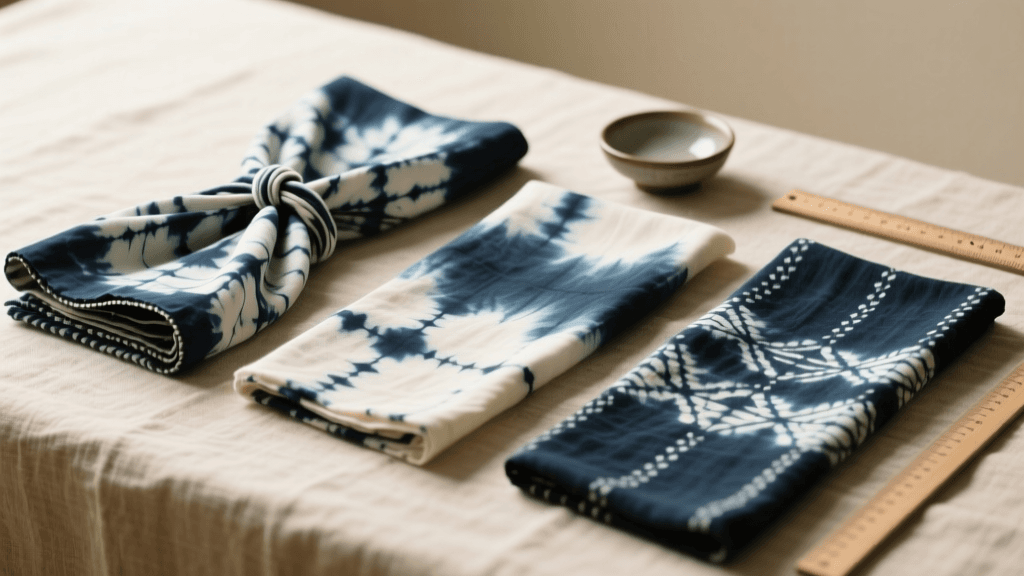
Shibori is not merely "tie-dye"; it is a complex sculptural process where fabric is bound, stitched, folded, or wrapped before being submerged in indigo or other vats. The World Shibori Network categorizes Shibori into several primary techniques, each yielding distinct visual results:
- Kanoko Shibori: The fabric is pinched and bound with thread, creating circular, dot-like patterns. High-end vintage Kanoko (known as Hitta Shibori) features thousands of micro-ties, creating a mesmerizing, pebbled texture that feels like crepe paper.
- Arashi Shibori: Fabric is wrapped diagonally around a pole, tightly bound, and compressed before dyeing. This results in striking, rain-like diagonal striations.
- Itajime Shibori: Fabric is folded and clamped between carved wooden blocks, producing sharp, repeating geometric grids.
Collector's Tip: Authentic vintage Kanoko Shibori silk will retain a permanent 3D texture. If the fabric is completely flat, it is likely a modern printed imitation.
Deep Dive: Yuzen (The Painter's Resist)
Developed in the late 17th century by Miyazaki Yuzensai, this technique revolutionized Japanese fashion by allowing pictorial, multi-colored designs on silk. The process involves applying a water-resistant rice paste (itome-nori) along the outlines of a design. This paste prevents dyes from bleeding into adjacent areas, allowing artisans to hand-paint intricate landscapes, florals, and seasonal motifs.
There are two primary regional styles collectors should know:
- Kyo-Yuzen (Kyoto): Characterized by pastel backgrounds, elegant courtly motifs, and heavy use of metallic leaf (surihaku) and embroidery accents.
- Kaga-Yuzen (Kanazawa): Known for hyper-realistic botanical motifs, the "Kaga Five" color palette (indigo, crimson, yellow ochre, grass green, and deep purple), and the deliberate use of mushikui (insect-eaten leaf) aesthetics.
Deep Dive: Kasuri (The Weaver's Illusion)
Unlike Shibori and Yuzen, which are surface dyeing techniques applied to finished cloth, Kasuri (the Japanese term for Ikat) involves dyeing the threads before they are woven. Bundles of cotton or hemp yarn are tightly bound to resist dye, then woven on a loom. Because the dyed threads shift slightly during weaving, Kasuri is defined by its signature "blurry" or "fuzzy" pattern edges.
Kurume Kasuri (from Fukuoka) is famous for complex, multi-layered geometric indigo patterns, while Bingo Kasuri (from Hiroshima) often features striking pictorial motifs like cranes or pine trees woven directly into the cotton.
Sourcing Authentic Pieces: A Buyer's Guide
Sourcing requires navigating both physical and digital marketplaces. Here is actionable advice for acquiring authentic pieces:
Online Platforms
- Yahoo! Auctions Japan (via Buyee or ZenMarket): The goldmine for serious collectors. Search terms like
絞り(Shibori),友禅(Yuzen), and絣(Kasuri) will yield thousands of results. Expect to pay $50–$200 for mid-century Kasuri kimono, and $500+ for authenticated Taisho-era (1912–1926) Yuzen. - Etsy & eBay: Ideal for curated vintage pieces, but prices are marked up by 100% to 300%. Always demand close-up photos of the reverse side of the fabric to verify hand-dyeing versus digital printing.
Physical Markets
- Toji Temple Flea Market (Kyoto): Held on the 21st of every month, this is a premier location for digging through crates of vintage Kasuri and everyday Shibori textiles.
- Nishijin District (Kyoto): For high-end, museum-quality Yuzen and contemporary Shibori, visit the established galleries and weaving houses in this historic textile district.
Archival Care and Maintenance Metrics
Preserving organic dyes and delicate protein (silk) or cellulose (cotton/hemp) fibers requires strict adherence to conservation standards. The Smithsonian Museum Conservation Institute outlines rigorous protocols for textile preservation that private collectors should adapt.
Washing and Spot Cleaning Protocols
Warning: Never machine wash or dry clean authentic Yuzen or vintage Shibori. The metallic threads, rice paste remnants, and natural indigo will be destroyed by harsh solvents.
- Detergent: Use only conservation-grade, neutral pH detergents. Orvus WA Paste (a horse shampoo widely used by quilters and archivists) is the industry standard. Use exactly 1 teaspoon per 1 gallon of water.
- Water Temperature: Strictly maintain water temperature below 30°C (85°F). Hot water will cause natural indigo to bleed and silk fibers to lose their tensile strength.
- Agitation: Do not wring or twist. Submerge the garment and gently press the water through the fibers with your hands for a maximum of 5 minutes.
- Drying: Lay flat on a clean, white cotton towel. Roll the towel to gently press out moisture, then unroll and allow to air dry in a shaded room. Never expose to direct UV light. Maximum drying time should not exceed 24 hours to prevent mildew.
Storage and Display Metrics
Improper storage is the leading cause of textile degradation. Follow these exact specifications for your collection:
- Tissue Paper: Wrap all garments in unbuffered, acid-free tissue paper (pH 7.0)
- Rolling vs. Folding: Never hang vintage kimono; the weight will tear the shoulder seams. Fold loosely with tissue padding in the creases, or ideally, roll them around PVC-free, archival-grade cardboard tubes (minimum 4-inch diameter).
- Environmental Controls: Store in a climate-controlled environment. Maintain relative humidity (RH) between 45% and 55%, and temperature between 18°C and 20°C (64°F - 68°F).
- Light Exposure: If displaying Yuzen or Shibori, limit light exposure to 50 lux maximum, and rotate the piece out of display after 3 months to prevent irreversible photo-oxidation of the natural dyes.
Common Mistakes Collectors Make
"The most frequent error I see in private collections is the use of cedar wood storage chests. While cedar repels moths, the natural oils and acidic vapors emitted by the wood will cause yellowing and severe embrittlement of silk Yuzen fabrics over a decade." — Textile Conservation Best Practices
To avoid this, always line wooden storage drawers with Marvelseal (an aluminum-nylon barrier film) or store the textiles in sealed, inert polypropylene plastic bins with silica gel packets to regulate moisture.
Conclusion
Collecting and caring for Shibori, Yuzen, and Kasuri textiles is a profound way to engage with Asian traditions. By understanding the distinct mechanical processes behind each technique, utilizing targeted Japanese search terms for sourcing, and applying rigorous, museum-grade conservation metrics to your storage and cleaning routines, you ensure that these masterworks of textile art survive for generations to come. Whether you are hunting for a rustic indigo Kurume Kasuri jacket or a breathtaking Taisho-era Yuzen furisode, the key to success lies in patience, education, and meticulous care.