The Mamianqun: Ming Court Fashion To Modern Hanfu Guide
The Mamianqun: A Masterpiece of Chinese Court Fashion
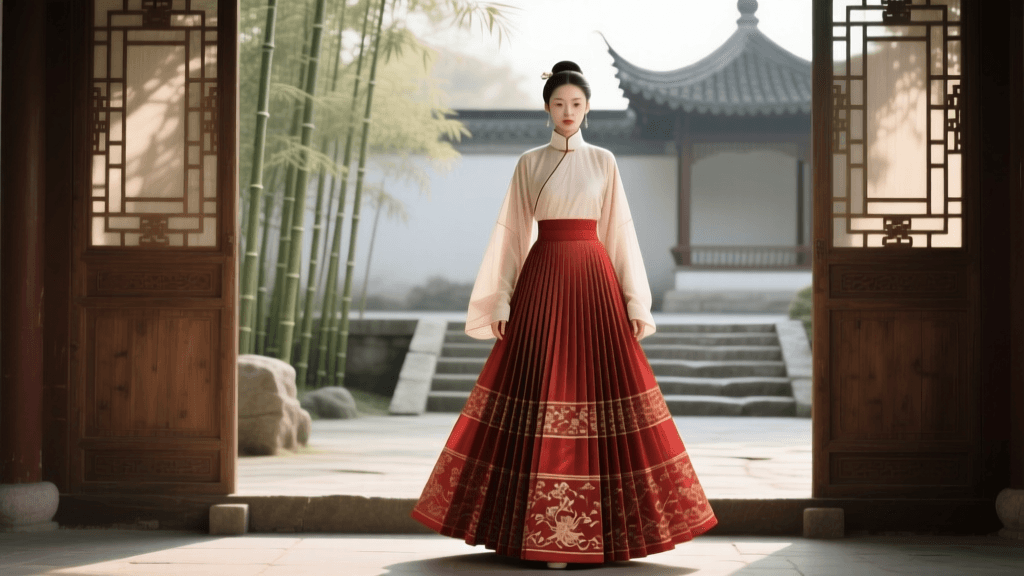
The Mamianqun, literally translated as the 'horse-face skirt', stands as one of the most iconic and enduring garments in the history of traditional Chinese clothing. Despite its equestrian-sounding name, the 'horse-face' moniker actually derives from ancient Chinese architectural terminology, referring to the flat, protruding frontal panels of city walls designed for defense. In the context of fashion, these flat, unpleated front and back panels are flanked by intricately folded side pleats, creating a silhouette that is both structurally fascinating and deeply elegant. Today, the Mamianqun is experiencing a massive renaissance, transitioning from museum archives and historical dramas into the everyday wardrobes of modern Hanfu enthusiasts. Understanding its evolution from the Ming Dynasty court to contemporary streets requires a deep dive into imperial sumptuary laws, masterful textile engineering, and modern styling techniques.
Dynasty Evolution: From Practicality to Imperial Zenith
Song and Yuan Origins: The Equestrian Influence
The earliest iterations of the wrap-around, pleated skirt can be traced back to the Song Dynasty (960–1279). During this era, the skirt was primarily valued for its practicality. The overlapping wrap design and side pleats allowed for a wide range of movement, making it highly suitable for women engaging in equestrian activities or navigating the varied terrains of the era. The structural foundation was laid during these centuries, prioritizing function alongside the understated aesthetic preferences of Song-era scholars and nobility.
The Ming Dynasty Court Standard
It was during the Ming Dynasty (1368–1644) that the Mamianqun reached its absolute zenith, becoming a mandatory staple of court fashion and aristocratic dress. The Ming imperial court enforced strict sumptuary laws that dictated not only the colors and motifs permissible for different social ranks but also the specific weaving techniques used in garment creation. As noted by the Metropolitan Museum of Art's Heilbrunn Timeline of Art History, the Ming era was characterized by an unprecedented flourishing of the silk industry and state-sponsored textile manufactories. Court women adorned their Mamianqun with elaborate zhuanghua (woven gold and silver threads) and zhijin (brocade) techniques. The flat 'horse-face' panels became canvases for imperial motifs: soaring phoenixes, coiling dragons, and auspicious flora, all woven directly into the silk rather than embroidered on top, showcasing a level of loom mastery that remains staggering today.
Qing Dynasty Survival and Adaptation
When the Manchu-led Qing Dynasty (1644–1912) conquered China, they imposed the 'Tifa Yifu' edict, forcing Han Chinese men to adopt the Manchu queue hairstyle and clothing under penalty of death. However, a cultural loophole known as 'men submit, women do not' allowed Han women to retain their traditional Ming-style garments. Consequently, the Mamianqun survived and evolved throughout the Qing era. The pleats became sharper and more numerous, and the waistbands were often constructed from cheaper, durable white cotton or linen (hidden by the top garment), while the visible skirt portions were crafted from lavish silks.
Anatomy of the Horse-Face Skirt: Structure and Measurements
To truly appreciate the Mamianqun, one must understand its brilliant zero-waste, wrap-around engineering. A traditional skirt is constructed from two identical rectangular pieces of fabric. These pieces are overlapped and joined at the waistband, creating four flat panels (two in the front, two in the back) and two pleated sections on the sides. The overlapping front ensures modesty and opacity, while the side pleats expand dynamically with the wearer's stride.
Measurement and Sizing Guide
For modern buyers and tailors, achieving the correct drape requires precise measurements. Unlike Western skirts that rely on zippers and darts, the Mamianqun relies on tension, overlap, and exact pleat calculations. Below is a practical measurement chart for commissioning or purchasing a custom-fit Mamianqun.
| Measurement Point | How to Measure | Skirt Construction Target |
|---|---|---|
| Waist Circumference | Measure around the natural waist (or where the skirt will sit, typically higher than modern low-rise pants). | Waistband length = (Waist x 1.5) to allow for a secure wrap and overlap. |
| Hip Circumference | Measure the fullest part of the hips to ensure the flat panels do not pull apart. | Total skirt width must be at least 2x hip measurement to maintain modesty during movement. |
| Skirt Length | Measure from the waist down to the ankle bone, subtracting 3-5 cm for shoe clearance. | Fabric cut length = Desired length + 4 cm for hem allowance + waistband width. |
| Pleat Depth | Determined by aesthetic preference and fabric weight. | Standard Ming-style parallel pleats are usually 2 cm to 4 cm deep per fold. |
Modern Revival: Buying, Styling, and Caring for Your Mamianqun
The 21st century has witnessed an explosive revival of the Mamianqun, heavily propelled by the Hanfu movement and viral social media moments. A notable catalyst was the global discourse surrounding a major European luxury house's release of a skirt that closely mirrored the Mamianqun's structural design, which sparked widespread conversations about cultural appropriation and intellectual property. As BBC Travel reported during the height of the Mamianqun's viral TikTok resurgence, the garment has transcended niche historical reenactment to become a symbol of cultural pride and a versatile piece of modern fashion.
Actionable Buying Guide: Costs, Fabrics, and Timing
If you are looking to add an authentic Mamianqun to your wardrobe, navigating the market requires an understanding of tiered pricing, textile choices, and manufacturing timelines.
- Entry-Level / Daily Wear ($30 - $60 USD): Constructed from polyester jacquard or cotton-linen blends. These are machine-washable, hold their pleats exceptionally well after heat-setting, and are perfect for daily commuting or casual outings. Look for skirts with a cotton waistband to prevent slipping.
- Mid-Tier / Enthusiast ($80 - $180 USD): Features high-quality viscose, tencel, or silk-blend brocades. The motifs are often historically accurate reproductions of Ming Dynasty tomb artifacts. These require gentle hand-washing or dry cleaning. Expect to wait 2 to 4 weeks for production, as many mid-tier Hanfu brands operate on a 'pre-order' (Yushou) model to minimize textile waste.
- Haute Couture / Custom Silk ($300 - $1,000+ USD): Woven using traditional wooden draw-looms or advanced modern Jacquard looms utilizing real gold-wrapped threads and pure mulberry silk. These are investment pieces meant for formal ceremonies, weddings, or high-end cultural events. Commissioning a custom piece from a master weaver in Nanjing or Suzhou can take 3 to 6 months.
Styling for the Modern Wardrobe
While purists often pair the Mamianqun with a traditional Ming Dynasty Pipa-sleeve Ao (a cross-collar or standing-collar top with curved sleeves), the skirt's structural beauty makes it remarkably adaptable to contemporary fashion. For a fusion look, style a solid-colored, pleated Mamianqun with a crisp, tailored white button-down shirt or a fitted modern turtleneck. The juxtaposition of Western minimalism with the intricate, woven motifs of the skirt's front panels creates a striking, high-fashion silhouette. When exploring historical textile motifs and their modern applications, the archives of institutions like the Victoria and Albert Museum's Chinese Art collections provide endless inspiration for color-blocking and pattern-matching in modern ensemble building.
Care and Maintenance
Preserving the sharp, knife-like pleats of a Mamianqun is the most critical aspect of garment care. Never hang the skirt by the waistband, as the weight of the fabric will pull the pleats out of alignment over time. Instead, fold the skirt along its natural pleat lines and store it flat in a breathable cotton garment bag. If the pleats begin to loosen, lightly mist the fabric with water, fold the pleats back into their original lines, secure them with binder clips, and press with a steam iron on a low, fabric-appropriate setting.
Conclusion
The Mamianqun is far more than a relic of imperial China; it is a living, breathing testament to the ingenuity of traditional Asian tailoring. From its pragmatic origins in the Song Dynasty to its opulent peak in the Ming court, and finally to its current status as a global fashion phenomenon, the horse-face skirt bridges the gap between ancient heritage and modern identity. By understanding its historical context, mastering the fit, and investing in quality craftsmanship, wearers today can proudly carry forward a legacy of elegance that has endured for nearly a millennium.