Miao Ethnic Clothing: Guide to Silver & Embroidery Art
The Cultural Significance of Miao Clothing
The Miao people, widely known in the West as the Hmong, represent one of China's most culturally vibrant and historically resilient ethnic minority groups. Concentrated primarily in the mountainous regions of Guizhou, Hunan, and Yunnan provinces, the Miao have cultivated a breathtaking sartorial tradition that serves as far more than mere adornment. Because the Miao historically lacked a formal written language, their clothing became a vital medium for recording their history, mythology, and migratory patterns. Often described by anthropologists as a 'wearable history book,' Miao ethnic clothing is a masterclass in textile art, intricate metallurgy, and profound cultural symbolism.
For textile collectors, cultural historians, and ethical fashion enthusiasts, understanding the nuances of Miao garments requires a deep dive into their two most defining elements: the painstakingly crafted indigo batik and embroidery, and the staggering silver jewelry that crowns their festival attire. This guide explores the techniques, regional variations, and practical advice for sourcing and caring for authentic Miao clothing and accessories.
The Art of Miao Embroidery and Batik
Miao embroidery is renowned globally for its complexity, vibrant color palettes, and the sheer number of hours required to complete a single garment. According to the Metropolitan Museum of Art's Asian Art collection, Miao textiles are among the most highly sought-after ethnographic artifacts due to their sophisticated use of mythological motifs, such as the butterfly mother, the water buffalo, and the Chinese dragon.
Key Embroidery Techniques
- Pleated Embroidery (Zhouxiu): This highly specialized technique involves stitching onto silk or cotton that has been tightly pleated and bound. When the bindings are removed, the embroidery expands into a three-dimensional, textured surface. It is most commonly seen on the collars and sleeves of festival jackets.
- White Sketch Embroidery (Baimiao): Using only white thread on a dark indigo background, artisans create delicate, lace-like patterns that rely entirely on the contrast of light and shadow rather than vibrant colors.
- Seed Stitching (Dazi-xiu): A time-consuming method where tiny knots are tied across the fabric, creating a raised, seed-like texture that is incredibly durable and resistant to wear.
Indigo Batik (Laran)
Before the needle ever touches the cloth, the fabric must be dyed. Miao batik relies on natural indigo fermentation. Artisans use a brass knife dipped in melted beeswax to draw intricate geometric and floral patterns on white cotton. The cloth is then submerged in vats of fermented indigo for several weeks. Once the desired depth of blue-black is achieved, the fabric is boiled to melt away the wax, revealing crisp white patterns against the deep blue background. Authentic hand-dyed indigo has a distinct, earthy scent and may initially rub off slightly on the skin, a hallmark of natural plant dyes compared to synthetic chemical alternatives.
Miao Silver Jewelry: Wealth, Weight, and Craftsmanship
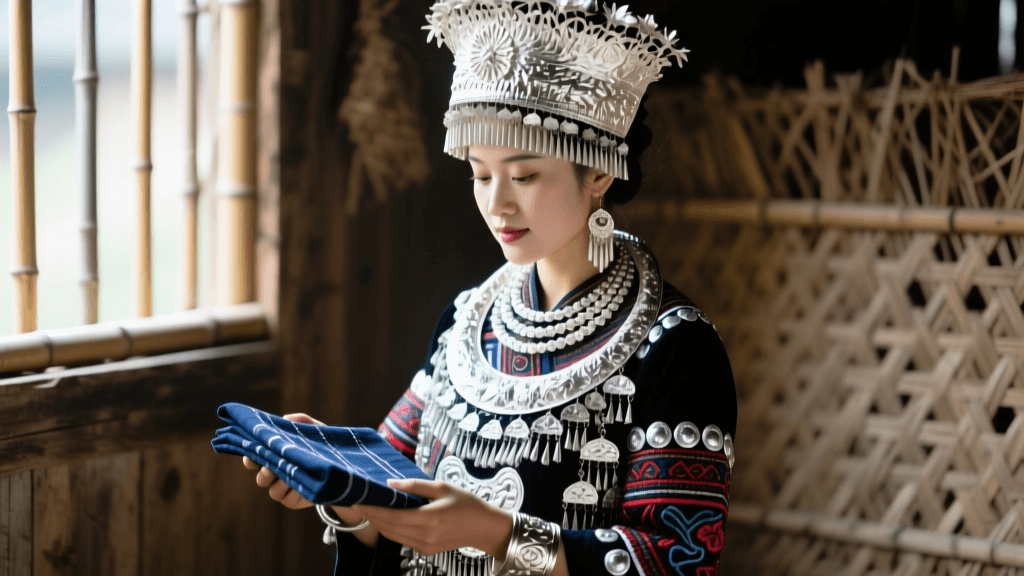
While the textiles tell the story of the Miao past, the silver jewelry represents their present wealth and spiritual protection. Silver is believed to ward off evil spirits and bring good health. During major celebrations like the Sisters' Meal Festival in April or the Lusheng Festival in autumn, Miao women don massive silver headdresses, necklaces, and chest plates that can weigh upwards of 10 kilograms in total.
The craftsmanship of Miao silversmiths is unparalleled. Using techniques such as filigree, repoussé, and hollow-casting, silversmiths transform raw silver into intricate horns, flowers, and birds. The iconic 'Silver Horn' headdress mimics the horns of the water buffalo, an animal deeply revered in Miao agrarian society.
Comparison Chart: Miao Silver Ornaments
| Ornament Type | Average Weight | Estimated Cost (USD) | Primary Occasion |
|---|---|---|---|
| Large Silver Horn Headdress | 1.5 kg - 3.0 kg | $1,200 - $2,500 | Weddings, Major Festivals |
| Multi-Layered Neck Torcs | 0.5 kg - 1.2 kg | $400 - $900 | Festivals, Coming-of-Age |
| Chained Chest Pectorals | 0.8 kg - 1.5 kg | $600 - $1,200 | Dance Performances |
| Everyday Silver Hairpins | 50g - 150g | $40 - $120 | Daily Wear, Market Days |
Subgroup Variations: A Regional Guide
The Miao are not a monolith; they are divided into numerous subgroups, often categorized by outsiders based on their clothing styles or the colors they favor. Recognizing these differences is crucial for collectors and travelers.
- Long Skirt Miao (Changqun Miao): Found predominantly in the Xijiang area of Guizhou. Women wear heavily pleated, ankle-length indigo skirts that require up to 20 meters of fabric. Their silver headdresses are exceptionally large and ornate.
- Short Skirt Miao (Duanqun Miao): Located in the Danzhai and Rongjiang regions. Their skirts are remarkably short, often resembling a pleated mini-skirt worn over embroidered leggings. This style is historically linked to the need for mobility in steep, mountainous terrain.
- Black Miao (Hei Miao): Residing in the Southeastern Guizhou highlands, their clothing is characterized by deep, dark indigo garments with minimal, highly concentrated embroidery around the collar and cuffs, favoring a more subdued, elegant aesthetic.
Practical Guide to Purchasing, Sizing, and Caring
Sourcing authentic Miao garments and silver requires a blend of cultural respect, patience, and practical knowledge. The commercialization of ethnic tourism in places like Xijiang Miao Village has led to a flood of mass-produced, synthetic imitations. Here is how to navigate the market.
Sourcing Authentic Silver
When purchasing silver in Guizhou, always look for the '999' stamp, indicating pure silver. Miao silversmiths typically charge based on the daily international silver spot price plus a craftsmanship fee. Expect to pay a premium of 15 to 30 RMB ($2 to $4 USD) per gram for the artisan's labor. Always ask the silversmith to demonstrate the piece's purity; traditional artisans will gladly heat a small section of the silver with a torch to prove it does not contain base metals like copper or nickel.
Sizing Traditional Garments
Unlike Western tailored clothing, traditional Miao jackets are often cut in a cross-collar, wrap-around style (jiaoling youren) that is highly forgiving and size-inclusive. However, the iconic pleated skirts (bai-zhe-qun) rely on a woven waistband that must be tightly wrapped. Standard artisan skirts are designed to fit waists between 60cm and 90cm. If you are commissioning a bespoke skirt, provide your exact waist measurement and specify the desired skirt length, as the pleating process makes post-creation alterations nearly impossible.
Care and Maintenance
- Indigo Batik: Never machine wash or use harsh detergents on natural indigo. Hand wash in cold water with a pH-neutral soap. The water will run blue for the first few washes; this is normal. Dry in the shade, as direct sunlight will bleach the natural plant dyes.
- Embroidered Silk: Spot clean only. The silk threads used in vintage Miao embroidery are naturally dyed and will bleed if submerged in water. Store flat in acid-free tissue paper to prevent the heavy pleats from losing their structure.
- Silver Jewelry: Miao silver is often intentionally oxidized in the crevices to highlight the intricate filigree work. Do not use chemical silver dips, as they will strip this dark patina and leave the piece looking flat and overly bright. Instead, use a soft, dry jeweler's cloth to gently buff only the raised surfaces.
Preserving a Living Heritage
The creation of a single, fully embroidered Miao festival jacket can take an artisan anywhere from one to three years of part-time work. This immense investment of time is why authentic, hand-crafted vintage pieces are highly prized by institutions recognized on the UNESCO Intangible Cultural Heritage lists and global textile museums. As modernization threatens these labor-intensive traditions, supporting ethical cooperatives and purchasing directly from village artisans ensures that the Miao's wearable history continues to be written, stitched, and forged for generations to come.
'To the Miao, a needle is a pen, and the thread is ink. When a woman finishes her festival skirt, she has not just made a garment; she has written the autobiography of her ancestors.'