Destination Wedding Kimono Guide: Styles and Travel Tips
The Allure of the Destination Wedding Kimono
Destination weddings have evolved far beyond simple beachside vows. For couples with Japanese heritage, or those deeply enamored with Japanese culture, hosting a ceremony in a historic Kyoto shrine, a luxury Hawaiian resort, or a European estate while wearing traditional bridal kimono offers a profound connection to sartorial history. However, executing a destination wedding involving traditional Japanese garments requires meticulous planning, an understanding of strict formality rules, and specialized logistical foresight.
As noted by the Victoria and Albert Museum, the kimono is not merely a garment but a complex canvas of cultural expression, social signaling, and artistic mastery. When transported across the globe for a destination event, the kimono bridges centuries of tradition with modern matrimonial celebrations. This guide provides actionable advice on selecting the right garments, navigating the logistics of traveling with delicate silks, and securing professional dressing services abroad.
Decoding Bridal and Guest Formality
Japanese formalwear operates on a strict hierarchy. Understanding the distinction between bridal ensembles and guest attire is critical to maintaining cultural etiquette at your destination event.
Shiromuku (The Pure White Ensemble)
The shiromuku is the highest level of bridal formality, traditionally worn during the actual Shinto wedding ceremony (shinzen shiki). Comprising entirely white layers—including the under-robe (nagajuban), the outer robe, and the obi—it symbolizes purity and the bride's willingness to be 'dyed' in the colors of her new family. A complete shiromuku ensemble is heavily layered and can weigh between 15 to 20 kilograms (33 to 44 lbs). Brides typically pair this with a wataboshi (a domed silk hat) or a tsunokakushi (a flat, rectangular cap symbolizing the hiding of jealousy and ego).
Iro-Uchikake (The Colored Outer Robe)
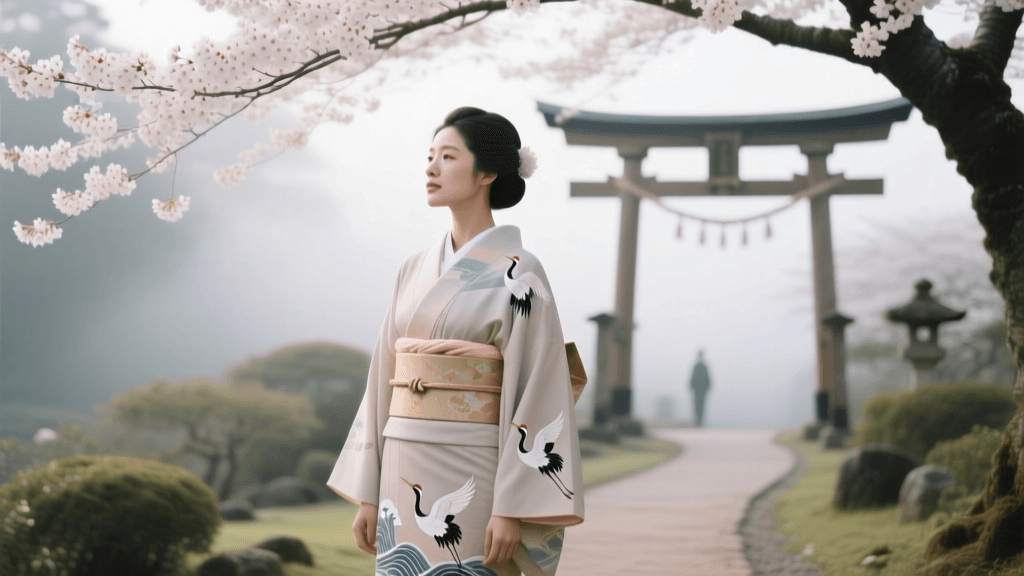
Often worn during the wedding reception or as a secondary outfit for destination photoshoots, the iro-uchikake is a vibrant, heavily padded outer robe worn open over a middle robe (kakeshita). According to the Metropolitan Museum of Art, the motifs woven and dyed into formal uchikake are deeply rooted in auspicious symbolism. You will frequently see the shochikubai trio (pine, bamboo, and plum blossom) representing longevity, resilience, and perseverance, as well as cranes (tsuru) symbolizing a long and happy marriage. The hem is heavily padded with cotton or silk wadding to ensure it trails elegantly on the floor.
Guest Attire: Hōmonga and Furisode
For guests attending a destination wedding, the rules of formality still apply. Unmarried women and girls typically wear a furisode, characterized by its dramatic, swinging sleeves that can measure up to 114 centimeters in length. Married women should opt for a hōmonga (visiting wear), which features elegant patterns that flow continuously across the seams. Both require a formal fukuro obi tied in a decorative knot, such as the nijudaiko (double drum) or taiko musubi.
The Logistics of Traveling with Silk
Traveling internationally with a bridal kimono collection is a high-stakes logistical challenge. Vintage and high-end modern silks are highly susceptible to humidity, friction, and improper folding. If you are bringing your own garments rather than renting locally, adhere to these strict packing protocols:
- Use Tatoushi Paper: Never pack a silk kimono in plastic. Plastic traps moisture and can cause yellowing or mold. Wrap each folded garment in acid-free tatoushi (traditional kimono storage paper) to allow the fibers to breathe.
- The Hard-Shell Suitcase: Place the wrapped garments flat in a rigid, hard-shell suitcase. Do not use soft duffel bags, as the weight of other luggage in the cargo hold can crush the delicate embroidery and 3D gold leaf (kinpaku) appliqués.
- Carry-On the Obi and Accessories: Your maru obi or fukuro obi should be carried onto the plane. Obis are densely woven, often featuring metallic threads that can permanently crease or snap if subjected to the extreme temperature fluctuations and rough handling of checked baggage.
- Climate Acclimation: Upon arriving at your destination, open the suitcase immediately and allow the garments to acclimate to the room's ambient temperature and humidity for at least 24 hours before dressing. This prevents condensation from forming on the silk.
Securing a Kitsuke (Dressing) Professional Abroad
A kimono cannot be put on like a Western dress; it requires a certified kitsuke (dressing) professional. For destination weddings outside of Japan, finding a qualified dresser requires early intervention.
Begin your search 8 to 12 months in advance. Look for dressers certified by organizations such as the All Japan Kimono Consultants Association. If you are marrying in a Western country, you may need to fly a dresser in from a major metropolitan hub like Los Angeles, London, or Paris, or hire a local expert who specializes in Japanese formalwear. Expect to pay a premium for destination services; a bridal dressing fee internationally typically ranges from $400 to $900 USD, excluding travel and accommodation expenses for the dresser.
Pro Tip: Ensure your dressing room at the venue has a completely flat, armless chair or a traditional low stool, a full-length mirror, and bright, natural or daylight-balanced lighting. The dressing process for a bride takes between 60 to 90 minutes and requires significant physical space to manage the long sleeves and trailing hems.
Destination Kimono Planning Matrix
Use the following comparison chart to budget and schedule your destination wedding garments effectively.
| Garment Type | Formality Level | Ideal Wearer | Avg. Rental Cost (USD) | Dressing Time |
|---|---|---|---|---|
| Shiromuku | Highest (Ceremony) | Bride | $800 - $1,500 | 75 - 90 mins |
| Iro-Uchikake | Highest (Reception) | Bride | $600 - $1,200 | 60 - 75 mins |
| Furisode | High (Unmarried) | Guest / Bridesmaid | $250 - $500 | 45 - 60 mins |
| Hōmonga | High (Married) | Guest / Mother | $200 - $450 | 40 - 50 mins |
| Montsuki Haori Hakama | Highest (Formal) | Groom | $150 - $350 | 30 - 45 mins |
Venue Etiquette and Climate Considerations
The venue you choose for your destination wedding heavily dictates the feasibility of wearing a kimono. If you are hosting a traditional shinzen shiki at a Shinto shrine, the Kyoto City Tourism Association and local shrine authorities recommend booking your venue and associated dressing services at least six months in advance, as popular shrines limit the number of daily ceremonies to preserve the sanctity of the grounds.
When navigating shrine grounds, remember that bare skin is considered impure in sacred spaces. The kimono's overlapping collar (eri) must be pulled tight to the nape of the neck, leaving only a small, elegant window of skin visible. Furthermore, traditional tabi (split-toe socks) and zori (sandals) are mandatory. Western footwear is strictly prohibited on shrine pavilions.
Climate is another critical factor. If your destination wedding is in a tropical locale or during the height of summer, a traditional multi-layered silk shiromuku can lead to heat exhaustion. For warm-weather destination weddings, consult your dresser about utilizing modern, breathable synthetic undergarments (ro or sha weaves) and specialized cooling mesh hadajuban (under-robese) designed specifically for summer bridal wear. Some modern brides also opt for lightweight, two-piece kimono sets that mimic the silhouette of the uchikake without the crushing weight of the traditional padding.
Conclusion
Wearing a kimono for a destination wedding is a breathtaking way to honor Japanese heritage while celebrating your union in a unique global setting. From selecting the auspicious motifs of your iro-uchikake to carefully packing your silk garments in acid-free paper, every detail requires intention and respect for the craft. By understanding the nuances of formality, preparing for the logistical hurdles of international travel, and securing a skilled kitsuke professional, you ensure that your traditional garments will look flawless, allowing you to focus entirely on the joy of your wedding day.