Children's Hanfu Guide: Festivals, Rites, and Milestones
The Cultural Significance of Children's Hanfu
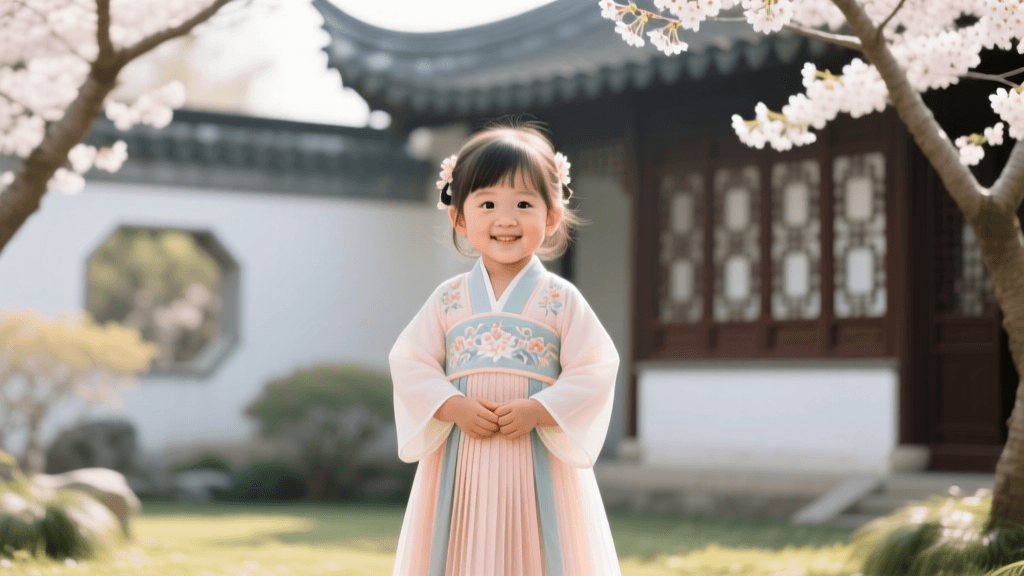
The global revival of traditional Chinese clothing is no longer confined to adult enthusiasts and university clubs. As documented by BBC Culture and Sixth Tone, the Hanfu movement has deeply permeated family life, with parents increasingly seeking authentic traditional garments for their children. Dressing children in Hanfu is not merely about aesthetics or festival cosplay; it is a profound method of cultural inheritance, aesthetic education, and familial bonding. From a toddler's first birthday to a teenager's coming-of-age ceremony, traditional garments serve as wearable milestones that connect younger generations to millennia of Asian heritage.
However, purchasing and styling Hanfu for growing children presents unique challenges. Parents must navigate height-based sizing systems, select fabrics suitable for sensitive skin, and balance historical accuracy with modern safety and comfort. This comprehensive guide provides actionable advice for outfitting children in traditional Chinese attire for major festivals and rites of passage.
Key Milestones and Rites of Passage
Zhua Zhou (First Birthday Ceremony)
The Zhua Zhou (抓周), or "grabbing week," is one of the most vital early milestones in Chinese culture. As detailed in cultural guides by China Highlights, this ritual involves placing the one-year-old child in front of a mat scattered with symbolic objects—such as a book, a calculator, a stethoscope, or a calligraphy brush. The item the child grabs is said to predict their future inclinations and career. For this occasion, infants are typically dressed in auspicious reds and golds. The most iconic garment is the Dudou (肚兜), a diamond-shaped embroidered bellyband that protects the child's stomach from cold winds, often paired with soft cotton Ku (trousers). Tiger-head shoes (Hutou Xie) are also essential, as the tiger motif is traditionally believed to ward off evil spirits and protect the vulnerable infant.
Lunar New Year and Spring Festival
The Lunar New Year requires vibrant, layered clothing to combat winter chill while projecting festive joy. For girls, the Mamianqun (horse-face skirt) is highly popular. Its flat front and back panels with pleated sides allow for ease of movement, which is crucial for active children. Pairing the skirt with a padded Ao (jacket) featuring traditional floral or lantern embroidery creates a historically grounded yet practical winter outfit. For boys, a thick cotton Shenyi (deep robe) or a layered Ruqun with a sleeveless Beizi (vest) provides warmth without restricting play. Modern adaptations often include hidden velcro or snap closures to make bathroom breaks and diaper changes manageable for parents.
Youth Coming-of-Age Ceremonies (Guan Li & Ji Li)
As children transition into adolescence, traditional rites of passage become more formal. Historically, the Guan Li (capping ceremony) for boys at age 20 and the Ji Li (hairpin ceremony) for girls at age 15 marked their entry into adulthood. Today, many families and cultural organizations adapt these ceremonies for younger teens (ages 12 to 14) to coincide with middle school graduation or the Lunar New Year. Teenagers transition from children's cross-collar robes to more structured adult silhouettes, such as the Yuanlingpao (round-collar robe) for boys and the elaborate Qixiong Ruqun (chest-high skirt) for girls, symbolizing their new societal responsibilities.
Practical Buying Guide: Sizing, Fabrics, and Budget
Understanding Children's Hanfu Sizing
Unlike Western clothing, which often uses age brackets (e.g., 4T, 5-6 years), traditional Chinese children's wear relies on a strict height-based metric system measured in centimeters. A size "110" is designed for a child who is exactly 110 cm tall. Because Hanfu features wide sleeves, drop shoulders, and flowing skirts, proper measurement is critical to avoid tripping hazards.
- Height: Measure from the crown of the head to the floor. This is your primary size indicator.
- Chest/Bust: Measure around the fullest part of the chest. Hanfu jackets (Ru or Ao) are cut flat, so allow 2-3 inches of ease for layering.
- Skirt Length: For a Mamianqun or Ruqun, the skirt should ideally end just above the ankle bone to prevent the child from stepping on the pleats. If buying off-the-rack, use hemming tape to adjust the length without cutting the fabric.
- Pro-Tip: Always size up by one tier (e.g., buy size 120 for a 115cm child) to account for winter undergarments and the child's growth spurts.
Fabric Choices for Sensitive Skin
Children's skin is highly sensitive, making fabric selection a matter of health as well as aesthetics. The traditional Hanfu layering system naturally solves this through the Zhongyi (innermost layer).
| Fabric Type | Best Used For | Pros & Cons | Care Instructions |
|---|---|---|---|
| 100% Cotton | Zhongyi (inner layers), Dudou, Summer Ruqun | Breathable, hypoallergenic. Lacks the sheen of formal wear. | Machine wash cold, tumble dry low. |
| Linen / Ramie | Summer Shenyi, casual festival wear | Highly cooling, historically accurate for commoners. Can be scratchy if unlined. | Hand wash, lay flat to dry to prevent shrinking. |
| Silk / Satin | Outer Ao, formal Ji Li ceremonies | Luxurious drape, beautiful embroidery base. Slippery and stains easily. | Dry clean only or spot clean with silk detergent. |
| Brocade / Jacquard | Winter Mamianqun, festive vests | Stiff structure holds pleats well, very durable. Heavy and not breathable. | Spot clean, steam to remove wrinkles. |
Budgeting for Children's Traditional Wear
The cost of children's Hanfu varies wildly based on craftsmanship and materials. Mass-produced, machine-embroidered sets from e-commerce platforms typically range from $30 to $60 USD. These are excellent for single-use events like a school cultural fair. Mid-range boutique brands, which offer better fabric blends (like cotton-linen mixes) and original, culturally accurate patterns, generally cost between $70 and $150 USD. For coming-of-age ceremonies, custom-tailored silk garments with hand-embroidered motifs can easily exceed $300 USD, serving as a lifelong heirloom.
Milestone Hanfu Comparison Chart
To help parents plan their purchases, here is a structured breakdown of recommended garments for specific childhood milestones.
| Milestone | Typical Age | Recommended Style | Key Accessories | Est. Cost (USD) |
|---|---|---|---|---|
| Zhua Zhou (1st Birthday) | 1 Year | Cotton Dudou & soft Ku | Tiger-head shoes, cloth bib | $25 - $45 |
| Lunar New Year | 3 - 10 Years | Padded Aoqun or Shenyi | Faux-fur collar, lantern hairpins | $50 - $120 |
| Qixi / Mid-Autumn | 5 - 12 Years | Lightweight Ruqun / Beizi | Floral crowns, jade pendants | $40 - $90 |
| Youth Coming-of-Age | 12 - 15 Years | Formal Yuanlingpao / Qixiong | Hair sticks (Zan), folding fan | $150 - $350+ |
Styling and Etiquette Tips for Young Wearers
Safe Accessories and Footwear
When styling children, safety must override historical strictness. Avoid long, trailing silk ribbons or heavy metal hairpins for children under the age of eight, as these pose significant choking and injury hazards. Instead, opt for lightweight resin or wooden hair sticks (Zan) and use modern elastic hair ties hidden beneath the hair to secure traditional buns. For footwear, traditional cloth boots can be slippery on modern polished floors. Many modern Hanfu brands now offer "cloud shoes" (Yuntou Xie) equipped with rubberized, non-slip soles, providing the historical silhouette with the traction necessary for active children.
Traditional Greeting Etiquette (Zuoyi)
Wearing the garment is only half the experience; understanding the associated etiquette completes the cultural lesson. Parents should teach children the traditional Zuoyi (作揖) greeting, which involves clasping the hands in front of the chest and bowing slightly. The hand placement is deeply rooted in Yin and Yang philosophy and is a common area of confusion. For males, the left hand should cover the right fist, as the left side represents life and auspiciousness (Yang), while the right represents martial force and death (Yin). For females, the right hand covers the left fist. Teaching this nuance helps children understand the philosophical underpinnings of their heritage, transforming a simple outfit into a living history lesson.
Conclusion
Outfitting children in Hanfu for festivals and rites of passage is a beautiful way to anchor them in their cultural identity. By prioritizing skin-friendly fabrics, understanding the height-based sizing system, and respecting the safety needs of active youth, parents can ensure that traditional clothing is a source of joy rather than discomfort. Whether it is the protective tiger shoes of a first birthday or the dignified robes of a coming-of-age ceremony, children's Hanfu bridges the gap between ancient artistry and modern family life, ensuring these traditions continue to thrive for generations to come.