Chinese Garment Color Codes: Imperial Rank and Modern Styling
The Cosmological Canvas: Wuxing and the Five Sacred Colors
To understand traditional Chinese clothing is to read a visual language woven from cosmology, philosophy, and strict social hierarchy. Long before modern fashion trends dictated seasonal palettes, the colors of Chinese garments were governed by the Wuxing (Five Elements) theory. This ancient philosophical system mapped the universe into five interconnected phases: Wood, Fire, Earth, Metal, and Water. Each element corresponded to a specific cardinal direction, season, and, most importantly, a sacred color.
According to the Metropolitan Museum of Art, the integration of these cosmological beliefs into daily life and statecraft was a hallmark of Chinese imperial history. The five orthodox colors (zhengse) were:
- Qing (Blue-Green): Representing Wood, the East, and Spring. It symbolized vitality, growth, and the scholarly class.
- Chi (Red/Vermilion): Representing Fire, the South, and Summer. It embodied joy, prosperity, and the Vermilion Bird of Chinese mythology.
- Huang (Yellow): Representing Earth, the Center, and the transition of seasons. As the color of the Yellow Emperor and the fertile soil of the Yellow River basin, it eventually became the ultimate symbol of imperial supremacy.
- Bai (White): Representing Metal, the West, and Autumn. It was associated with the White Tiger, purity, and, crucially, mourning and the afterlife.
- Hei (Black): Representing Water, the North, and Winter. While often viewed as inauspicious in later folk traditions, black was actually the revered imperial color of the Qin Dynasty, symbolizing the vast, unfathomable depths of water.
Color in traditional Chinese dress was never merely decorative; it was a strict moral and political boundary. To wear a color above one's station was not a fashion faux pas, but an act of treason.
Sartorial Hierarchy: Ming and Qing Sumptuary Laws
The transition from the Ming to the Qing Dynasty saw an explosion of complex sumptuary laws designed to visually segregate the ruling elite from the common populace. As noted by Encyclopedia Britannica, the Qing court established a rigorous dress code where the exact shade of a silk robe could dictate a man's proximity to the Emperor.
Bright yellow (minghuang) was strictly reserved for the Emperor, the Empress, and the Empress Dowager. The Crown Prince was permitted apricot yellow (xinghuang), while other imperial princes were relegated to golden yellow (jinhuan). High-ranking officials and nobles were generally restricted to deep blues, blacks, and dark purples for their formal court robes (chaofu), reserving brighter hues for specific festival occasions. Commoners were legally barred from wearing bright yellow, crimson, and certain types of intricate dragon motifs, forcing them into muted indigos, earthy browns, and unbleached hemp tones.
Decoding the Mandarin Squares (Buzi)
While color denoted broad social strata and imperial proximity, exact bureaucratic rank was communicated via the Buzi, or Mandarin Square. These intricately embroidered badges were affixed to the front and back of official surcoats (bufu). Civil officials wore birds to symbolize literary elegance, while military generals wore beasts to represent martial prowess.
Below is a structured guide to the Qing Dynasty's nine-rank system, a vital reference for collectors, historians, and modern hanfu enthusiasts recreating official garments:
| Rank | Civil Badge (Bird) | Military Badge (Beast) | Permitted Robe Colors & Notes |
|---|---|---|---|
| 1st | Crane | Qilin (Mythical) | Deep blue/black surcoat; ruby hat finial. |
| 2nd | Golden Pheasant | Lion | Deep blue/black surcoat; coral hat finial. |
| 3rd | Peacock | Leopard | Deep blue/black surcoat; sapphire hat finial. |
| 4th | Wild Goose | Tiger | Deep blue/black surcoat; lapis lazuli finial. |
| 5th | Silver Pheasant | Bear | Dark brown/blue; crystal hat finial. |
| 6th | Egret | Panther | Dark brown/blue; white shell finial. |
| 7th | Mandarin Duck | Rhinoceros | Muted tones; gold-trimmed clear glass finial. |
| 8th | Quail | Rhinoceros | Muted tones; gold-trimmed clear glass finial. |
| 9th | Paradise Flycatcher | Sea Horse (Mythical) | Muted tones; plain gold finial. |
Actionable Guide: Applying Imperial Codes to Modern Garments
Today, the revival of traditional Chinese clothing—ranging from the flowing silhouettes of Hanfu to the tailored elegance of the Qipao and the structured Tangzhuang—offers a unique opportunity to wear history. However, understanding the historical weight of these colors is essential for selecting the right garment for modern events. The Smithsonian National Museum of Asian Art frequently highlights how historical textiles continue to inform contemporary Asian design, bridging the gap between ancient ritual and modern aesthetics.
Hanfu Ceremonial Wear: Weddings and Rites of Passage
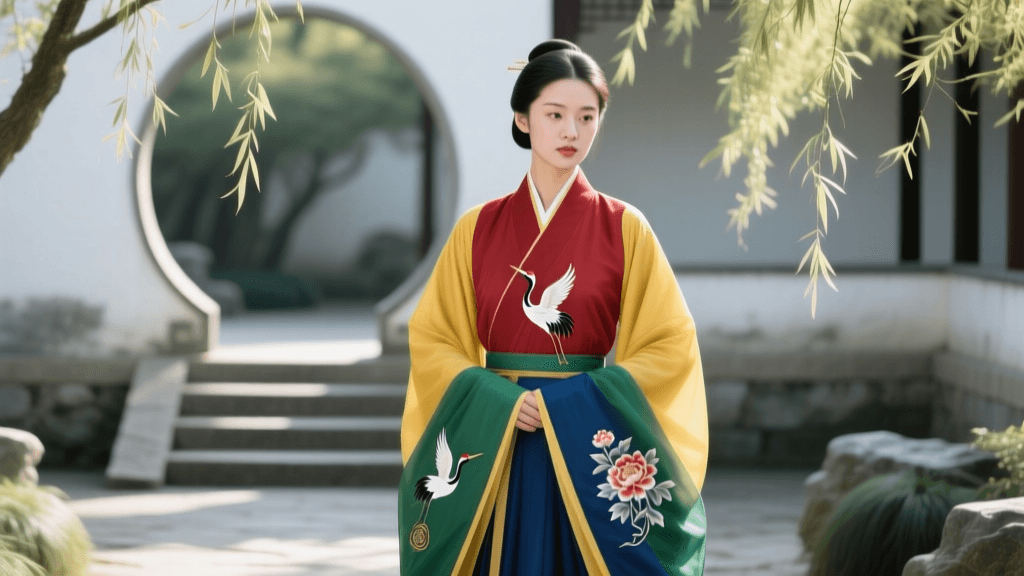
For modern Hanfu weddings, couples often gravitate toward the Ming Dynasty-style Xiuhefu or Qungua. While vibrant crimson and gold are the contemporary standards for joy and prosperity, historically accurate Ming-style wedding garments for the groom often featured deep navy or black outer robes, symbolizing the solemnity of the Water element and the sacred vow of marriage.
- Weddings: Opt for crimson red, deep maroon, or navy blue with gold embroidery. Avoid all-white or unbleached linen, which are strictly reserved for mourning (sangfu).
- Coming-of-Age Ceremonies (Guanli/Ziji): Young adults should wear Qing (blue-green) to represent the Wood element, signifying youth, growth, and the spring of life.
- Academic or Formal Graduations: A deep blue or black scholar's robe with subtle silver or white trim honors the intellectual tradition of the civil service exams.
Qipao and Social Etiquette
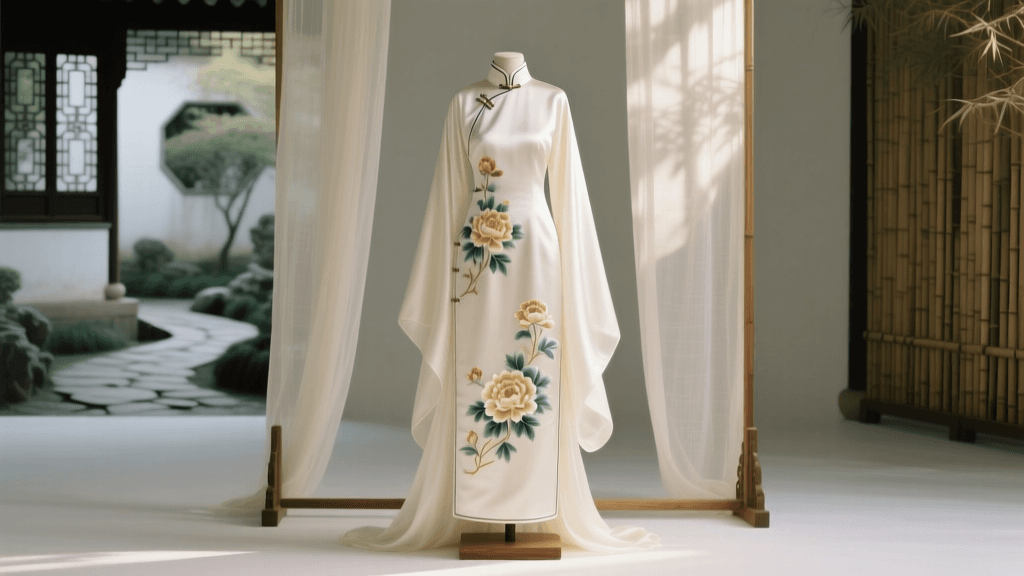
The Qipao (Cheongsam), though a product of 1920s modernization, still adheres to underlying cultural color psychology. When commissioning or buying a Qipao for social events, consider the following:
- Joyous Events & Banquets: Jade green (Wood/growth), plum red (Fire/joy), and peony pink are excellent choices. They project warmth, vitality, and respect for the host.
- Funerals & Somber Memorials: Stick to unadorned black, navy, or white. Avoid any metallic embroidery or bright silk brocades.
- Business & Diplomacy: Deep sapphire blue or charcoal grey conveys authority and intellect, echoing the robes of high-ranking civil officials without crossing into imperial yellow arrogance.
Bespoke Tailoring: Costs, Timelines, and Measurements
If you are looking to invest in authentic, historically informed garments, be prepared for a rigorous tailoring process. Mass-produced costumes often use synthetic fabrics and inaccurate color palettes. For genuine traditional wear, consider the following practical metrics:
- Fabric Sourcing: Authentic Shu or Song brocade (traditional silk weaves featuring raised patterns) typically costs between $60 to $150 per yard. A full Ming-style Aoqun (jacket and skirt set) requires 5 to 7 yards.
- Custom Embroidery (Buzi): If you are commissioning a replica Mandarin square for a historical reenactment or high-end Tangzhuang, hand-embroidery using silk thread and gold-wrapped couched threads takes 40 to 80 hours of labor. Expect to pay $300 to $800 just for the badges, with a lead time of 6 to 10 weeks.
- Measurements: A proper Qipao requires up to 14 distinct measurements, including the precise drop of the dalailing (large collar) and the circumference of the knee to ensure the side slits (kaiqi) do not breach modesty when seated. Hanfu requires precise tongxiu (full sleeve span) measurements, often ranging from 160cm to 220cm depending on the dynasty and formality.
Conclusion
The colors and symbols of traditional Chinese garments are far more than aesthetic choices; they are a wearable archive of Chinese philosophy, statecraft, and social order. By understanding the Wuxing color theory and the strict hierarchy of the Buzi, modern wearers can select Hanfu, Qipao, and Tangzhuang with profound cultural literacy. Whether you are choosing a jade-green Qipao for a diplomatic dinner or a navy-blue Hanfu for a solemn ceremony, you are participating in a sartorial dialogue that has spanned millennia.