Suzhou Silk Embroidery: A Buyer's Guide for Hanfu & Qipao
The Pinnacle of Asian Textile Arts: Understanding Su Xiu
Suzhou embroidery, universally known as Su Xiu, represents the absolute zenith of Chinese silk textile arts. Originating in the Jiangsu province over 2,000 years ago, this meticulous craft has become synonymous with luxury, elegance, and profound cultural heritage. For modern collectors, historians, and enthusiasts of traditional Chinese clothing, incorporating authentic Su Xiu into garments like the Hanfu and the Qipao (Cheongsam) is not merely a fashion choice; it is a direct investment in wearable, living art. Whether you are commissioning a bespoke Ming-dynasty style Aoqun (jacket and skirt) or a form-fitting Republic-era Qipao, understanding the technical and aesthetic nuances of silk embroidery is essential. This comprehensive guide provides actionable insights into evaluating authenticity, understanding market pricing, and preserving these exquisite textiles for future generations.
The cultural and historical significance of this craft is globally recognized. According to UNESCO's Intangible Cultural Heritage list, the sericulture and silk craftsmanship of China, which encompasses the foundational skills of Su Xiu, is a vital traditional skill passed down through generations. Historically, Suzhou was the epicenter of China's silk trade, and its artisans developed techniques so refined that their work was strictly reserved for imperial dragon robes and high-court garments. Today, the art form is characterized by eight primary aesthetic traits: flat, neat, fine, dense, even, smooth, harmonious, and uniform.
The Anatomy of Su Xiu on Hanfu and Qipao
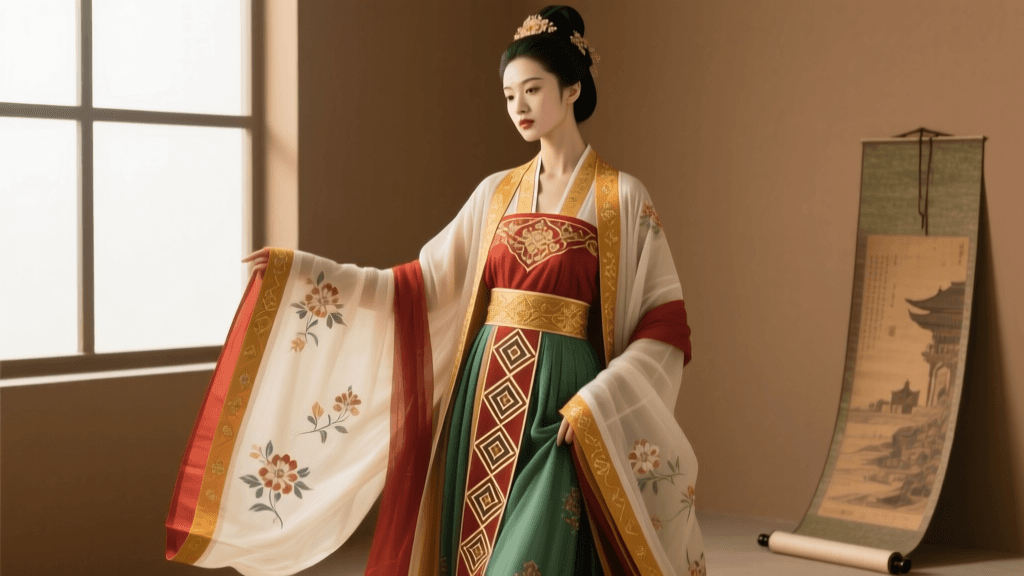
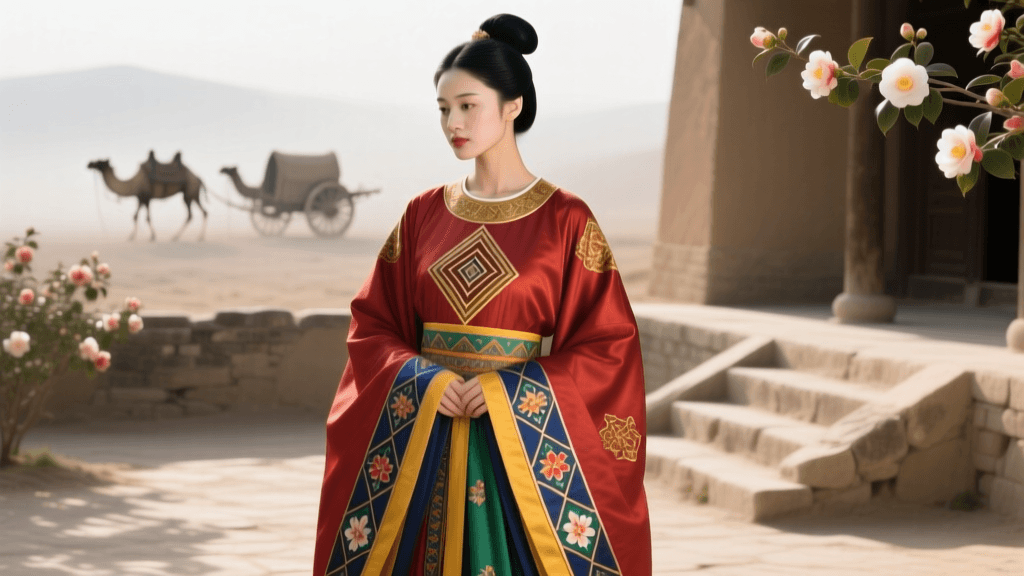
When applied to traditional Hanfu, Su Xiu is typically concentrated on the lan (decorative borders) of a Mamianqun (horse-face skirt) or the cuffs, collar, and lapels of a Beizi (cloak) or Pifo (cloud shoulder). Artisans utilize a breathtaking technique called thread splitting, where a single strand of silk is divided into multiple microscopic filaments. For delicate motifs like the translucent petals of a plum blossom or the intricate feathers of a crane, master embroiderers will split a single thread into 1/32nd or even 1/48th of its original thickness. This allows for seamless color gradients and a painterly effect that machine embroidery simply cannot replicate.
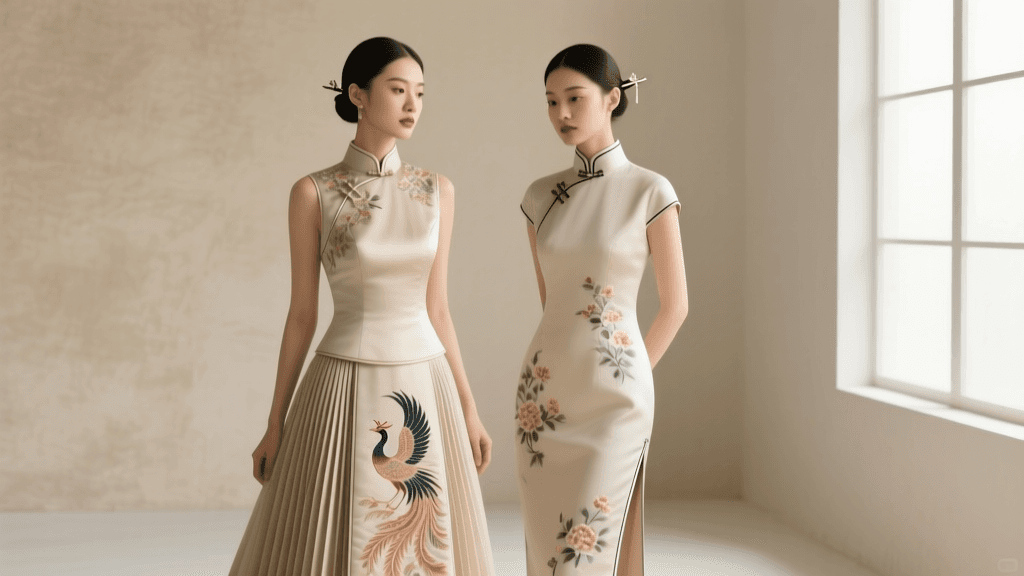
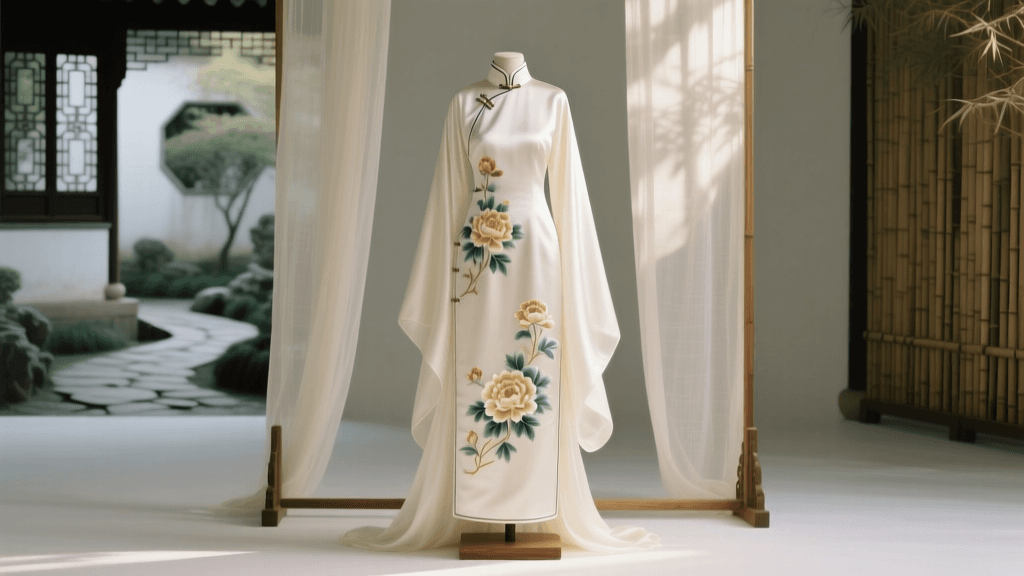
On a Qipao, the embroidery often follows the natural contour of the body. Artisans strategically place motifs like peonies (symbolizing wealth and honor) or bamboo (symbolizing resilience and integrity) to flatter the wearer's silhouette while respecting the drape of the silk crepe or brocade base. The integration of Su Xiu elevates the Qipao from everyday formal wear to a ceremonial masterpiece, often requiring hundreds of hours of continuous, unbroken labor.
Handcrafted vs. Machine-Made: A Buyer's Checklist
Distinguishing between hand-embroidered Su Xiu and machine-made imitations is the most critical skill for a buyer. Use this actionable checklist when evaluating a garment:
- Thread Thickness and Luster: Machine embroidery uses continuous, uniform synthetic or thick silk threads, resulting in a stiff texture and an overly glossy, plastic-like sheen. Authentic hand-embroidered Su Xiu features natural irregularities in hand-spun silk, catching the light at varying, softer angles.
- The Reverse Side Test: Flip the fabric over. Machine-embroidered pieces will show dense, chaotic bobbin threads, often with a paper or synthetic stabilizer backing. Hand-embroidered Su Xiu features a remarkably clean back. In the case of double-sided embroidery (Shuang Mian Xiu), the front and back are virtually identical, with all thread ends meticulously hidden within the stitches.
- Color Gradients: Hand-embroidered gradients transition seamlessly without visible color-blocking. Machines rely on distinct, separate thread colors placed adjacent to one another, creating a pixelated or banded effect upon close inspection.
- Stitch Direction: Master artisans alter the angle of their stitches to mimic the natural growth patterns of flowers or the flow of water. Machines typically stitch in uniform, repetitive directional patterns.
The Four Great Embroideries of China: A Comparison
While Su Xiu is the most famous, China boasts four major regional embroidery styles, each with distinct characteristics. Understanding these differences helps buyers identify the exact style used on vintage or antique Hanfu and Qipao pieces. As noted by textile historians at The Metropolitan Museum of Art, regional variations in silk craftsmanship reflect local climates, flora, and cultural priorities.
| Embroidery Style | Origin Region | Key Characteristics | Common Motifs & Applications |
|---|---|---|---|
| Su Xiu (Suzhou) | Jiangsu Province | Extremely fine thread splitting, soft color gradients, flat and smooth texture, double-sided techniques. | Delicate florals, cats, koi fish, landscapes. Highly prized for luxury Qipao and fine Hanfu borders. |
| Xiang Xiu (Hunan) | Hunan Province | Rich, vibrant colors, emphasis on light and shadow, often uses dark backgrounds for high contrast. | Tigers, lions, bold peonies. Frequently used in decorative screens and heavy ceremonial jackets. |
| Shu Xiu (Sichuan) | Sichuan Province | Thick, padded stitches, brilliant and bold colors, neat and rigid edges, highly durable. | Dragons, phoenixes, auspicious clouds. Traditional choice for heavy winter Hanfu and theatrical costumes. |
| Yue Xiu (Guangdong) | Guangdong Province | Intricate gold and silver thread work, dense patterns, uses metallic threads heavily. | Birds, dragons, lychees. Commonly applied to ceremonial Kwa (wedding jackets) and southern regional dress. |
Pricing, Commissions, and Timelines
Investing in authentic Su Xiu requires an understanding of the market's pricing tiers. The cost is dictated by the base fabric, the complexity of the design, the fineness of the thread splitting, and the reputation of the artisan. According to archives and exhibitions documented by the Victoria and Albert Museum, the labor intensity of Chinese silk embroidery makes it one of the most time-consuming textile arts in the world.
- Entry-Level / Machine-Assisted ($150 - $400): These garments feature machine-embroidered base patterns with minimal hand-finishing. Suitable for daily wear Hanfu or casual Qipao, but they lack investment value.
- Mid-Tier Hand-Embroidered ($800 - $2,500): Fully hand-embroidered by skilled artisans using 1/16th or 1/32nd thread splits. This is the sweet spot for serious collectors. A custom Qipao or a heavily embroidered Mamianqun in this tier typically requires a commissioning timeline of 3 to 6 months.
- Master-Level / Double-Sided ($5,000 - $20,000+): Created by provincial or national-level master artisans. These pieces feature 1/48th thread splits, invisible stitch ends, and complex double-sided motifs. Commissioning a master-level garment can take 12 to 18 months of continuous work. These are museum-quality investment pieces.
Archival Care and Maintenance for Silk Textiles
Silk is a protein fiber, making it highly susceptible to environmental damage, UV degradation, and improper washing. To preserve the structural integrity of your Su Xiu Hanfu or Qipao, adhere to these strict maintenance protocols:
Washing and Cleaning
Never machine wash or aggressively hand-wash heavy Su Xiu garments. The tension of the embroidery threads can cause the base silk to pucker or tear when wet. For minor stains, use a pH-neutral detergent (exactly pH 7.0) and gently dab the area with a microfiber cloth. For comprehensive cleaning, rely exclusively on specialized dry cleaners who have documented experience with antique or haute-couture Asian textiles.
Ironing and Steaming
Direct heat will scorch silk and melt metallic embroidery threads. Always iron the garment on the reverse side. Set your iron to exactly 110°C (230°F) — the standard silk setting. Place a clean, unbleached cotton press cloth between the iron and the garment. Never use a steam iron directly on the embroidery, as water spots can permanently stain the silk and cause the dyes in the embroidery threads to bleed.
Storage and Environment
Store your garments flat in acid-free archival tissue paper to prevent the embroidery threads from creasing or snapping over time. If hanging a Qipao, use a wide, padded wooden hanger to distribute the weight of the embroidery and prevent shoulder dimples. The storage environment must be strictly controlled: maintain a relative humidity between 45% and 55%, and keep the temperature around 18°C to 20°C (64°F to 68°F). Always store in complete darkness, as UV exposure will rapidly fade the delicate, naturally dyed silk threads used in high-end Su Xiu.
Conclusion
Suzhou silk embroidery is far more than a decorative embellishment; it is a profound expression of Asian heritage, patience, and artistic mastery. Whether you are acquiring a vintage Qipao or commissioning a modern Hanfu ensemble, understanding the technical markers of Su Xiu ensures that you are investing in genuine craftsmanship. By applying these evaluation techniques and adhering to strict archival care standards, collectors can preserve these breathtaking textile arts, allowing the legacy of China's master embroiderers to endure for centuries to come.