Kimono Motif Symbolism: A Guide to Seasonal Colors
Decoding Kisetsukan: The Art of Seasonal Awareness
The Japanese kimono is far more than a simple garment; it is a wearable canvas that reflects the profound cultural reverence for nature and the passage of time. At the heart of traditional Japanese dress is the concept of kisetsukan, or seasonal awareness. This aesthetic principle dictates that the colors, patterns, and motifs of a kimono must harmonize with the natural world, often anticipating the changing seasons rather than merely reflecting them. According to the Metropolitan Museum of Art, the evolution of kimono aesthetics was deeply intertwined with the Heian court's obsession with seasonal poetry and nature, a tradition that remains rigidly observed in formal kimono wearing today.
Understanding pattern color and motif symbolism is essential for anyone looking to collect, wear, or appreciate traditional Japanese garments. Wearing a cherry blossom motif in the dead of winter, or donning heavy autumnal colors during the humid peak of summer, is considered a significant sartorial misstep. This guide explores the intricate language of kimono motifs, the symbolism of traditional colors, and provides actionable advice for building a seasonally appropriate kimono wardrobe.
The Language of Colors: Goshiki and Seasonal Hues
Traditional Japanese color theory is heavily influenced by the Goshiki, or the five elemental colors derived from Chinese cosmology: red, yellow, blue, white, and black. These colors correspond to the five elements (fire, earth, wood/water, metal, and water/void) and carry deep symbolic weight. However, when applied to the kimono, these base colors are expanded into a breathtaking spectrum of seasonal dyes.
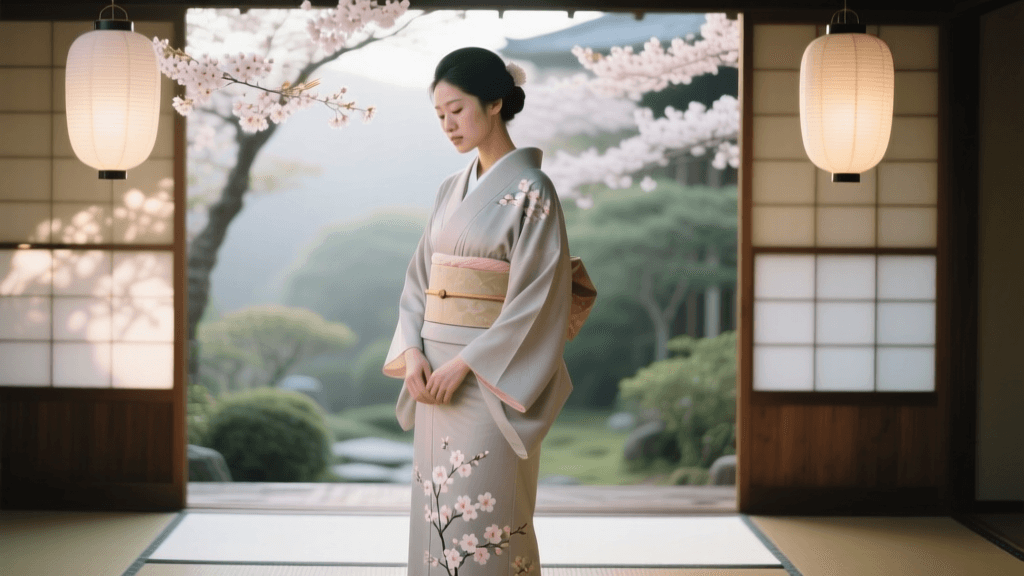
- Spring (Haru): Pastels dominate the spring palette. Soft pinks (sakura-iro), pale yellows (nanohana), and fresh greens (moegi) represent renewal and the blossoming of life.
- Summer (Natsu): To combat the intense heat and humidity of the Japanese summer, cool, visually refreshing colors are preferred. Deep indigos (ai), crisp whites, and translucent water-motif blues are utilized, particularly in lightweight ro and sha silk weaves, as well as cotton yukata.
- Autumn (Aki): The autumn palette is rich, warm, and melancholic. Russet browns, burnt oranges, deep golds, and crimson reds mirror the changing leaves and the harvest.
- Winter (Fuyu): Winter calls for stark, grounding colors. Deep purples, navy blues, stark whites (evoking snow), and rich blacks are common, often accented with metallic gold or silver threads to represent the crisp winter sun or frost.
Motif Symbolism: Flora, Fauna, and Geometry
The motifs adorning a kimono are never purely decorative; they are imbued with auspicious meanings, literary references, and strict seasonal boundaries. The Victoria and Albert Museum highlights how Japanese textile artisans historically used these motifs to convey the wearer's status, hopes, and respect for the natural order.
Flora: The Seasonal Anchors
Botanical motifs are the most common indicators of seasonality. The Sho-Chiku-Bai (Pine, Bamboo, and Plum) trio is a highly auspicious winter and New Year motif, symbolizing resilience, longevity, and perseverance. Cherry blossoms (sakura) are the undisputed symbol of spring, representing the ephemeral beauty of life. Conversely, maple leaves (momiji) and bush clover (hagi) are strictly reserved for autumn. Peonies (botan) can bridge late spring and early summer, symbolizing wealth and honor.
Fauna: Auspicious Creatures
Animal motifs often transcend strict seasonal rules and are instead tied to the formality and purpose of the garment. The crane (tsuru) and the turtle (kame) are legendary symbols of longevity, frequently woven into the gold-leaf patterns of a bride's uchikake or a formal kurotomesode. Mandarin ducks (oshidori) represent marital fidelity and are popular on wedding attire, while swallows (tsubame) indicate the arrival of spring.
Geometry and Elements
Geometric patterns like the seigaiha (blue ocean waves) or asanoha (hemp leaf) are considered kisetsu-moyo (season-less patterns). These are highly versatile and can be worn year-round, making them excellent investments for those building a foundational kimono wardrobe.
Formality and Motif Placement
Symbolism is also dictated by how and where the motif is placed on the fabric. In a komon (everyday kimono), a single small motif is repeated across the entire garment. In contrast, a houmongi (visiting wear) or furisode (long-sleeved formal wear for unmarried women) features eba-moyo, an elaborate, continuous picture that flows seamlessly across the seams of the kimono when wrapped around the body. The higher the motif crosses the waist and shoulders, and the more metallic thread it incorporates, the more formal the garment.
Actionable Guide: Buying, Sizing, and Wearing Seasonal Kimono
For collectors and wearers, navigating the vintage and modern kimono market requires practical knowledge of sizing, timing, and pricing.
Timing the Seasons: The Rule of Anticipation
The golden rule of kisetsukan is anticipation. You should begin wearing a seasonal motif two to three weeks before the season or event actually peaks, and stop wearing it the moment it passes. For example, cherry blossom motifs should be worn in late February and March. Once the actual cherry blossoms begin to fall in April, wearing the motif is considered late and aesthetically inappropriate. Similarly, autumn maple leaves should be introduced in late September, well before the peak foliage in November.
Measurements and Fit
Unlike Western clothing, kimono are constructed from straight bolts of fabric and are adjusted to the wearer's body through folding and tying. When purchasing a vintage kimono, pay close attention to two measurements:
- Width (Yuki): The standard kimono width from the center back to the wrist is typically 62-66cm. The individual fabric panels are usually 34-38cm wide. If you have a broader wingspan, you must look for modern, wider-cut kimono or accept that the sleeves will sit slightly up your forearm.
- Length (Mitake): To achieve the traditional ohashori (the visible fold at the waist), the kimono's total length should be approximately your height plus 20cm to 25cm. A woman who is 160cm tall should look for a kimono with a length of 155cm to 160cm, as the extra fabric is folded under the obi to adjust the hemline to the ankle.
Cost Guide for Collectors and Wearers
Building a seasonally diverse wardrobe is highly achievable on the vintage market, though formal new garments remain a luxury investment.
- Vintage Komon (Everyday Patterned Silk): $40 to $120. Excellent for practicing seasonal motifs and casual outings.
- Vintage Houmongi (Formal Visiting Wear): $150 to $400. Look for continuous eba-moyo patterns. Ensure there are no deep creases or water stains on the painted motifs.
- Vintage Obi (Sashes): $50 to $300. A season-less gold or silver fukuro obi is a vital investment that can elevate multiple kimono.
- New Furisode (Formal Unmarried Women's Wear): $2,000 to $5,000+. These are custom-ordered and feature the most elaborate, hand-painted seasonal motifs and heavy metallic embroidery.
Seasonal Motif and Color Matrix
Use the following matrix as a quick-reference guide when shopping for or styling traditional Japanese garments.
| Season | Primary Colors | Key Motifs | Best Time to Wear |
|---|---|---|---|
| Spring | Pastel pinks, pale yellows, fresh greens | Cherry blossom, plum, swallows, wisteria | February to early April |
| Summer | Indigo, crisp white, cool blues | Fireflies, water streams, morning glory, goldfish | May to August (Use Ro/Sha silks) |
| Autumn | Russet, burnt orange, deep gold, crimson | Maple leaves, bush clover, full moon, chrysanthemum | September to November |
| Winter | Deep purple, navy, stark white, black | Pine, bamboo, snow crystals, camellia, cranes | December to January (New Year) |
| Year-Round | Any (depending on base color) | Seigaiha (waves), Asanoha (hemp), geometric shibori | Anytime (Adjust color weight for temp) |
'The beauty of the kimono lies not just in its silk, but in its dialogue with the wind, the falling snow, and the blooming branch. To wear it is to wear the calendar itself.' — Traditional Japanese aesthetic proverb reflecting Mono no aware.
Conclusion
The symbolism of color and motif in the Japanese kimono is a masterclass in wearable poetry. By understanding the rules of kisetsukan, wearers do more than just dress beautifully; they participate in a centuries-old cultural dialogue that honors the fleeting beauty of the natural world. Whether you are investing in a vintage autumn houmongi adorned with golden maple leaves or selecting a crisp indigo yukata for a summer festival, respecting these traditional boundaries elevates the garment from mere clothing to a profound expression of cultural reverence. As noted by Smithsonian Magazine, the enduring legacy of the kimono in the modern era relies heavily on the preservation of these intricate, symbolic traditions, ensuring that the art of the seasons continues to drape elegantly over future generations.