Miao Pleated Skirts & Silver: Guizhou Folk Dress Guide
The Heart of Guizhou: Understanding Miao Provincial Dress
Nestled in the mountainous terrain of southwestern China, Guizhou Province is a vibrant tapestry of ethnic diversity, home to the Miao (also widely known as Hmong) people. Unlike the standardized silhouettes of the Han Chinese hanfu or the Manchu-derived qipao, Miao provincial dress is a hyper-regional expression of identity, history, and spiritual belief. The traditional garments of the Miao are not merely clothing; they are wearable archives. Because the Miao historically lacked a written language, their history, migration routes, and mythologies were meticulously encoded into the intricate embroidery, indigo-dyed textiles, and heavy silver ornaments that define their regional folk dress. For textile collectors, cultural historians, and fashion enthusiasts, understanding the nuances of Guizhou's Miao clothing offers a profound glimpse into one of Asia's most resilient and artistically rich cultures.
The Anatomy of the Miao Pleated Skirt (Bai Zhe Qun)
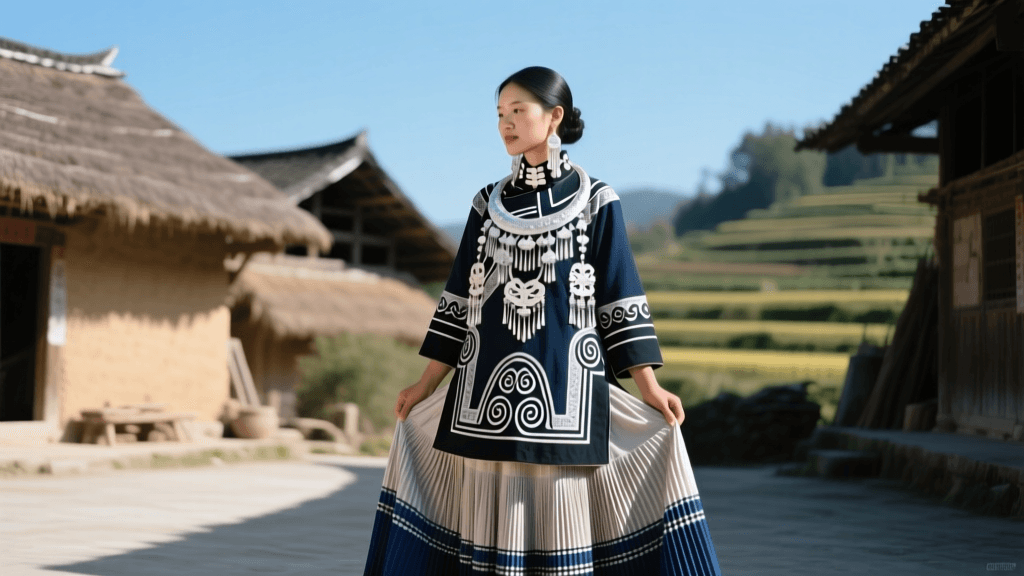
The most iconic garment of the Guizhou Miao woman is the Bai Zhe Qun, or the hundred-pleat skirt. This garment is a marvel of textile engineering and patience. A single authentic, handmade pleated skirt requires between 15 to 20 meters of hand-woven cotton. The fabric is first subjected to a rigorous, months-long indigo dyeing process. Artisans use fermented indigo leaves, often enriched with rice wine, ash, and sometimes ox-bile or egg whites, to achieve a deep, lustrous blue-black hue that is both water-resistant and incredibly durable.
The pleating process itself is a specialized skill passed down through generations. The dyed cotton is laid out on long wooden tables, folded into precise, razor-sharp pleats measuring exactly 1 to 2 centimeters in width. To ensure the pleats hold their shape permanently, the skirt is tightly bound with cotton thread and steamed over boiling water for several hours. Some regional variations in Guizhou, particularly around the Danzhai and Rongjiang counties, incorporate elaborate cross-stitch or batik (using beeswax resist) patterns on the hem before the pleating begins. The finished skirt typically falls to the mid-calf or ankle, featuring a structured waistband woven from heavy hemp or cotton, designed to support the immense weight and volume of the pleated fabric.
Silver Ornaments: Weight, Craftsmanship, and Cost
No Miao festival ensemble is complete without silver. In Miao cosmology, silver represents the moon, purity, and spiritual protection against malevolent spirits. It also serves as a portable form of generational wealth. The silversmithing village of Shidong in Guizhou's Taijiang County is renowned for producing some of the finest Miao silverwork in Asia. Artisans here use traditional techniques, including filigree, repoussé, and granulation, to craft elaborate headdresses, horned crowns, chest plates, and bangles.
The sheer weight of a full festival silver set can be staggering, often exceeding 5 to 10 kilograms. Below is a practical breakdown of the most common silver ornaments, their average weights, and current market costs for authentic, hand-forged pieces.
| Ornament Type | Average Weight | Estimated Cost (USD) | Regional Significance & Notes |
|---|---|---|---|
| Silver Horn Crown | 1.5 kg - 3.0 kg | $600 - $1,500+ | Represents the water buffalo; worn primarily by unmarried women during the Lusheng Festival. |
| Chest Plate (Ya Xian) | 0.8 kg - 1.5 kg | $350 - $800 | Often features dragon and butterfly motifs; protects the heart and lungs from evil spirits. |
| Layered Neck Rings | 1.0 kg - 2.0 kg | $400 - $900 | Worn in sets of 3 to 7; twisted silver wire ending in stylized fish or dragon heads. |
| Hairpins & Combs | 0.1 kg - 0.3 kg | $50 - $150 | Used to secure the heavy, turban-like indigo headwraps; features delicate dangling charms. |
Regional Embroidery: Motifs and Techniques
Miao embroidery is vastly different from the refined, flat silk embroidery of the Han Chinese Suzhou tradition. Miao needlework is highly textured, utilizing techniques like seed stitch, couching, and three-dimensional appliqué. The color palette is unapologetically vibrant, favoring hot pinks, electric blues, and vivid greens, which contrast sharply against the dark indigo base fabrics.
The motifs are deeply symbolic. The most revered is the 'Butterfly Mother' (Mai Bang), a central figure in Miao creation mythology who hatched the first humans from a sweetgum tree. You will also find stylized water buffalo dragons, birds, and abstract geometric patterns that map ancestral migration routes across the mountains. According to cultural historians documented by Britannica's overview of Hmong/Miao cultural history, these textiles act as a vital mnemonic device for a people who have endured centuries of migration and displacement.
Practical Guide: Sourcing and Purchasing Authentic Garments
For collectors and enthusiasts looking to acquire authentic Miao provincial dress, knowing where and when to go is crucial. The commercialization of ethnic tourism means that machine-made, synthetic 'costumes' are prevalent in major tourist hubs. To find genuine, handcrafted folk dress, follow these actionable guidelines:
- Locations: Bypass the main commercial streets of Xijiang Miao Village. Instead, visit the weekly rural markets in Kaili, Shidong (for silver), and Danzhai (for batik and indigo). The Smithsonian Magazine's travel guide to Guizhou highlights these rural markets as the best places to interact directly with artisans.
- Timing: Plan your trip around the Lusheng Festival (typically late autumn) or the Miao New Year (November). This is when villagers wear their finest, newest pieces, and silversmiths have their most elaborate inventory available for sale.
- Authentication: Examine the reverse side of embroidered panels. Hand-embroidery will show neat, intentional knotting and thread management, whereas machine embroidery often features messy, uniform jump-stitches. For indigo, rub a damp white cloth on the fabric; natural indigo will transfer a slight blue tint and smell faintly earthy or like fermented grass, whereas synthetic chemical dyes will not.
- Budgeting: Expect to pay between $150 and $400 for a genuine, hand-pleated indigo skirt. Vintage jackets with dense embroidery can range from $300 to over $1,000, depending on the age, condition, and density of the needlework.
Care and Maintenance for Indigo and Silver
Preserving the integrity of regional folk dress requires specialized care, as the natural materials used are highly reactive to modern cleaning methods.
Caring for Indigo and Pleats
Never machine wash or dry-clean a traditional Miao pleated skirt. The harsh agitation and chemical solvents will strip the natural indigo and destroy the structural integrity of the pleats. Instead, spot clean with cold water and a pH-neutral, mild soap. If the entire garment must be washed, submerge it gently in a tub of cold water, avoiding any wringing or twisting. To dry, hang the skirt by its waistband in a shaded, well-ventilated area. Once dry, you may need to gently re-press the pleats using a cool iron and a pressing cloth, folding them precisely along their original crease lines.
Caring for Silver Ornaments
Miao silver is traditionally an alloy, often containing a mix of silver, copper, and sometimes trace amounts of other metals to increase durability. This makes it highly susceptible to tarnishing. Store silver pieces in airtight cloth bags with anti-tarnish silica strips. To clean, avoid abrasive commercial silver polishes that can strip the dark oxidation intentionally left in the crevices of filigree work to highlight the design. Instead, use a soft-bristled toothbrush with a mild paste of baking soda and water, gently brushing only the raised surfaces, and dry immediately with a microfiber cloth.
Styling Provincial Dress for Modern Wardrobes
Integrating Guizhou folk dress into a contemporary wardrobe requires a respectful and balanced approach. The sheer volume and visual weight of Miao textiles mean they should serve as the focal point of an outfit. A highly effective styling technique is to pair a vintage, heavily embroidered Miao jacket with modern, minimalist silhouettes—such as a crisp white linen button-down, tailored black trousers, or a simple silk slip dress. This juxtaposition allows the intricate 'Butterfly Mother' motifs and the rich indigo textures to stand out without overwhelming the wearer.
For those who prefer accessories, Miao silver hairpins and smaller bangles can be seamlessly integrated into everyday wear. When purchasing these items for daily use, opt for the lighter, everyday silver pieces rather than the heavy festival crowns. Institutions like The Metropolitan Museum of Art's Miao textile collection demonstrate how these regional garments possess a timeless, sculptural quality that transcends their geographic origins, proving that Guizhou's provincial dress is not just a relic of the past, but a living, breathing art form that continues to inspire global fashion and textile design.