Kimono Fashion in Ukiyo-e Art: Decoding Edo Woodblocks
The "Vogue" of the Edo Period: Ukiyo-e as Fashion Media
Ukiyo-e, translating to "pictures of the floating world," is globally celebrated for its striking compositions, masterful use of line, and profound influence on Western Impressionism. Yet, beyond their aesthetic brilliance, these Edo-period (1603–1867) woodblock prints served a highly practical, commercial purpose: they were the mass media and fashion magazines of their day. For the rising merchant class (chonin) of Japan, ukiyo-e prints were vital catalogs that dictated kimono trends, popularized new textile dyeing techniques, and established the era's most prominent style icons.
During the Edo period, strict sumptuary laws regulated the colors and fabrics that different social classes could wear. In response, the merchant class developed the concept of iki—an understated, refined elegance that emphasized subtle patterns, hidden linings, and sophisticated color palettes over ostentatious displays of wealth. Ukiyo-e artists captured this nuance perfectly. High-ranking courtesans (oiran) and popular kabuki actors were the ultimate fashion influencers, and their garments were meticulously documented in woodblock prints, allowing fans and merchants across the country to replicate their styles.
Decoding Kimono Motifs and Colors in Woodblock Prints
To truly appreciate kimono fashion in Japanese art, one must learn to read the visual language embedded in the textiles. The garments depicted in ukiyo-e were not merely decorative; they were deeply symbolic, communicating the wearer's age, marital status, season, and even literary interests.
Seasonality and Symbolism
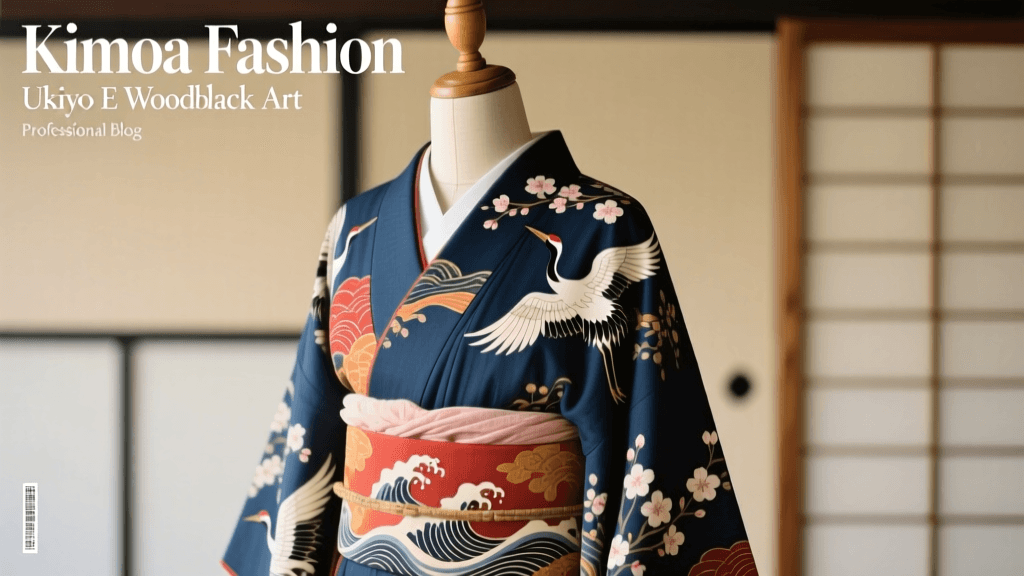
Japanese kimono culture is intrinsically tied to the changing seasons, and ukiyo-e artists were masters of capturing this temporal awareness. A woman depicted wearing a kimono adorned with cherry blossoms (sakura) and flowing water patterns immediately signals the spring season. Conversely, maple leaves (momiji) scattered over a geometric tortoiseshell pattern denote autumn. Plum blossoms (ume) paired with pine and bamboo (shochikubai) represent the resilience of winter and are often associated with New Year celebrations.
The Color Revolutions: From Benizuri-e to Nishiki-e
The evolution of kimono representation in art is directly linked to advancements in woodblock printing technology. Early prints were hand-colored or limited to two or three colors (benizuri-e). However, the 1760s brought a massive revolution with the invention of nishiki-e (brocade pictures), a multi-block, full-color printing technique. According to the Victoria and Albert Museum, this innovation allowed printers to accurately replicate the complex, vibrant silk weaves and intricate yuzen dyeing techniques that were sweeping Edo's fashion districts. Artists could now depict the sheer translucency of summer gauze (ro and sha) and the heavy, embroidered hems of winter uchikake (over-kimono) with stunning realism.
Practical Guide: Identifying Key Ukiyo-e Fashion Artists
When studying or collecting ukiyo-e, recognizing the distinct stylistic approaches of master artists is crucial. Each artist interpreted kimono fashion through a unique lens, reflecting the shifting tastes of the Edo period.
| Artist | Active Period | Signature Kimono Style | Notable Subject Matter |
|---|---|---|---|
| Suzuki Harunobu | 1725–1770 | Delicate, multi-layered kosode with soft, poetic patterns; pioneered full-color nishiki-e. | Youthful, idealized beauties in domestic or snowy settings. |
| Kitagawa Utamaro | 1753–1806 | Intricate yuzen-dyed silks, sheer summer fabrics, and extensive use of kirazuri (mica backgrounds) to highlight textile textures. | Close-up portraits (okubi-e) of courtesans and tea house women. |
| Torii Kiyonaga | 1752–1815 | Flowing, elegant drapery on tall, stately figures; prominent, sculptural obi knots. | Stately beauties in outdoor promenades and teahouse balconies. |
| Utagawa Hiroshige | 1797–1858 | Practical travel garments, michiyuki coats, and straw raincoats (mino) layered over everyday kimono. | Landscapes, travel routes, and women navigating weather elements. |
Actionable Advice: Collecting and Viewing Authentic Ukiyo-e
For enthusiasts of traditional Asian garments, collecting ukiyo-e offers a tangible connection to the history of Japanese fashion. However, navigating the antique print market requires specific knowledge regarding sizing, condition, and authentication.
Where to View Masterpieces
Before purchasing, it is essential to study authentic prints in person or through high-resolution digital archives. Institutions like the Smithsonian National Museum of Asian Art house extensive archives that allow you to study the fine lines and color gradients of original Edo-period prints. The Metropolitan Museum of Art's Heilbrunn Timeline of Art History also provides invaluable scholarly context on how these prints were produced and consumed by the public.
A Collector’s Guide to Buying Ukiyo-e
If you are looking to acquire authentic woodblock prints featuring kimono fashion, keep the following practical guidelines in mind:
- Understand Standard Sizes: The most common format for ukiyo-e is the oban size, measuring approximately 39 x 26 cm (15.3 x 10.2 inches). Knowing this helps you quickly identify if a print has been heavily trimmed, which significantly reduces its value.
- Check the Margins: Original prints were often bound into albums or pasted onto screens, resulting in trimmed margins. A print with full, intact margins (where the publisher's seal and censor seals are fully visible) commands a premium price.
- Evaluate Color Fastness: Early vegetable dyes, particularly the purples and pinks derived from safflower and dayflower, are highly fugitive and fade quickly when exposed to light. A print with vibrant, unfaded Edo-period blues (Prussian blue) and deep blacks is highly desirable.
- Decipher the Seals: Authentic prints feature specific cartouches. Look for the artist's signature (gakko), the publisher's mark, and the censor seals (kiwame), which can help you date the print to a specific year or even month of production.
- Budget Expectations: Entry-level, authentic Edo-period prints (often with minor flaws like restored wormholes or faded colors) can be acquired for $150 to $400. Mid-tier prints by recognized masters in good condition range from $800 to $2,500. Pristine masterpieces, particularly first-edition prints by Utamaro or Sharaku, can easily exceed $10,000 to $50,000.
"The woodblock print was not merely a reflection of the floating world; it was the very engine that drove its fashion, turning local textile innovations into nationwide obsessions."
Preserving and Displaying Your Ukiyo-e Collection
Once you have acquired an authentic ukiyo-e print showcasing historical kimono fashion, proper preservation is critical. These works are printed on washi, a traditional Japanese paper made from mulberry bark. While remarkably strong, it is highly susceptible to acidic environments and ultraviolet light.
When framing, never use standard cardboard backing or acidic tape. Insist on museum-grade, acid-free matting and hinging techniques using Japanese wheat starch paste. The glazing must be UV-filtering acrylic or museum glass to prevent the delicate pigments from fading. Finally, avoid hanging your prints in direct sunlight or in rooms with high humidity fluctuations, such as bathrooms or kitchens. By treating these prints with the same care as a fragile silk kimono, you ensure that the vibrant fashion history of the Edo period survives for future generations to study and admire.