Preserving Xiangyunsha: China's Intangible Silk Heritage
The Legacy of Gambiered Guangdong Gauze
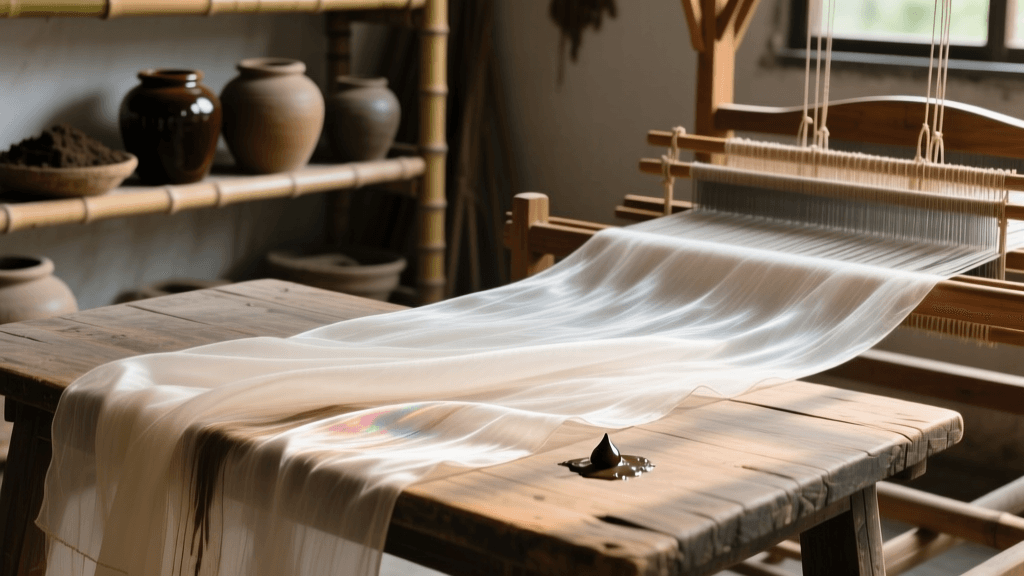
Within the vast tapestry of Asian traditional garments, few textiles possess the mystique, complexity, and profound cultural weight of Xiangyunsha (香云纱), also known as Gambiered Guangdong Gauze. Recognized as a masterpiece of Chinese traditional crafts, this unique silk fabric is a shining example of intangible cultural heritage (ICH). Unlike mass-produced modern silks, Xiangyunsha is born from a symbiotic relationship between human artisanship and the natural environment. Its creation relies on a highly specific chemical reaction between plant tannins and iron-rich river mud, a process that has been refined over centuries in the Shunde district of Foshan, Guangdong province.
The preservation of such crafts is vital to maintaining the cultural identity embedded in traditional Chinese clothing. As noted by UNESCO's Intangible Cultural Heritage list, the broader umbrella of Chinese sericulture and silk craftsmanship represents centuries of accumulated knowledge, social practices, and artistic expression. Xiangyunsha stands out within this tradition due to its grueling, weather-dependent production cycle and its distinctive sensory profile—it is known to make a soft, crackling sound when worn, which poetically translates to 'ringing clouds.'
The 13-Step Artisan Process: Timing and Measurements
The creation of authentic Xiangyunsha is not merely a manufacturing process; it is a rigorous 13-step ritual that demands immense physical endurance and precise timing from master artisans. The entire process can only be executed between the months of April and October, when the sun is at its most intense and the humidity is optimal for drying. Attempting to produce this textile in the winter or during the rainy season results in flawed, unevenly dyed fabric.
The foundational dye is extracted from the tubers of the Dioscorea cirrhosa plant, commonly known as gambier. The tubers are crushed and soaked to release a rich, reddish-brown juice high in tannins. Artisans submerge the raw silk gauze into this juice, then lay it out on grassy fields to bake in the direct sun. This cycle of dipping and sun-drying is repeated up to 30 times. With each cycle, the silk absorbs more tannins, gradually shifting from a pale yellow to a deep, rich amber.
The most critical and dramatic step is the 'mud-coating' or 'sweating' process. Artisans harvest dark, iron-rich mud from the bottom of local, unpolluted rivers. This mud is applied evenly to one side of the tannin-soaked silk. When the iron ions in the mud meet the tannins in the gambier juice, a rapid chemical reaction occurs, turning the coated side a brilliant, lustrous black while leaving the reverse side a warm brown. After a brief resting period, the fabric is washed in the river to remove the mud, leaving behind the permanent, colorfast transformation.
Key Measurements and Environmental Requirements
For those looking to understand the technical specifications of heritage Xiangyunsha production, the following parameters are strictly maintained by master artisans:
- Base Silk Dimensions: Traditional bolts measure exactly 15 meters in length and 90 centimeters in width, though modern adaptations sometimes utilize 1.4-meter widths to accommodate contemporary Hanfu and Qipao patterns.
- Gambier Juice Concentration: The ratio of crushed tuber to water is typically 1:3, fermented for a minimum of 48 hours to ensure maximum tannin extraction.
- Sun-Drying Timing: Each drying cycle requires precisely 30 to 40 minutes of direct, unfiltered sunlight. Overexposure causes the silk fibers to become brittle, while underexposure prevents proper tannin bonding.
- Mud Application Thickness: The river mud is applied at a microscopic thickness of roughly 0.5 to 1 millimeter. Any thicker, and the mud will crack and flake off before the chemical reaction completes.
Sourcing Authentic Xiangyunsha: Costs and Practical Guide
As the global interest in traditional Hanfu and heritage Asian fashion grows, the market has been flooded with chemical imitations of Xiangyunsha. True heritage pieces are investments. According to exhibitions and archives documented by the China National Silk Museum, authentic intangible heritage textiles require certification and command a premium due to the sheer labor and environmental constraints involved in their creation.
When sourcing authentic Xiangyunsha for custom tailoring or collection, buyers should expect to pay between $150 to $400+ USD per meter, depending on the base silk weight (measured in momme) and the specific weave (such as heavy crepe versus light gauze). In contrast, mass-produced chemical imitations, which use synthetic black dyes and artificial stiffeners to mimic the texture, typically sell for $10 to $25 per meter.
| Feature | Authentic Heritage Xiangyunsha | Mass-Produced Chemical Imitation |
|---|---|---|
| Cost per Meter | $150 - $400+ USD | $10 - $25 USD |
| Scent | Faint, earthy aroma of river mud and dried herbs | Sharp chemical or synthetic dye odor |
| Texture & Drape | Crisp but fluid; softens beautifully against the skin over time | Stiff, plastic-like feel; remains rigid and traps heat |
| Color Reversibility | Black on the face, warm amber/brown on the reverse | Uniform black on both sides, or painted reverse |
| Sound | Produces a soft, distinct crackling ('ringing') when walked in | Silent or produces a harsh, synthetic rustle |
Care, Maintenance, and Wearing Etiquette
Owning a garment crafted from authentic Xiangyunsha requires specific maintenance to preserve the integrity of the natural dyes and the silk fibers. Because the color is the result of a natural tannin-iron bond, it is highly colorfast but sensitive to alkaline substances. Artisans strongly advise against the use of standard laundry detergents, which will strip the natural oils from the silk and dull the lustrous black finish.
Actionable Care Instructions:
- Washing: Hand wash only in cold or lukewarm water (strictly below 30°C / 86°F). Use a pH-neutral silk wash or a mild baby shampoo.
- Drying: Never wring or twist the fabric. Gently press out excess water and lay the garment flat in the shade. Direct sunlight during the washing phase will cause uneven fading.
- Storage: Store in a breathable cotton garment bag. Avoid plastic covers, which can trap moisture and cause the natural dyes to develop mildew.
- Wearing: Xiangyunsha is highly breathable and naturally antibacterial, making it ideal for humid summer climates. However, avoid spraying perfume or applying heavy lotions directly before wearing, as the alcohol and oils can stain the porous silk gauze.
Supporting Intangible Cultural Heritage Artisans
The survival of Xiangyunsha relies entirely on the transmission of knowledge from master dyers to the next generation. The physical toll of the craft—hauling heavy wet silk across muddy fields under the blistering sun—has led to a shortage of young apprentices. Supporting this craft means seeking out verified artisan cooperatives, attending heritage exhibitions, and advocating for the protection of traditional ecological knowledge.
As highlighted by UNESCO's global heritage initiatives, the safeguarding of intangible cultural heritage is not just about preserving objects, but about sustaining the communities and ecosystems that produce them. When you purchase authentic Xiangyunsha, you are not merely buying a textile; you are funding the preservation of a 600-year-old ecological dialogue between the rivers, the sun, and the hands of Guangdong's master artisans. By understanding the rigorous measurements, the precise timing, and the true cost of this heritage craft, collectors and Hanfu enthusiasts can ensure that the 'ringing clouds' continue to echo through the corridors of Asian fashion history.