Murasaki Shikibu's Legacy: The Heian Junihitoe & Modern Bridal Guide
The Literary and Sartorial Genius of Murasaki Shikibu
Murasaki Shikibu, the 11th-century noblewoman and author of The Tale of Genji, is globally celebrated for her literary mastery. However, her legacy extends far beyond prose; she was an unparalleled chronicler of Heian-era (794–1185) fashion. In her diaries and novels, Murasaki meticulously detailed the junihitoe (twelve-layer robe), a garment system that served as a visual language of status, seasonality, and aesthetic refinement. Today, her observations remain the foundational blueprint for understanding traditional Japanese court dress, influencing everything from modern bridal couture to high-fashion runways.
Unlike the later Edo-period kosode, which evolved into the modern kimono as detailed by the Victoria and Albert Museum, the Heian junihitoe was less about the exterior silhouette and entirely about the cascading layers visible at the sleeves, hems, and collar. Murasaki’s writings teach us that in the Heian court, true elegance was found in the subtle, poetic reveals of hidden silk.
Deconstructing the Junihitoe: The Ultimate Layering System
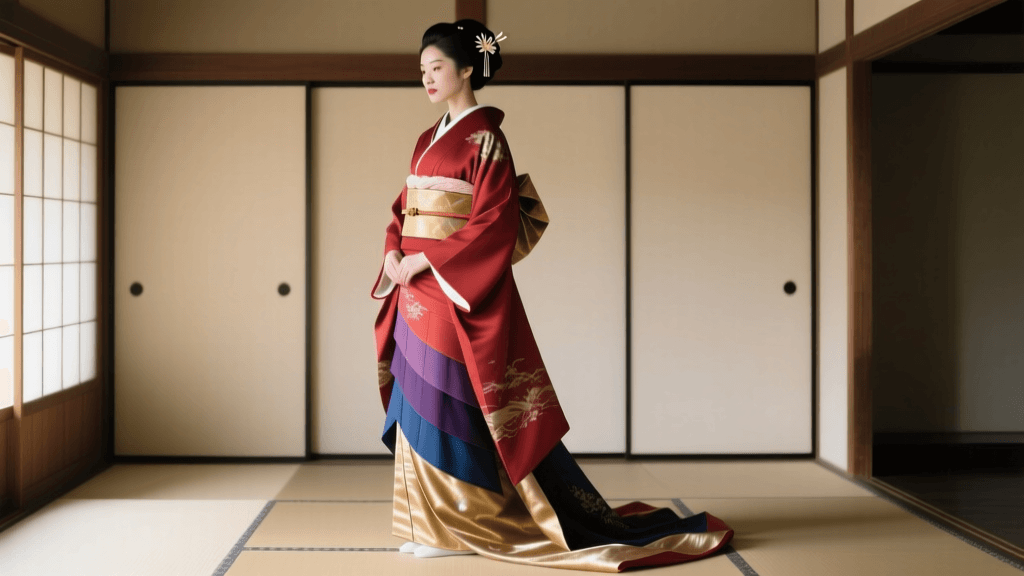
The term junihitoe translates to 'twelve unlined robes,' though the actual number of layers varied based on the wearer's rank, the season, and the occasion. A formal court ensemble was a marvel of textile engineering, often weighing between 15 and 20 kilograms (33 to 44 lbs). Understanding the anatomy of this garment is essential for historians and modern collectors alike.
The Core Layers
- Kosode: The foundational short-sleeved undergarment, usually made of soft, unpatterned white silk.
- Nagabakama: Extremely long, wide-legged pleated trousers that trailed behind the wearer, often dyed in deep crimson or sea-green.
- Hitoe: An unlined silk robe worn over the undergarments, serving as the base canvas for the layers above.
- Itsutsuginu: A set of five to eight layered robes, each slightly smaller in width and sleeve length than the one beneath it, creating a staggered, cascading effect at the edges.
- Uchiginu: A stiff, beaten-silk robe that provided structure and volume to the layers beneath the outer jacket.
- Karaginu: A short, hip-length jacket featuring dramatic, wing-like sleeves, often woven with intricate kara-ori (Chinese-style brocade) patterns.
- Mo: A sheer, pleated apron-like train tied at the waist and trailing to the floor, often dyed with auspicious motifs like cranes, pine trees, or flowing water.
The Kasane no Irome: Murasaki’s Color Theory
Murasaki Shikibu’s writings heavily emphasize kasane no irome (the layering of colors). In the Heian court, a noblewoman’s taste was judged not by the fabric's overt pattern, but by how the edges of her sleeves and hems revealed meticulously coordinated color combinations. As noted in historical analyses of Japanese dress by Britannica, strict sumptuary laws and court protocols dictated which color combinations were permissible for specific ranks and seasons.
Seasonal Color Combinations
- Spring (Plum Blossom): A deep crimson outer layer over a pristine white inner layer, mimicking the ume flower blooming against late winter snow.
- Autumn (Maple Leaves): A vibrant yellow or orange outer layer over a deep crimson base, evoking the turning foliage of Kyoto’s hills.
- Winter (Pine and Snow): A pale, icy blue or white outer layer over a vibrant pine green, symbolizing endurance and longevity through the cold.
From Court to Stage: The Theatrical Survival of the Junihitoe
When the samurai class took power in the Kamakura period, the extravagant junihitoe was largely abandoned in daily life for practical, martial clothing. However, Murasaki’s fashion legacy survived through the performing arts. In Noh theater, the karaginu and mo are still worn by actors portraying high-ranking noblewomen or deities. The stylized, slow movements of Noh perfectly accommodate the heavy, trailing layers, turning the restrictive nature of the garment into a theatrical advantage. Kabuki also adopted these layers for jidaimono (historical plays), ensuring that the visual vocabulary of the Heian court remained embedded in the Japanese cultural consciousness.
Murasaki’s Influence on Modern Japanese Bridal Fashion
While the junihitoe vanished from daily life centuries ago, it experienced a profound revival in the Meiji era as a symbol of imperial heritage. Today, it is the ultimate statement of traditional luxury for Japanese brides opting for a Shinzen Shiki (Shinto wedding ceremony) or high-end editorial photoshoots. Modern brides channel Murasaki’s aristocratic elegance, though the practicalities of wearing a 20-kilogram garment require significant preparation, specialized dressers (kitsuke), and a substantial budget.
Practical Guide: Renting a Junihitoe for Modern Weddings
For those planning a traditional Japanese wedding, sourcing a junihitoe is a specialized endeavor. Most brides opt for rentals from high-end bridal kimono salons in Kyoto or Tokyo, as purchasing a custom-woven set is cost-prohibitive. Below is a breakdown of what to expect when securing this historical garment.
| Category | Details & Specifications | Estimated Cost (JPY / USD) |
|---|---|---|
| Garment Rental | Full 12-layer set including Karaginu and Mo. Modern silk blends. | ¥150,000 - ¥350,000 ($1,000 - $2,300) |
| Custom Purchase | Bespoke Nishijin-ori brocades and 100% pure silk layers. | ¥1,500,000+ ($10,000+) |
| Dressing Service | Requires 2 professional kitsuke dressers. Takes 120-150 minutes. | ¥30,000 - ¥50,000 ($200 - $330) |
| Hair & Makeup | Traditional suberakashi styling with antique kushi (combs). | ¥40,000 - ¥70,000 ($260 - $460) |
| Garment Weight | Total weight on the bride's shoulders and waist. | 15kg - 20kg (33lbs - 44lbs) |
Actionable Tips for Heian-Inspired Kimono Styling
If you are a textile collector, a historical reenactor, or a bride planning a Heian-themed wedding, here is actionable advice for managing, sourcing, and preserving these extraordinary garments.
Sourcing Authentic Textiles and Accessories
- Nishijin-ori Brocades: For the Karaginu (jacket), seek out authentic Nishijin-weave brocades from Kyoto. Modern reproductions often use synthetic blends, but purists should request 100% silk kara-ori from established weaving houses like Hosoo.
- Hair Ornaments (Kushi and Kanzashi): Heian court ladies wore their hair long and unbound (suberakashi), secured with lacquered or tortoiseshell combs (kushi). Budget approximately ¥30,000 to ¥50,000 for authentic antique tortoiseshell combs at Kyoto’s antique markets, such as Toji Temple’s Kobo-san.
Dressing and Movement Logistics
- The Dressing Process: Allocate a minimum of 120 to 150 minutes for the dressing process. Because the layers must be perfectly staggered at the millimeter level to show the kasane no irome, two professional kitsuke are strictly required.
- Movement: The junihitoe severely restricts rapid movement. Brides and performers must practice the suriashi (sliding step) technique, keeping the upper body entirely still while gliding the feet to prevent the heavy layers from tangling.
- Climate Control: The sheer volume of silk traps body heat. If dressing between June and September, the dressing room must be kept at a strict 18°C (64°F) to prevent perspiration, which can stain and degrade the antique silk layers.
Care and Maintenance for Collectors
Owning or renting antique Heian-style layers requires stringent care protocols to preserve the textiles for future generations.
- Airing Out: Silk layers must be aired out in a shaded, well-ventilated room for 48 hours after wearing to release trapped moisture and body oils.
- Storage: Never hang a junihitoe on standard hangers. The weight of the silk will distort the weave and stretch the shoulders. Layers must be folded along traditional tatami lines and stored in flat, paulownia wood drawers (tansu) interleaved with acid-free tatou paper.
- Pest Control: Use natural camphor or specialized Japanese insect repellents (shou nou), ensuring they never make direct contact with the silk to prevent chemical burns on the delicate natural dyes.
Preserving a Millennium-Old Fashion Legacy
Murasaki Shikibu’s legacy is a testament to the idea that fashion is never merely superficial; it is a profound expression of culture, poetry, and seasonal awareness. Institutions like the Japan National Tourism Organization actively promote the preservation of these traditional arts, encouraging global audiences to engage with the deep history of Japanese textiles beyond the standard tourist kimono rental.
Whether you are studying the kasane no irome for a textile design project, renting a junihitoe for a once-in-a-lifetime ceremony, or simply reading The Tale of Genji with a new appreciation for its sartorial descriptions, the Heian court’s fashion legacy remains one of the most sophisticated, poetic, and beautiful clothing systems ever conceived by human hands.