Douyin Street Fashion: Mastering the New Chinese Style Trend
The Rise of 'Xin Zhong Shi' on Douyin
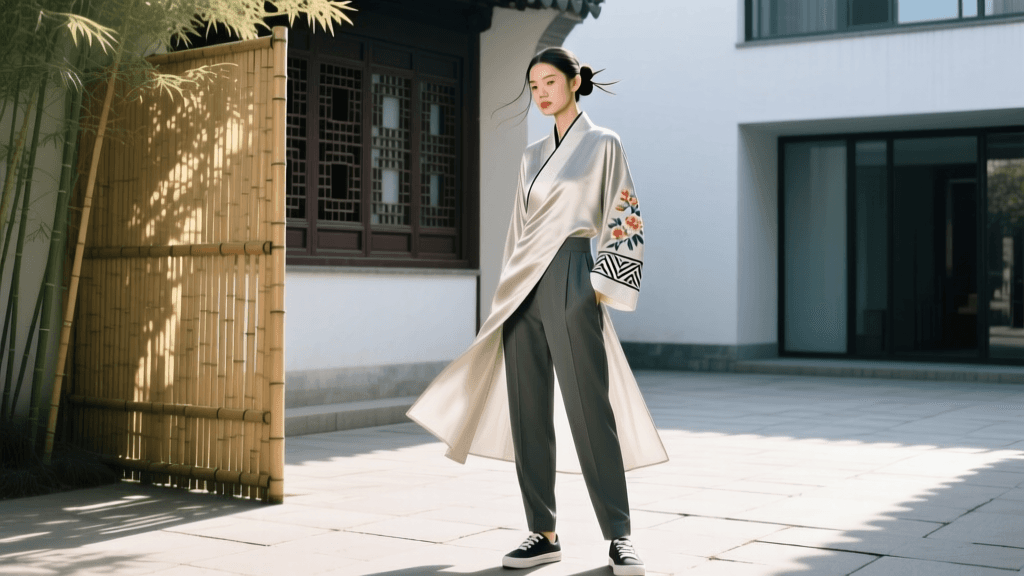
Over the past three years, Douyin (the Chinese counterpart to TikTok) has evolved from a platform for viral dances into the undisputed epicenter of Asian street fashion. At the forefront of this digital sartorial revolution is the 'Xin Zhong Shi' (New Chinese Style) trend. Unlike the strict historical accuracy demanded by traditional Hanfu purists, Xin Zhong Shi is a fluid, community-driven fusion. It marries the structural elegance of traditional Chinese garments with the utilitarian edge of modern streetwear.
Influencers in fashion hubs like Chengdu's Taikoo Li and Shanghai's Xintiandi are pioneering this look, proving that heritage textiles can thrive in contemporary urban environments. According to historical analyses of Chinese dress by the Metropolitan Museum of Art, traditional Chinese clothing has always been characterized by flat-cutting techniques and a focus on surface decoration rather than tailored body-conforming shapes. Douyin creators are brilliantly subverting these ancient silhouettes by pairing them with hyper-modern, structured Western pieces.
Deconstructing the Douyin Street Style Formula
To replicate the viral looks seen on your For You Page, you must understand the underlying mechanics of the New Chinese Style. It is not about wearing a costume; it is about creating a dialogue between epochs.
The 70/30 Wardrobe Ratio
The golden rule among top Douyin street fashion influencers is the 70/30 ratio. An outfit should consist of either 70% modern streetwear and 30% traditional elements, or vice versa. Wearing 100% traditional clothing shifts the aesthetic from 'street fashion' to 'historical reenactment.' By anchoring a look with modern staples—such as chunky sneakers, oversized leather jackets, or distressed denim—the traditional pieces are recontextualized as high fashion.
Key Garments and Fabric Choices
- Mamian Qun (Horse-Face Skirt): Characterized by flat front and back panels with heavily pleated sides. Influencers favor mid-calf lengths in jacquard or matte satin for daily wear.
- Song Dynasty Beizi: A long, open-front jacket with narrow sleeves and side slits. Often worn unbuttoned to create a flowing, layered silhouette that catches the wind.
- Xiangyunsha (Gambiered Silk): A premium, breathable silk dyed with plant extracts and river mud. Highly prized by influencers for summer street styling due to its unique crinkled texture and acoustic 'rustle.'
The Influencer Pairing Matrix
The following table breaks down the most successful pairings utilized by Douyin fashion creators, including estimated sourcing costs and styling notes.
| Traditional Element | Modern Streetwear Pairing | Estimated Cost (USD) | Styling Notes & Proportions |
|---|---|---|---|
| Mamian Skirt (Jacquard) | Oversized Cropped Blazer | $60 - $120 | Blazer hem must hit exactly at the skirt's flat waistband to avoid bulk. |
| Song Beizi (Sheer Organza) | High-Neck Ribbed Bodysuit | $45 - $85 | Use a black bodysuit under a pale jade or ivory Beizi for high-contrast layering. |
| Pankou Knot Button Top | Wide-Leg Cargo Trousers | $50 - $90 | Tuck the top in completely. Add a chunky chain belt to merge heritage with tech-wear. |
| Embroidered Cloud Shoulder | Plain White Graphic Tee | $30 - $60 | Wear the cloud shoulder over the tee like a statement necklace or harness. |
Actionable Styling Guide: Recreating Viral Douyin Looks
Look 1: The Taikoo Li Mamian & Leather Combo
This look dominates the streets of Chengdu. Start with a dark, woven Mamian skirt featuring subtle metallic threading. Pair it with a vintage-wash, oversized graphic t-shirt, tucked in tightly. The crucial layer is a cropped, distressed leather moto jacket. Finish the look with chunky platform combat boots and silver hardware jewelry. The juxtaposition of the delicate pleats against the heavy leather creates the signature Douyin 'cool girl' aesthetic.
Look 2: The Shanghai Xintiandi Minimalist Beizi
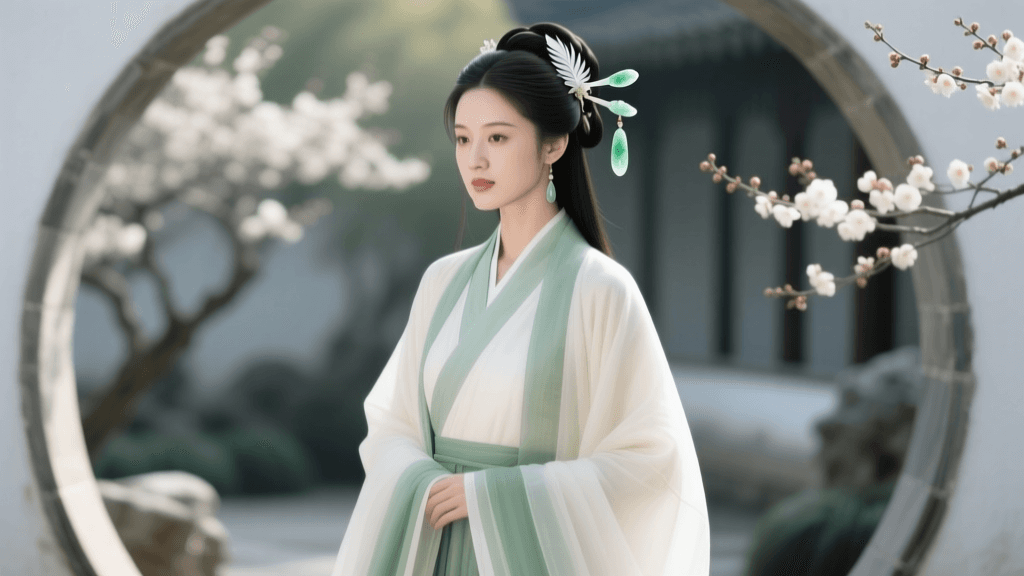
For a more refined, elevated street style, opt for a floor-length Song Dynasty Beizi in a solid, muted tone like celadon or slate grey. Underneath, wear a fitted black turtleneck and straight-leg tailored trousers. The Beizi acts as a lightweight duster coat. Accessorize with a single, minimalist jade hairpin securing a low, twisted bun, and finish with pointed-toe leather ankle boots. This look relies on the Victoria and Albert Museum's noted principles of Chinese dress, where the elegance is derived from the drape and movement of the fabric rather than restrictive tailoring.
Integrating Jade and Hair Accessories
No Douyin street style look is complete without meticulous attention to hair and accessories. Influencers have moved away from heavy, ceremonial hairpieces in favor of subtle, everyday jade ornaments. A popular technique is the 'lazy twist,' secured with a single, carved nephrite jade hairpin. The contrast of the cool, polished jade against modern, bleached, or vividly colored hair creates a striking visual anchor. Furthermore, small jade pendants are frequently attached to modern tech-wear belts or woven into the drawstrings of cargo pants, merging ancient talismanic traditions with urban utility.
Spotlight on Regional Embroidery
True connoisseurs of the Xin Zhong Shi trend pay close attention to regional embroidery techniques, using them as the focal point of their streetwear. Shu Embroidery from Sichuan is famous for its vibrant colors and intricate depictions of koi and pandas, often featured on the back panels of modern denim jackets. Conversely, Suzhou Embroidery (Su Xiu) is prized for its delicate, double-sided stitching and subtle pastel threads. Influencers will often wear a plain, structured streetwear hoodie but let the cuffs and hem peek out to reveal exquisite, hand-stitched Suzhou silk lining. This subtle flex of hidden luxury is a hallmark of high-tier Douyin fashion influencers.
Sourcing Authentic Pieces for Your Wardrobe
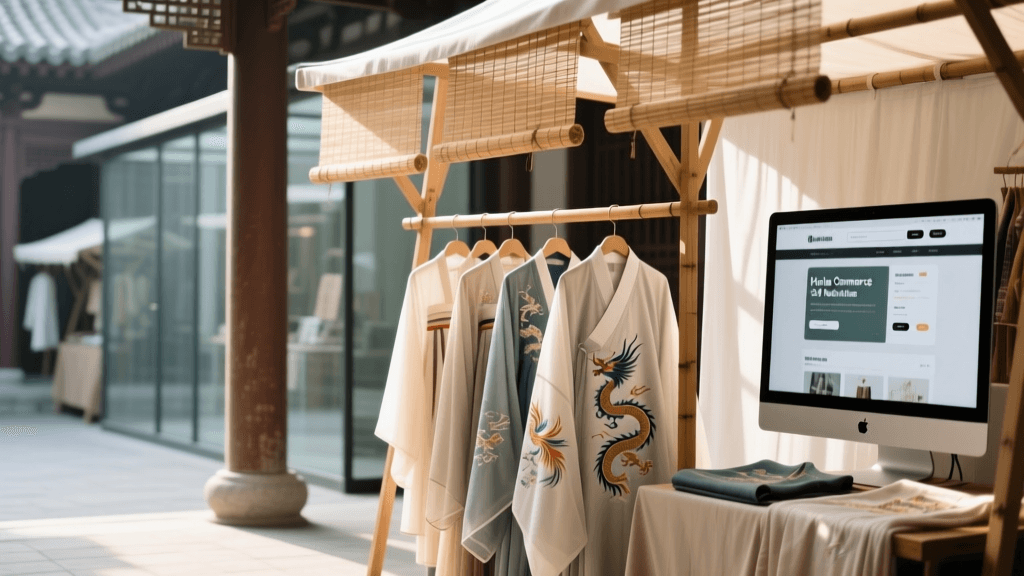
For international enthusiasts looking to build a Xin Zhong Shi wardrobe, Taobao remains the most vital resource. However, navigating the platform requires specific terminology. Here are the top search terms to find authentic, community-approved indie brands rather than cheap costume replicas:
- 'Xin Zhong Shi Mamian Qun' (新中式马面裙): Yields modern, daily-wear horse-face skirts with practical pockets and durable polyester-blend jacquards.
- 'Xiangyunsha Song Beizi' (香云纱宋制褙子): Filters for genuine gambiered silk jackets, essential for breathable summer layering.
- 'Gai Liang Han Fu' (改良汉服): Translates to 'modified Hanfu,' which is the exact category for garments that feature traditional aesthetics but utilize modern closures like zippers and elastic waistbands for street wearability.
When ordering, always measure your 'flat width' rather than relying on standard Western sizing. Traditional garments are cut from flat rectangles of fabric, meaning the shoulder seams often drop significantly. A garment labeled 'one size' in Chinese street fashion typically fits a bust of 85-105cm comfortably due to this flat-cutting philosophy.
The Cultural Impact of Digital Street Fashion
The Douyin street fashion movement is more than a fleeting trend; it is a profound reclamation of cultural identity by Gen Z and Millennial consumers. By integrating elements like Pankou knot buttons and regional embroidery into their daily rotation, young Asians are ensuring that traditional textile arts remain economically viable and culturally relevant. The influencers driving this trend are not merely showcasing clothes; they are acting as digital curators, educating millions on the nuances of regional dyeing techniques and historical silhouettes.
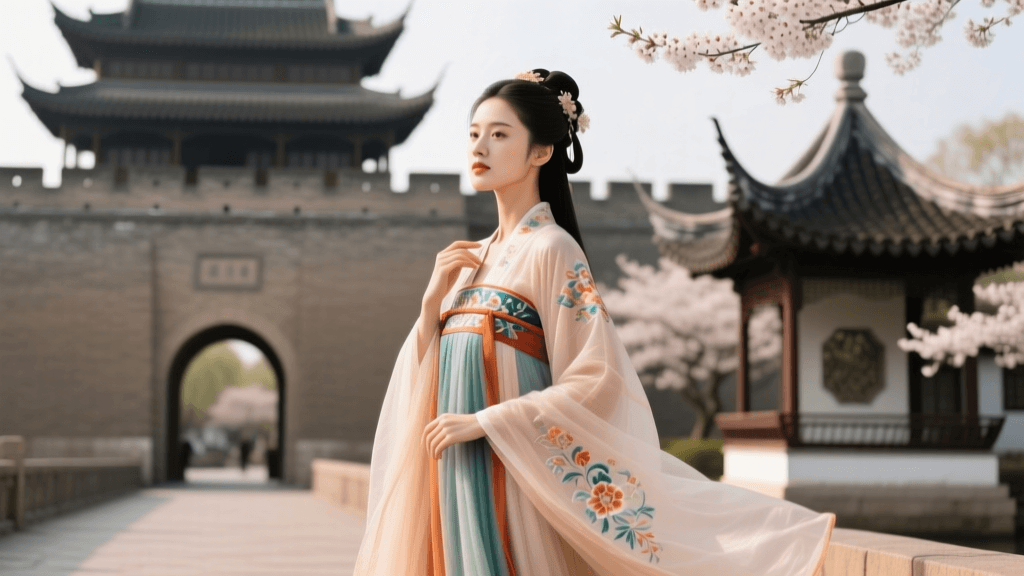
Destination styling has also become a massive sub-genre on Douyin. Creators travel to historical sites in Xi'an or the water towns of Suzhou, intentionally contrasting their modern-traditional fusion outfits against ancient architecture. This visual storytelling has caught the eye of international couture houses, with European runways increasingly adopting the flat-cutting techniques and Pankou fastenings popularized by these Asian street style icons. As the New Chinese Style continues to influence global streetwear, mastering these Douyin formulas offers a direct connection to the vibrant, evolving heart of Asian sartorial heritage.